Voltage Regulator
CN → US| HS Code | Tariff Rate | Origin | Destination | Doc |
|---|---|---|---|---|
| 8542390090 | 60.0% | CN | US | Official Doc |
| 8542390070 | 60.0% | CN | US | Official Doc |
| 8543709860 | 37.6% | CN | US | Official Doc |
| 8543706000 | 35.0% | CN | US | Official Doc |
| 8504409580 | 35.0% | CN | US | Official Doc |
| 8504409550 | 35.0% | CN | US | Official Doc |
Product Images
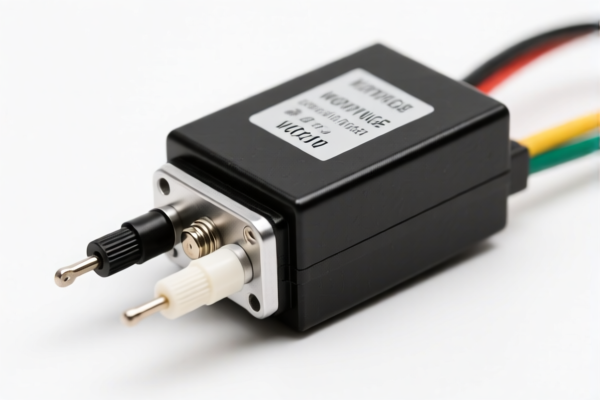
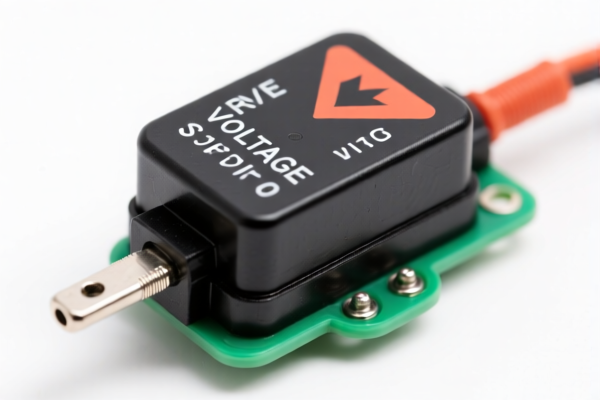
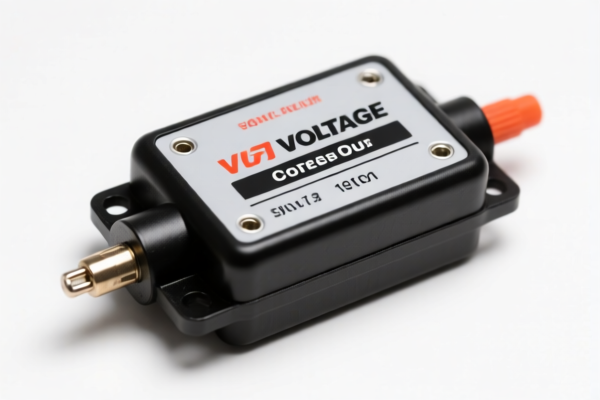
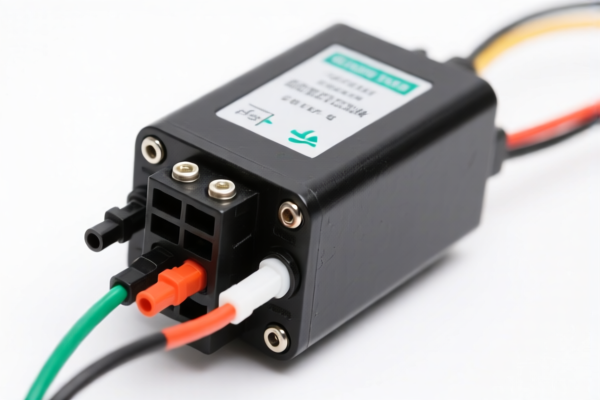
AI Analysis
⚡ Voltage Regulator (Power Supply & Control Devices)
🌐 HS Code Reference & Customs Clearance Guide | 2026 Latest Tariff Analysis | Professional Clearance Strategy
📌 I. Product Definition & Classification: What Exactly is a Voltage Regulator?
A Voltage Regulator is an electromechanical or electronic device designed to maintain a constant output voltage level regardless of fluctuations in input voltage or load conditions. In international trade, these devices are rarely classified under a single "Voltage Regulator" code. Instead, they are split based on their internal technology and specific function:
1. Integrated Circuit (IC) Voltage Regulators:
Miniature semiconductor chips (e.g., LM7805, LDOs) used on PCBs. These are considered "Electronic Integrated Circuits."
2. Static Converters/Rectifiers:
Standalone units, transformers, or modules that convert AC to DC or step up/down voltages using diodes/thyristors. These are classified as "Static Converters" or "Electrical Machines/Apparatus."
⚠️ Key Distinction Point:
- If it is a microchip/semiconductor (black plastic/metal can with pins) → It is an Integrated Circuit (HS 8542).
- If it is a standalone module, box, or transformer containing diodes/thyristors/transformers → It is a Static Converter or Electrical Apparatus (HS 8504 or 8543).
- If it is a network-related device (e.g., PoE injectors, network signal regulators) → It may fall under HS 8543.
📦 II. HS Code Classification Details (2026 Latest Tariff Authority Alignment)
Based on the provided data, the specific HS Codes and their corresponding tariff implications are detailed below. Note that all listed items are subject to significant Additional Tariffs (likely US Section 301/IEEPA measures).
| HS Code | Product Description | Applicable Scenario | Technology Type |
|---|---|---|---|
8542.39.00.90 |
Electronic Integrated Circuits: Other (Other) | General-purpose IC voltage regulators, LDOs, switching controller chips. | ✅ Semiconductor IC |
8542.39.00.70 |
Electronic Integrated Circuits: Other (With adjustable performance characteristics) | Programmable voltage regulators, digitally controlled ICs. | ✅ Semiconductor IC |
8543.70.98.60 |
Other Machines/Apparatus: Other (Other Other) | Generic electrical apparatus not specified elsewhere (e.g., custom power conditioning units). | ✅ Apparatus/Module |
8543.70.60.00 |
Other Machines/Apparatus: Articles for Telegraph/Telephone Networks | Network power injectors, telecom voltage regulators. | ✅ Network Apparatus |
8504.40.95.80 |
Static Converters: Other (Other Other) | Standalone AC-DC converters, non-standard rectifier modules. | ✅ Static Converter |
8504.40.95.50 |
Static Converters: Other (Rectifiers and Rectifying Apparatus) | Standard rectifiers, power supply modules. | ✅ Static Converter |
🔍 Critical Reminder:
- ICs (8542) and Standalone Converters (8504) have different structural requirements.
- Network-specific regulators (8543.70.60) must be explicitly for telegraphic/telephonic use.
- All listed codes carry high additional tariffs (25%–50%). Misclassification can lead to severe penalties.
💰 III. 2026 Latest Tariff Rate Details (Including Surtaxes & Policy Add-ons)
✅ Applicable Country: United States (US)
✅ Origin: China (CN) (Implied by the high surtax rates typical of Section 301/IEEPA)
✅ Effective Date: Current regime (Post-2025 adjustments)
🎯 1. 8542.39.00.90 & 8542.39.00.70 —— Electronic Integrated Circuits (Voltage Regulator Chips)
| Item | Content |
|---|---|
| Base Tariff | 0.0% (ad valorem) |
| Additional Surtax | +50.0% |
| Total Tax Rate | 50.0% |
| Tax Calculation | CIF Value × 50.0% |
| De Minimis Exemption | ❌ Not Eligible (High-risk category for Chinese origin) |
| Legal Basis | High-volume IC imports from China are heavily scrutinized. The 50% rate reflects maximum punitive tariffs under current trade restrictions. |
📌 Explanation:
- The base tariff for most integrated circuits is 0%, but the 50% additional tariff is a punitive measure often applied to high-tech components under trade disputes.
- Total Cost Impact: A $10,000 shipment of regulator chips will incur $5,000 in duties.
- Note: Even if the chip is "adjustable" (8542.39.00.70), the rate remains 50%. There is no preferential rate for precision.
🎯 2. 8504.40.95.80 & 8504.40.95.50 —— Static Converters (Rectifiers/Power Modules)
| Item | Content |
|---|---|
| Base Tariff | 0.0% |
| Additional Surtax | +25.0% |
| Total Tax Rate | 25.0% |
| Tax Calculation | CIF Value × 25.0% |
| De Minimis Exemption | ❌ Not Eligible |
| Legal Basis | Section 301 tariffs on electrical machinery and static converters. |
📌 Explanation:
- Standalone voltage regulators or rectifier modules are classified as Static Converters.
- The 25% additional tariff is standard for many electrical machinery items from China.
- Total Cost Impact: A $10,000 shipment of power modules will incur $2,500 in duties.
🎯 3. 8543.70.98.60 & 8543.70.60.00 —— Other Electrical Apparatus
| Item | Content |
|---|---|
| Base Tariff | 2.6% (8543.70.98.60) / 0.0% (8543.70.60.00) |
| Additional Surtax | +25.0% |
| Total Tax Rate | 27.6% (8543.70.98.60) / 25.0% (8543.70.60.00) |
| Tax Calculation | CIF Value × Total Rate |
| De Minimis Exemption | ❌ Not Eligible |
| Legal Basis | Other electrical machines not specified elsewhere. |
📌 Explanation:
-8543.70.98.60has a 2.6% base rate, so the total is 27.6%.
-8543.70.60.00(Network-related) has a 0% base rate, so the total is 25.0%.
- Use Case: If your regulator is part of a telecom network (e.g., PoE splitter), use8543.70.60.00to minimize the base rate.
🛠️ IV. Customs Clearance Practical Advice (Battle-Tested Pitfall Guide)
✅ 1. Required Documentation Checklist (Non-Negotiable)
| Document | Must Provide | Description |
|---|---|---|
| ✅ Technical Datasheet | ✔️ | Must clearly state: Input Voltage, Output Voltage, Current Rating, Type (IC vs. Standalone). |
| ✅ Circuit Diagram/Schematic | ✔️ | Crucial for distinguishing between IC (8542) and Static Converter (8504). |
| ✅ Product Photos | ✔️ | Show the physical form factor: Chip? Box? PCB-mounted? |
| ✅ Commercial Invoice | ✔️ | Must NOT say "Voltage Regulator" generically if it implies a different HS Code. Use precise technical description. |
| ✅ Packing List | ✔️ | Ensure packaging details match the declaration (e.g., "Bulk ICs" vs. "Boxed Power Supplies"). |
| ✅ Certificate of Origin | ✔️ | To prove country of origin (China triggers these surtaxes). |
✅ 2. Declaration Strategy (Key Mantra)
🔥 “Chip is IC, Box is Converter. Don’t mix them, or you’ll pay more!”
| Scenario | Correct HS Code | Wrong Declaration | Consequence |
|---|---|---|---|
| Surface-mount chip (e.g., LM317) | 8542.39.00.90 |
"Voltage Regulator Module" | Misclassification → 50% tax applied, but if cleared as "Apparatus," risk of penalty. |
| Standalone AC-DC Adapter | 8504.40.95.50 |
"Integrated Circuit" | Huge Error. ICs are 0% base, but converters are 0% base + 25%. However, wrong description delays clearance. |
| Network PoE Injector | 8543.70.60.00 |
"Power Supply" | 8543.70.60.00 has 0% base tax, making it cheaper than generic 8543.70.98.60 (2.6% base). |
| Custom Power Conditioning Unit | 8543.70.98.60 |
"Transformer" | Transformers are HS 8504. Power conditioning units are often 8543. Wrong code leads to inspection. |
✅ 3. Special Circumstances Handling
| Situation | Handling Advice |
|---|---|
| OEM Custom ICs | Provide the Datasheet showing it is a "Linear Regulator IC." Do not call it a "Power Supply." |
| Hybrid Devices (IC + Enclosure) | If the device contains a regulator IC but is sold as a complete "Power Supply Module," it must be classified as a Static Converter (8504) or Apparatus (8543), NOT an IC. The function of the whole unit dictates the classification. |
| Adjustable/Digital Regulators | Use 8542.39.00.70 if it is a standalone IC with programmable features. |
| Telecom Equipment | If the regulator is essential for telephone network operation, explicitly state "For Telephonic Network Use" to qualify for 8543.70.60.00. |
🌍 V. Global Market Comparison (2026 Latest)
| Country/Region | Recommended HS Code | Tariff (China Origin) | Certification Required | Notes |
|---|---|---|---|---|
| 🇺🇸 USA | 8542.39.00.90 / 8504.40.95.50 |
25% – 50% | FCC (if electronic), UL (if power supply) | Highest tariffs. ICs face 50%. Standalone converters face 25%. |
| 🇨🇳 China | 8542.39.00.90 / 8504.40.95.50 |
5% – 10% | CCC (if applicable) | No punitive surtaxes. |
| 🇪🇺 EU | 8542.39.00 / 8504.40.99 |
0% – 4% | CE, RoHS | Low base tariffs. No trade war surtaxes. |
| 🇬🇧 UK | 8542.39 / 8504.40 |
0% – 5% | UKCA | Post-Brexit rules apply, but generally low tariffs. |
| 🇯🇵 Japan | 8542.39 / 8504.40 |
0% – 2.5% | PSE | Very low tariffs for electronics. |
📌 Conclusion:
- The US is the most expensive market for voltage regulators due to punitive tariffs.
- ICs (8542) are taxed at 50% in the US, making them extremely costly for Chinese manufacturers exporting to the US.
- Standalone Converters (8504) are taxed at 25%, which is still high but half the cost of ICs.
- Strategy: If possible, design products to use 8543.70.60.00 (Network Apparatus) for 25% total tax (0% base), or consider third-country assembly (e.g., Vietnam, Mexico) to avoid China-origin surtaxes.
📌 VI. Common Errors & Pitfall Guide (Lessons Learned)
❌ Error 1: Calling a Standalone Power Supply an "Integrated Circuit"
👉 Consequence: Customs may reclassify it as 8504 (25% tax) but impose penalties for false declaration. Worse, if they think it’s an IC, they might inspect it heavily for IP reasons.
❌ Error 2: Declaring a Network Regulator as a "General Purpose Power Supply" (8543.70.98.60)
👉 Consequence: You pay 27.6% instead of 25.0%. Small difference, but avoidable.
❌ Error 3: Ignoring the "Adjustable" feature in ICs
👉 Consequence: Using 8542.39.00.90 for an adjustable IC is acceptable, but 8542.39.00.70 is more precise. Accuracy reduces audit risk.
❌ Error 4: Splitting a Power Supply Unit into "Transformer" and "Rectifier" parts
👉 Consequence: If sold as one unit, it must be declared as one Static Converter (8504). Splitting leads to "Parts" classification, which may have different (often higher) duty rates or documentation requirements.
✅ Correct Approach:
"Linear Voltage Regulator IC, LM7805, 5V Output, SMD Package, No Enclosure" → 8542.39.00.90
"AC to DC Power Supply Module, 12V 2A, Enclosed, Rectifier Type" → 8504.40.95.50
🎯 VII. Conclusion: Precision Classification Saves 25%+ in Duties!
🎯 Remember the Mantra:
🔹 "IC is 50%, Converter is 25%, Network is 25%."
🔹 "Chip vs. Box determines your destiny."
🔹 "Don’t let a $1 chip cost you $0.50 in duty!"
📌 Pro Tip:
If your voltage regulators are integrated into a larger device (e.g., a router, a PC motherboard), declare the entire device under its own HS Code. The regulator becomes a "part," which may have a lower or different tariff rate.
- Example: A computer with a regulator chip inside is declared as a "Computer" (HS 8471), not as a separate "IC." The IC’s 50% tax is avoided if it’s not imported separately.
📣 Immediate Action:
📞 Consult a Customs Broker to classify your specific regulator form factor.
📄 Prepare Datasheets that clearly distinguish between ICs and Standalone Converters.
🌍 Consider Supply Chain Shift if exporting high-volume ICs to the US, as the 50% tariff is unsustainable.
✨ Professional Clearance Starts with Precise Classification!
💼 Every percentage point of duty is profit lost if misclassified!
Customer Reviews
About HS Code Classification
The Harmonized System (HS) is an internationally standardized nomenclature developed by the World Customs Organization (WCO) to classify traded products. Over 200 countries use the HS system as the basis for customs tariffs, trade statistics, and import/export regulations.
Each HS code follows a hierarchical structure:
- Chapter (2 digits) — Broad category of goods (e.g., Chapter 84: Machinery and Mechanical Appliances)
- Heading (4 digits) — More specific grouping within the chapter
- Subheading (6 digits) — Internationally standardized breakdown, used by all WCO member countries
- National subdivisions (8-10 digits) — Country-specific extensions for further classification, such as US HTSUS 10-digit codes
Correct HS code classification is essential for smooth customs clearance, accurate duty payment, and compliance with trade regulations. Misclassification can lead to customs delays, overpayment of duties, or penalties.
When importing from CN to US, the applicable tariff rates may include:
- Most-Favored-Nation (MFN) rate — The standard duty rate applied to WTO members
- General rate — Applied to countries without trade agreements
- Trade remedy duties — Additional tariffs such as Section 301 (anti-dumping), Section 232 (national security), or countervailing duties
The information provided on this page is for reference purposes only. For official classification, please consult with your local customs authority or a licensed customs broker.