Voltage Tester
CN → US| HS Code | Tariff Rate | Origin | Destination | Doc |
|---|---|---|---|---|
| 9030310000 | 35.0% | CN | US | Official Doc |
| 9030333800 | 35.0% | CN | US | Official Doc |
Product Images
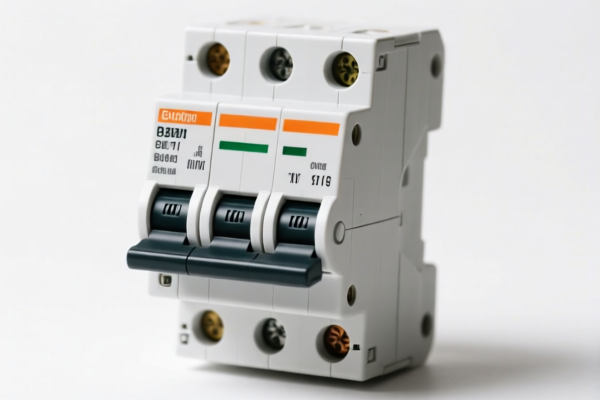
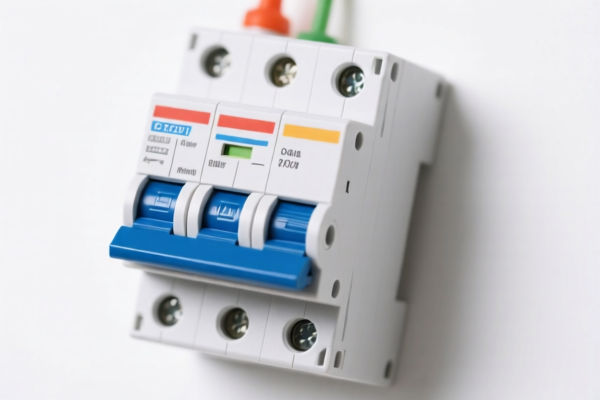
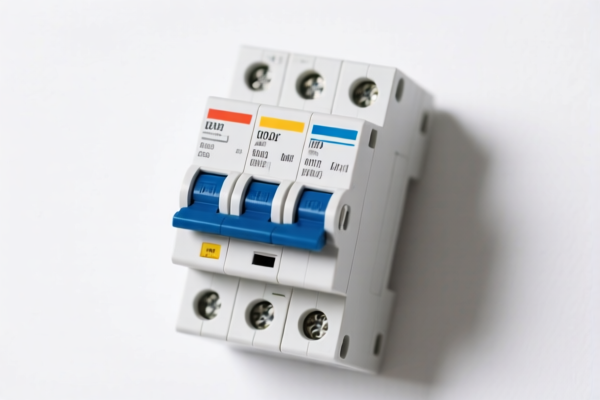
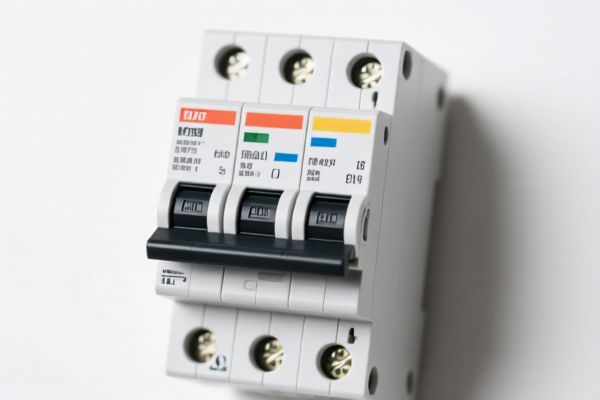
AI Analysis
🔌 Voltage Testers & Multimeters (Electrical Measuring Instruments)
🌐 HS Code Reference & Customs Clearance Guide | 2026 Latest Tariff Analysis | Professional-Level Clearance Strategy
📌 Part 1: Product Definition & Classification: Do You Really Understand "Voltage Testers"?
Voltage testers and multimeters are essential tools for measuring electrical parameters such as voltage, current, resistance, and power. In international trade, they fall under Chapter 90: Optical, photographic, cinematographic, measuring, checking, precision, medical or surgical instruments and apparatus.
However, not all electrical measurement tools belong to the same HS Code. The key distinction lies in the functionality: * Specific Electrical Quantity Meters: Devices specifically designed to measure voltage, current, resistance, or power (e.g., standard multimeters, voltage testers) are classified under Heading 9030. * Power Meters (Electricity Meters): Devices that measure the consumption of electricity for billing purposes (e.g., household electricity meters) are classified under Heading 9028. * Ionizing Radiation Detectors: Devices detecting alpha, beta, gamma, or X-rays are excluded from Heading 9030.
⚠️ Critical Distinction:
- If the device is a multimeter, voltage tester, or ammeter (used for checking circuit integrity or electrical values) → It belongs to Heading 9030.
- If the device is an electricity meter (used for billing/consumption tracking) → It belongs to Heading 9028 (NOT covered in this specific dataset).
- Note: Semiconductor wafer testing equipment has separate sub-headings. The codes below apply to general electrical quantity measurement.
📦 Part 2: HS Code Classification Details (2026 Latest Tariff Authority Comparison)
Based on the provided <DATA>, the relevant HS Codes for Voltage Testers and Multimeters (without recording devices) are as follows:
| HS Code | Product Description | Applicable Scenario | Recording Device? |
|---|---|---|---|
9030.31.00.00 |
Multimeters, without a recording device | Standard digital/analog multimeters, clamp meters, voltage testers used for checking voltage, current, resistance, or power. | ❌ No |
9030.33.38.00 |
Other instruments/apparatus (voltage/current/resistance/power), without a recording device, other | Specialized voltage testers, non-multimeter electrical testers, oscilloscopes/spectrum analyzers (if excluded from other specific sub-headings), or other custom electrical measuring apparatus not covered by 9030.31. | ❌ No |
🔍 Key Reminder:
- All devices that measure electrical quantities (voltage, current, resistance, power) for checking purposes fall under Heading 9030.
- If the device has a recording device (data logger), it falls under different sub-headings (9030.32, etc.), which are not in the current<DATA>scope.
- The<DATA>explicitly covers instruments without a recording device.
💰 Part 3: 2026 Latest Tariff Rate Breakdown (Including Surcharges)
✅ Applicable Country: United States (US)
✅ Origin: China (CN)
✅ Effective Date: From the current tariff schedule (based on provided<DATA>)
🎯 1. 9030.31.00.00 —— Multimeters, Without a Recording Device
| Item | Content |
|---|---|
| Base Tariff Rate | 0.0% (ad valorem) |
| Section 301 / Additional Tariff | +25.0% |
| Total Tariff Rate | 25.0% |
| Tax Calculation | CIF Value × 25% |
| De Minimis Exemption | ❌ Not Applicable (High-value instrument) |
| Legal Basis Path | USITC:9030.31.00.00 → Section 301: 25% surcharge |
📌 Explanation:
- Base Rate: 0% for electrical measuring instruments under Heading 9030.
- Surcharge: 25% is applied due to US trade actions (Section 301) on Chinese-origin goods in this category.
- Total Cost Impact: Importers must budget for a 25% tariff on top of the product cost and shipping.
🎯 2. 9030.33.38.00 —— Other Instruments/Apparatus (Voltage/Current/Resistance/Power), Without Recording Device
| Item | Content |
|---|---|
| Base Tariff Rate | 0.0% (ad valorem) |
| Section 301 / Additional Tariff | +25.0% |
| Total Tariff Rate | 25.0% |
| Tax Calculation | CIF Value × 25% |
| De Minimis Exemption | ❌ Not Applicable |
| Legal Basis Path | USITC:9030.33.38.00 → Section 301: 25% surcharge |
📌 Note:
- This code captures specialized voltage testers or electrical checking apparatus that are not standard multimeters.
- The tariff structure is identical to multimeters: 0% base + 25% surcharge = 25% total.
- Even if the device is highly specialized (e.g., for industrial grid checking), as long as it measures electrical quantities without recording, it falls here.
🛠️ Part 4: Customs Clearance Practical Advice (Battle-Tested Pitfall Avoidance)
✅ 1. Required Documentation Checklist (Missing Any = Delay/Return)
| Document | Mandatory | Description |
|---|---|---|
| ✅ Product Specification Sheet | ✔️ | Must clearly state: "Measures Voltage/Current/Resistance," "No Data Recording Function," Model Number. |
| ✅ Product Photos | ✔️ | Clear images of the device, display screen, ports, and nameplate (showing input/output ratings). |
| ✅ Circuit Diagram/Block Diagram | ✔️ | Crucial to prove it is NOT an electricity meter (Heading 9028) and does NOT have data logging capabilities. |
| ✅ Commercial Invoice | ✔️ | Must explicitly describe the item as "Multimeter" or "Voltage Tester" and include the correct HS Code. |
| ✅ Packing List | ✔️ | List components. If batteries or probes are included, ensure they are declared as accessories. |
| ✅ FCC Certification | ✔️ | Mandatory for US. Electrical testers are electronic devices emitting RF interference. Must have FCC ID. |
| ✅ CE/RoHS Report | ✔️ | Optional but recommended for marketability; not always required for US entry unless specified by retailer. |
✅ 2. Declaration Tips (Key Mantra)
🔥 "Check Electrical, Not Power Bills; No Recorder, 25% Bill!"
| Scenario | Correct Declaration | Wrong Practice |
|---|---|---|
| Standard Multimeter | HS: 9030.31.00.00Desc: "Digital Multimeter, No Recording" |
❌ Misdeclare as "Power Meter" (9028) → Audit risk. |
| Voltage Tester (Non-Multimeter) | HS: 9030.33.38.00Desc: "Voltage Tester, Electrical Quantity Check" |
❌ Call it "Tool" vaguely → Customs holds for classification. |
| Device WITH Data Logging | NOT in this dataset (Likely 9030.32 or 9030.40) |
❌ Declare 9030.31/33 when it has recording → False Declaration. |
| Electricity Meter (Billing) | NOT in this dataset (Heading 9028) |
❌ Declare 9030 → Incorrect HS Code, Penalty Risk. |
✅ 3. Special Situation Handling
| Situation | Handling Advice |
|---|---|
| OEM Voltage Testers | Provide the brand license and design specs. Ensure FCC ID is linked to the model. |
| Kit with Probes/Batteries | Declare as "Main Unit + Accessories." Do not split invoices to avoid higher duties on accessories. |
| Industrial vs. Consumer | Both fall under 9030. Industrial grade may have higher value, but tariff rate (25%) remains the same. |
| Used/Refurbished | US Customs requires clear labeling "Used" or "Refurbished." Additional inspection may occur. |
🌍 Part 5: Global Market Comparison (2026 Latest)
| Country/Region | Recommended HS Code | Tariff (China Origin) | Certification | Notes |
|---|---|---|---|---|
| 🇺🇸 USA | 9030.31.00.00 / 9030.33.38.00 |
25% (0% Base + 25% Surcharge) | FCC (Mandatory) | High compliance barrier due to FCC. |
| 🇨🇳 China | 9030.31.00.00 |
~5-10% (Import Duty) | CCC (Optional for some) | No additional surcharge for import. |
| 🇪🇺 EU | 9030.31.00 |
0% | CE Mark (Mandatory) | No surcharge. Low tariff environment. |
| 🇬🇧 UK | 9030.31.00 |
0% | UKCA (Post-Brexit) | Similar to EU but requires UKCA. |
| 🇯🇵 Japan | 9030.31.00 |
0% | PSE (Electrical Appliance Safety) | PSE diamond mark required for powered testers. |
📌 Conclusion:
- USA is the most challenging market due to the 25% additional tariff.
- EU/UK/JP have 0% base tariffs, making them more cost-effective for exporters, provided certifications (CE/UKCA/PSE) are obtained.
📌 Part 6: Common Errors & Pitfall Guide (Lessons Learned)
❌ Error 1: Declaring a "Multimeter with Data Logger" as 9030.31.00.00
👉 Consequence: The device has a recording function. It should be classified under 9030.32 or 9030.40. Misclassification leads to penalties and retroactive duties.
❌ Error 2: Confusing "Voltage Tester" with "Electricity Meter" (9028)
👉 Consequence: 9028 is for billing. 9030 is for checking. Customs may flag if the description doesn't match the function. Provide a clear function statement.
❌ Error 3: Missing FCC Certification
👉 Consequence: US Customs (CBP) will detain the shipment at the port of entry. No FCC ID = No Entry. Fix: Obtain FCC ID before shipping.
❌ Error 4: Vague Description "Electrical Tool"
👉 Consequence: Customs cannot determine if it’s 9030 or 9028. Shipment delayed for 2-4 weeks. Fix: Use specific terms like "Digital Multimeter" or "Voltage Tester."
✅ Correct Practice:
"Digital Multimeter, Model XYZ, Measures Voltage/Current/Resistance, No Recording Device, FCC Certified, For Electrical System Checking"
🎯 Part 7: Conclusion: Professional Declaration, Cost Control, Efficient Clearance!
🎯 Remember the Mantra:
🔹 "Check Voltage/Current? → 9030. No Recorder? → 25%. With Recorder? → Check Other Codes. No FCC? → Don't Ship to US!"
🔹 "HS Code defines the tax, FCC defines the entry, Accuracy defines the speed."
📌 Pro Tip:
- If your voltage testers are originally from Vietnam, Mexico, or Thailand, you may avoid the 25% surcharge (subject to Rules of Origin).
- For high-value industrial testers, consider Applying for an Advance Ruling from US Customs to pre-approve the HS Code and avoid delays.
📣 Immediate Action:
📞 Contact a US Customs Broker + Provide FCC ID + Verify HS Code 9030.31/9030.33
🚀 Ensure Smooth Clearance, Avoid 25% Pitfalls, Protect Your Margins!
✨ Professional Customs Clearance Starts with Accurate Classification!
💼 Every Dollar Saved in Tariffs is Pure Profit!
Customer Reviews
About HS Code Classification
The Harmonized System (HS) is an internationally standardized nomenclature developed by the World Customs Organization (WCO) to classify traded products. Over 200 countries use the HS system as the basis for customs tariffs, trade statistics, and import/export regulations.
Each HS code follows a hierarchical structure:
- Chapter (2 digits) — Broad category of goods (e.g., Chapter 84: Machinery and Mechanical Appliances)
- Heading (4 digits) — More specific grouping within the chapter
- Subheading (6 digits) — Internationally standardized breakdown, used by all WCO member countries
- National subdivisions (8-10 digits) — Country-specific extensions for further classification, such as US HTSUS 10-digit codes
Correct HS code classification is essential for smooth customs clearance, accurate duty payment, and compliance with trade regulations. Misclassification can lead to customs delays, overpayment of duties, or penalties.
When importing from CN to US, the applicable tariff rates may include:
- Most-Favored-Nation (MFN) rate — The standard duty rate applied to WTO members
- General rate — Applied to countries without trade agreements
- Trade remedy duties — Additional tariffs such as Section 301 (anti-dumping), Section 232 (national security), or countervailing duties
The information provided on this page is for reference purposes only. For official classification, please consult with your local customs authority or a licensed customs broker.