Volume Measurement Unit
CN → US| HS Code | Tariff Rate | Origin | Destination | Doc |
|---|---|---|---|---|
| 8423899000 | 37.9% | CN | US | Official Doc |
| 9026102080 | 35.0% | CN | US | Official Doc |
| 9026106000 | 17.5% | CN | US | Official Doc |
| 9017800000 | 40.3% | CN | US | Official Doc |
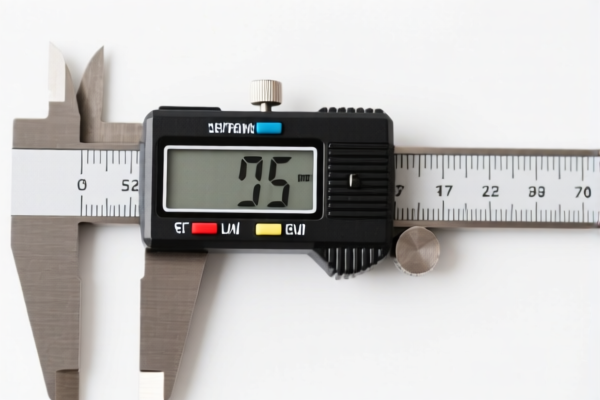
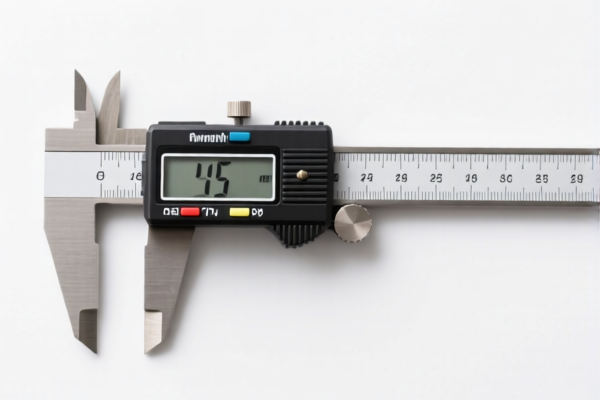
Product Images


AI Analysis
📏 Volume Measurement Units: HS Code Classification & Tariff Guide 2026
🌐 HS Code Reference & Customs Clearance Strategy | Global Trade Compliance for Flow & Level Instruments
📌 I. Product Definition: What is a "Volume Measurement Unit"?
A Volume Measurement Unit is a general term for devices used to quantify the amount of liquid, gas, or bulk material passing through a system or stored in a container. In international trade, these devices are not a single "lump" but are classified based on their underlying technology, primary function, and application context.
⚠️ Critical Classification Logic:
- Is it a "Scale"? (Measuring mass indirectly via volume/density) → Chapter 84
- Is it a "Flowmeter"? (Measuring liquid/gas flow rate) → Chapter 90
- Is it a "General Measuring Instrument"? (Handheld, laboratory, or mechanical) → Chapter 90
- Material/Origin matters significantly due to Section 122 and USITC "301" tariffs.
📦 II. HS Code Classification & Tax Analysis (Based on Provided Data)
Based on the specific dataset provided, here is the breakdown of why a Volume Measurement Unit might fall into one of these four HS Codes, along with the exact tax details and implications.
1️⃣ 8423.89.90.00 — Weight/Volumetric Scales
-
Why this Code?
If the device measures volume indirectly by weighing the contents (e.g., a tank scale that calculates volume based on weight/density) or if it falls under "other weighing machinery" not specified elsewhere. The dataset explicitly states: "Volume measurement tools are classified as other weighing machinery." -
💰 Tax Breakdown (Total: 37.9%) | Tax Component | Rate | Description | | :--- | :--- | :--- | | Base Duty | 2.9% | Standard Most-Favored-Nation (MFN) rate. | | Section 232 / Trade Act | 25.0% | "Add-on" tariff (often 301 or Section 301). | | Section 122 Tariff | 10.0% | Specific retaliatory or counter-measure tariff. | | TOTAL | 37.9% | High Tariff Impact |
🔍 Risk Alert: This code attracts 25% add-on + 10% Section 122 tariffs. It is significantly more expensive than pure flowmeters.
2️⃣ 9026.10.20.80 — Flow/Level Instruments (High Tariff)
-
Why this Code?
If the device is a dedicated electrical or mechanical instrument specifically designed to measure Flow (Liquid/Gas) or Liquid Level. The logic states: "Volume measurement matches flow or level measurement purposes." -
💰 Tax Breakdown (Total: 35.0%) | Tax Component | Rate | Description | | :--- | :--- | :--- | | Base Duty | 0.0% | Duty-free base rate for specific mechanical/elec instruments. | | Section 232 / Trade Act | 25.0% | "Add-on" tariff (Heavy burden). | | Section 122 Tariff | 10.0% | Specific retaliatory tariff. | | TOTAL | 35.0% | Moderate-High Impact |
🔍 Risk Alert: Despite a 0% base duty, the 35% total is driven entirely by 25% + 10% sanctions. Do not be fooled by the "0% base" line.
3️⃣ 9026.10.60.00 — Flow/Level Instruments (Low Tariff - BEST OPTION)
-
Why this Code?
If the device is a mechanical/flow instrument that fits specific sub-category criteria (often older or specific mechanical types). The logic: "Volume and flow/level measurement belong to the same physical category, no material/form conflict." -
💰 Tax Breakdown (Total: 17.5%) | Tax Component | Rate | Description | | :--- | :--- | :--- | | Base Duty | 0.0% | Duty-free. | | Section 232 / Trade Act | 7.5% | Reduced "Add-on" tariff (Crucial distinction). | | Section 122 Tariff | 10.0% | Same Section 122 rate. | | TOTAL | 17.5% | Lowest Available Rate |
🚀 Strategic Opportunity: This is the most cost-effective classification. The difference in "Add-on tariff" (7.5% vs 25%) saves 17.5% on the CIF value. Action: Ensure your product design matches the specific mechanical or flow definition required for
60sub-category to avoid being pushed to20or80.
4️⃣ 9017.80.00.00 — General Measuring Instruments
-
Why this Code?
If the device is a general-purpose physical quantity measuring instrument (e.g., a handheld volumeter, lab-grade glassware, or a specialized caliper-like volume tool) that doesn't fit neatly into "Flow" or "Weighing" categories. -
💰 Tax Breakdown (Total: 40.3%) | Tax Component | Rate | Description | | :--- | :--- | :--- | | Base Duty | 5.3% | Standard duty for general measuring instruments. | | Section 232 / Trade Act | 25.0% | "Add-on" tariff. | | Section 122 Tariff | 10.0% | Specific retaliatory tariff. | | TOTAL | 40.3% | Highest Tax Liability |
⚠️ Warning: This is the most expensive option due to the combination of a 5.3% base duty + 35% in sanctions. Use this only if the device is clearly not a flowmeter or scale.
🛠️ III. Customs Clearance & Strategic Recommendations
🎯 1. Classification Strategy (The "17.5%" Play)
- Primary Goal: Aim for
9026.10.60.00.- Why? It offers a 50% reduction in total tax (17.5% vs 35.0%) compared to the other flowmeter codes.
- Requirement: Your product must be purely a mechanical or specific electrical flow/level instrument. Avoid "smart" devices that might be classified as "other weighing" or "general instruments" if they lack clear flow meter certification.
- Avoid
8423(Scales): Unless the device is explicitly a tank scale, do not use8423.89.90.00. The 37.9% total is a cost killer. - Avoid
9017(General): Only use if the device is a laboratory glassware or non-industrial handheld tool. 40.3% is prohibitive.
📝 2. Documentation Checklist (Critical for 301/122 Exemptions)
To navigate the 25% and 10% tariffs, you must prove the nature of the goods.
* Technical Datasheet: Must explicitly state "Flow Measurement" or "Level Measurement" and NOT "Weight" or "Mass".
* Circuit Diagram: Show if it is electrical vs. mechanical (Mechanical often helps argue for 9026.10.60.00).
* Application Proof: Invoice/Contract must specify: "For measuring water/gas flow rate in [Industry], NOT for weighing containers."
* Origin Certificate: Strict adherence to country of origin rules. Section 122 and 301 tariffs are heavily dependent on origin.
⚠️ 3. "Section 122" & "Add-on" Tariff Explanation
- Section 122 Tariff (10%): This is a specific retaliatory tariff (often linked to US trade disputes). It is non-negotiable and applies to almost all Chinese-manufactured goods unless a specific exclusion list covers your product.
- Add-on Tariff (7.5% vs 25%):
- If your product fits
9026.10.60.00, you pay 7.5% additional. - If it falls into
9026.10.20.80or8423.89.90.00, you pay 25% additional. - Strategy: The 7.5% vs 25% difference is the key to cost saving. Ensure your product description aligns perfectly with the "60" sub-category.
- If your product fits
✅ 4. Clearance Tips
- HS Code Pre-Ruling: Apply for a binding ruling from the relevant customs authority (e.g., CBP in the US) specifically for
9026.10.60.00before shipping. This locks in the lower tax rate. - Labeling: Do not label as "Scale" or "Weighing Tool" if it measures volume via flow. Use terms like "Flow Meter", "Liquid Level Sensor", or "Volumetric Flow Instrument".
- Packaging: If shipping a flowmeter with a "balance scale" component, declare them separately if possible, or ensure the primary function is clearly volume/flow to avoid the higher
8423classification.
📊 IV. Summary Comparison Table
| HS Code | Primary Function | Base Rate | Add-on (Section 301/232) | Section 122 | Total Tax | Recommendation |
|---|---|---|---|---|---|---|
| 9026.10.60.00 | Flow / Level (Specific) | 0.0% | 7.5% | 10.0% | 17.5% | ✅ BEST OPTION (Lowest Cost) |
| 9026.10.20.80 | Flow / Level (General) | 0.0% | 25.0% | 10.0% | 35.0% | ⚠️ Use if 60 doesn't apply |
| 8423.89.90.00 | Weighing/Scales (Indirect) | 2.9% | 25.0% | 10.0% | 37.9% | ❌ Avoid unless it's a scale |
| 9017.80.00.00 | General Measuring | 5.3% | 25.0% | 10.0% | 40.3% | ❌ Highest Cost - Avoid |
🚀 Final Takeaway
For Volume Measurement Units, the difference between paying 17.5% and 40.3% is determined by the specific sub-category of the flowmeter.
* Do not treat it as a "Scale" (8423).
* Do not treat it as a "General Instrument" (9017).
* Fight for the 9026.10.60.00 classification to secure the 7.5% add-on rate instead of the 25% rate.
💡 Pro Tip: Consult with a licensed customs broker to verify if your specific "Volume Measurement Unit" fits the technical criteria for
9026.10.60.00to save nearly 23% on your landed cost.
Customer Reviews
About HS Code Classification
The Harmonized System (HS) is an internationally standardized nomenclature developed by the World Customs Organization (WCO) to classify traded products. Over 200 countries use the HS system as the basis for customs tariffs, trade statistics, and import/export regulations.
Each HS code follows a hierarchical structure:
- Chapter (2 digits) — Broad category of goods (e.g., Chapter 84: Machinery and Mechanical Appliances)
- Heading (4 digits) — More specific grouping within the chapter
- Subheading (6 digits) — Internationally standardized breakdown, used by all WCO member countries
- National subdivisions (8-10 digits) — Country-specific extensions for further classification, such as US HTSUS 10-digit codes
Correct HS code classification is essential for smooth customs clearance, accurate duty payment, and compliance with trade regulations. Misclassification can lead to customs delays, overpayment of duties, or penalties.
When importing from CN to US, the applicable tariff rates may include:
- Most-Favored-Nation (MFN) rate — The standard duty rate applied to WTO members
- General rate — Applied to countries without trade agreements
- Trade remedy duties — Additional tariffs such as Section 301 (anti-dumping), Section 232 (national security), or countervailing duties
The information provided on this page is for reference purposes only. For official classification, please consult with your local customs authority or a licensed customs broker.