Vulcanized Cork Rubber Boards
CN → US| HS Code | Tariff Rate | Origin | Destination | Doc |
|---|---|---|---|---|
| 4008210000 | 35.0% | CN | US | Official Doc |
| 4008111000 | 35.0% | CN | US | Official Doc |
| 4016996050 | 37.5% | CN | US | Official Doc |
| 4016935010 | 37.5% | CN | US | Official Doc |
| 4016931010 | 37.5% | CN | US | Official Doc |
Product Images
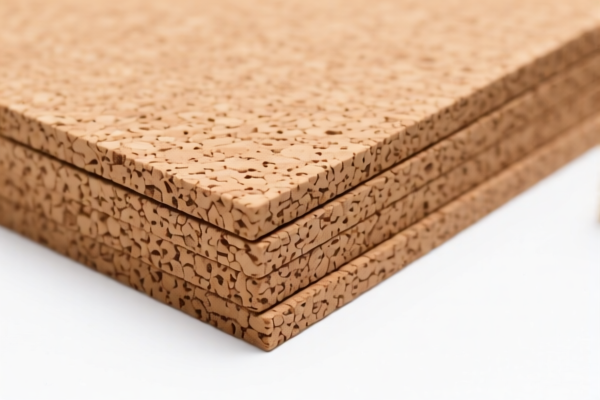
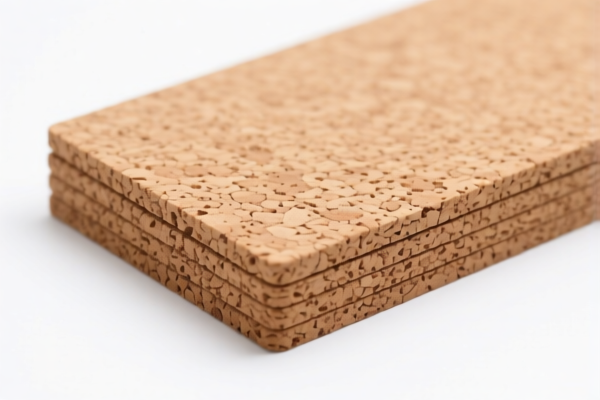
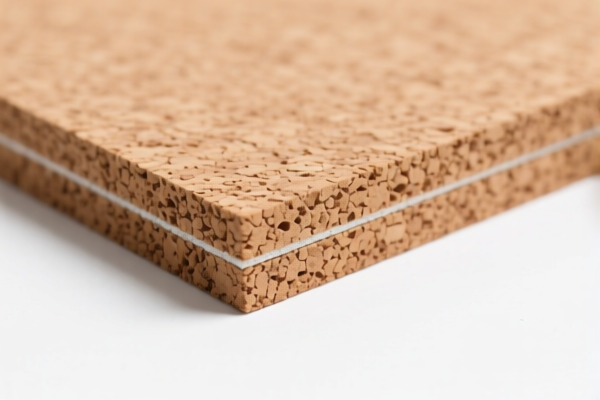
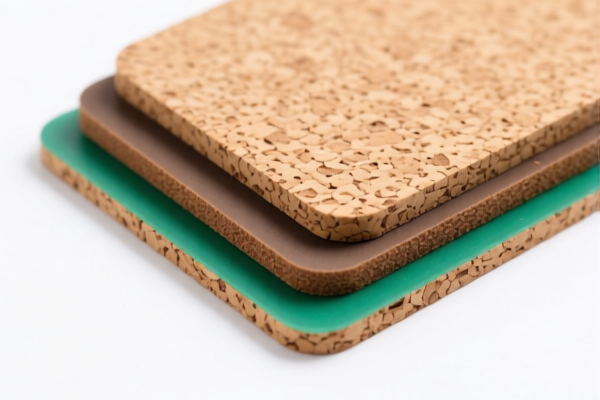
AI Analysis
🛡️ Vulcanized Cork Rubber Boards: HS Code Classification & Customs Clearance Guide (US Market)
🌐 HS Code Reference & Customs Strategy | 2026 Latest Tariff Analysis | Professional Clearance Protocol
📌 I. Product Definition & Classification: What Exactly is "Vulcanized Cork Rubber Board"?
Vulcanized Cork Rubber Boards are composite industrial materials made from rubber particles mixed with cork granules, vulcanized under heat and pressure. They are widely used for sealing, gasketing, shock absorption, and insulation in automotive, construction, and machinery applications.
In international trade, this product is primarily classified based on its shape (Board vs. Other) and specific function (Sealing vs. General Use). The critical distinction lies in whether the product is strictly a "board" (Chapter 40 heading 4008) or an "other article of rubber" (Chapter 40 heading 4016).
⚠️ Key Distinction Point: - If the product is a flat, continuous sheet or plate intended for general use → Classified under 4008 (Plates, Sheets, Rods). - If the product is cut into specific shapes (like seals, gaskets) or belongs to "other rubber articles" → Classified under 4016 (Other articles of vulcanized rubber).
📦 II. HS Code Classification Details (2026 Latest Tariff Authority)
| HS Code | Product Description | Specific Attribute | Tax Rate |
|---|---|---|---|
4008.21.00.00 |
Vulcanized rubber plates, sheets, strip, rods and profile shapes | Shape: Board/Plate | 35.0% |
4008.11.10.00 |
Vulcanized rubber plates, sheets, strip, rods and profile shapes | Shape: Board/Plate | 35.0% |
4016.99.60.50 |
Other vulcanized rubber articles (not elsewhere specified) | Type: Other rubber articles | 37.5% |
4016.93.50.10 |
Vulcanized cork rubber sealing strips | Function: Sealing Piece | 37.5% |
4016.93.10.10 |
Other sealing articles of vulcanized rubber | Function: Other Seals | 37.5% |
🔍 Critical Note: - 4008.21/4008.11: These codes cover raw boards/plates. If you are importing continuous rolls or large sheets for further cutting, use these. - 4016.93/4016.99: These codes cover finished articles or specialized seals. If the board is pre-cut into gaskets or seals, it falls here. - Tax Difference: The "Board" classification (4008) has a lower base rate (0%) compared to "Other Articles" (4016) which has a 2.5% base rate, leading to different total liabilities.
💰 III. 2026 Latest Tariff Rate Breakdown (Including Supplementary Taxes)
✅ Applicable Country: United States (US) ✅ Origin: China (CN) ✅ Effective Time: From November 10, 2025 (inclusive)
🎯 1. 4008.21.00.00 & 4008.11.10.00 —— Vulcanized Rubber Boards (Raw/General)
| Item | Content |
|---|---|
| Base Tariff | 0.0% (ad valorem) |
| USITC Supplementary Tax | +25.0% (Section 301 Tariff) |
| 122 Clause Tariff | +10.0% (Section 122 Tariff) |
| Total Tax Rate | 35.0% |
| Tax Calculation | CIF Value × 35% |
| De Minimis Eligibility | ❌ No (deny_de_minimis) |
| Legal Basis Path | USITC:4008.21.00.00 → FOOTNOTE:301 → SECTION122:122 |
📌 Explanation: - "Base Tariff 0%": Under normal MFN (Most Favored Nation) treatment, rubber plates are duty-free. - "Supplementary Tax 25%": This is the standard Section 301 tariff applied to most Chinese rubber products. - "122 Clause Tariff 10%": This is an additional administrative tariff imposed on specific Chinese goods. - Total 35%: This is a significant cost factor. Importers must budget for this high duty burden.
🎯 2. 4016.99.60.50 —— Other Vulcanized Rubber Articles (General)
| Item | Content |
|---|---|
| Base Tariff | 2.5% (ad valorem) |
| USITC Supplementary Tax | +25.0% (Section 301 Tariff) |
| 122 Clause Tariff | +10.0% (Section 122 Tariff) |
| Total Tax Rate | 37.5% |
| Tax Calculation | CIF Value × 37.5% |
| De Minimis Eligibility | ❌ No (deny_de_minimis) |
| Legal Basis Path | USITC:4016.99.60.50 → FOOTNOTE:301 → SECTION122:122 |
📌 Note: - Although the base rate is only 2.5%, the addition of 25% and 10% makes it more expensive than the "Board" category. - This code is used if the product is considered an "article" rather than a "plate/sheet."
🎯 3. 4016.93.50.10 & 4016.93.10.10 —— Vulcanized Cork Rubber Sealing Pieces/Seals
| Item | Content |
|---|---|
| Base Tariff | 2.5% (ad valorem) |
| USITC Supplementary Tax | +25.0% (Section 301 Tariff) |
| 122 Clause Tariff | +10.0% (Section 122 Tariff) |
| Total Tax Rate | 37.5% |
| Tax Calculation | CIF Value × 37.5% |
| De Minimis Eligibility | ❌ No (deny_de_minimis) |
| Legal Basis Path | USITC:4016.93.* → FOOTNOTE:301 → SECTION122:122 |
📌 Important: - If your product is specifically marketed as a gasket or seal, it falls under heading 4016.93. - The tax rate is identical to general rubber articles (37.5%), but the classification is stricter. Misdeclaring a seal as a board (35%) could lead to customs penalties.
🛠️ IV. Customs Clearance Practical Advice (Avoid Pitfalls)
✅ 1. Document Checklist (Mandatory)
| Document | Required | Description |
|---|---|---|
| ✅ Product Specification Sheet | ✔️ | Must specify material composition (Rubber % + Cork %), hardness, thickness. |
| ✅ Material Safety Data Sheet (MSDS) | ✔️ | For chemical safety compliance. |
| ✅ Commercial Invoice | ✔️ | Must clearly state "Vulcanized Rubber Board" or "Sealing Gasket," NOT just "Rubber." |
| ✅ Packing List | ✔️ | Detail weight, dimensions, and quantity. |
| ✅ Certificate of Origin (CO) | ✔️ | Proof of Chinese origin is mandatory for tariff calculation. |
✅ 2. Declaration Tips (Key Mnemonics)
🔥 "Board is 4008, Seal is 4016; Don't Mix Them Up!"
| Scenario | Correct Declaration | Wrong Practice |
|---|---|---|
| Large flat sheets/rolls for cutting | 4008.21.00.00 or 4008.11.10.00 |
Declare as "Gasket" → Higher Tax (37.5%) |
| Pre-cut rubber gaskets/seals | 4016.93.50.10 or 4016.93.10.10 |
Declare as "Board" → Customs Rejection/Penalty |
| Mixed shipment (Board + Seals) | Separate Lines in Invoice | Combine into one line → Risk of whole shipment audit |
✅ 3. Special Handling
| Situation | Handling Suggestion |
|---|---|
| Cork Content | If cork content is very high, emphasize "Cork Rubber" in description to avoid misclassification as pure rubber. |
| Customs Inspection | Keep samples ready. Customs may test for vulcanization level and composition. |
| Tariff Engineering | If possible, import raw boards (4008) and cut them locally to save the 2.5% base rate difference, but ensure the final product description matches the import intent. |
🌍 V. Global Market Comparison (2026 Latest)
| Country/Region | Recommended HS Code | Tariff Rate | Certification Required | Remarks |
|---|---|---|---|---|
| 🇺🇸 USA | 4008.21.00.00 (Board) |
35.0% | None specific | High due to Section 301 + 122 |
| 🇨🇳 China | 4008.21.00.00 |
0% - 5% | N/A | Low tariff for domestic trade |
| 🇪🇺 EU | 4008.21.00 |
0% | REACH | No Section 301 equivalent |
| 🇬🇧 UK | 4008.21.00 |
0% | UKCA | Post-Brexit rules apply |
📌 Conclusion: - USA is the highest cost market for this product due to combined Section 301 and 122 tariffs. - EU/UK offer duty-free access, making them competitive markets for Chinese rubber products.
📌 VI. Common Mistakes & Pitfalls (Lessons Learned)
❌ Mistake 1: Declaring "Seals" as "Boards" to save 2.5% 👉 Consequence: Customs flags discrepancy in physical form → Fine + Back Taxes.
❌ Mistake 2: Ignoring the "122 Clause Tariff" 👉 Consequence: Underpayment of 10% → Delay in clearance + Interest.
❌ Mistake 3: Vague Description ("Rubber Mat") 👉 Consequence: Customs assigns default HS Code, possibly with higher duty or rejection.
✅ Correct Practice:
"Vulcanized Cork Rubber Board, Shape: Plate, Material: 60% Rubber 40% Cork, Hardness: 70 Shore A, Model: CRB-001"
🎯 VII. Conclusion: Precise Classification Saves Money!
🎯 Remember the Mnemonic:
🔹 "Board = 4008 (35%), Seal = 4016 (37.5%). Don't lie, don't hide!"
🔹 "35% vs 37.5% matters less than the 25% + 10% extra. Prepare for the hit!"
📌 Pro Tip: If your business volume is large, consider Advance Ruling from US Customs (CBP) to get a binding classification decision, preventing future disputes.
📣 Immediate Action:
📞 Contact a licensed customs broker + Provide product photos + Verify HS Code pre-shipment
🚀 Ensure smooth clearance, avoid delays, and protect your margins!
✨ Professional Clearance Starts with Accurate Classification!
💼 Every percentage point counts in cross-border trade!
Customer Reviews
About HS Code Classification
The Harmonized System (HS) is an internationally standardized nomenclature developed by the World Customs Organization (WCO) to classify traded products. Over 200 countries use the HS system as the basis for customs tariffs, trade statistics, and import/export regulations.
Each HS code follows a hierarchical structure:
- Chapter (2 digits) — Broad category of goods (e.g., Chapter 84: Machinery and Mechanical Appliances)
- Heading (4 digits) — More specific grouping within the chapter
- Subheading (6 digits) — Internationally standardized breakdown, used by all WCO member countries
- National subdivisions (8-10 digits) — Country-specific extensions for further classification, such as US HTSUS 10-digit codes
Correct HS code classification is essential for smooth customs clearance, accurate duty payment, and compliance with trade regulations. Misclassification can lead to customs delays, overpayment of duties, or penalties.
When importing from CN to US, the applicable tariff rates may include:
- Most-Favored-Nation (MFN) rate — The standard duty rate applied to WTO members
- General rate — Applied to countries without trade agreements
- Trade remedy duties — Additional tariffs such as Section 301 (anti-dumping), Section 232 (national security), or countervailing duties
The information provided on this page is for reference purposes only. For official classification, please consult with your local customs authority or a licensed customs broker.