Vulcanized Cork Rubber Industrial Sheets
CN → US| HS Code | Tariff Rate | Origin | Destination | Doc |
|---|---|---|---|---|
| 4008210000 | 35.0% | CN | US | Official Doc |
| 4008111000 | 35.0% | CN | US | Official Doc |
| 4016996050 | 37.5% | CN | US | Official Doc |
| 4016935010 | 37.5% | CN | US | Official Doc |
| 4016931010 | 37.5% | CN | US | Official Doc |
| 4504105000 | 35.0% | CN | US | Official Doc |
Product Images
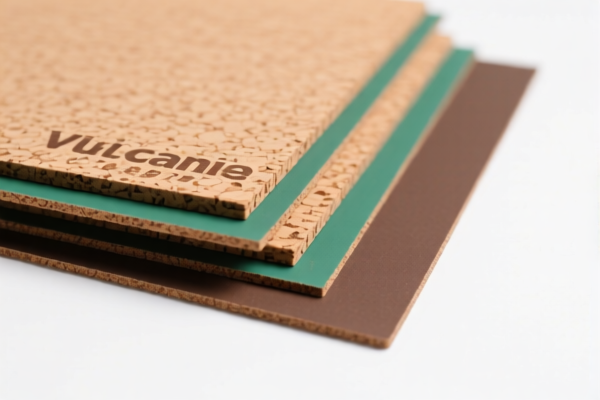
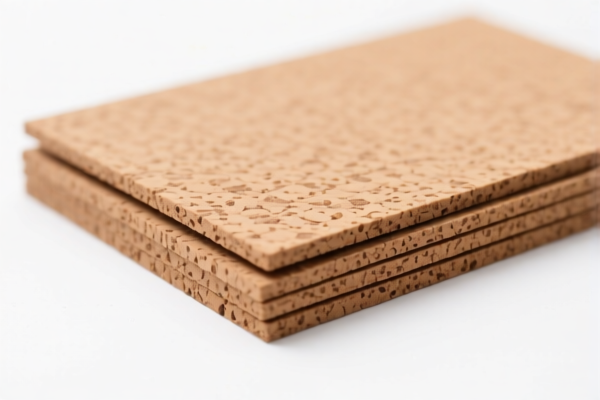
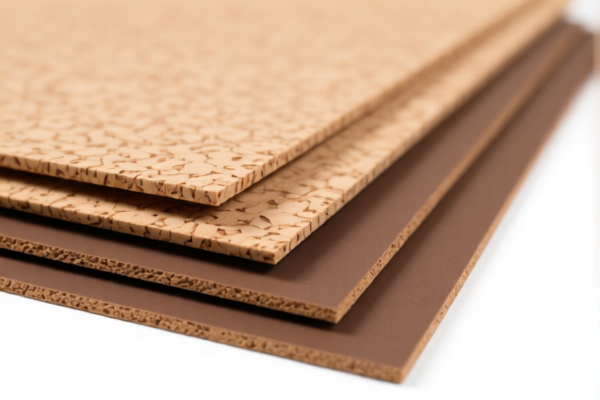
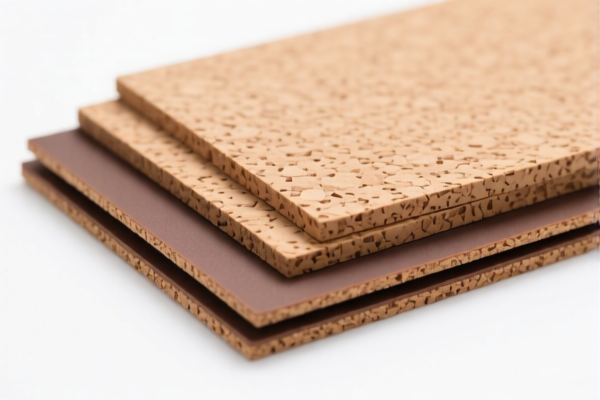
AI Analysis
🛡️ Vulcanized Cork Rubber Industrial Sheets (Sulfur-Cured Rubber)
🌐 HS Code Classification & Customs Clearance Guide | 2026 Latest Tariff Analysis | Professional Compliance Strategy
📌 I. Product Definition: What Exactly Are You Shipping?
Vulcanized Cork Rubber Sheets are composite industrial materials consisting of rubber particles bound together with a vulcanized rubber binder, often containing cork dust or granules for elasticity and damping properties. In international trade, these are critical for sealing, gasketing, vibration dampening, and insulation.
However, the critical distinction in classification lies in the form factor and specific use:
1. Raw Sheets/Plates (Flat Products):
If the material is in the form of simple plates, sheets, or strips without being cut into specific shapes for a particular machine, it generally falls under Chapter 40 headers related to plates/sheets.
2. Specific Sealing Parts (Articles of Rubber):
If the material is cut into gaskets, seals, or specific shapes (even if flat) intended for immediate installation as a sealing component, it may fall under "Other articles of vulcanized rubber other than hard rubber."
⚠️ Key Distinction Point:
- If it is a generic sheet used for further processing or general padding → Classify under 4008.
- If it is a finished sealing piece (e.g., "Cork Rubber Seal Gasket") or classified as a specific "other article" → Classify under 4016.
📦 II. HS Code Classification Details (2026 Latest Tariff Cross-Reference)
Based on the provided data, here is the breakdown for Vulcanized Cork Rubber Industrial Sheets:
| HS Code | Product Description | Application Scenario | Key Classification Logic |
|--------|--------------------------|--------------------------|
| 4008.21.00.00 | Vulcanized Rubber Plates/Sheets (Non-cellular) | Standard industrial rubber sheets, base layers, general padding | Generic form; "Plate/Sheet" definition |
| 4008.11.10.00 | Vulcanized Rubber Plates/Sheets (Cellular/Expanded) | Cork-rubber composites often have cellular structures; used for damping | Cellular/Expanded structure logic |
| 4016.99.60.50 | Other Vulcanized Rubber Articles | General purpose cork rubber sheets not fitting specific plate codes; "Other" category | Catch-all for rubber articles |
| 4016.93.50.10 | Vulcanized Cork Rubber Sealing Sheets | Specifically identified as sealing material in sheet form | Explicitly mentions "Sealing Sheet" |
| 4016.93.10.10 | Other Vulcanized Rubber Sealing Parts | Sealing gaskets, rings, or specific shapes | Explicitly mentions "Sealing Parts" |
🔍 Critical Reminder:
- If your product is simply "Cork Rubber Sheet" without specific sealing contours, 4008 codes are often safer for raw materials.
- If the product is marketed as "Sealing Gaskets" or "Insulation Seals", customs may prefer 4016 codes.
- Do not mix "Sheet" (4008) and "Sealing Part" (4016) in the same shipment without clear differentiation to avoid misclassification penalties.
💰 III. 2026 Latest Tariff Rate Breakdown (Including Surcharges)
✅ Applicable Country: United States (US)
✅ Origin: China (CN)
✅ Effective Date: Ongoing (Includes 301 Tariffs & Section 122 Tariffs)
All codes listed below carry significant additional duties due to US-China trade policies.
🎯 1. 4008.21.00.00 & 4008.11.10.00 – Rubber Plates/Sheets
| Item | Detail |
|---|---|
| Base Tariff | 0.0% (Ad Valorem) |
| Section 301 Surcharge | +25.0% (USITC Additional Duty) |
| Section 122 Tariff | +10.0% (Specific to certain rubber articles from China) |
| Total Effective Tax Rate | 35.0% |
| Tax Calculation | CIF Value × 35% |
| De Minimis Exemption? | ❌ NO (Not eligible for Section 321 de minimis) |
| Legal Basis Path | USITC:4008.21.00.00 → SECTION301:Footnote 9903.88.01 → SECTION122 |
📌 Explanation:
- The Base Rate is 0%, but the 35% total tax is driven entirely by punitive tariffs. - Section 301 (25%) applies to most Chinese rubber goods. - Section 122 (10%) applies specifically to certain rubber articles. - Total = 35%. This is a high-cost classification.
🎯 2. 4016.99.60.50 – Other Rubber Articles
| Item | Detail |
|---|---|
| Base Tariff | 2.5% (Ad Valorem) |
| Section 301 Surcharge | +25.0% |
| Section 122 Tariff | +10.0% |
| Total Effective Tax Rate | 37.5% |
| Tax Calculation | CIF Value × 37.5% |
| De Minimis Exemption? | ❌ NO |
| Legal Basis Path | USITC:4016.99.60.50 → SECTION301 → SECTION122 |
📌 Explanation:
- This code has a higher base rate (2.5%) than the 4008 series. - Total = 37.5%. This is the highest cost option in this dataset.
🎯 3. 4016.93.50.10 & 4016.93.10.10 – Sealing Sheets/Parts
| Item | Detail |
|---|---|
| Base Tariff | 2.5% (Ad Valorem) |
| Section 301 Surcharge | +25.0% |
| Section 122 Tariff | +10.0% |
| Total Effective Tax Rate | 37.5% |
| Tax Calculation | CIF Value × 37.5% |
| De Minimis Exemption? | ❌ NO |
| Legal Basis Path | USITC:4016.93.xxxx → SECTION301 → SECTION122 |
📌 Explanation:
- Sealing products are often viewed as "finished articles" rather than raw materials. - Total = 37.5%. Same as the "Other Articles" category. - Warning: Misclassifying a simple sheet as a "sealing part" to avoid a different code is risky if the product is not explicitly shaped for sealing.
🛠️ IV. Customs Clearance Practical Advice (Pitfall Avoidance)
✅ 1. Documentation Checklist (Non-Negotiable)
| Document | Required | Purpose |
|---|---|---|
| ✅ Product Specification Sheet | ✔️ | Must specify: Material (Vulcanized Cork Rubber), Form (Sheet/Plate), Density, Thickness, Hardness. |
| ✅ Commercial Invoice | ✔️ | Must clearly state: "Vulcanized Rubber Sheets" or "Cork Rubber Sealing Sheets". Avoid vague terms like "Rubber Products". |
| ✅ Packing List | ✔️ | Detail weight per sheet, total sheets, and packaging type. |
| ✅ Certificate of Origin (CO) | ✔️ | Essential for determining origin (China). If not from China, tariffs may differ. |
| ✅ Material Safety Data Sheet (MSDS) | ✔️ | Required for rubber products to verify no hazardous restricted substances. |
| ✅ Photos of Product | ✔️ | Show the sheet's texture, cross-section (if cellular), and any markings. |
✅ 2. Classification Strategy (Key Mnemonic)
🔥 "Raw Sheet = 4008, Finished Seal = 4016, Tax 35% or 37.5%"
| Scenario | Recommended HS Code | Risk Level |
|---|---|---|
| Generic Rubber Sheet (for cutting later) | 4008.21.00.00 or 4008.11.10.00 |
🟡 Medium (Lowest tax at 35%) |
| Pre-cut Gaskets/Seals | 4016.93.50.10 |
🟠 High (Highest tax at 37.5%) |
| Unclear/General Use | 4016.99.60.50 |
🟠 High (Highest tax at 37.5%) |
📌 Pro Tip:
- If the product is a generic sheet that the buyer will cut themselves, insist on 4008. It saves 2.5% base tax compared to 4016. - If the product is already cut into specific sealing shapes, you must use 4016. Misdeclaring a shaped gasket as a "sheet" (4008) is misclassification and leads to seizures.
✅ 3. Special Considerations
| Situation | Action |
|---|---|
| Cellular vs. Non-Cellular | Check if the cork rubber is cellular (expanded). If yes, 4008.11.10.00 is more accurate than 4008.21.00.00. Both have the same tax, but accuracy prevents audits. |
| Section 122 Applicability | Verify if the specific rubber article is subject to the 10% Section 122 tariff. Most standard rubber sheets/seals from China are included. |
| De Minimis (Section 321) | DO NOT attempt to use Section 321 (under $800) for these goods. They are explicitly excluded from de minimis treatment due to the 301 and 122 tariffs. |
🌍 V. Global Market Comparison (2026)
| Country/Region | Recommended HS Code | Approx. Tariff (China Origin) | Notes |
|---|---|---|---|
| 🇺🇸 USA | 4008.21.00.00 or 4016.93.50.10 |
35% - 37.5% | High punitive tariffs (301 + 122) |
| 🇨🇳 China | 4008.21.00.00 or 4016.93.50.10 |
~5-8% | Import duties are low; VAT applies |
| 🇪🇺 EU | 4008.21.00.00 or 4016.93.50.10 |
~0-3% | No punitive tariffs; VAT applies |
| 🇦🇺 Australia | 4008.21.00.00 or 4016.93.50.10 |
~5% | No punitive tariffs |
📌 Conclusion:
- The USA is the most expensive market for these goods due to Section 301 and Section 122 tariffs. - For US imports, cost optimization is critical. Consider sourcing from non-China origins (e.g., Vietnam, Mexico) if possible, as they may be exempt from these specific tariffs.
📌 VI. Common Mistakes & Pitfalls (Blood Lessons)
❌ Mistake 1: Declaring "Sealing Gaskets" as "Rubber Sheets" (4008) to avoid higher base rates.
👉 Consequence: Customs audit finds physical mismatch → Penalty + Back Taxes + Seizure.
❌ Mistake 2: Ignoring Section 122 Tariffs.
👉 Consequence: Underpaying by 10% → Late fees and interest.
❌ Mistake 3: Using vague descriptions like "Rubber Parts" on the invoice.
👉 Consequence: Customs assigns a higher, unspecified code → Delays + Additional Duty Assessment.
❌ Mistake 4: Attempting De Minimis (under $800) shipments.
👉 Consequence: Rejected at border due to exclusion rules.
✅ Correct Practice:
"Vulcanized Cork Rubber Sheet, 5mm Thick, Non-Cellular, Industrial Grade, Model XYZ"
OR
"Vulcanized Cork Rubber Sealing Gasket, Pre-Cut, Circular, Model ABC"
🎯 VII. Conclusion: Professional Declaration, Cost Control, Efficiency!
🎯 Remember the Golden Rules:
🔹 "Raw Sheet = 4008 (35%), Finished Seal = 4016 (37.5%)"
🔹 "No De Minimis for China Rubber"
🔹 "Accurate Description Saves Thousands"
📌 Pro Tip:
If you are importing large volumes, consider applying for an HTS Exclusion under Section 301 (if eligible) or restructure your supply chain to include substantial transformation in a third country (e.g., Vietnam) to avoid US punitive tariffs.
📣 Immediate Action:
📞 Consult a licensed customs broker
📄 Prepare precise product specs
🚀 Ensure compliant classification to avoid costly delays!
✨ Professional Clearance, Starting with Accurate Classification!
💼 Every Dollar Saved is a Dollar Earned!
Customer Reviews
About HS Code Classification
The Harmonized System (HS) is an internationally standardized nomenclature developed by the World Customs Organization (WCO) to classify traded products. Over 200 countries use the HS system as the basis for customs tariffs, trade statistics, and import/export regulations.
Each HS code follows a hierarchical structure:
- Chapter (2 digits) — Broad category of goods (e.g., Chapter 84: Machinery and Mechanical Appliances)
- Heading (4 digits) — More specific grouping within the chapter
- Subheading (6 digits) — Internationally standardized breakdown, used by all WCO member countries
- National subdivisions (8-10 digits) — Country-specific extensions for further classification, such as US HTSUS 10-digit codes
Correct HS code classification is essential for smooth customs clearance, accurate duty payment, and compliance with trade regulations. Misclassification can lead to customs delays, overpayment of duties, or penalties.
When importing from CN to US, the applicable tariff rates may include:
- Most-Favored-Nation (MFN) rate — The standard duty rate applied to WTO members
- General rate — Applied to countries without trade agreements
- Trade remedy duties — Additional tariffs such as Section 301 (anti-dumping), Section 232 (national security), or countervailing duties
The information provided on this page is for reference purposes only. For official classification, please consult with your local customs authority or a licensed customs broker.