Vulcanized Rubber Tubes with Fittings, Other
CN → US| HS Code | Tariff Rate | Origin | Destination | Doc |
|---|---|---|---|---|
| 4009120050 | 20.0% | CN | US | Official Doc |
| 4009420050 | 20.0% | CN | US | Official Doc |
| 4016935020 | 37.5% | CN | US | Official Doc |
| 4016990300 | 38.0% | CN | US | Official Doc |
| 4016935010 | 37.5% | CN | US | Official Doc |
Product Images
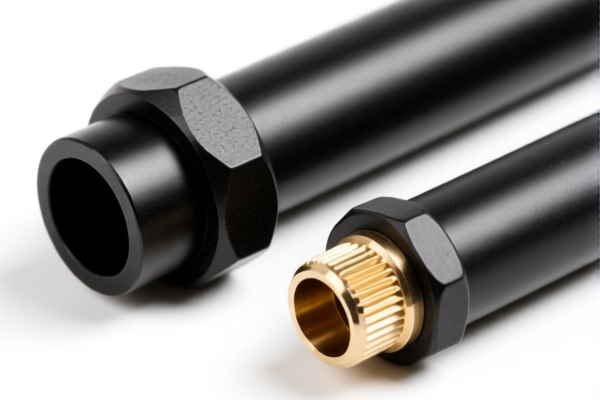
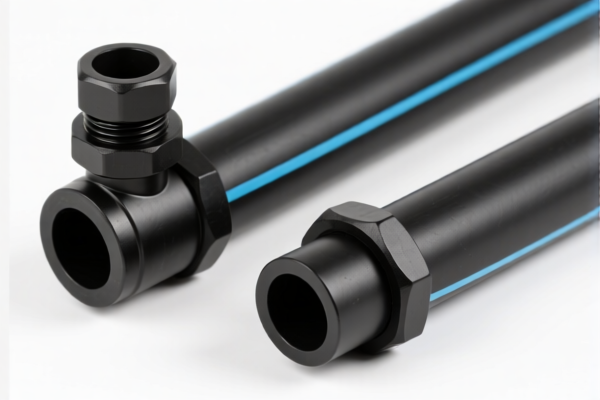
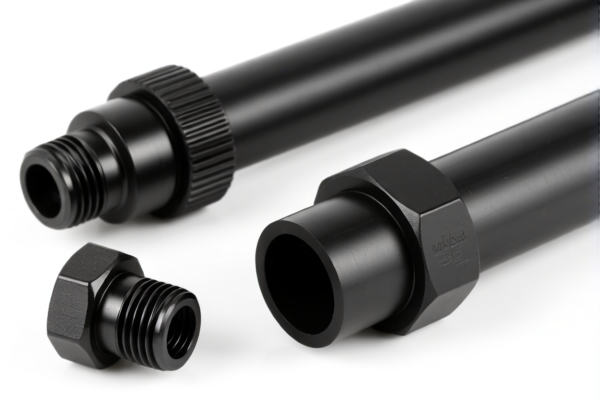

AI Analysis
🛢️ Vulcanized Rubber Tubes with Fittings, Other (非硬橡胶硫化橡胶管带配件)
🌐 HS Code Reference & Customs Clearance Guide | 2026 Latest Tariff Analysis | Professional Clearance Strategy
📌 I. Product Definition & Classification: Do You Really Understand "Rubber Tubing with Fittings"?
Vulcanized Rubber Tubes with Fittings are essential components in fluid, gas, and pneumatic transmission systems. In international trade, these are not a single entity but are strictly divided based on manufacturing method, construction, and application.
The core distinction lies in whether the tubing is reinforced (for high pressure) or basic, and whether it is part of a mechanical sealing component or a simple conduit.
⚠️ Key Classification Logic:
- Group 4009: Flexible tubes made of vulcanized rubber other than hard rubber, with or without their fittings.
- Subheading 4009.1x: Tubes of circular cross-section, reinforced only by textile or other flat material embedded in the wall.
- Subheading 4009.4x: Tubes of circular cross-section, reinforced with metal or other material (not flat) embedded in the wall.
- Group 4016: Other articles of vulcanized rubber other than hard rubber.
- Subheading 4016.93: Sealing gaskets and other seals, of cellular rubber.
- Subheading 4016.99: Other rubber articles.
📦 II. HS Code Classification Details (2026 Latest Tariff Authority Comparison)
| HS Code | Product Description | Application Scenario | Reinforcement Type | Key Feature |
|---|---|---|---|---|
4009.12.00.50 |
Tubes of circular cross-section, vulcanized rubber other than hard rubber, of a kind used as parts of machines or appliances | General industrial rubber hoses (low/medium pressure) | Reinforced by textile/flat material | Basic rubber tubing with fittings |
4009.42.00.50 |
Tubes of circular cross-section, vulcanized rubber other than hard rubber, of a kind used as parts of machines or appliances | High-pressure industrial hoses | Reinforced by metal/other material (not flat) | Heavy-duty hoses with fittings |
4016.93.50.20 |
Rubber gaskets and other seals, cellular rubber | Sealing components, O-rings, custom seals | Not applicable (Seals) | Classified as Seals, not tubes |
4016.99.03.00 |
Other articles of vulcanized rubber other than hard rubber | Miscellaneous rubber parts, non-sealing, non-tube | N/A | Catch-all for other rubber accessories |
4016.93.50.10 |
Other gaskets and seals, cellular rubber | Custom-shaped sealing rings | Not applicable (Seals) | Specialized sealing products |
🔍 Critical Warning:
- 4009 Codes are for tubing/hoses (conduits for fluids/gases).
- 4016.93 Codes are for seals/gaskets (static or dynamic sealing elements).
- If your product is a tube used for flow, do NOT classify it under 4016.93.
- If your product is a tube used as a seal (e.g., O-ring tube), it may fall under 4016.93, but this is rare and requires expert justification.
💰 III. 2026 Latest Tariff Rate Breakdown (Including Surtaxes & Policy Add-ons)
✅ Applicable Country: United States (US)
✅ Country of Origin: China (CN)
✅ Effective Date: From November 10, 2025 (including subsequent imports)
🎯 1. 4009.12.00.50 & 4009.42.00.50 —— Rubber Tubing with Fittings
| Item | Content |
|---|---|
| Base Tariff Rate | 2.5% (ad valorem) |
| Section 301 Surtax | +7.5% (from USITC Footnote 9903.88.01, List 4B) |
| IEEPA Surcharge | +10% (for Chinese/HK products, effective Nov 10, 2025) |
| Total Tariff Rate | 20.0% |
| Tax Calculation | CIF Value × 20% |
| De Minimis Exemption? | ❌ No (deny_de_minimis) |
| Legal Basis Path | IEEPA:9903.01.25 → IEEPA:9903.01.24 → USITC:4009.12.00.50 → FOOTNOTE:9903.88.01 |
📌 Explanation:
- Base 2.5%: Standard MFN rate for rubber hoses.
- 301 Surtax 7.5%: Applied to specific rubber products under Trade Action 301.
- IEEPA 10%: Additional surcharge under International Emergency Economic Powers Act for Chinese-origin rubber goods.
- Total 20%: This is the standard high-risk rate for rubber hoses.
🎯 2. 4016.93.50.20 & 4016.93.50.10 —— Rubber Seals/Gaskets (Cellular Rubber)
| Item | Content |
|---|---|
| Base Tariff Rate | 2.5% (ad valorem) |
| Section 301 Surtax | +25.0% (from USITC Footnote 9903.88.01, List 3/4) |
| IEEPA Surcharge | +10% (for Chinese/HK products, effective Nov 10, 2025) |
| Total Tariff Rate | 37.5% |
| Tax Calculation | CIF Value × 37.5% |
| De Minimis Exemption? | ❌ No (deny_de_minimis) |
| Legal Basis Path | IEEPA:9903.01.25 → IEEPA:9903.01.24 → USITC:4016.93.50.20 → FOOTNOTE:9903.88.01 |
📌 Critical Alert:
- Misclassification Danger: If you ship rubber hoses but declare them as seals (4016.93), you might face an extra 17.5% tax burden if incorrectly audited.
- However, if you correctly classify hoses as4009, you pay 20%.
- If you incorrectly classify hoses as4016.93(thinking it's cheaper), you face 37.5% + potential penalties for false declaration.
- Conclusion: Correct classification saves 17.5% here.
🎯 3. 4016.99.03.00 —— Other Rubber Articles
| Item | Content |
|---|---|
| Base Tariff Rate | 3.0% (ad valorem) |
| Section 301 Surtax | +25.0% |
| IEEPA Surcharge | +10% |
| Total Tariff Rate | 38.0% |
| Tax Calculation | CIF Value × 38.0% |
| De Minimis Exemption? | ❌ No (deny_de_minimis) |
| Legal Basis Path | IEEPA:9903.01.25 → IEEPA:9903.01.24 → USITC:4016.99.03.00 → FOOTNOTE:9903.88.01 |
📌 Note:
- This is the highest tax bracket among the listed codes.
- Only applies if the product is neither a tube (4009) nor a seal (4016.93).
- Example: Rubber feet, rubber mats, or non-functional decorative rubber parts.
🛠️ IV. Customs Clearance Practical Advice (Battlefield Pitfall Avoidance Guide)
✅ 1. Document Preparation Checklist (Missing = Delay)
| Document | Required | Description |
|---|---|---|
| ✅ Product Specification Sheet | ✔️ | Must specify: Inner/Outer Diameter, Wall Thickness, Material (e.g., NBR, EPDM), Reinforcement Type (Textile vs. Steel) |
| ✅ Circuit/Structure Diagram | ✔️ | Show how fittings are attached (e.g., molded-in vs. clamped) |
| ✅ Product Photos (Including Labels) | ✔️ | Clear images of cross-section, fittings, and any pressure ratings |
| ✅ Third-Party Test Report | ✔️ | Pressure test, chemical resistance, temperature range |
| ✅ Commercial Invoice | ✔️ | Must state: "Vulcanized Rubber Hoses with Fittings, For Fluid Transfer" |
| ✅ Certificate of Origin (CO) | ✔️ | If not China-origin, to avoid surtax |
| ✅ Packing List | ✔️ | Detail contents: Tubes, Fittings, Connectors |
✅ 2. Declaration Tips (Key Mantra)
🔥 "Hoses go to 4009, Seals go to 4016.93. Don't mix them up or pay 38%!"
| Scenario | Correct Declaration | Wrong Action | Consequence |
|---|---|---|---|
| Standard Rubber Hose | 4009.12.00.50 or 4009.42.00.50 |
Declare as 4016.99 |
Pay 38% instead of 20% → Extra 18% cost! |
| Rubber Seal/Gasket | 4016.93.50.20 |
Declare as 4009 |
Risk of audit, potential penalty for false classification |
| Hose Assembly (Tube + Fittings) | 4009.12.00.50 |
Split into "Tube" + "Metal Fitting" | Metal fittings might have different duty, but assembly rule applies → Keep as one unit |
| Non-Rubber Fittings on Rubber Tube | 4009.12.00.50 |
Separate declaration | GRI 3(b) says assembly is classified as the essential character component (rubber) |
✅ 3. Special Case Handling
| Situation | Handling Advice |
|---|---|
| OEM Custom Hoses | Provide customer specs + drawings. Avoid generic terms like "rubber tube". |
| Hoses for Automotive | Still 4009. Do not claim automotive exemption unless specific HS code allows. |
| Hoses for Medical Use | Still 4009. If sterilized, still 4009 unless packaged for retail as a kit. |
| Hoses with Metal Fittings | Classified as 4009. The rubber is the essential material. |
🌍 V. Global Market Customs Clearance Comparison (2026 Latest)
| Country/Region | Recommended HS Code | Tariff | Certification | Note |
|---|---|---|---|---|
| 🇺🇸 USA | 4009.12.00.50 / 4009.42.00.50 |
20% (China) | N/A | 37.5%-38% if misclassified as seals/other |
| 🇨🇳 China | 4009.12.00.50 / 4009.42.00.50 |
5% | CCC (if applicable) | No surtax |
| 🇪🇺 EU | 4009.31 / 4009.41 |
3% | REACH + RoHS | No additional surtax |
| 🇬🇧 UK | 4009.31 / 4009.41 |
3% | UKCA + RoHS | Post-Brexit rules apply |
| 🇯🇵 Japan | 4009.31 / 4009.41 |
3% | PSE (if electrical) | No surtax |
📌 Conclusion:
- USA has the highest duty burden due to IEEPA + Section 301 surtaxes.
- Misclassification is the biggest risk: Paying 38% instead of 20% is a 90% tax increase.
- Supply Chain Advice: Consider sourcing from Vietnam, Mexico, or Thailand to avoid IEEPA surtaxes (if eligible).
📌 VI. Common Mistakes & Pitfall Avoidance (Blood-Test Lessons)
❌ Mistake 1: Declaring "Rubber Hoses" as "Seals" (4016.93) to save money
👉 Result: If audited, customs will reclassify to 4009 (20%) vs. 4016.93 (37.5%). Wait, 4009 is cheaper!
👉 Correction: Actually, 4009 is cheaper (20%) than 4016.93 (37.5%). So, misclassifying as seals costs more. Do not do this.
❌ Mistake 2: Splitting "Hose + Fittings" into two lines
👉 Result: Fittings might be classified as metal parts (different duty), but GRI 3(b) requires classifying the set as the essential character (rubber hose). Splitting can lead to penalties for incorrect valuation.
❌ Mistake 3: Ignoring "Reinforcement Type"
👉 Result: 4009.12 (Textile) vs. 4009.42 (Metal). If you declare textile but it's metal, customs may reclassify, causing delay.
❌ Mistake 4: Not stating "Vulcanized" in description
👉 Result: Customs may doubt if it's raw rubber. Always specify "Vulcanized Rubber".
✅ Correct Approach:
"Vulcanized Rubber Hose, 2-inch ID, 100 PSI, Reinforced with Textile, with Brass Fittings, For Water Transfer, Model ABC"
🎯 VII. Conclusion: Professional Declaration, Save Time, Cut Costs!
🎯 Remember the Mantra:
🔹 "Hoses are 4009, Seals are 4016.93. Hoses are 20%, Seals are 37.5%. Don't mix them or pay 38%!"
🔹 "HS Code decides destiny, tariff difference is huge, one mistake costs thousands!"
📌 Pro Tip:
If your rubber hoses are originating from Vietnam, Mexico, Thailand, or Malaysia, you may qualify for IEEPA Exemption, reducing the total tariff from 20% to 7.5% (or lower).
Recommendation: Apply for an Advance Ruling (Pre-classification) with US Customs (CBP) to confirm the exact HS code and surtax applicability.
📣 Act Now:
📞 Contact a professional customs broker + Provide product images + Apply for HS Code Pre-classification
🚀 Let your rubber hoses clear customs smoothly, escape high tariffs, and double your profits!
✨ Professional Customs Clearance Starts with Precise Classification!
💼 Every cent of your cost deserves precise calculation!
Customer Reviews
About HS Code Classification
The Harmonized System (HS) is an internationally standardized nomenclature developed by the World Customs Organization (WCO) to classify traded products. Over 200 countries use the HS system as the basis for customs tariffs, trade statistics, and import/export regulations.
Each HS code follows a hierarchical structure:
- Chapter (2 digits) — Broad category of goods (e.g., Chapter 84: Machinery and Mechanical Appliances)
- Heading (4 digits) — More specific grouping within the chapter
- Subheading (6 digits) — Internationally standardized breakdown, used by all WCO member countries
- National subdivisions (8-10 digits) — Country-specific extensions for further classification, such as US HTSUS 10-digit codes
Correct HS code classification is essential for smooth customs clearance, accurate duty payment, and compliance with trade regulations. Misclassification can lead to customs delays, overpayment of duties, or penalties.
When importing from CN to US, the applicable tariff rates may include:
- Most-Favored-Nation (MFN) rate — The standard duty rate applied to WTO members
- General rate — Applied to countries without trade agreements
- Trade remedy duties — Additional tariffs such as Section 301 (anti-dumping), Section 232 (national security), or countervailing duties
The information provided on this page is for reference purposes only. For official classification, please consult with your local customs authority or a licensed customs broker.