Vulcanized rubber gaskets
CN → US| HS Code | Tariff Rate | Origin | Destination | Doc |
|---|---|---|---|---|
| 4016950000 | 21.7% | CN | US | Official Doc |
| 9404299095 | 41.0% | CN | US | Official Doc |
| 4016996050 | 37.5% | CN | US | Official Doc |
| 4016910000 | 37.7% | CN | US | Official Doc |
| 9404210095 | 38.0% | CN | US | Official Doc |
Product Images
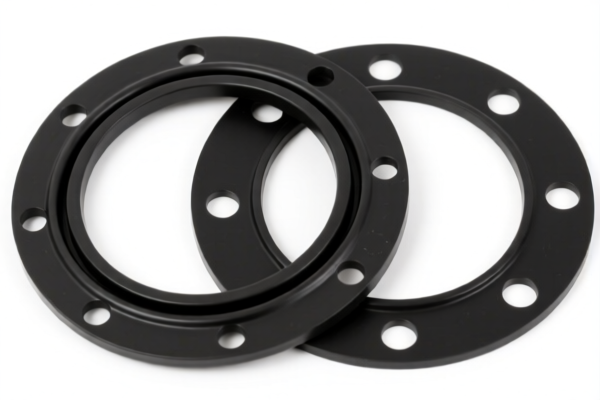
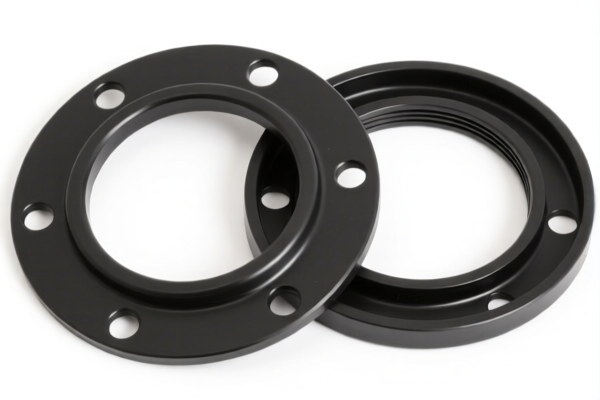
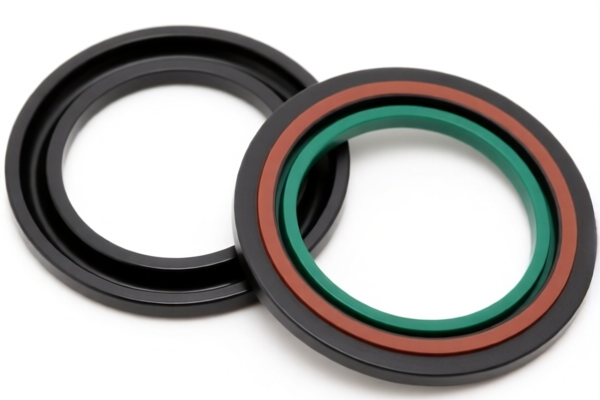
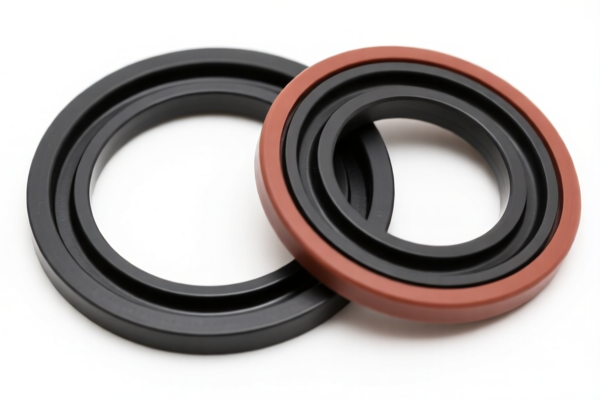
AI Analysis
🛡️ Vulcanized Rubber Gaskets (Seals)
🌐 HS Code Reference & Customs Clearance Guide | 2026 Latest Tariff Analysis | Professional Transit Strategy
📌 I. Product Definition & Classification: Do You Really Understand "Vulcanized Rubber Gaskets"?
Vulcanized rubber gaskets are critical sealing components used in industrial, automotive, plumbing, and machinery applications. In international trade, their classification depends heavily on two factors: 1. Material: Specifically "Vulcanized Rubber" (not plastic or other materials). 2. Form/Function: Whether it is an "inflatable" product, a "mat/pad," or a "general rubber article."
⚠️ Key Distinction Points:
- If the product is an inflatable item (e.g., inflatable seals, air dams) → Classify under Chapter 40.16 (Inflatable Articles).
- If the product is a flat sheet/pad/mat used for cushioning or insulation → Classify under Chapter 94.04 (Mattresses/Pads) or 40.16 (Other Rubber Articles).
- If the product is a complex shaped gasket/seal (O-rings, flange seals) that does not fit specific sub-categories → Classify under 40.16.99 (Other).
📦 II. HS Code Classification Details (2026 Latest Tariff Authority Comparison)
| HS Code | Product Description | Application Scenario | Classification Basis |
|---|---|---|---|
4016.95.00.00 |
Other inflatable articles, of vulcanized rubber | Inflatable seals, air chambers, pneumatic components | ✅ Inflatable Form |
9404.29.90.95 |
Other materials (rubber) mattresses and padding; other articles | Rubber mats, padding sheets, cushioning pads | ✅ Pad/Mat Form |
4016.99.60.50 |
Other articles of vulcanized rubber | General rubber gaskets, seals, washers not elsewhere specified | ✅ General Rubber Article |
4016.91.00.00 |
Flooring and wall coverings, of cellular rubber | Rubber flooring mats, gym mats, anti-fatigue mats | ✅ Flooring/Floor Mat Form |
9404.21.00.95 |
Mattresses and padding, of cellular rubber or foam rubber | Foam-rubber pads, cellular rubber cushions | ✅ Cellular/Foam Rubber |
🔍 Critical Reminder:
- Do not misclassify complex mechanical seals as "mattresses" or "flooring" unless they are explicitly large, flat, and used for padding/flooring.
- Inflatable rubber items have a lower base tariff but may still face high additional duties.
- "Gaskets" that are simply shaped rubber rings typically fall under 4016.99, not "mattresses."
💰 III. 2026 Latest Tariff Rate Breakdown (Including Surtaxes & Policy Add-ons)
✅ Applicable Country: United States (US)
✅ Country of Origin: China (CN)
✅ Effective Date: Post-2025 (Current trade policy)
🎯 1. 4016.95.00.00 —— Inflatable Rubber Articles
| Item | Content |
|---|---|
| Base Tariff | 4.2% |
| Section 301 Surtax | +7.5% |
| Section 122 Tariff | +10% |
| Total Tariff | 21.7% |
| Tax Calculation | CIF Value × 21.7% |
| De Minimis Eligibility | ❌ No (Subject to high scrutiny) |
| Legal Basis Path | Base: 4016.95 → Surtax: 301(7.5%) → 122: 10% |
📌 Explanation:
- This code applies if the gasket is inflatable (e.g., pneumatic seals).
- Lower total rate (21.7%) compared to other rubber articles due to a lower base tariff (4.2% vs. 2.5-6.0%).
- Still high, so cost calculation must include all surcharges.
🎯 2. 9404.29.90.95 —— Other Material Mattresses/Padding (Rubber)
| Item | Content |
|---|---|
| Base Tariff | 6.0% |
| Section 301 Surtax | +25.0% |
| Section 122 Tariff | +10% |
| Total Tariff | 41.0% |
| Tax Calculation | CIF Value × 41.0% |
| De Minimis Eligibility | ❌ No |
| Legal Basis Path | Base: 9404.29 → Surtax: 301(25%) → 122: 10% |
📌 Explanation:
- Only apply if the "gasket" is essentially a rubber pad/mattress (e.g., large anti-vibration rubber mats).
- Highest total rate (41.0%) due to the heavy 25% Section 301 surcharge.
- Avoid this code for standard mechanical gaskets to prevent overpayment.
🎯 3. 4016.99.60.50 —— Other Vulcanized Rubber Articles
| Item | Content |
|---|---|
| Base Tariff | 2.5% |
| Section 301 Surtax | +25.0% |
| Section 122 Tariff | +10% |
| Total Tariff | 37.5% |
| Tax Calculation | CIF Value × 37.5% |
| De Minimis Eligibility | ❌ No |
| Legal Basis Path | Base: 4016.99 → Surtax: 301(25%) → 122: 10% |
📌 Explanation:
- This is the most common code for standard rubber gaskets, seals, and washers that are not inflatable or flooring.
- Moderate rate (37.5%).
- Recommendation: Use this for standard O-rings, flange gaskets, and custom-shaped rubber seals.
🎯 4. 4016.91.00.00 —— Flooring/Wall Coverings (Cellular Rubber)
| Item | Content |
|---|---|
| Base Tariff | 2.7% |
| Section 301 Surtax | +25.0% |
| Section 122 Tariff | +10% |
| Total Tariff | 37.7% |
| Tax Calculation | CIF Value × 37.7% |
| De Minimis Eligibility | ❌ No |
| Legal Basis Path | Base: 4016.91 → Surtax: 301(25%) → 122: 10% |
📌 Explanation:
- Applies only if the product is marketed as flooring or wall covering (e.g., gym mats, industrial floor tiles).
- Rate (37.7%) is similar to4016.99.60.50, but classification risk is higher if misapplied.
- Do not use for small mechanical gaskets.
🎯 5. 9404.21.00.95 —— Cellular Rubber/Foam Pads
| Item | Content |
|---|---|
| Base Tariff | 3.0% |
| Section 301 Surtax | +25.0% |
| Section 122 Tariff | +10% |
| Total Tariff | 38.0% |
| Tax Calculation | CIF Value × 38.0% |
| De Minimis Eligibility | ❌ No |
| Legal Basis Path | Base: 9404.21 → Surtax: 301(25%) → 122: 10% |
📌 Explanation:
- For foam rubber or cellular rubber pads.
- Slightly higher (38.0%) than general rubber articles.
- Only use if the material is distinctly foam/cellular, not solid vulcanized rubber.
🛠️ IV. Customs Clearance Practical Advice (Real-World Pitfall Guide)
✅ 1. Preparation Checklist (Essential Documents)
| Document | Required | Notes |
|---|---|---|
| ✅ Product Specification Sheet | ✔️ | Must state: "Vulcanized Rubber," shape, dimensions, hardness (Shore A). |
| ✅ Material Composition Report | ✔️ | Confirm no plastic or silicone contamination (affects HS Code). |
| ✅ Product Photos (Clear Label) | ✔️ | Show O-ring, gasket, or pad shape. Avoid ambiguous terms like "seal." |
| ✅ Commercial Invoice | ✔️ | Description: "Vulcanized Rubber Gasket, Part No. XYZ, for Industrial Machinery." |
| ✅ Packing List | ✔️ | Clarify if items are loose or pre-packed in kits. |
✅ 2. Declaration Tips (Key Mantra)
🔥 “Material is Key, Shape is King, Inflatable vs. Solid, Tax Varies!”
| Scenario | Correct Declaration | Wrong Practice |
|---|---|---|
| Standard O-ring/Gasket | 4016.99.60.50 (Other Rubber Article) |
Misdeclare as 9404 (Mattress) → Higher Tax! |
| Inflatable Seal | 4016.95.00.00 (Inflatable Article) |
Misdeclare as solid rubber → Lower Base Tax but Risk of Audit |
| Large Rubber Mat | 9404.29.90.95 or 4016.91.00.00 |
Misdeclare as gasket → Possible Rejection if used for flooring |
| Foam Rubber Pad | 9404.21.00.95 |
Misdeclare as solid rubber → Minor discrepancy, but best to be precise |
✅ 3. Special Handling
| Situation | Handling Advice |
|---|---|
| OEM Custom Gaskets | Provide drawing + material spec. Do not use generic terms. |
| Mixed Shipments (Rubber + Plastic) | Declare separately. Rubber parts go to Ch. 40, Plastic to Ch. 39. |
| "Seal" vs. "Gasket" | Use "Gasket" or "Rubber Article" in description. Avoid vague "Seal." |
| High-Value Industrial Gaskets | Consider Advance Ruling to lock in 4016.99.60.50 and avoid duty disputes. |
🌍 V. Global Customs Comparison (2026 Latest)
| Country/Region | Recommended HS Code | Tariff Rate | Certification | Notes |
|---|---|---|---|---|
| 🇺🇸 USA | 4016.99.60.50 |
37.5% (CN Origin) | No special cert | High surtax! |
| 🇨🇳 China | 4016.99.60.50 |
2.5% | None | Low duty |
| 🇪🇺 EU | 4016.99.00 |
4.2% | REACH (Material) | No Section 301 |
| 🇦🇺 Australia | 4016.99.00 |
5.0% | None | Moderate duty |
| 🇯🇵 Japan | 4016.99.00 |
3.9% | JIS | Low duty |
📌 Conclusion:
- USA is the most expensive market for Chinese rubber goods due to 301 & 122 tariffs.
- EU/Japan/Australia have much lower tariffs (~4-5%), making them more cost-effective for rubber exports.
- Strategic Suggestion: If exporting to US, consider suppliers in Vietnam/Malaysia (subject to different rules) to mitigate 37.5%+ duties.
📌 VI. Common Errors & Pitfalls (Blood Lessons)
❌ Error 1: Declaring Solid Rubber Gaskets as 9404 (Mattresses)
👉 Consequence: Tax jumps from 37.5% to 41.0% → Overpayment!
❌ Error 2: Declaring Inflatable Seals as 4016.99 (Solid)
👉 Consequence: Base tax is higher (2.5% vs 4.2%), but audit risk if product is clearly inflatable → Delays/Fines!
❌ Error 3: Using vague term "Rubber Seal" without specifying material/form
👉 Consequence: Customs officer has discretion → Highest applicable rate (41.0%) assigned by default!
❌ Error 4: Forgetting Section 122 Tariff (+10%)
👉 Consequence: Under-declaration → Back taxes + Penalties!
✅ Correct Practice:
“Vulcanized Rubber Gasket, Part No. ABC, Solid, Shore A 70, for Hydraulic System, HS 4016.99.60.50”
🎯 VII. Conclusion: Precise Classification Saves Money!
🎯 Remember the Mantra:
🔹 “Solid Gasket → 4016.99 (37.5%)”
🔹 “Inflatable → 4016.95 (21.7%)”
🔹 “Mat/Pad → 9404 (41.0%)”
🔹 “Don’t Guess, Specify!”🔹 “HS Code Decides Tax, 10% Point Difference = Huge Profit!”
📌 Pro Tip:
If your rubber gaskets are originating from Vietnam, Mexico, or Thailand, you may apply for IEEPA Exemption or lower tariffs.
Recommendation: Apply for an Advance Ruling from US Customs (CBP) to lock in the correct HS Code and duty rate.
📣 Immediate Action:
📞 Contact a licensed customs broker + Provide product photos + Apply for HS Code Advance Ruling
🚀 Ensure your rubber gaskets, clear customs smoothly, reduce costs, and maximize profit!
✨ Professional Clearance Starts with Accurate Classification!
💼 Every Cent of Duty Should Be Precisely Calculated!
Customer Reviews
About HS Code Classification
The Harmonized System (HS) is an internationally standardized nomenclature developed by the World Customs Organization (WCO) to classify traded products. Over 200 countries use the HS system as the basis for customs tariffs, trade statistics, and import/export regulations.
Each HS code follows a hierarchical structure:
- Chapter (2 digits) — Broad category of goods (e.g., Chapter 84: Machinery and Mechanical Appliances)
- Heading (4 digits) — More specific grouping within the chapter
- Subheading (6 digits) — Internationally standardized breakdown, used by all WCO member countries
- National subdivisions (8-10 digits) — Country-specific extensions for further classification, such as US HTSUS 10-digit codes
Correct HS code classification is essential for smooth customs clearance, accurate duty payment, and compliance with trade regulations. Misclassification can lead to customs delays, overpayment of duties, or penalties.
When importing from CN to US, the applicable tariff rates may include:
- Most-Favored-Nation (MFN) rate — The standard duty rate applied to WTO members
- General rate — Applied to countries without trade agreements
- Trade remedy duties — Additional tariffs such as Section 301 (anti-dumping), Section 232 (national security), or countervailing duties
The information provided on this page is for reference purposes only. For official classification, please consult with your local customs authority or a licensed customs broker.