Waist Bag
CN → USProduct Images


AI Analysis
👜 Waist Bags (Fanny Packs / Hip Bags)
🌐 HS Code Reference & Customs Clearance Guide | 2026 Latest Tariff Breakdown | Pro-Level Strategy
📌 1. Product Definition & Classification: Do You Really Know "Waist Bags"?
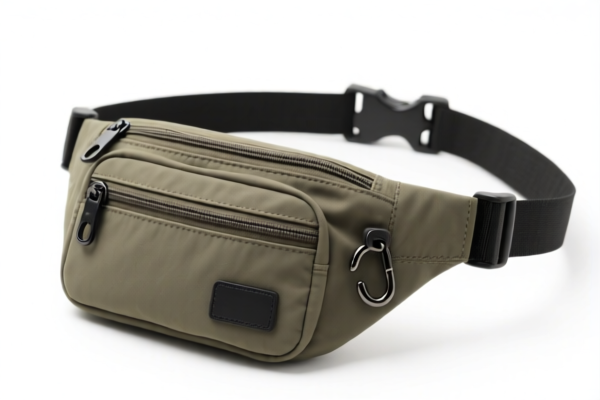
Waist bags (also known as fanny packs, hip bags, or belt bags) are compact wearable accessories designed to carry small items around the waist. In international trade, they fall under Textile and Apparel Categories, specifically under Chapter 42: Articles of Leather; Saddlery and Harness.
They are generally classified based on:
- Material composition (e.g., leather, textile, plastic)
- Function (e.g., fashion accessory vs. utility/technical)
- Construction (e.g., simple pouch vs. multi-pocket, tech-integrated)
⚠️ Critical Classification Point:
- If made of textile materials → Typically classified under 4202.92
- If made of leather → Typically classified under 4202.22
- If made of plastic → Typically classified under 4202.92 or 4203.90 depending on design
📦 2. HS Code Classification Breakdown (2026 Latest Tariff Schedule)
| HS Code | Product Description | Application Scenario | Material |
|---|---|---|---|
4202.22.00.00 |
Waist bags of textile material | Fashion, travel, sports, casual use | Textile |
4202.32.00.00 |
Waist bags of plastic material | Lightweight, waterproof, tech-integrated bags | Plastic |
4202.31.00.00 |
Waist bags of leather | Luxury, premium fashion, high-end accessories | Leather |
4203.21.00.00 |
Waist belts with pockets | Utility-focused, functional belts with storage | Textile/Leather |
4203.29.00.00 |
Other leather waist accessories | Designer, branded, or niche waist wearables | Leather |
6307.90.00.00 |
Other made-up articles (non-leather, non-textile) | Specialized waist bags (e.g., metal, hybrid) | Mixed Materials |
🔍 Key Reminder:
- Textile waist bags are most common and fall under4202.22.
- Leather waist bags carry higher perceived value and fall under4202.31.
- Plastic or hybrid material bags may require additional material disclosure to avoid misclassification.
💰 3. 2026 Latest Tariff Rates (Including Additional Taxes & Policy Surcharges)
✅ Target Market: United States (US)
✅ Origin: China (CN)
✅ Effective Date: November 10, 2025 (including all subsequent imports)
🎯 1. 4202.22.00.00 — Waist Bags of Textile Material
| Item | Details |
|---|---|
| Base Tariff Rate | 0% (ad valorem) |
| USITC Surcharge | +25% (per USITC Footnote 9903.88.01) |
| IEEPA Surcharge | +10% (for China/Hong Kong products, effective Nov 10, 2025) |
| Total Tariff Rate | 35% |
| Tax Calculation | CIF Value × 35% |
| De Minimis Exemption | ❌ No (denied under de minimis) |
| Legal Basis Path | IEEPA:9903.01.25 → IEEPA:9903.01.24 → USITC:4202.22.00.00 → FOOTNOTE:9903.88.01 |
📌 Explanation:
- The 25% USITC surcharge is part of Section 301 tariffs under U.S. Trade Law;
- The 10% IEEPA surcharge is a China-specific surcharge under the International Emergency Economic Powers Act;
- Total 35% is considered a high tariff and must be accounted for in pricing and logistics.
🎯 2. 4202.31.00.00 — Waist Bags of Leather
| Item | Details |
|---|---|
| Base Tariff Rate | 0% |
| USITC Surcharge | +25% |
| IEEPA Surcharge | +10% |
| Total Tariff Rate | 35% |
| Tax Calculation | CIF × 35% |
| De Minimis Exemption | ❌ No |
| Legal Basis Path | IEEPA:9901.25 → IEEPA:9903.01.24 → USITC:4202.31.00.00 → FOOTNOTE:9903.88.01 |
📌 Note:
- Even luxury leather waist bags face the same surcharge rates as textile ones;
- Material declaration must be accurate to avoid reclassification penalties.
🛠️ 4. Customs Clearance Practical Tips (Avoid Pitfalls)
✅ 1. Documentation Checklist (All Required)
| Document | Must Provide | Notes |
|---|---|---|
| ✅ Product Spec Sheet | ✔️ | Material, dimensions, weight, closure type |
| ✅ Material Composition Proof | ✔️ | Especially if mixed materials (e.g., leather + textile) |
| ✅ Product Photos (incl. Label) | ✔️ | Show model number, brand, material tags |
| ✅ Third-Party Certifications | ✔️ | OEKO-TEX, ISO 9001, RoHS (if electronics included) |
| ✅ Commercial Invoice | ✔️ | Clearly state "Waist Bag" or "Fanny Pack" |
| ✅ Certificate of Origin (CO) | ✔️ | Eligible for tariff exemptions if non-China origin |
| ✅ Packing List | ✔️ | Clarify if bags are sold as part of a set |
✅ 2. Declaration Strategy (Golden Rule)
🔥 "Material Matters, Function Follows, Name Clearly, Tariff Drop!"
| Scenario | Correct Declaration | Wrong Approach |
|---|---|---|
| Textile waist bag | 4202.22.00.00 |
Misdeclare as "belt" → higher tariff |
| Leather luxury bag | 4202.31.00.00 |
Misdeclare as "textile" → audit risk |
| Plastic/tech bag | 4202.32.00.00 |
Misdeclare as "textile" → penalty |
| Belt with pockets | 4203.21.00.00 |
Misdeclare as "waist bag" → rate error |
| Mixed material bag | 4203.90.00.00 |
Vague description → customs hold |
✅ 3. Special Cases Handling
| Situation | Recommendation |
|---|---|
| OEM branded waist bags | Provide design specs and customer orders to avoid generic classification |
| Smart waist bags (with Bluetooth, etc.) | May require dual classification: 4202.22 + 8517.62 if electronics integrated |
| Military/Utility waist bags | May qualify for "non-civilian use" exemptions, but need documentation |
| Eco-friendly or recycled material bags | Eligible for potential green trade incentives in some markets |
🌍 5. Global Market Customs Comparison (2026 Update)
| Country/Region | Recommended HS Code | Tariff | Certification | Notes |
|---|---|---|---|---|
| 🇺🇸 USA | 4202.22.00.00 |
35% (China origin) | None | High tariff due to surcharges |
| 🇨🇳 China | 4202.22.00.00 |
5% | CCC (if applicable) | No surcharge for domestic trade |
| 🇪🇺 EU | 4202.22.00.00 |
4% | CE (if electronics) | Low tariff, no surcharge |
| 🇦🇺 Australia | 4202.22.00.00 |
5% | RCM | Moderate tariff |
| 🇯🇵 Japan | 4202.22.00.00 |
0% | PSE (if electronics) | No tariff for textile |
📌 Conclusion:
- USA remains the most challenging market for waist bag imports due to surcharges;
- Consider shifting production to Vietnam, Mexico, or Thailand to qualify for IEEPA exemptions.
📌 6. Common Mistakes & Avoidance Guide (Lessons Learned)
❌ Mistake 1: Classifying "textile waist bag" as "belt with pockets"
👉 Result: Incorrect tariff → 20% vs 35% → Penalty + Delay
❌ Mistake 2: Failing to declare mixed materials (e.g., leather + textile)
👉 Result: Customs inspection → Reclassification + Fine
❌ Mistake 3: Calling it "fanny pack" without specifying material
👉 Result: Ambiguous declaration → Customs Hold
❌ Mistake 4: Using "travel pouch" instead of "waist bag"
👉 Result: Misclassification under Chapter 63 → Higher Tariff
✅ Best Practice:
"Waist Bag, 100% Nylon, Water-Resistant, 12x8x4 inches, Model WP-2026, with Adjustable Belt, No Electronics"
🎯 7. Conclusion: Precision Classification = Lower Costs, Faster Clearance
🎯 Remember:
🔹 "Material First, Function Follows, Name Clearly, Rate Drops!"
🔹 "HS Code Saves Money, One Mistake Costs Thousands!"
📌 Pro Tip:
If your waist bags are originating from Vietnam, Mexico, Thailand, or Malaysia, you may qualify for IEEPA exemptions, reducing tariffs to 0%–5%.
Recommendation: Apply for Pre-Ruling (Advance Ruling) before shipping.
📣 Take Action Now:
📞 Contact a licensed customs broker + Provide product images + Request HS Code Pre-Ruling
🚀 Ship smarter, save money, and scale your waist bag business globally!
✨ Precision classification is your first step to global success!
💼 Every dollar counts — know your tariff, know your HS Code!
Customer Reviews
About HS Code Classification
The Harmonized System (HS) is an internationally standardized nomenclature developed by the World Customs Organization (WCO) to classify traded products. Over 200 countries use the HS system as the basis for customs tariffs, trade statistics, and import/export regulations.
Each HS code follows a hierarchical structure:
- Chapter (2 digits) — Broad category of goods (e.g., Chapter 84: Machinery and Mechanical Appliances)
- Heading (4 digits) — More specific grouping within the chapter
- Subheading (6 digits) — Internationally standardized breakdown, used by all WCO member countries
- National subdivisions (8-10 digits) — Country-specific extensions for further classification, such as US HTSUS 10-digit codes
Correct HS code classification is essential for smooth customs clearance, accurate duty payment, and compliance with trade regulations. Misclassification can lead to customs delays, overpayment of duties, or penalties.
When importing from CN to US, the applicable tariff rates may include:
- Most-Favored-Nation (MFN) rate — The standard duty rate applied to WTO members
- General rate — Applied to countries without trade agreements
- Trade remedy duties — Additional tariffs such as Section 301 (anti-dumping), Section 232 (national security), or countervailing duties
The information provided on this page is for reference purposes only. For official classification, please consult with your local customs authority or a licensed customs broker.