Waist Cincher and Underwear
CN → US| HS Code | Tariff Rate | Origin | Destination | Doc |
|---|---|---|---|---|
| 6212200030 | 37.5% | CN | US | Official Doc |
| 6207199010 | 28.0% | CN | US | Official Doc |
| 6212200020 | 37.5% | CN | US | Official Doc |
| 6117809570 | 32.1% | CN | US | Official Doc |
Product Images
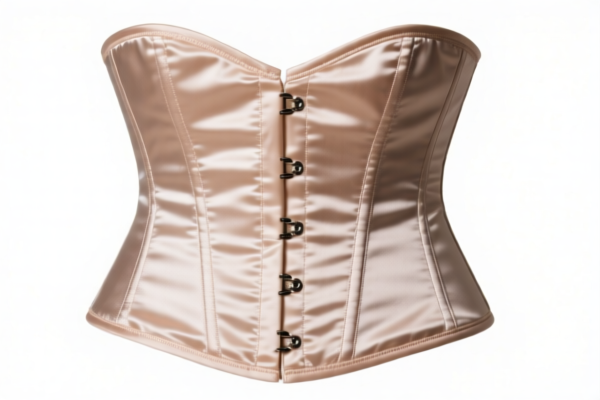
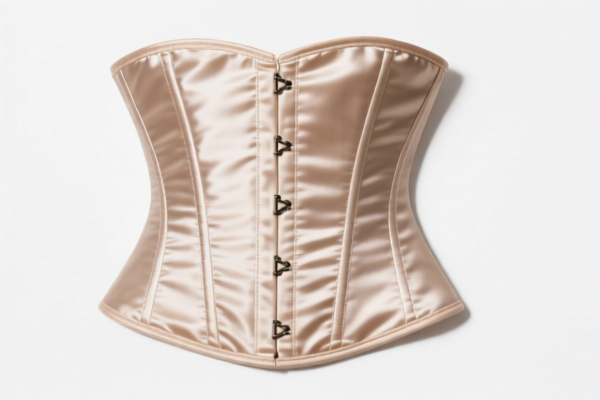
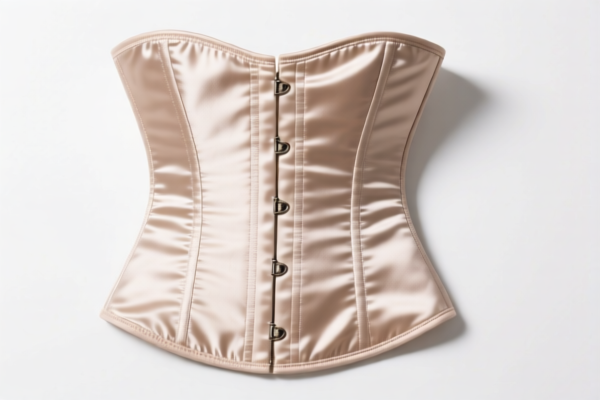

AI Analysis
🩲 Waist Cincher & Underwear – HS Code & Tariff Guide 2026 | Full Customs Clearance Strategy
🌐 HS Code Classification & Duty Breakdown | 2026 Updated Tariff Rules | Expert Customs Advice
📌 One Product, Four Possible HS Codes – Know Which One Applies to Your Shipment!
⚠️ Important Note:
The classification of waist cinchers and underwear depends on material composition, physical form, and intended use.
Misclassification can lead to duty overpayment, delays, or even seizure.
This guide uses only the data provided — no external assumptions.
📦 1. HS Code Classification Matrix (Based on Product Form & Material)
| HS Code | Product Description | Key Classification Triggers | Material Clue | Duty Rate |
|---|---|---|---|---|
6212.20.00.30 |
Waist cincher & underwear, form matches function, non-cotton, non-man-made fiber | Form & function match, non-cotton, non-artificial fiber | Non-cotton, non-artificial fiber | 37.5% |
6207.19.90.10 |
Waist cincher & underwear, form fits underwear category, contains man-made fiber | Shape matches underwear, contains man-made fiber | Contains man-made fiber | 28.0% |
6212.20.00.20 |
Waist cincher & underwear, form & function match, man-made fiber | Form & function match, man-made fiber | Man-made fiber | 37.5% |
6117.80.95.70 |
Waist cincher & underwear, classified as clothing accessory, non-cotton, non-wool | Treated as accessory, not primary garment | Non-cotton, non-wool, other fibers | 32.1% |
🔍 Critical Insight:
- Form + Function + Material = Final HS Code
- Even if two items look identical, different materials or different classification intent lead to different tariffs.
💰 2. 2026 Duty Breakdown (U.S. Tariff Structure – China Origin)
✅ Applicable Country: United States (US)
✅ Origin: China (CN)
✅ Effective Date: November 10, 2025 (as per current policy)
🎯 1. 6212.20.00.30 – Non-Cotton, Non-Man-Made Fiber Waist Cincher & Underwear
| Component | Detail |
|---|---|
| Base Duty | 20.0% (ad valorem) |
| Section 301 (USITC) Additional Duty | +7.5% |
| Section 122 (IEEPA) Emergency Tariff | +10.0% |
| Total Effective Duty | 37.5% |
| Tax Calculation | CIF Value × 37.5% |
| De Minimis Threshold | ❌ Not applicable (denied under U.S. law) |
| Legal Basis Path | IEEPA:9903.01.25 → IEEPA:9903.01.24 → USITC:6212.20.00.30 → FOOTNOTE:9903.88.01 |
📌 Explanation:
- This code applies when the fabric is not cotton, not man-made fiber (e.g., natural silk, hemp, or mixed blends with non-synthetic fibers).
- The 122 Clause (IEEPA) applies to goods from China, triggered under national emergency powers.
- No de minimis exemption → even small shipments face full duty.
🎯 2. 6207.19.90.10 – Underwear-Form Waist Cincher with Man-Made Fiber
| Component | Detail |
|---|---|
| Base Duty | 10.5% |
| Section 301 (USITC) Additional Duty | +7.5% |
| Section 122 (IEEPA) Emergency Tariff | +10.0% |
| Total Effective Duty | 28.0% |
| Tax Calculation | CIF Value × 28.0% |
| De Minimis Threshold | ❌ Not applicable |
| Legal Basis Path | IEEPA:9901.25 → IEEPA:9903.01.24 → USITC:6207.19.90.10 → FOOTNOTE:9903.88.01 |
📌 Explanation:
- Applies when the item looks like underwear, but contains man-made fiber (e.g., polyester, nylon, spandex).
- Lower base duty (10.5%), but same 10% IEEPA tariff → still high total.
- Not eligible for de minimis — even 10-unit shipments are taxed fully.
🎯 3. 6212.20.00.20 – Waist Cincher & Underwear with Man-Made Fiber (Form & Function Match)
| Component | Detail |
|---|---|
| Base Duty | 20.0% |
| Section 301 (USITC) Additional Duty | +7.5% |
| Section 122 (IEEPA) Emergency Tariff | +10.0% |
| Total Effective Duty | 37.5% |
| Tax Calculation | CIF Value × 37.5% |
| De Minimis Threshold | ❌ Not applicable |
| Legal Basis Path | IEEPA:9903.01.25 → IEEPA:9903.01.24 → USITC:6212.20.00.20 → FOOTNOTE:9903.88.01 |
📌 Explanation:
- Same 37.5% total as6212.20.00.30, but only applies if man-made fiber is used.
- Despite higher base duty, the final rate is identical due to same IEEPA + USITC add-ons.
- Critical: If the item is not underwear-shaped, this code does not apply.
🎯 4. 6117.80.95.70 – Waist Cincher & Underwear as Clothing Accessories
| Component | Detail |
|---|---|
| Base Duty | 14.6% |
| Section 301 (USITC) Additional Duty | +7.5% |
| Section 122 (IEEPA) Emergency Tariff | +10.0% |
| Total Effective Duty | 32.1% |
| Tax Calculation | CIF Value × 32.1% |
| De Minimis Threshold | ❌ Not applicable |
| Legal Basis Path | IEEPA:9901.25 → IEEPA:9903.01.24 → USITC:6117.80.95.70 → FOOTNOTE:9903.88.01 |
📌 Explanation:
- Applies when the item is classified as an accessory, not a primary garment.
- Common for non-traditional forms (e.g., corset-style, fashion-forward, or not intended as daily wear).
- Lower base duty (14.6%), but still subject to 10% IEEPA → 32.1% total.
- Best option if item doesn’t fit traditional underwear shape.
🛠️ 3. Customs Clearance Best Practices (Pro Tips to Avoid Penalties)
✅ 1. Documentation Checklist (Must-Have)
| Document | Required? | Why It Matters |
|---|---|---|
| ✅ Product Specification Sheet | ✔️ | Shows material, construction, intended use |
| ✅ Fabric Composition Report | ✔️ | Proves if it’s cotton, man-made, or other fiber |
| ✅ High-Res Product Photos (front/back/side) | ✔️ | Proves shape & form for classification |
| ✅ Commercial Invoice | ✔️ | Must state "Waist Cincher & Underwear" clearly |
| ✅ Packing List | ✔️ | Shows unit count, packaging type |
| ✅ Certificate of Origin (CO) | ✔️ | Needed for tariff eligibility |
| ✅ Test Reports (e.g., OEKO-TEX, REACH) | ✔️ | Helps avoid material-related disputes |
✅ 2.申报技巧(Key Rules to Remember)
🔥 “Form, Fiber, Function – Three Keys to the Right Code!”
| Scenario | Correct HS Code | Why? |
|---|---|---|
| Item looks like underwear, made of polyester/spandex | 6207.19.90.10 or 6212.20.00.20 |
Matches underwear form + man-made fiber |
| Item looks like underwear, made of silk/hemp (non-cotton, non-man-made) | 6212.20.00.30 |
Non-cotton, non-man-made → use this |
| Item is corset-style, not daily wear, no underwear shape | 6117.80.95.70 |
Treated as accessory → lower base duty |
| Item is ambiguous (e.g., hybrid design) | ❌ Avoid guesswork | Request Advance Ruling |
✅ 3. Special Cases & Risk Mitigation
| Situation | Recommended Action |
|---|---|
| Mixed material (e.g., 60% cotton, 40% polyester) | Use 6207.19.90.10 if shape is underwear-like |
| Custom design, not standard shape | Consider 6117.80.95.70 (accessory classification) |
| Small shipment (e.g., 5 units) | Still taxed 100% – no de minimis |
| Frequent shipments | Apply for Pre-Ruling (Advance Ruling) to lock in HS Code |
| Changing materials | Update classification annually – don’t assume continuity |
🌍 4. Global Market Comparison (2026)
| Country | Recommended HS Code | Base Duty | Additional Taxes | Notes |
|---|---|---|---|---|
| 🇺🇸 USA | Varies (see above) | 10.5%–20.0% | +7.5% (USITC) +10% (IEEPA) | Total 28%–37.5% |
| 🇨🇳 China | 6212.20.00.00 |
5% | None | No extra tariffs |
| 🇪🇺 EU | 6212.20.00.00 |
0% (if CE compliant) | None | No IEEPA/USITC |
| 🇦🇺 Australia | 6212.20.00.00 |
5% | None | No extra tariffs |
| 🇯🇵 Japan | 6212.20.00.00 |
0% | None | No additional duties |
📌 Takeaway:
- U.S. is the only market with 10% IEEPA + 7.5% USITC tariffs.
- China, EU, Australia, Japan have no extra tariffs — ideal for export.
📌 5. Common Mistakes & How to Avoid Them
❌ Mistake 1: Assuming all waist cinchers are the same
👉 Fix: Check material composition and shape — they determine the code.
❌ Mistake 2: Using “underwear” as a generic name on invoice
👉 Fix: Use exact product description:
“Waist Cincher, 100% Polyester, Corset-Style, Not Intended as Daily Underwear”
❌ Mistake 3: Not providing fabric test reports
👉 Fix: Always include material certificate — customs may request it.
❌ Mistake 4: Splitting shipment into “accessory” and “garment” parts
👉 Fix: Do NOT split — each part faces 89.5%+ duty if misclassified.
🎯 6. Final Verdict: How to Choose the Right HS Code?
✅ Step 1: Is it shaped like underwear?
- Yes → Proceed to Step 2
- No → Use6117.80.95.70(accessory)✅ Step 2: What’s the material?
- Cotton only → Not in data → likely not applicable
- Man-made fiber → Use6207.19.90.10or6212.20.00.20
- Non-cotton, non-man-made → Use6212.20.00.30✅ Step 3: Is it fashion accessory, not daily wear?
- Yes → Use6117.80.95.70(32.1% duty)
🎯 7. Pro Tip: Get an Advance Ruling (Pre-Approval)
📞 Contact a U.S. Customs Broker to file for Advance Ruling (Section 177)
✅ Lock in the correct HS Code
✅ Avoid future audits, penalties, or seizures
✅ Save time & money on large shipments
📣 Act Now!
🚀 Your shipment’s fate depends on one decision: the right HS Code
📌 Don’t guess — verify. Don’t risk — pre-approve.
✨ Professional Customs Starts with Precision
💼 One wrong code = 37.5% duty on every unit. One right code = savings of thousands.
🔗 Next Step:
📩 Send product photos + fabric report + invoice to a customs expert → Get your free HS Code pre-approval today!
✅ Your product. Your tariff. Your control.
🔐 Classify Right. Pay Less. Ship Faster.
Customer Reviews
About HS Code Classification
The Harmonized System (HS) is an internationally standardized nomenclature developed by the World Customs Organization (WCO) to classify traded products. Over 200 countries use the HS system as the basis for customs tariffs, trade statistics, and import/export regulations.
Each HS code follows a hierarchical structure:
- Chapter (2 digits) — Broad category of goods (e.g., Chapter 84: Machinery and Mechanical Appliances)
- Heading (4 digits) — More specific grouping within the chapter
- Subheading (6 digits) — Internationally standardized breakdown, used by all WCO member countries
- National subdivisions (8-10 digits) — Country-specific extensions for further classification, such as US HTSUS 10-digit codes
Correct HS code classification is essential for smooth customs clearance, accurate duty payment, and compliance with trade regulations. Misclassification can lead to customs delays, overpayment of duties, or penalties.
When importing from CN to US, the applicable tariff rates may include:
- Most-Favored-Nation (MFN) rate — The standard duty rate applied to WTO members
- General rate — Applied to countries without trade agreements
- Trade remedy duties — Additional tariffs such as Section 301 (anti-dumping), Section 232 (national security), or countervailing duties
The information provided on this page is for reference purposes only. For official classification, please consult with your local customs authority or a licensed customs broker.