Walkie Talkie
CN → US| HS Code | Tariff Rate | Origin | Destination | Doc |
|---|---|---|---|---|
| 8543706000 | 35.0% | CN | US | Official Doc |
| 8517140050 | 10.0% | CN | US | Official Doc |
| 8517140080 | 10.0% | CN | US | Official Doc |
Product Images
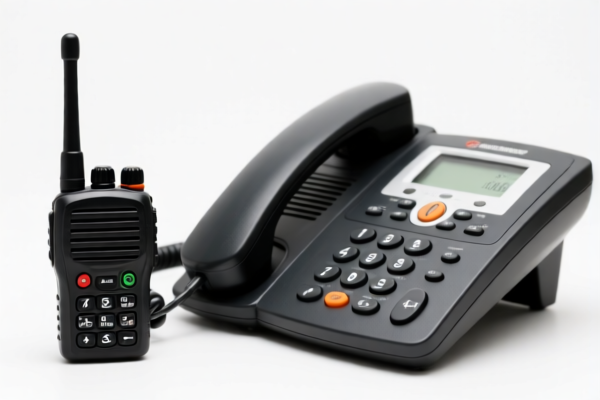
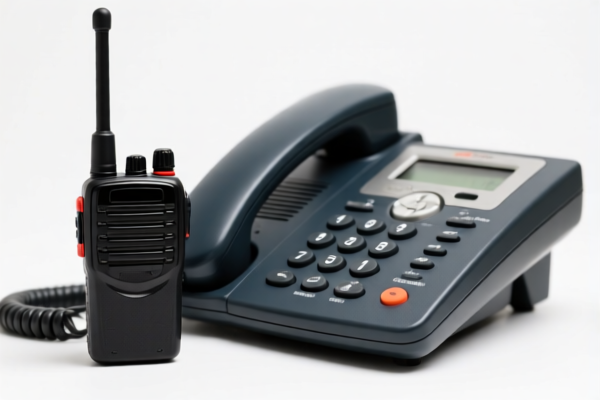
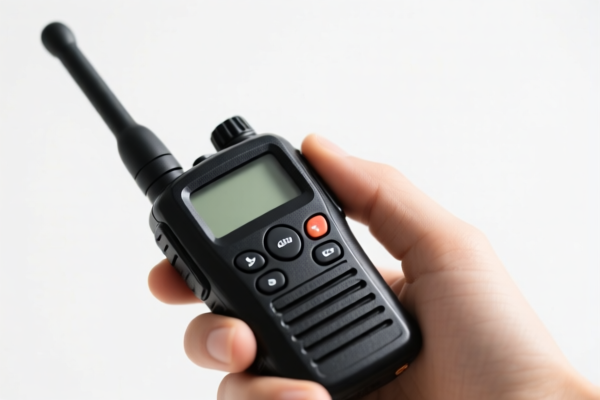
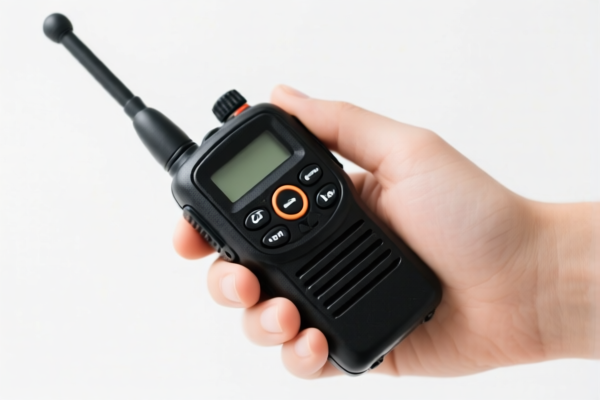
AI Analysis
📻 Walkie Talkie (Two-Way Radios)
🌐 HS Code Reference & Customs Clearance Guide | 2026 Latest Tariff Analysis | Professional Clearance Strategy
📌 I. Product Definition & Classification: Do You Really Understand "Walkie Talkie"?
Walkie Talkies (Two-Way Radios) are portable handheld devices used for real-time wireless voice communication. In international trade, they fall under Radio Communication Equipment, but the exact HS Code depends on their technical functionality, frequency range, and application context.
⚠️ Key Classification Criteria:
- Frequency Band & Function: Is it a standard analog radio? Does it support Wi-Fi/IP integration? Is it for personal, commercial, or emergency use?
- Technical Architecture: Does it include advanced data capabilities (e.g., Bluetooth, GPS, IP networking)?
- Intended Use: General communication vs. specialized wireless network integration.
Based on the latest 2026 tariff data, Walkie Talkies are primarily classified under three HS Codes, each with distinct tax implications:
📦 II. HS Code Classification Breakdown (2026 Tariff Authority)
| HS Code | Product Description | Application Scenario | Technical Features |
|---|---|---|---|
| 8543.70.60.00 | Radio communication equipment (general purpose) | Standard analog/digital two-way radios, public safety, industrial use | ✅ Independent radio function, no integrated Wi-Fi/data network |
| 8517.14.00.50 | Wireless telephone & network communication equipment | Walkie Talkies with Wi-Fi/4G/5G data integration, IP-based communication | ✅ Supports IP protocols, data transmission, network calling |
| 8517.14.00.80 | Other wireless communication equipment | General wireless radios with broad network compatibility, not classified under specific subcategories | ✅ Broad wireless functionality, general-purpose network integration |
🔍 Critical Differentiation:
- 8543.70.60.00: For traditional walkie talkies (no data/Wi-Fi). Used in construction, logistics, security.
- 8517.14.00.50 & 8517.14.00.80: For smart radios with IP/Wi-Fi capabilities, used in enterprise, IoT, or advanced communication systems.
💰 III. 2026 Tariff Rate Breakdown (Including Surtaxes & Policy Add-ons)
✅ Target Market: USA (US)
✅ Country of Origin: China (CN)
✅ Effective Date: 2025-11-10 (Applicable to all subsequent imports)
🎯 1. HS Code 8543.70.60.00 – Traditional Walkie Talkie
Tax Structure & Legal Basis:
| Item | Value |
|---|---|
| Base Tariff | 0.0% (ad valorem) |
| Additional Tariff (Section 301) | +25.0% (USITC Footnote 9903.88.01) |
| Section 122 Tariff | +10.0% (IEEPA对华加征关税) |
| Total Tariff | 35.0% |
| Calculation Method | CIF Value × 35% |
| De Minimis Exemption | ❌ Not Eligible |
| Legal Path | IEEPA:9903.01.25 → Section 301:9903.88.01 → Footnote:9903.88.01 |
📌 Explanation:
- 35% Total Tariff = 0% Base + 25% (301) + 10% (122).
- High-risk classification for traditional radios from China.
- No de minimis exemption applies (small shipments still taxed).
🎯 2. HS Code 8517.14.00.50 – Smart Walkie Talkie (Wi-Fi/Data)
Tax Structure & Legal Basis:
| Item | Value |
|---|---|
| Base Tariff | 0.0% |
| Additional Tariff (Section 301) | 0.0% |
| Section 122 Tariff | +10.0% |
| Total Tariff | 10.0% |
| Calculation Method | CIF Value × 10% |
| De Minimis Exemption | ❌ Not Eligible |
| Legal Path | IEEPA:9903.01.25 → Section 122:9903.01.25 |
📌 Note:
- 10% Total Tariff = 0% Base + 0% (301) + 10% (122).
- No 301 surtax applies because these devices are classified as wireless network equipment (not general radios).
- Lower tax burden for advanced communication devices.
🎯 3. HS Code 8517.14.00.80 – General Wireless Communication Equipment
Tax Structure & Legal Basis:
| Item | Value |
|---|---|
| Base Tariff | 0.0% |
| Additional Tariff (Section 301) | 0.0% |
| Section 122 Tariff | +10.0% |
| Total Tariff | 10.0% |
| Calculation Method | CIF Value × 10% |
| De Minimis Exemption | ❌ Not Eligible |
| Legal Path | IEEPA:9903.01.25 → Section 122:9903.01.25 |
📌 Note:
- 10% Total Tariff = 0% Base + 0% (301) + 10% (122).
- Similar tax treatment to8517.14.00.50, but broader category.
- Ideal for devices with mixed functionality (voice + data).
🛠️ IV. Customs Clearance Practical Tips (Avoid Pitfalls!)
✅ 1. Documentation Checklist (Essential for Clearance)
| Document | Required | Purpose |
|---|---|---|
| ✅ Product Specifications | ✔️ | Define frequency, modulation, data capabilities |
| ✅ Technical Diagrams | ✔️ | Show circuitry, Wi-Fi modules, network interfaces |
| ✅ Product Photos (Label & Interior) | ✔️ | Verify model, brand, voltage, FCC/CE marks |
| ✅ FCC/CE/RoHS Reports | ✔️ | Compliance with US/EU regulations |
| ✅ Commercial Invoice | ✔️ | Clearly state "Two-Way Radio" + HS Code |
| ✅ Packing List | ✔️ | Indicate if accessories included (headsets, chargers) |
| ✅ Origin Certificate (CO) | ✔️ | If non-China origin, claim preferential rates |
✅ 2. Declaration Strategy (Key Rules)
🔥 "Function Dictates Code, Data Beats Radio, Declare Accurately to Save 25%!"
| Scenario | Correct HS Code | Incorrect Declaration |
|---|---|---|
| Traditional Analog Radio | 8543.70.60.00 |
Misclassifying as 8517.14.00.50 → 10% vs 35% |
| Wi-Fi/IP Enabled Radio | 8517.14.00.50 |
Declaring as 8543.70.60.00 → 35% instead of 10% |
| Mixed-Function Radio | 8517.14.00.80 |
Oversimplifying as "Radio" → 35% |
| Accessories (Headsets/Chargers) | 8517.14.00.80 or 9013.90.80.00 |
Separating accessories → Higher total tax |
✅ 3. Special Cases & Solutions
| Situation | Recommendation |
|---|---|
| OEM Custom Radios | Provide design specs + client order to prove "network capability" |
| Radios with GPS/Bluetooth | Declare under 8517.14.00.50 or 8517.14.00.80 to avoid 35% |
| Military/Industrial Use | Request non-commercial exemption with supporting docs |
| Smart Radios (IoT) | Highlight IP protocols to qualify for 10% tax |
🌍 V. Global Market Comparison (2026 Tariffs)
| Country/Region | Recommended HS Code | Tariff | Certification | Notes |
|---|---|---|---|---|
| 🇺🇸 USA | 8517.14.00.50 / 8517.14.00.80 |
10% | FCC + RoHS | 8543.70.60.00 = 35% |
| 🇨🇳 China | 8517.14.00.50 / 8517.14.00.80 |
5% | CCC + RoHS | No additional surtaxes |
| 🇪🇺 EU | 8517.14.00.50 / 8517.14.00.80 |
0% | CE + ErP | No 301/122 tariffs |
| 🇦🇺 Australia | 8517.14.00.50 / 8517.14.00.80 |
5% | RCM | No surtaxes |
| 🇯🇵 Japan | 8517.14.00.50 / 8517.14.00.80 |
0% | PSE | No additional tariffs |
📌 Conclusion:
- USA imposes 35% on traditional radios (8543.70.60.00), but only 10% on smart radios (8517.14.00.50/80).
- China, EU, Japan, Australia offer lower or zero tariffs for walkie talkies.
- Strategy: Upgrade to IP-enabled radios to save 25% in US tariffs.
📌 VI. Common Mistakes & Solutions (Lessons Learned)
❌ Mistake 1: Declaring smart radios as 8543.70.60.00
👉 Consequence: Pay 35% instead of 10% → Extra 25% tax per unit!
❌ Mistake 2: Splitting radio + accessories for separate declaration
👉 Consequence: Accessories taxed at higher rates → Total tax > 40%
❌ Mistake 3: Missing FCC/CE compliance docs
👉 Consequence: Customs hold → Delay + Storage fees
❌ Mistake 4: Using vague terms like "Radio" instead of "Wi-Fi Radio"
👉 Consequence: 35% tax applied automatically
✅ Correct Approach:
"Walkie Talkie, IP-enabled, Wi-Fi/4G, FCC-certified, Model XYZ, 10% tariff eligible under 8517.14.00.50"
🎯 VII. Conclusion: Precision Classification = Cost Savings!
🎯 Remember:
🔹 "Traditional Radio = 35%, Smart Radio = 10%"
🔹 "FCC/CE Docs = Clearance Success"
🔹 "HS Code = Profit Margin Determinant"
📌 Pro Tip:
If your walkie talkies are manufactured in Vietnam, Mexico, or Thailand, you may qualify for IEEPA exemptions, reducing tariffs to 0%~5%.
Recommendation: Apply for Advance Ruling (Pre-Classification) before shipping to avoid surprises.
📣 Take Action Now:
📞 Contact a Customs Broker + Submit Product Specs + Request HS Code Pre-Ruling
🚀 Optimize Your Walkie Talkie Shipments, Minimize Costs, Maximize Profits!
✨ Professional Customs Clearance Starts with Accurate Classification!
💼 Every Dollar Saved is a Dollar Earned!
Customer Reviews
About HS Code Classification
The Harmonized System (HS) is an internationally standardized nomenclature developed by the World Customs Organization (WCO) to classify traded products. Over 200 countries use the HS system as the basis for customs tariffs, trade statistics, and import/export regulations.
Each HS code follows a hierarchical structure:
- Chapter (2 digits) — Broad category of goods (e.g., Chapter 84: Machinery and Mechanical Appliances)
- Heading (4 digits) — More specific grouping within the chapter
- Subheading (6 digits) — Internationally standardized breakdown, used by all WCO member countries
- National subdivisions (8-10 digits) — Country-specific extensions for further classification, such as US HTSUS 10-digit codes
Correct HS code classification is essential for smooth customs clearance, accurate duty payment, and compliance with trade regulations. Misclassification can lead to customs delays, overpayment of duties, or penalties.
When importing from CN to US, the applicable tariff rates may include:
- Most-Favored-Nation (MFN) rate — The standard duty rate applied to WTO members
- General rate — Applied to countries without trade agreements
- Trade remedy duties — Additional tariffs such as Section 301 (anti-dumping), Section 232 (national security), or countervailing duties
The information provided on this page is for reference purposes only. For official classification, please consult with your local customs authority or a licensed customs broker.