Wall Charger
CN → US| HS Code | Tariff Rate | Origin | Destination | Doc |
|---|---|---|---|---|
| 8504404000 | 35.0% | CN | US | Official Doc |
| 8504409580 | 35.0% | CN | US | Official Doc |
| 8543706000 | 35.0% | CN | US | Official Doc |
| 8543709860 | 37.6% | CN | US | Official Doc |
| 8544429090 | 87.6% | CN | US | Official Doc |
Product Images
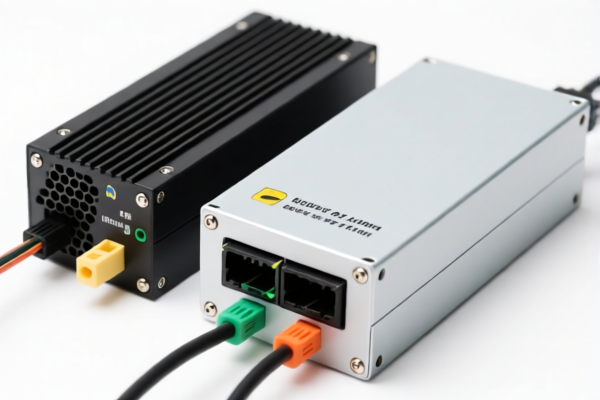
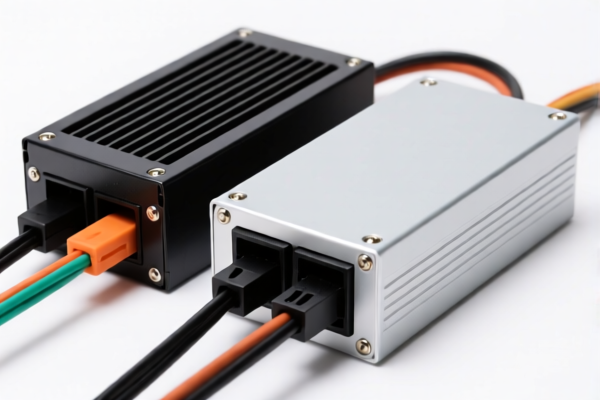
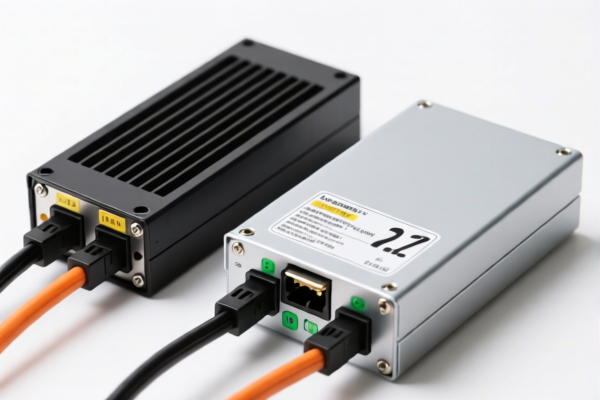
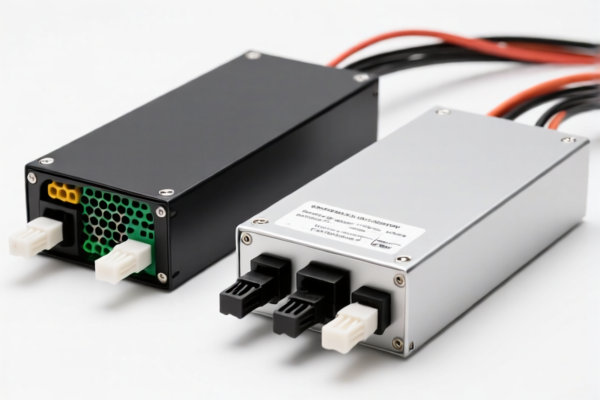
AI Analysis
🔌 Wall Charger (EV Charging Station)
🌐 HS Code Reference & Customs Clearance Guide | 2026 Latest Tariff Analysis | Professional Clearance Strategy
📌 I. Product Definition & Classification: Do You Really Understand "Wall Chargers"?
Wall chargers, specifically wall-mounted (saddle) EV charging stations, are static converters that convert AC grid power to DC or manage AC power delivery for electric vehicles. Their core function is power conversion and control.
In international trade, they are classified based on their technical nature: * Static Converters (AC/DC or AC/AC with control): Devices that convert electrical energy. * Electrical Control Apparatus: Devices used to connect power networks or specific equipment.
⚠️ Key Distinction Point:
- If it is purely a static converter (AC/DC transformation) → Consider 8504 or 8543.
- If it is an independent electronic control device → Consider 8543.70.
- If it is viewed merely as insulated conductors/cables (less common for full units) → Consider 8544.
📦 II. HS Code Classification Details (2026 Latest Tariff Authority Cross-Reference)
| HS Code | Product Description | Applicable Scenario | Tax Rate (US Import from CN) |
|---|---|---|---|
8504.40.40.00 |
Wall charger belongs to static converters; core function is power conversion and control. | Standard AC/DC conversion units. | 35.0% |
8504.40.95.80 |
Wall charger belongs to static converters (AC/DC), matching other static converter uses. | Other static converter applications. | 35.0% |
8543.70.60.00 |
Wall charger belongs to electrical apparatus for connecting power networks or specific equipment. | Network connection devices. | 35.0% |
8543.70.98.60 |
Wall charger belongs to electronic control equipment with independent functions, fitting the category of other machines/devices. | Independent control units. | 37.6% |
8544.42.90.90 |
Wall charger belongs to electrical conductors/cables with voltage ≤ 1,000V, fitting insulated conductor attributes. | Misclassification Risk (Treated as cables/accessories). | 87.6% |
🔍 Critical Reminder:
- Most standard Wall Chargers are classified under 8504.40 or 8543.70 as active electronic devices, not passive cables. - Classifying under 8544.42.90.90 is generally considered a misclassification (viewing the unit as a simple cable/accessory), leading to the highest tax burden (87.6%) due to specific steel/aluminum/iron product tariffs.
💰 III. 2026 Latest Tariff Rate Detailed Breakdown (Including Additional Taxes & Policy Surcharges)
✅ Applicable Country: United States (US)
✅ Origin: China (CN)
✅ Effective Time: 2025/2026 Import Cycle
🎯 1. 8504.40.40.00 & 8504.40.95.80 —— Static Converters
| Item | Content |
|---|---|
| Basic Tariff | 0.0% (Ad Valorem) |
| Section 301 Additional Tariff | +25.0% |
| Section 122 Tariff | +10.0% |
| Total Tariff Rate | 35.0% |
| Tax Calculation | CIF Value × 35% |
| De Minimis Exemption | ❌ Not Applicable (Subject to Section 301/122) |
| Legal Basis | USITC Footnotes for Section 301 and Section 122 surcharges. |
📌 Explanation:
- Basic Tariff 0%: Standard MFN rate for these converters.
- +25% (Section 301): Added tariff on Chinese goods under Trade Act of 1974 Section 301.
- +10% (Section 122): Additional tariff on specific categories under Section 232/122 provisions.
- Total 35%: A significant cost increase. Must be factored into landed cost calculations.
🎯 2. 8543.70.60.00 —— Electrical Apparatus for Network Connection
| Item | Content |
|---|---|
| Basic Tariff | 0.0% |
| Section 301 Additional Tariff | +25.0% |
| Section 122 Tariff | +10.0% |
| Total Tariff Rate | 35.0% |
| Tax Calculation | CIF Value × 35% |
| De Minimis Exemption | ❌ Not Applicable |
| Legal Basis | Same as above. |
📌 Note:
- Functionally similar to 8504 in terms of taxation for Chinese origin.
- Classification depends on specific technical documentation emphasizing "network connection" vs. "pure conversion."
🎯 3. 8543.70.98.60 —— Other Machines & Apparatus (Independent Control)
| Item | Content |
|---|---|
| Basic Tariff | 2.6% |
| Section 301 Additional Tariff | +25.0% |
| Section 122 Tariff | +10.0% |
| Total Tariff Rate | 37.6% |
| Tax Calculation | CIF Value × 37.6% |
| De Minimis Exemption | ❌ Not Applicable |
| Legal Basis | IEEPA & USITC Footnotes. |
📌 Explanation:
- Basic Tariff 2.6%: Unlike other subheadings, this "other" category has a small base duty.
- Total 37.6%: Higher than the 35% category due to the 2.6% base, despite the same additional surcharges.
🎯 4. 8544.42.90.90 —— Insulated Conductors (Voltage ≤ 1,000V)
| Item | Content |
|---|---|
| Basic Tariff | 2.6% |
| Section 301 Additional Tariff | +25.0% |
| Section 122 Tariff | +10.0% |
| Steel/Aluminum/Iron Products Tariff | +50.0% (Specific to material composition) |
| Total Tariff Rate | 87.6% |
| Tax Calculation | CIF Value × 87.6% |
| De Minimis Exemption | ❌ Not Applicable |
| Legal Basis | High punitive tariff for misclassified or specific cable categories. |
⚠️ WARNING:
- This rate is extremely high and applies if the charger is incorrectly declared as a "cable" or "connector" rather than an active device.
- The 50% surcharge for steel/aluminum/iron products drastically increases costs.
- Recommendation: Avoid this classification unless the product is strictly a passive cable assembly without internal electronics.
🛠️ IV. Customs Clearance Practical Advice (Battle-Tested Pitfall Avoidance)
✅ 1. Preparation Checklist (Non-Negotiable)
| Document | Required | Description |
|---|---|---|
| ✅ Product Specification Sheet | ✔️ | Must detail input/output voltage, power, conversion type (AC/DC), and communication protocols. |
| ✅ Circuit Diagram/Block Diagram | ✔️ | Crucial to prove the presence of control electronics (justifying 8504/8543 over 8544). |
| ✅ Product Photos (with Label) | ✔️ | Clear view of rating plate, model number, and safety certifications. |
| ✅ Third-Party Test Reports | ✔️ | UL, CE, FCC, or RoHS compliance certificates. |
| ✅ Commercial Invoice | ✔️ | Clearly state "EV Wall Charger, Static Converter with Control Functions." |
| ✅ Packing List | ✔️ | Distinguish between main unit and accessories (cables). |
✅ 2. Declaration Tips (Key Mantra)
🔥 "Active Device, Not Cable! Control Board Exists, Tariff Avoids Grave!"
| Scenario | Correct Declaration | Incorrect Practice |
|---|---|---|
| Full Wall Charger Unit (with PCB, casing, plug) | 8504.40.40.00 or 8543.70.60.00 |
Declaring as "Cable" → 87.6% Tax |
| Charger + Separate Cable | Declare Unit under 8504/8543; Cable separately if needed | Combining them into one line item |
| Passive Cable Only (no electronics) | 8544.42.90.90 (if misclassified) or correct cable code |
Declaring as "Charger" → Audit risk |
| Charger for Medical/Vehicle | Still 8504 or 8543 (function defines HS) |
Trying to find a "medical exemption" without specific HTSUS code |
✅ 3. Special Situation Handling
| Situation | Handling Advice |
|---|---|
| OEM Custom Chargers | Provide customer order + design drawings. Ensure "Static Converter" description matches technical specs. |
| Smart Chargers (WiFi/4G) | Emphasize "Control Apparatus" (8543) or "Converter" (8504). Do not declare as "Communication Device" (8517) unless primary function is communication. |
| Steel/Aluminum Casing | Be aware that even under 8544, the 50% tariff triggers if misclassified as metal product/cable. Under 8504/8543, casing material is less relevant to the base tax but confirm no specific metal tariffs apply to the chassis separately. |
| Pre-Order/Forwarding | Ensure HS Code is pre-verified. Misclassification of 8544 can lead to 87.6% liability instantly. |
🌍 V. Global Market Comparison (2026 Latest)
| Country/Region | Recommended HS Code | Tariff (CN Origin) | Certification | Notes |
|---|---|---|---|---|
| 🇺🇸 USA | 8504.40.40.00 |
35.0% | UL + FCC | High duty due to Section 301/122. |
| 🇨🇳 China | 8504.40.40.00 |
~10-15% | CCC | Lower duty, no Section 301. |
| 🇪🇺 EU | 8504.40.95 |
0-2.7% | CE + RED | No major additional tariffs. |
| 🇬🇧 UK | 8504.40.95 |
0-2.7% | UKCA + RED | Post-Brexit rules apply. |
| 🇦🇺 Australia | 8504.40.95 |
~5-10% | RCM + C-Tick | No Section 301 equivalent. |
📌 Conclusion:
- USA is the most challenging market for EV Wall Chargers due to the 35%-37.6% effective tariff rate.
- EU/UK/AU remain favorable with low single-digit tariffs.
- Strategic Advice: If shipping to the US, ensure strict classification to8504or8543to avoid the 87.6% penalty. Consider supply chain diversification if tariffs impact margin significantly.
📌 VI. Common Errors & Pitfall Guide (Lessons Learned)
❌ Error 1: Declaring a fully assembled Wall Charger as a "Power Cable" (8544.42.90.90)
👉 Consequence: Tax jumps to 87.6% + potential customs seizure for misdeclaration.
❌ Error 2: Ignoring the Section 122 +10% surcharge
👉 Consequence: Underestimating landed cost by 10%. Total should be calculated as 35% (0+25+10), not just 25%.
❌ Error 3: Using vague descriptions like "Charger Accessory"
👉 Consequence: CBP may reclassify as a miscellaneous article or assume higher duty rates.
✅ Correct Description:
"Electric Vehicle Wall-Mounted Charger, Static AC/DC Converter with Control Board, 7.2kW, UL Listed, Model XYZ, Origin: China"
❌ Error 4: Splitting "Main Unit" and "Cable" incorrectly
👉 Consequence: If the cable is integral, it must be included in the main HS code. If separate, declare separately but ensure the main unit is correctly classified.
🎯 VII. Conclusion: Professional Declaration Saves Money!
🎯 Remember the Mantra:
🔹 "Active Device, Not Cable! Control Board Exists, Tariff Avoids Grave!"
🔹 "USA: 35% is the floor, 87.6% is the trap. Classify as Converter (8504) or Apparatus (8543)."
📌 Pro Tip:
- If your Wall Charger uses significant amounts of steel/aluminum in the housing, do NOT classify under 8544 to try and simplify; the 50% surcharge will destroy profitability.
- Always apply for an Advance Ruling from CBP if the product design is unique (e.g., combines charging with payment systems) to secure the correct 35% rate instead of risking an 87.6% misclassification.
📣 Immediate Action:
📞 Contact a licensed customs broker + Provide Circuit Diagram + Request HS Code Advance Ruling
🚀 Ensure your EV Wall Charger clears smoothly, avoids punitive tariffs, and maximizes profit!
✨ Professional clearance starts with precise classification!
💼 Every percentage point of tax difference is pure profit or loss!
Customer Reviews
About HS Code Classification
The Harmonized System (HS) is an internationally standardized nomenclature developed by the World Customs Organization (WCO) to classify traded products. Over 200 countries use the HS system as the basis for customs tariffs, trade statistics, and import/export regulations.
Each HS code follows a hierarchical structure:
- Chapter (2 digits) — Broad category of goods (e.g., Chapter 84: Machinery and Mechanical Appliances)
- Heading (4 digits) — More specific grouping within the chapter
- Subheading (6 digits) — Internationally standardized breakdown, used by all WCO member countries
- National subdivisions (8-10 digits) — Country-specific extensions for further classification, such as US HTSUS 10-digit codes
Correct HS code classification is essential for smooth customs clearance, accurate duty payment, and compliance with trade regulations. Misclassification can lead to customs delays, overpayment of duties, or penalties.
When importing from CN to US, the applicable tariff rates may include:
- Most-Favored-Nation (MFN) rate — The standard duty rate applied to WTO members
- General rate — Applied to countries without trade agreements
- Trade remedy duties — Additional tariffs such as Section 301 (anti-dumping), Section 232 (national security), or countervailing duties
The information provided on this page is for reference purposes only. For official classification, please consult with your local customs authority or a licensed customs broker.