Wall Clock
CN → US| HS Code | Tariff Rate | Origin | Destination | Doc |
|---|---|---|---|---|
| 9105294000 | 0.0% | CN | US | Official Doc |
| 9105295000 | 0.0% | CN | US | Official Doc |
| 9106906500 | 0.0% | CN | US | Official Doc |
| 9104004000 | 0.0% | CN | US | Official Doc |
| 9105294000 | 0.0% | CN | US | Official Doc |
Product Images
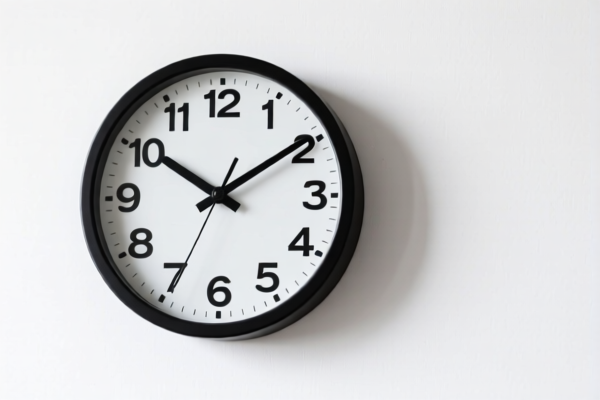
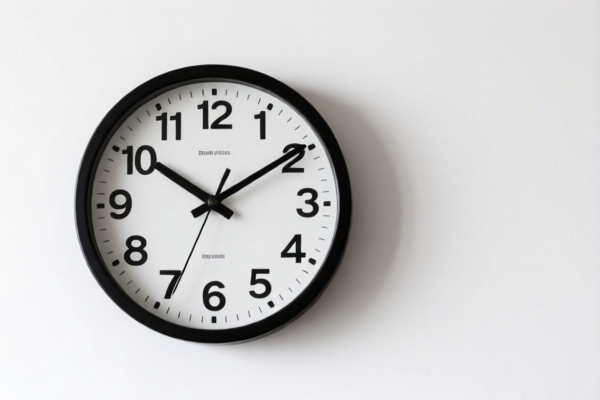
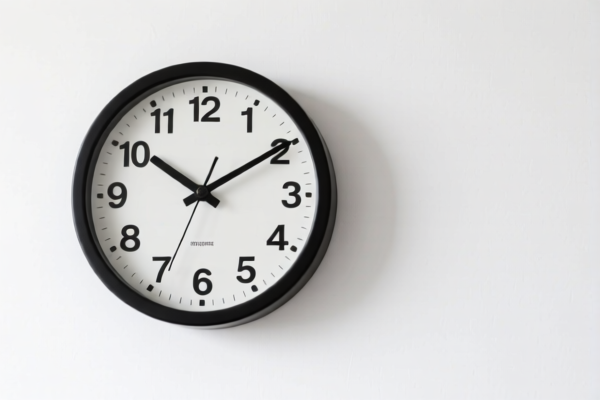
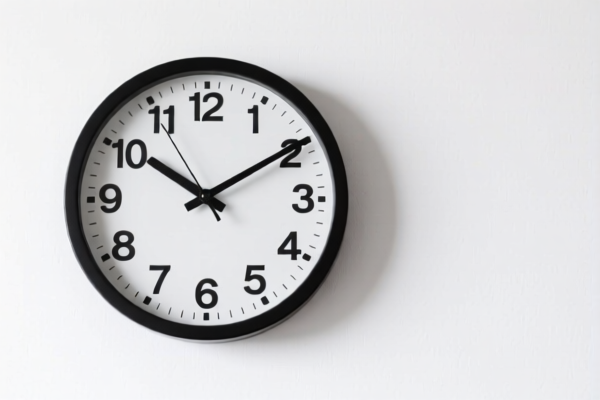
AI Analysis
🕰️ Wall Clocks (Wall-Mounted Timepieces)
🌐 HS Code Reference & Customs Clearance Guide | 2026 Latest Tariff Analysis | Professional Clearance Strategy
📌 I. Product Definition & Classification: Do You Really Understand "Wall Clocks"?
Wall clocks are essential timekeeping devices used in residential, commercial, and industrial settings. In international trade, they are broadly categorized into mechanical/analog clocks and digital/electronic clocks. The classification hinges on the power source, movement type, and specific function (e.g., simple time indication vs. interval indication).
⚠️ Key Distinction Points:
- Analog Wall Clocks: Typically battery-operated or winding mechanisms, displaying time via hands/dials. → Often fall under 9105.29.
- Digital Wall Clocks: Electronic displays (LCD/LED). If simple, often 9105.29; if complex (interval indicators with jewel movements), may fall under 9106.90 or 9104.00.
- Material/Construction: Wooden, plastic, metal, or glass casings generally do not change the HS code unless they constitute the essential character in a way that overrides Chapter 91 (rare for standard clocks).
📦 II. HS Code Classification Details (2026 Latest Tariff Authority Comparison)
Based on the provided data, here are the specific classifications for different types of wall clocks:
| HS Code | Product Description | Applicability Summary |
|---|---|---|
9105.29.40.00 |
Analog Wall Clocks (General) | Mechanical/battery-powered analog clocks. No material conflict. |
9105.29.50.00 |
Other Wall Clocks (Fallback) | Analog clocks using fallback principle for other categories. |
9106.90.65.00 |
Digital Wall Clocks (Interval Indicators) | Digital clocks with clockwork movements, battery-powered, indicating time intervals. |
9104.00.40.00 |
Digital Wall Clocks (Generic) | Digital clocks fitting under generic "Clocks" fallback if no specific material/use conflict. |
9105.29.40.00 |
Digital Wall Clocks (Simple) | Simple digital wall clocks inferred as clock finished products based on common sense. |
🔍 Important Note:
- The same HS Code (9105.29.40.00) applies to both some Analog and some Simple Digital clocks, highlighting that digitality alone does not always trigger a different HS code if it fits the "Wall Clock" definition broadly.
- However, Complex Digital Clocks (interval indicators with jewels) shift to 9106.90.65.00, which has a significantly different tax structure.
💰 III. 2026 Latest Tariff Rate Details (Including Surcharge & Policy Additions)
✅ Applicable Country: United States (US)
✅ Origin: China (CN) (Implied by "Section 301" and "122 Clause" context in data)
✅ Effective Date: 2025/2026 Period
🎯 1. 9105.29.40.00 —— Analog & Simple Digital Wall Clocks
| Item | Content |
|---|---|
| Base Tariff | 15¢ each + 6.4% (ad valorem) |
| Section 301 Surcharge | 0.0% |
| Section 122 Tariff | 10.0% |
| Total Effective Rate | 15¢ each + 16.4% |
| Tax Calculation | (15¢ × Qty) + (CIF Value × 16.4%) |
| De Minimis Eligibility | ❌ No (High risk of audit due to mixed tariff structure) |
| Legal Basis Path | HTSUS:9105.29.40.00 → Sec 301: 0% → Sec 122: 10% |
📌 Explanation:
- This is the most common classification for standard wall clocks.
- The 15¢ per unit fee adds up quickly for large volumes.
- Section 122 (10%) is an additional layer on top of the base 6.4%, making the total ad valorem rate 16.4%.
- No Section 301 (25%) applies here, making it relatively favorable compared to other categories.
🎯 2. 9105.29.50.00 —— Other Wall Clocks (Fallback Category)
| Item | Content |
|---|---|
| Base Tariff | 30¢ each + 4.3% (ad valorem) |
| Section 301 Surcharge | 7.5% |
| Section 122 Tariff | 10.0% |
| Total Effective Rate | 30¢ each + 21.8% |
| Tax Calculation | (30¢ × Qty) + (CIF Value × 21.8%) |
| De Minimis Eligibility | ❌ No |
| Legal Basis Path | HTSUS:9105.29.50.00 → Sec 301: 7.5% → Sec 122: 10% |
📌 Explanation:
- Higher per-unit fee (30¢) and higher base rate (4.3%).
- Section 301 applies at 7.5% (not 25%), which is unusual but specified in the data.
- Total ad valorem burden is 21.8%, making this more expensive than9105.29.40.00.
🎯 3. 9106.90.65.00 —— Digital Wall Clocks (Interval Indicators with Jewels)
| Item | Content |
|---|---|
| Base Tariff | 15¢ each + 2.3% + 0.8¢/jewel |
| Section 301 Surcharge | 25.0% |
| Section 122 Tariff | 10.0% |
| Total Effective Rate | 15¢ each + 37.3% + 0.8¢/jewel |
| Tax Calculation | (15¢ × Qty) + (CIF Value × 37.3%) + (0.8¢ × Total Jewels) |
| De Minimis Eligibility | ❌ No |
| Legal Basis Path | HTSUS:9106.90.65.00 → Sec 301: 25% → Sec 122: 10% |
📌 Explanation:
- This category is for complex digital clocks (e.g., those with mechanical jewel movements for timing intervals).
- Section 301 applies at 25%, the highest surcharge.
- Total ad valorem rate is 37.3% (2.3% + 25% + 10%).
- Additional cost: 0.8¢ per jewel, which can be significant for high-end or complex movements.
- Warning: If your digital clock has a simple LCD/LED display without jewel mechanisms, do not use this code. It attracts the highest tariff.
🎯 4. 9104.00.40.00 —— Digital Wall Clocks (Generic Fallback)
| Item | Content |
|---|---|
| Base Tariff | 30¢ each + 4.3% (ad valorem) |
| Section 301 Surcharge | 25.0% |
| Section 122 Tariff | 10.0% |
| Total Effective Rate | 30¢ each + 39.3% |
| Tax Calculation | (30¢ × Qty) + (CIF Value × 39.3%) |
| De Minimis Eligibility | ❌ No |
| Legal Basis Path | HTSUS:9104.00.40.00 → Sec 301: 25% → Sec 122: 10% |
📌 Explanation:
- This is the most expensive category.
- Section 301 at 25% combined with a high base fee (30¢) and high base rate (4.3%).
- Total ad valorem burden is 39.3%.
- Only use if the clock does not fit other specific definitions and no better alternative exists.
🛠️ IV. Customs Clearance Practical Advice (Battle-Tested Pitfall Guide)
✅ 1. Required Documentation Checklist (Non-Negotiable)
| Document | Required | Notes |
|---|---|---|
| ✅ Product Specifications | ✔️ | Must clearly state: Power source (battery/mains), Type (Analog/Digital), Display type. |
| ✅ Product Photos | ✔️ | Clear images of the face, back (movement type), and packaging. |
| ✅ Commercial Invoice | ✔️ | Description must match HS code logic (e.g., "Wall Clock, Battery Operated, Analog"). |
| ✅ Packing List | ✔️ | Item count is critical for the "per unit" fee calculation. |
| ✅ Certificate of Origin | ✔️ | To verify Chinese origin for Section 301/122 application. |
| ✅ Technical Diagram | ✔️ | If claiming "Interval Indicator" (9106.90.65.00), prove presence of jewel movement. |
✅ 2. Declaration Tips (Key Mantra)
🔥 “Match Type, Avoid Fallback, Specify Power!”
| Scenario | Correct Declaration | Wrong Declaration | Consequence |
|---|---|---|---|
| Standard Analog Clock | 9105.29.40.00 |
9105.29.50.00 |
Overpaying 5.4% ad valorem + 15¢/unit |
| Simple Digital Clock | 9105.29.40.00 |
9104.00.40.00 |
Overpaying ~23% ad valorem |
| Complex Digital (Jewel) | 9106.90.65.00 |
9105.29.40.00 |
Under-declared, risk of penalty & back-taxes |
| Vague Description | "Clock" | "Wall Clock, Digital, Battery, 12-inch" | Customs may reclassify to higher tariff |
✅ 3. Special Handling Cases
| Case | Handling Advice |
|---|---|
| OEM/White Label Clocks | Provide design specs. If it’s just a logo change on an analog clock, stick with 9105.29.40.00. |
| Smart/Digital Clocks | If it connects to Wi-Fi/App, it might NOT be a simple "Wall Clock" under 9105. It could fall under Chapter 85 (Electrical Equipment). Check Chapter 85 first! If it’s purely timekeeping, use 9105/9106. |
| Digital with Alarm | Still 9105.29.40.00 if simple. If it has complex timing intervals (e.g., kitchen timer with jewels), consider 9106.90.65.00. |
| Wooden/Metal Casings | Does not change HS code from Chapter 91 unless the case is the primary value driver (rare for clocks). |
🌍 V. Global Market Clearance Comparison (2026 Latest)
| Country/Region | Recommended HS Code | Tariff Impact | Certification | Notes |
|---|---|---|---|---|
| 🇺🇸 USA | 9105.29.40.00 |
16.4% + 15¢/unit | No specific | Best Rate for standard clocks. Avoid 9104 and 9106 unless necessary. |
| 🇨🇳 China | 9105.29.40.00 |
5% (Export) | CCC (if applicable) | Export duties may vary. Focus on US import clearance. |
| 🇪🇺 EU | 9105.29.00.00 |
0% (Most FTA) | CE + RoHS | No Section 122/301 equivalents. Very favorable. |
| 🇬🇧 UK | 9105.29.00.00 |
0% | UKCA | Post-Brexit rules. Generally low duty. |
| 🇦🇺 Australia | 9105.29.00.00 |
5% | RCM | No high surcharges. |
📌 Conclusion:
- USA is the highest-cost market due to Section 122 and potential Section 301.
- EU/UK/Australia are much more favorable with low or zero tariffs.
- Strategic Advice: If shipping to the US, ensure the HS code is9105.29.40.00for all standard wall clocks (analog and simple digital) to minimize costs.
📌 VI. Common Mistakes & Pitfall Guide (Lessons Learned)
❌ Mistake 1: Classifying all digital clocks under 9104.00.40.00
👉 Consequence: 39.3% tariff instead of 16.4%. Overpayment of ~23%.
❌ Mistake 2: Classifying simple digital clocks as 9106.90.65.00
👉 Consequence: 37.3% tariff + per-jewel fees. Complexity without benefit.
❌ Mistake 3: Missing the "per unit" fee in cost calculations
👉 Consequence: Underestimating landed cost. For 10,000 units, 9105.29.40.00 adds $1,500 in flat fees.
❌ Mistake 4: Not declaring "Wall Clock" specifically
👉 Consequence: Customs may view it as "Part" or "Accessory" or misclassify, leading to delays.
✅ Correct Approach:
"Wall Clock, Battery Operated, Analog, Plastic Case, Model XYZ, 12-inch Diameter"
OR
"Digital Wall Clock, Battery Operated, LCD Display, Simple Time Indication, Model ABC"
🎯 VII. Conclusion: Professional Declaration Saves Money!
🎯 Remember the Mantra:
🔹 "Analog & Simple Digital: 9105.29.40 (16.4%)
🔹 Complex Digital (Jewel): 9106.90.65 (37.3%)
🔹 Fallback/Other: 9105.29.50 (21.8%) or 9104.00.40 (39.3%)
🔹 "Don't use Fallback if Standard Fits!"
📌 Pro Tip:
If your digital clock has Wi-Fi, Bluetooth, or Smart Home Integration, it may NOT be a clock under Chapter 91. It might fall under Chapter 85 (Electronic Appliances). Consult a customs broker to determine if Chapter 85 offers a lower duty rate for "Smart Clocks."
📣 Action Plan:
📞 Contact a Customs Broker + Provide Product Photos + Verify Movement Type
🚀 Ensure Correct HS Code (9105.29.40.00) for standard clocks to maximize profit margins!
✨ Professional Clearance Starts with Accurate Classification!
💼 Every Cent Saved is a Cent Earned!
Customer Reviews
About HS Code Classification
The Harmonized System (HS) is an internationally standardized nomenclature developed by the World Customs Organization (WCO) to classify traded products. Over 200 countries use the HS system as the basis for customs tariffs, trade statistics, and import/export regulations.
Each HS code follows a hierarchical structure:
- Chapter (2 digits) — Broad category of goods (e.g., Chapter 84: Machinery and Mechanical Appliances)
- Heading (4 digits) — More specific grouping within the chapter
- Subheading (6 digits) — Internationally standardized breakdown, used by all WCO member countries
- National subdivisions (8-10 digits) — Country-specific extensions for further classification, such as US HTSUS 10-digit codes
Correct HS code classification is essential for smooth customs clearance, accurate duty payment, and compliance with trade regulations. Misclassification can lead to customs delays, overpayment of duties, or penalties.
When importing from CN to US, the applicable tariff rates may include:
- Most-Favored-Nation (MFN) rate — The standard duty rate applied to WTO members
- General rate — Applied to countries without trade agreements
- Trade remedy duties — Additional tariffs such as Section 301 (anti-dumping), Section 232 (national security), or countervailing duties
The information provided on this page is for reference purposes only. For official classification, please consult with your local customs authority or a licensed customs broker.