Wall Drilling and Repair Tools
CN → US| HS Code | Tariff Rate | Origin | Destination | Doc |
|---|---|---|---|---|
| 8467891000 | 17.5% | CN | US | Official Doc |
| 8205100000 | 41.2% | CN | US | Official Doc |
| 9017800000 | 40.3% | CN | US | Official Doc |
| 9017900160 | 0.0% | CN | US | Official Doc |
| 8205595560 | 40.3% | CN | US | Official Doc |
Product Images
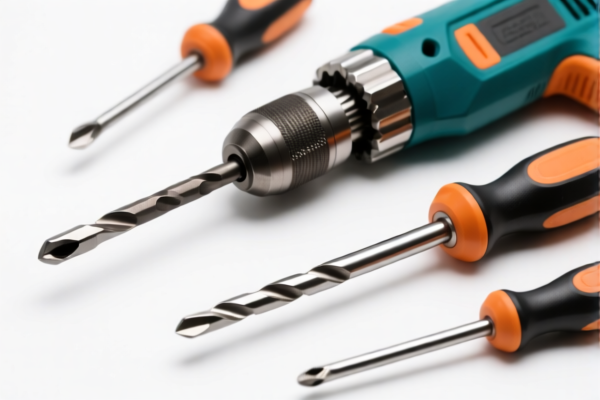
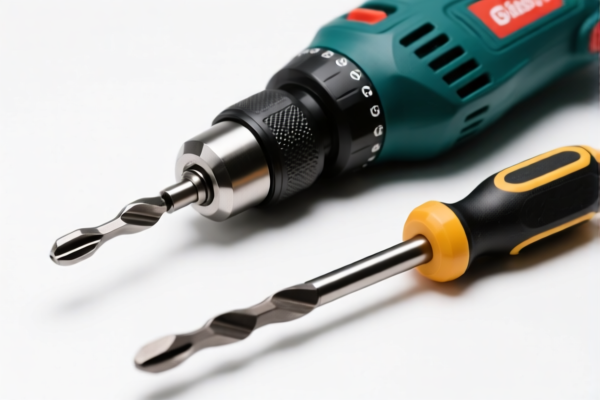
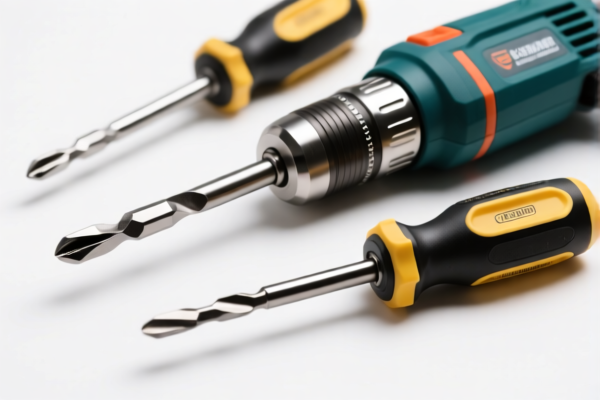
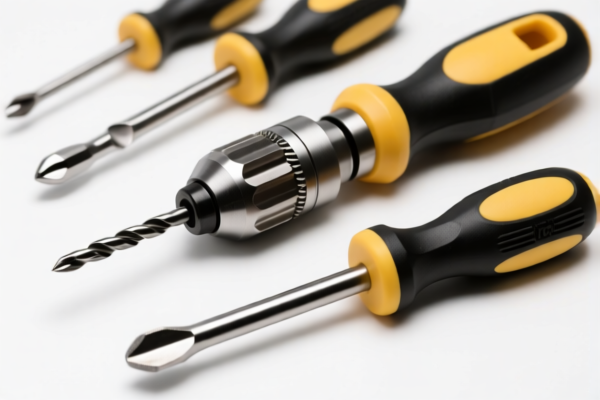
AI Analysis
🛠️ Wall Drilling and Repair Tools (多孔与修补工具)
🌐 HS Code Reference & Customs Clearance Guide | 2026 Latest Tariff Analysis | Professional Clearance Strategy
📌 I. Product Definition & Classification: What Are "Wall Drilling and Repair Tools"?
"Wall Drilling and Repair Tools" refer to handheld devices or kits used for creating holes in walls (typically concrete, brick, or drywall) and filling/repairing the resulting damage or old holes. In international trade, these items are ambiguous. They can be classified as powered hand tools, manual hand tools, or even measuring/positioning instruments depending on their specific drive mechanism and primary function.
⚠️ Key Classification Challenge:
- Is it powered (pneumatic, hydraulic, electric)? → Likely 8467
- Is it manual (hand-held, non-motorized)? → Likely 8205
- Is it used primarily for positioning/measuring before drilling? → Likely 9017
📦 II. HS Code Classification Details (2026 Latest Tariff Authority Mapping)
Based on the provided data, here are the five potential HS Code classifications, ranked by relevance and logical inference.
| HS Code | Product Description & Summary | Key Matching Criteria | Total Tax Rate |
|---|---|---|---|
8467.89.10.00 |
Powered Hand Tools (Pneumatic/Hydraulic/Electric) | Matches "hand-held tool" category. Function (drilling/repair) implies a power source (pneumatic, hydraulic, or self-contained motor) fitting metal/construction tool attributes. No material conflict. | 17.5% |
8205.10.00.00 |
Manual Hand Tools: Drilling/Tapping/Screwing | Matches "drilling" directly to "tools for drilling, tapping, or screwing". Classified as hand tools. | 41.2% |
8205.59.55.60 |
Other Hand Tools (Iron/Steel) | Matches "hand tool" category. Infers main material is iron/steel based on common sense. Function (drilling/repair) doesn't conflict with "other hand tools". | 40.3% |
9017.80.00.00 |
Measuring/Positioning Instruments | Matches tools used for drafting, marking, or mathematical calculation. Form fits measuring/positioning aids. Logic consistent with hand-held length/position measurement instruments. | 40.3% |
9017.90.01.60 |
Parts of Measuring Instruments | Matches wall repair devices if inferred as involving "positioning/marking" for holes. Classified under "Other" due to unspecified material. | Base Rate + 35.0% |
🔍 Critical Note:
- The biggest difference is between Powered (8467) and Manual/Instrument (8205/9017).
- 8467.89.10.00 offers the lowest tax (17.5%) but requires proof of being a powered tool.
- 8205 and 9017 codes carry high additional tariffs (25% + 10%), leading to total rates of 40-41%.
💰 III. 2026 Latest Tariff Rate Breakdown (Including Surcharges & Policy Add-ons)
✅ Applicable Country: United States (US)
✅ Origin: China (CN)
✅ Effective Time: Current US Trade Policy (Section 301 & IEEPA)
🎯 1. 8467.89.10.00 —— Powered Hand Tools (Lowest Tax Option)
| Item | Detail |
|---|---|
| Base Tariff | 0.0% |
| Section 301 Surcharge | +7.5% |
| IEEPA Surcharge (122) | +10% |
| Total Rate | 17.5% |
| Tax Calculation | CIF Value × 17.5% |
| De Minimis Eligibility | ❌ No (Deny de minimis for this category) |
| Legal Basis Path | USITC:8467.89.10.00 → FOOTNOTE:301_Surcharge → IEEPA:122 |
📌 Explanation:
- This is the most cost-effective classification if the tool is powered (e.g., cordless drill, pneumatic hammer).
- The base tariff is 0%, with only moderate surcharges.
- Must prove the tool has a motor, pneumatic connection, or hydraulic drive.
🎯 2. 8205.10.00.00 —— Manual Hand Tools for Drilling (High Tax)
| Item | Detail |
|---|---|
| Base Tariff | 6.2% |
| Section 301 Surcharge | +25.0% |
| IEEPA Surcharge (122) | +10% |
| Total Rate | 41.2% |
| Tax Calculation | CIF Value × 41.2% |
| De Minimis Eligibility | ❌ No |
| Legal Basis Path | USITC:8205.10.00.00 → FOOTNOTE:301 → IEEPA:9903.01.25 |
📌 Note:
- This applies to manual drills (e.g., hand-held screwdrivers, manual hole punches).
- High tariff burden due to 25% Section 301 duty.
- Only consider if the tool is strictly manual and cannot be classified as powered.
🎯 3. 8205.59.55.60 & 9017.80.00.00 —— Other Hand Tools / Measuring Instruments (High Tax)
| Item | Detail |
|---|---|
| Base Tariff | 5.3% |
| Section 301 Surcharge | +25.0% |
| IEEPA Surcharge (122) | +10% |
| Total Rate | 40.3% |
| Tax Calculation | CIF Value × 40.3% |
| De Minimis Eligibility | ❌ No |
📌 Note:
- These codes are less ideal due to the 40.3% total rate.
-9017.90.01.60has a complex rate: Base Rate (part-specific) + 35.0%, likely resulting in even higher costs.
🛠️ IV. Customs Clearance Practical Advice (Real-World Pitfall Guide)
✅ 1. Document Checklist (Must-Haves)
| Document | Required | Description |
|---|---|---|
| ✅ Product Specifications | ✔️ | Must specify drive type (electric, pneumatic, manual) |
| ✅ Photos (Clear & Detailed) | ✔️ | Show power source, buttons, batteries, or pneumatic fittings |
| ✅ User Manual | ✔️ | Indicates usage (e.g., "For drilling concrete," "For marking positions") |
| ✅ Commercial Invoice | ✔️ | Must match HS Code description exactly |
| ✅ Battery Safety Certificate | ✔️ | If powered (lithium-ion), UN38.3 is mandatory |
✅ 2. Declaration Strategy (Key Tips)
🔥 "Powered vs. Manual: Define Clearly, Save 25%!"
| Scenario | Correct Declaration | Risk of Error |
|---|---|---|
| Cordless Drill/Driver | 8467.89.10.00 (Powered Hand Tool) |
❌ Do NOT declare as manual tool → Saves 23.7% tax |
| Manual Hole Punch | 8205.10.00.00 (Manual Hand Tool) |
❌ Do NOT declare as powered → Avoids fraud penalties |
| Stud Finder + Drill Bit Kit | Separate items: 9017 (Finder) + 8205 (Bits) |
❌ Mixing causes confusion → Delays |
| Positioning Template for Drilling | 9017.80.00.00 (Measuring Instrument) |
❌ If used as drill, misclassification risk |
✅ 3. Special Cases Handling
| Case | Handling Advice |
|---|---|
| Kit with Multiple Items | Declare main item by primary function. If drill is main, use 8467 or 8205. Accessories can be bundled if minor. |
| Lithium Battery Included | Must include UN38.3 and MSDS. Hazardous cargo declaration required. |
| "Repair Tool" Ambiguity | If tool is for filling holes (e.g., caulk gun), it may fall under 8205.59 (Other Hand Tools). Ensure clarity. |
| Pre-Cutting Ruling | Highly Recommended for ambiguous "Repair Kits" to avoid 40%+ tariffs. |
🌍 V. Global Market Clearance Comparison (2026)
| Country/Region | Recommended HS Code | Tariff (China Origin) | Certifications | Notes |
|---|---|---|---|---|
| 🇺🇸 USA | 8467.89.10.00 |
17.5% | FCC, UL, UN38.3 (if battery) | Lowest tax if powered. Avoid 8205 (41.2%). |
| 🇨🇳 China | 8467.89.10.00 |
5-10% | CCC | Import duty lower than US. |
| 🇪🇺 EU | 8467.89.10.00 |
4.5% | CE, RoHS | No Section 301 equivalent. |
| 🇬🇧 UK | 8467.89.10.00 |
4.5% | UKCA | Post-Brexit tariffs similar to EU. |
| 🇦🇺 Australia | 8467.89.10.00 |
5% | RCM | Low tariff, no surcharges. |
📌 Conclusion:
- USA is the most critical market due to Section 301 + IEEPA surcharges.
- Power source is the key differentiator: Powered tools (8467) pay 17.5%; Manual/Measuring tools (8205/9017) pay 40-41%.
- Always aim for8467.89.10.00if the tool has any power mechanism.
📌 VI. Common Errors & Pitfalls (Lessons Learned)
❌ Mistake 1: Declaring a Cordless Drill as a "Manual Hand Tool" (8205)
👉 Consequence: Pay 41.2% instead of 17.5% → Extra 23.7% cost!
❌ Mistake 2: Declaring a Manual Stud Finder as a "Drill" (8205)
👉 Consequence: Customs rejects or reclassifies to 9017 → Delays + Penalties.
❌ Mistake 3: Omitting Battery Documentation
👉 Consequence: Cargo held at port, return shipment, or fines.
❌ Mistake 4: Using vague terms like "Repair Kit" without breakdown
👉 Consequence: Customs assigns worst-case scenario (9017.90 with complex rates) → Highest Tax.
✅ Correct Approach:
"Cordless Hammer Drill, 20V Lithium-Ion, for Concrete Wall Drilling, Model XYZ, with UN38.3 Certification"
🎯 VII. Conclusion: Precise Classification, Maximum Savings!
🎯 Remember the Golden Rule:
🔹 "Powered = 8467 (17.5%) | Manual = 8205 (41.2%) | Measuring = 9017 (40.3%)"
🔹 "Don't let ambiguity cost you 24% in tariffs!"
📌 Pro Tip:
If your product is a kit (e.g., drill + bits + repair paste), declare the drill as the main item (8467.89.10.00) and list accessories separately if their value is significant. This keeps the majority value under the lowest tax rate.
📣 Immediate Action:
📞 Contact a Professional Broker + Provide Product Photos + Apply for Advance Ruling
🚀 Save up to 24% in duties. Clear customs smoothly.
✨ Professional Clearance Starts with Accurate Classification!
💼 Every cent saved is profit earned!
Customer Reviews
About HS Code Classification
The Harmonized System (HS) is an internationally standardized nomenclature developed by the World Customs Organization (WCO) to classify traded products. Over 200 countries use the HS system as the basis for customs tariffs, trade statistics, and import/export regulations.
Each HS code follows a hierarchical structure:
- Chapter (2 digits) — Broad category of goods (e.g., Chapter 84: Machinery and Mechanical Appliances)
- Heading (4 digits) — More specific grouping within the chapter
- Subheading (6 digits) — Internationally standardized breakdown, used by all WCO member countries
- National subdivisions (8-10 digits) — Country-specific extensions for further classification, such as US HTSUS 10-digit codes
Correct HS code classification is essential for smooth customs clearance, accurate duty payment, and compliance with trade regulations. Misclassification can lead to customs delays, overpayment of duties, or penalties.
When importing from CN to US, the applicable tariff rates may include:
- Most-Favored-Nation (MFN) rate — The standard duty rate applied to WTO members
- General rate — Applied to countries without trade agreements
- Trade remedy duties — Additional tariffs such as Section 301 (anti-dumping), Section 232 (national security), or countervailing duties
The information provided on this page is for reference purposes only. For official classification, please consult with your local customs authority or a licensed customs broker.