Wall Flag Base
CN → US| HS Code | Tariff Rate | Origin | Destination | Doc |
|---|---|---|---|---|
| 3926909989 | 22.8% | CN | US | Official Doc |
| 3926905000 | 21.3% | CN | US | Official Doc |
| 3925100000 | 41.3% | CN | US | Official Doc |
| 3925900000 | 40.3% | CN | US | Official Doc |
| 7326908688 | 87.9% | CN | US | Official Doc |
Product Images
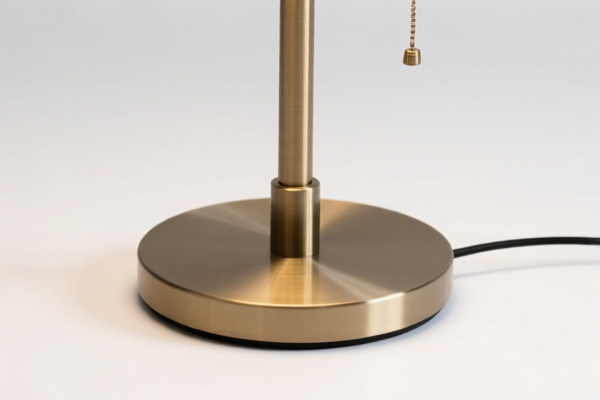
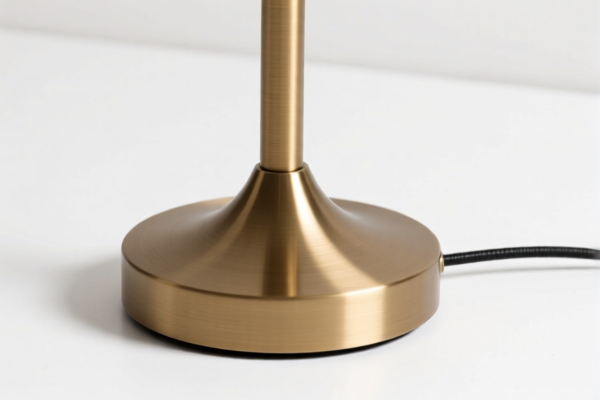
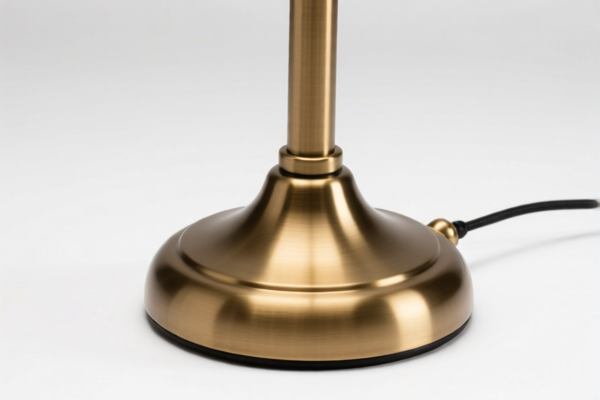

AI Analysis
🚩 Wall Flag Base | Plastic & Metal Stand Support Systems
🌐 HS Code Reference & Customs Clearance Guide | 2026 Latest Tariff Analysis | Professional Compliance Strategy
📌 I. Product Definition & Classification: What is a "Wall Flag Base"?
A Wall Flag Base is a stabilizing component designed to hold, display, or mount flags (typically decorative, promotional, or national flags) against walls, poles, or indoor structures. In international trade, classification depends strictly on material composition and functional classification.
It falls into two main material categories: 1. Plastic Bases: Lightweight, non-structural supports. Classified under Chapter 39 (Plastics). 2. Iron/Steel Bases: Heavy-duty, structural supports. Classified under Chapter 73 (Articles of Iron or Steel).
⚠️ Critical Distinction:
- If the base is made of Plastic → It is considered an "Other Plastic Article" → Chapter 39.
- If the base is made of Iron/Steel → It is considered an "Other Article of Iron/Steel" → Chapter 73.
- Do not classify metal bases as "parts of flags" (Chapter 63) or "statues" (Chapter 97) unless specifically stated; functional bases are classified by material.
📦 II. HS Code Classification Matrix (2026 Latest Tariff Data)
| HS Code | Product Description | Material | Functional Category |
|---|---|---|---|
3926.90.99.89 |
Plastic Wall Flag Base | Plastic | Other Plastic Articles |
3926.90.50.00 |
Plastic Wall Flag Base | Plastic | Other Plastic Articles |
3925.10.00.00 |
Plastic Wall Flag Base | Plastic | Other Plastic Articles |
3925.90.00.00 |
Plastic Wall Flag Base | Plastic | Other Plastic Articles |
7326.90.86.88 |
Flag Pole Base (Metal) | Iron/Steel | Other Articles of Iron/Steel |
🔍 Key Note:
- Plastic bases have varying duty rates depending on the specific sub-heading interpretation (3926vs3925).
- Metal bases are subject to significantly higher tariffs due to "Steel/Aluminum/Copper" surcharges.
- All codes below apply to imports from China to the USA.
💰 III. 2026 Latest Tariff Rate Breakdown (Including Surtaxes)
✅ Destination Country: United States (US)
✅ Origin Country: China (CN)
✅ Applicable Policies: Section 301, Section 232, IEEPA Surcharge
🎯 1. Plastic Bases (HS Codes: 3926 & 3925 Series)
A. 3926.90.99.89
Most Common for General Plastic Accessories
| Item | Detail |
|---|---|
| Base Tariff | 5.3% |
| Section 301 Surcharge | 7.5% |
| 122 Clause Surcharge | 10% |
| Total Effective Rate | 22.8% |
| Calculation | CIF Value × 22.8% |
| Legal Path | USITC:3926.90.99.89 → FOOTNOTE:301 → 122_CLAUSE |
B. 3926.90.50.00
Alternative Plastic Classification
| Item | Detail |
|---|---|
| Base Tariff | 3.8% |
| Section 301 Surcharge | 7.5% |
| 122 Clause Surcharge | 10% |
| Total Effective Rate | 21.3% |
| Calculation | CIF Value × 21.3% |
| Legal Path | USITC:3926.90.50.00 → FOOTNOTE:301 → 122_CLAUSE |
C. 3925.10.00.00
High Risk for Plastic Bases
| Item | Detail |
|---|---|
| Base Tariff | 6.3% |
| Section 301 Surcharge | 25.0% |
| 122 Clause Surcharge | 10% |
| Total Effective Rate | 41.3% |
| Calculation | CIF Value × 41.3% |
| Legal Path | USITC:3925.10.00.00 → FOOTNOTE:301 → 122_CLAUSE |
📌 Warning:
- Classifying a plastic base under 3925 (Builders' Work in Plastics) instead of 3926 (Other Plastic Articles) results in a ~20% higher tax burden.
- Recommendation: Argue that the base is an "accessory" (3926), not a "builder's item" (3925), unless it is permanently installed into building structure.
🎯 2. Metal Base (Iron/Steel) (HS Code: 7326.90.86.88)
A. 7326.90.86.88
Iron/Steel Flag Base
| Item | Detail |
|---|---|
| Base Tariff | 2.9% |
| Section 301 Surcharge | 25.0% |
| 122 Clause Surcharge | 10% |
| Steel/Aluminum/Copper Surcharge | 50.0% |
| Total Effective Rate | 87.9% |
| Calculation | CIF Value × 87.9% |
| Legal Path | USITC:7326.90.86.88 → FOOTNOTE:301 → 122_CLAUSE → 232_TARIFF |
📌 Critical Alert:
- This is the highest tax bracket in the dataset.
- The 50% surcharge is applied specifically to "Steel, Aluminum, Copper Articles" under Section 232/Trade Acts.
- Result: For every $100 of product value, you pay $87.90 in duties. This is rarely cost-effective unless the base is negligible in value compared to the flag.
🛠️ IV. Customs Clearance Operational Advice (Risk Mitigation)
✅ 1. Documentation Checklist (Mandatory)
| Document | Required? | Purpose |
|---|---|---|
| Product Specification Sheet | ✔️ | Confirm material (Plastic vs. Steel) and weight. |
| Material Declaration | ✔️ | Explicitly state: "100% Polypropylene" or "Forged Steel". |
| Commercial Invoice | ✔️ | Description must match HS Code logic (e.g., "Plastic Base for Decorative Flag"). |
| Packing List | ✔️ | Show net/gross weight accurately for valuation. |
| Photo of Product | ✔️ | Clear view of material texture and any markings. |
| Bill of Lading | ✔️ | Standard shipping document. |
✅ 2. Classification Strategy (Key Tactics)
🔥 "Material is King: Plastic Wins, Steel Costs."
| Scenario | Recommended Action | Outcome |
|---|---|---|
| Plastic Base | Classify under 3926.90.99.89 or 3926.90.50.00 | 21.3% - 22.8% Duty |
| Plastic Base (Misclassified) | Avoid 3925 Series | Prevent 41.3% Duty penalty |
| Steel Base | Consider changing material to Plastic or Aluminum (check Al rules) | Avoid 87.9% Duty |
| Mixed Material | If plastic coating > steel core, argue plastic classification (complex, requires ruling) | High risk of audit |
✅ 3. Special Considerations
| Issue | Solution |
|---|---|
| Value Declaration | Ensure the base value is declared separately if sold with a flag pole. Do not inflate the base value. |
| Steel Surcharge (50%) | If using steel, confirm if the base is a "structural part" of the pole. If so, it may be part of the pole's HS Code, but bases are usually "other articles." |
| Section 232 Exemptions | Some steel products are exempt if sourced from specific countries (not China). China-origin steel bases are NOT exempt. |
| Pre-Ruling | For large shipments, file an Advance Ruling with CBP to lock in the 3926 classification for plastic bases. |
🌍 V. Market Comparison & Strategy (2026)
| Market | HS Code | Total Duty (China Origin) | Strategy |
|---|---|---|---|
| 🇺🇸 USA | 3926.90.99.89 |
22.8% | Best Option: Use Plastic Bases. |
| 🇺🇸 USA | 7326.90.86.88 |
87.9% | Avoid: Steel bases are prohibitively expensive. |
| 🇪🇺 EU | 3926.90 | ~6.5% + VAT | Lower tariffs, but stricter CE/RoHS compliance. |
| 🇨🇳 China | 3926.90 | 5% (Import) | Low duty, but focus is on export compliance. |
📌 Conclusion:
- Plastic bases are the cost-effective choice for the US market.
- Steel bases incur an 87.9% tax, making them commercially unviable for mass import from China.
- Differentiation: Ensure your product description clearly states "Plastic" to avoid misclassification into the high-tax steel category.
📌 VI. Common Errors & Pitfalls (Lessons Learned)
❌ Error 1: Calling a plastic base "Flag Accessory" without material specification.
👉 Result: CBP may classify it as "Other" (higher rate) or demand extra documentation.
✅ Fix: Clearly state "Material: Plastic, PP/ABS" on invoice.
❌ Error 2: Classifying a steel base as "Plastic" to avoid the 50% surcharge.
👉 Result: Severe penalty, seizure, and potential fraud charges upon physical inspection.
✅ Fix: Be honest about material. If using steel, recalculate pricing to absorb the 87.9% duty.
❌ Error 3: Using HS Code 3925.10.00.00 for a small plastic base.
👉 Result: Unnecessary 41.3% tax vs. 22.8%.
✅ Fix: Argue that the base is a "finished article" (3926), not a "builder's item" (3925).
🎯 VII. Final Verdict & Recommendation
🎯 Summary:
- Best HS Code: 3926.90.99.89 or 3926.90.50.00 (Plastic)
- Total Tax: 21.3% - 22.8%
- Worst HS Code: 7326.90.86.88 (Steel)
- Total Tax: 87.9%
🚀 Action Plan:
1. Switch to Plastic: If currently using steel, switch to high-quality plastic or composite materials.
2. Precise Description: Use "Plastic Wall Flag Base" in all documentation.
3. Pre-Ruling: File for a binding ruling on3926.90.99.89if volume is high.
4. Cost Audit: Re-negotiate prices with US buyers to account for the 22.8% duty, not just the product cost.
📣 Immediate Step:
📞 Consult your customs broker with the product photo and material spec.
📝 Update your Invoice Description to: "Plastic Decorative Flag Base, Non-Structural, Model XYZ".
💰 Save up to 65% in duties by avoiding steel classification!
✨ Smart Classification, Smarter Profits!
💼 Don't let the 50% steel surcharge eat your margin!
Customer Reviews
About HS Code Classification
The Harmonized System (HS) is an internationally standardized nomenclature developed by the World Customs Organization (WCO) to classify traded products. Over 200 countries use the HS system as the basis for customs tariffs, trade statistics, and import/export regulations.
Each HS code follows a hierarchical structure:
- Chapter (2 digits) — Broad category of goods (e.g., Chapter 84: Machinery and Mechanical Appliances)
- Heading (4 digits) — More specific grouping within the chapter
- Subheading (6 digits) — Internationally standardized breakdown, used by all WCO member countries
- National subdivisions (8-10 digits) — Country-specific extensions for further classification, such as US HTSUS 10-digit codes
Correct HS code classification is essential for smooth customs clearance, accurate duty payment, and compliance with trade regulations. Misclassification can lead to customs delays, overpayment of duties, or penalties.
When importing from CN to US, the applicable tariff rates may include:
- Most-Favored-Nation (MFN) rate — The standard duty rate applied to WTO members
- General rate — Applied to countries without trade agreements
- Trade remedy duties — Additional tariffs such as Section 301 (anti-dumping), Section 232 (national security), or countervailing duties
The information provided on this page is for reference purposes only. For official classification, please consult with your local customs authority or a licensed customs broker.