Wall Mirror
CN → USProduct Images

AI Analysis
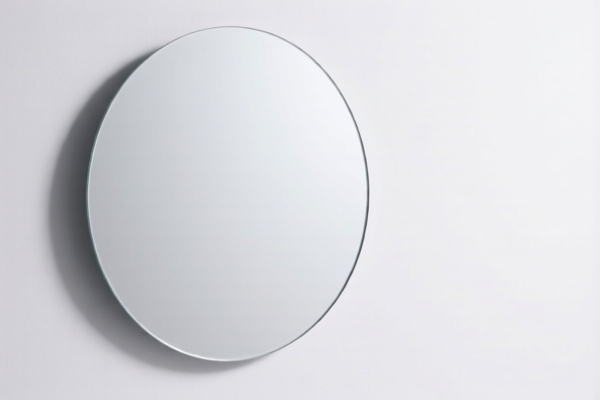
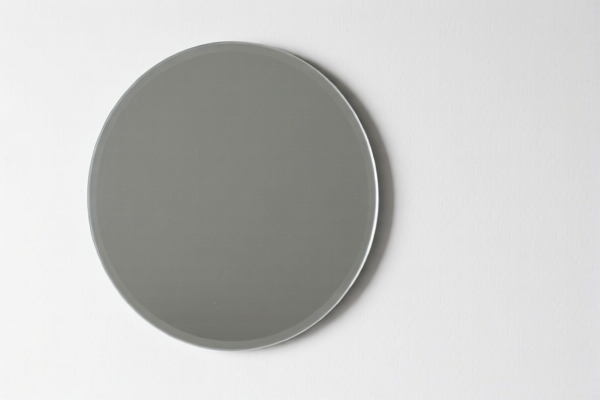
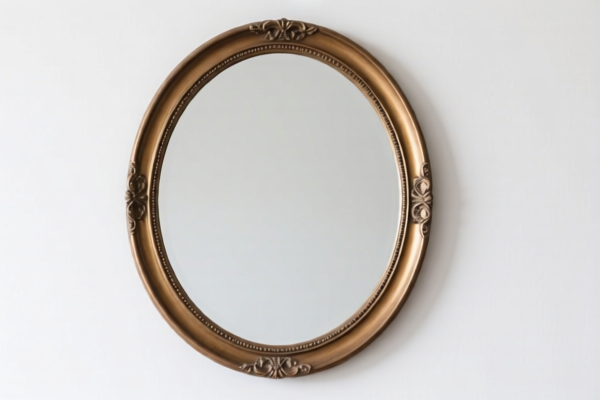
🪞 Wall Mirror (Decorative Mirrors for Interior Design)
🌐 HS Code Reference & Clearance Guide | 2026 Latest Tariff Analysis | Professional Customs Strategy
📌 I. Product Definition & Classification: Do You Really Understand "Wall Mirrors"?
Wall mirrors are essential interior decor items, functional aids, and design elements used in residential, commercial, and hospitality settings. In international trade, they are primarily classified based on their material composition, functionality, and whether they are backed/silvered.
Key Distinctions: * Glass Mirrors (Silvered/Aluminized): Most common. Made of glass with a reflective coating (silver or aluminum) on one side, often backed with paint, wood, or other materials. * Non-Glass Mirrors: Made from acrylic, plexiglass, or polished metal. * Backed vs. Unbacked: Mirrors with wooden frames, metal casings, or decorative backing are treated differently than plain glass mirrors.
⚠️ Critical Classification Point:
- If it is a plain glass mirror (silvered/aluminized) without significant framing or backing that changes its essential character → Chapter 70 (Glass).
- If it is integrated with a specific furniture frame (e.g., a vanity mirror attached to a dressing table) → Might be classified under Chapter 94 (Furniture).
- Decorative Wall Mirrors (standalone, framed or unframed glass) → 9009.12.00.00 or 7009.10.00.00 depending on structure.
📦 II. HS Code Classification Details (2026 Latest Tariff Authoritative Comparison)
| HS Code | Product Description | Applicable Scenario | Key Features |
|---|---|---|---|
9009.12.00.00 |
Projectors, other than cinematographic | Note: Often confused, but mirrors are NOT projectors. | ❌ Incorrect for Mirrors |
7009.10.00.00 |
Glass mirrors, unmounted | Unframed glass mirrors, raw mirror sheets | ✅ Unframed, plain glass |
7009.91.00.00 |
Glass mirrors, with backing (Wooden) | Mirrors with wooden frames or wooden backing | ✅ Wooden frame/backing |
7009.92.00.00 |
Glass mirrors, with backing (Other materials) | Mirrors with metal, plastic, or composite frames/backing | ✅ Non-wooden frame/backing |
9403.20.00.00 |
Furniture of glass | Mirrors integrated into glass furniture (e.g., glass cabinet doors) | ✅ Part of larger furniture |
9009.12.00.00 |
Projectors... | See Note above | ❌ Not applicable |
🔍 Key Reminder:
- Plain Glass Mirrors (Unframed): Typically classified under 7009.10.00.00.
- Framed/Backed Mirrors:
- Wooden Frame/Backing: 7009.91.00.00.
- Non-Wooden Frame/Backing (Metal, Plastic, Composite): 7009.92.00.00.
- Do Not classify standalone wall mirrors as furniture (9403) unless they are an integral part of a furniture piece (e.g., a dressing table).
💰 III. 2026 Latest Tariff Rate Details (Including Additional Taxes, Policy Surcharges)
✅ Applicable Country: United States (US)
✅ Country of Origin: China (CN)
✅ Effective Date: From November 10, 2025 (for subsequent imports)
🎯 1. 7009.10.00.00 —— Glass Mirrors, Unmounted (Unframed)
| Item | Details |
|---|---|
| Base Tariff Rate | 0% (ad valorem) |
| USITC Additional Tariff | +7.5% (Under USITC Footnote 88.01 for certain glass articles) |
| IEEPA Additional Tariff | +10% (For products from China/Hong Kong, effective from Nov 10, 2025) |
| Total Tariff Rate | 17.5% |
| Tax Calculation | CIF Value × 17.5% |
| De Minimis Exemption Eligible | ❌ No (deny_de_minimis) |
| Legal Basis Path | IEEPA:9903.01.24 → USITC:7009.10.00.00 → FOOTNOTE:88.01 |
📌 Explanation:
- Although the base rate is 0%, the 7.5% USITC tariff applies to certain glass mirrors due to trade remedies.
- The 10% IEEPA tariff is added for Chinese origin.
- Total: 17.5%. This is moderate but significant for low-margin goods.
🎯 2. 7009.91.00.00 —— Glass Mirrors, with Wooden Backing/Frame
| Item | Details |
|---|---|
| Base Tariff Rate | 0% |
| USITC Additional Tariff | +7.5% |
| IEEPA Additional Tariff | +10% |
| Total Tariff Rate | 17.5% |
| Tax Calculation | CIF Value × 17.5% |
| De Minimis Exemption Eligible | ❌ No (deny_de_minimis) |
| Legal Basis Path | IEEPA:9903.01.24 → USITC:7009.91.00.00 → FOOTNOTE:88.01 |
📌 Note:
- Same tariff structure as unmounted mirrors. The wooden frame does not increase the tariff rate but changes the HS code.
- Ensure the "wooden" component is clearly defined (e.g., solid wood, plywood, MDF with wood veneer).
🎯 3. 7009.92.00.00 —— Glass Mirrors, with Other Backing (Metal/Plastic)
| Item | Details |
|---|---|
| Base Tariff Rate | 0% |
| USITC Additional Tariff | +7.5% |
| IEEPA Additional Tariff | +10% |
| Total Tariff Rate | 17.5% |
| Tax Calculation | CIF Value × 17.5% |
| De Minimis Exemption Eligible | ❌ No (deny_de_minimis) |
| Legal Basis Path | IEEPA:9903.01.24 → USITC:7009.92.00.00 → FOOTNOTE:88.01 |
📌 Note:
- Applies to mirrors with metal, plastic, or composite frames/backing.
- The tariff rate remains 17.5%.
🛠️ IV. Customs Clearance Practical Advice (Practical Pitfall Avoidance Guide)
✅ 1. Documentation Checklist (All Required)
| Document | Mandatory | Description |
|---|---|---|
| ✅ Product Specifications | ✔️ | Size, material (glass type, backing material), weight, dimensions |
| ✅ Product Photos | ✔️ | Clear images showing front (mirror), back (frame/backing), and packaging |
| ✅ Commercial Invoice | ✔️ | Must specify "Wall Mirror," material, and country of origin |
| ✅ Packing List | ✔️ | Detailed breakdown of items, weights, and dimensions |
| ✅ Certificate of Origin (CO) | ✔️ | If not from China, may reduce tariffs. For China, confirms origin for IEEPA |
| ✅ Material Composition Statement | ✔️ | Specifically state if the frame/backing is wooden, metal, or plastic |
✅ 2. Declaration Tips (Key Mnemonics)
🔥 "Frame Determines Code, Backing Defines Subhead, China Origin Adds 10%!"
| Scenario | Correct Declaration | Incorrect Practice |
|---|---|---|
| Unframed Glass Mirror | 7009.10.00.00 |
Misdeclaring as furniture |
| Wooden Frame Mirror | 7009.91.00.00 |
Declaring as 7009.92.00.00 |
| Metal/Plastic Frame Mirror | 7009.92.00.00 |
Declaring as 7009.91.00.00 |
| Integrated Vanity Mirror | 9403.20.00.00 (if part of furniture) |
Declaring as standalone mirror |
✅ 3. Special Case Handling
| Situation | Handling Advice |
|---|---|
| Mixed Materials | If the frame has both wood and metal, classify based on the essential character (usually the majority material or the one defining the product's form). |
| Acrylic/Plexiglass Mirrors | Not covered under Chapter 70. Classified under 3926.90.99 (Other articles of plastics) or 3920.99.00.00 (Plates/sheets). Tariff may differ. |
| LED Mirrors | If the mirror has integrated lighting, it may be classified under 9405.42.00.00 (Floor/Table/Lamp). Consult a specialist. |
| Antique Mirrors | If >100 years old, may qualify for different treatment. Provide provenance documents. |
🌍 V. Global Market Comparison (2026 Latest)
| Country/Region | Recommended HS Code | Tariff (China Origin) | Certification Requirements | Remarks |
|---|---|---|---|---|
| 🇺🇸 USA | 7009.91.00.00 / 7009.92.00.00 |
17.5% (7.5% USITC + 10% IEEPA) | None for basic mirrors | High scrutiny on origin |
| 🇪🇺 EU | 7009.10.00.00 / 7009.92.00.00 |
0% (if GSP eligible, but mostly MFN) | CE Mark (if LED), REACH | Low base tariff |
| 🇨🇳 China | 7009.10.00.00 |
0% | CCC (if LED) | Free trade in internal market |
| 🇬🇧 UK | 7009.10.00.00 |
0% | UKCA Mark (if LED) | Post-Brexit rules apply |
| 🇦🇺 Australia | 7009.10.00.00 |
5% | RCM (if LED) | Moderate tariff |
📌 Conclusion:
- USA is the most challenging market for Chinese mirrors due to IEEPA + USITC tariffs.
- EU and UK have low or zero tariffs, making them more attractive for export.
- Non-wooden frames (7009.92.00.00) and wooden frames (7009.91.00.00) face the same total tariff rate in the US.
📌 VI. Common Errors & Pitfall Guide (Lessons Learned)
❌ Error 1: Misclassifying a framed mirror as furniture (9403.20.00.00)
👉 Consequence: If deemed incorrect, customs may reclassify to 7009, applying 17.5% instead of potential 0% (if furniture had lower rate). Penalty for misdeclaration.
❌ Error 2: Declaring acrylic mirrors under 7009 (Glass)
👉 Consequence: Acrylic is plastic. Should be 3926.90.99.00. Misdeclaration leads to rejection or fine.
❌ Error 3: Not declaring China Origin accurately
👉 Consequence: If origin is declared as Vietnam or Thailand but product is made in China, 10% IEEPA tariff will be added later, plus penalties.
❌ Error 4: Ignoring USITC Footnote 88.01
👉 Consequence: Forgetting the 7.5% additional tariff leads to underpayment.
✅ Correct Declaration Example:
"Wall Mirror, Glass, Silvered, with Wooden Frame, 24x36 Inches, Origin: China"
HS Code:7009.91.00.00
🎯 VII. Conclusion: Precision Classification Saves Money!
🎯 Remember the Mnemonic:
🔹 "Unframed is 7009.10, Wooden Frame is 7009.91, Other Frame is 7009.92!"
🔹 "China Origin = 17.5% Total Tariff in US!"
🔹 "Acrylic is Plastic, Not Glass!"
📌 Pro Tip:
If your mirrors are sourced from Vietnam, Malaysia, or Thailand, you may be eligible for lower or zero tariffs under IEEPA exemptions.
Action:
📞 Contact a customs broker + Provide Bill of Lading + Apply for Advance Ruling if volume is high.
🚀 Ensure smooth clearance, avoid delays, and protect your profit margins!
✨ Professional clearance starts with accurate classification!
💼 Every percentage point matters in the global trade!
Customer Reviews
About HS Code Classification
The Harmonized System (HS) is an internationally standardized nomenclature developed by the World Customs Organization (WCO) to classify traded products. Over 200 countries use the HS system as the basis for customs tariffs, trade statistics, and import/export regulations.
Each HS code follows a hierarchical structure:
- Chapter (2 digits) — Broad category of goods (e.g., Chapter 84: Machinery and Mechanical Appliances)
- Heading (4 digits) — More specific grouping within the chapter
- Subheading (6 digits) — Internationally standardized breakdown, used by all WCO member countries
- National subdivisions (8-10 digits) — Country-specific extensions for further classification, such as US HTSUS 10-digit codes
Correct HS code classification is essential for smooth customs clearance, accurate duty payment, and compliance with trade regulations. Misclassification can lead to customs delays, overpayment of duties, or penalties.
When importing from CN to US, the applicable tariff rates may include:
- Most-Favored-Nation (MFN) rate — The standard duty rate applied to WTO members
- General rate — Applied to countries without trade agreements
- Trade remedy duties — Additional tariffs such as Section 301 (anti-dumping), Section 232 (national security), or countervailing duties
The information provided on this page is for reference purposes only. For official classification, please consult with your local customs authority or a licensed customs broker.