Wall mounted Shelf
CN → US| HS Code | Tariff Rate | Origin | Destination | Doc |
|---|---|---|---|---|
| 9403200082 | 85.0% | CN | US | Official Doc |
| 9403200086 | 85.0% | CN | US | Official Doc |
| 4819600000 | 35.0% | CN | US | Official Doc |
Product Images
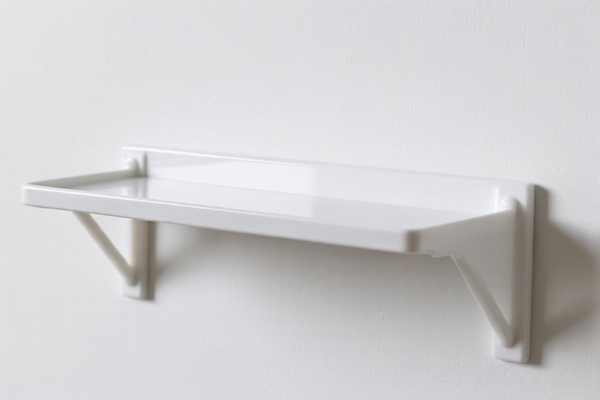
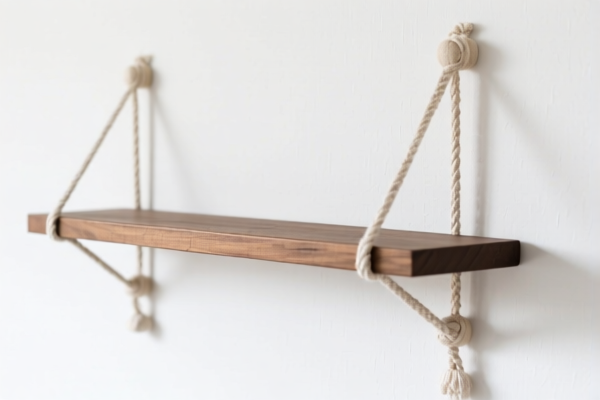
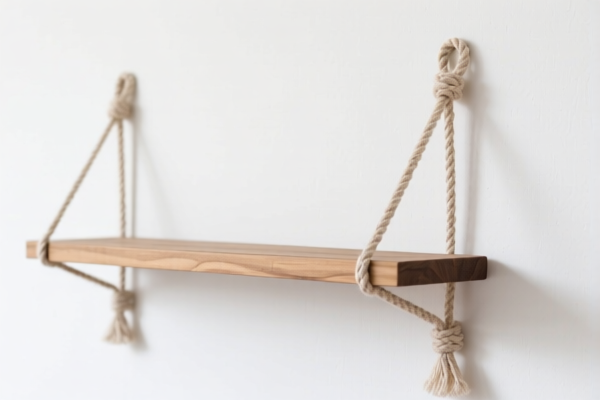
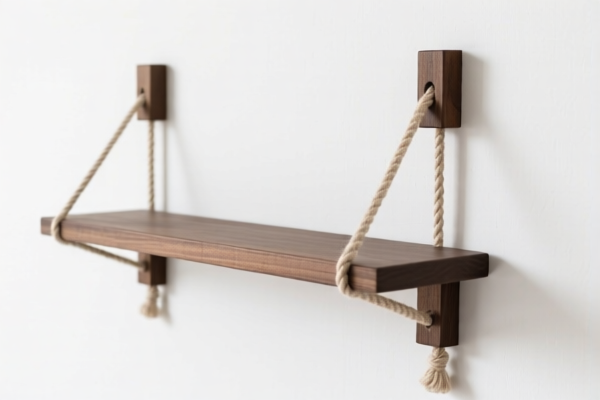
AI Analysis
🏗️ Wall-Mounted Shelf (Storage & Organization Systems)
🌐 HS Code Reference & Clearance Guide | 2026 Latest Duty Analysis | Professional Import Strategy
📌 I. Product Definition & Classification: Do You Really Know What a "Wall-Mounted Shelf" Is?
A Wall-Mounted Shelf is a versatile storage unit designed to be fixed directly to a vertical surface (wall). It is widely used in homes, offices, retail stores, and industrial warehouses for organizing items.
In international trade, its classification depends heavily on material composition and specific function:
Metal Shelving Units (Fixed/Structural): Rigid frames made of steel, aluminum, or copper alloy, often used in commercial/industrial settings.
Non-Specific Storage Boxes (Flexible/Container): Boxes, baskets, or organizers made of paper or similar materials, used for loose item storage.
⚠️ Key Distinction:
- If the product is a rigid metal frame/bracket system fixed to the wall → Classified under 9403 (Metal Furniture/Fixtures).
- If the product is a paper-based container (e.g., cardboard organizer) → Classified under 4819 (Paper Packaging/Storage).
📦 II. HS Code Classification Details (2026 Latest Tariff Schedule)
Based on the specific product characteristics, here are the three potential classifications found in your reference data:
| HS Code | Product Description | Material Deduction | Application Scenario |
|---|---|---|---|
| 9403.20.00.82 | Metal Storage Device (Furniture/Fixture) | Steel, Aluminum, Copper | Fixed metal shelving units, lockers, or storage racks. |
| 9403.20.00.86 | Metal Shelf/Rack (General) | Non-specific Metal (Steel/Aluminum) | Open wire racks, grid shelves, or general-purpose metal shelving. |
| 4819.60.00.00 | Paper Storage Container | Paper/Cardboard/Board | Foldable paper boxes, cardboard organizers, or office storage bins. |
🔍 Critical Insight:
- 9403.20.00.82: Matches "Storage Device" with no material conflict; falls under the "Other Metal Furniture" fallback category.
- 9403.20.00.86: Matches "Shelf/Bracket" form; assumes metal based on common sense; falls under non-specific shelving.
- 4819.60.00.00: Matches "Office/Store Storage" use; falls under "Storage Boxes & Similar Articles" (Paper).
💰 III. 2026 Latest Tariff Rate Breakdown (Including Surtaxes)
✅ Target Market: United States (US)
✅ Origin: China (CN)
✅ Effective Date: Applies to imports under current Section 301 and Section 232/1223 rules.
🎯 1. 9403.20.00.82 —— Metal Storage Device (Furniture)
| Item | Content |
|---|---|
| Base Tariff | 0.0% (Free Entry) |
| Section 301 Surcharge | +25.0% (Additional Duty on Chinese Goods) |
| Section 1223 Surtax | +50.0% (Specific surcharge for Steel, Aluminum, Copper products) |
| Total Duty Rate | 85.0% |
| Tax Calculation | CIF Value × 85% |
| De Minimis Exemption | ❌ No (High duty rate blocks small parcel exemption) |
📌 Explanation:
- Base 0%: Standard MFN rate for this category is often zero.
- Add-on 25%: The standard Section 301 tariff for most Chinese manufacturing goods.
- Add-on 50%: CRITICAL! This specific surcharge applies if the shelf contains Steel, Aluminum, or Copper (Section 1223). Since metal shelves are typically made of these metals, the total hits 85%.
- Result: Extremely high cost. Must verify if the product can be claimed as "Non-Metal" (unlikely for structural shelves).
🎯 2. 9403.20.00.86 —— Metal Shelf/Rack (General)
| Item | Content |
|---|---|
| Base Tariff | 0.0% |
| Section 301 Surcharge | +25.0% |
| Section 1223 Surtax | +50.0% (If Steel/Aluminum/Copper content exists) |
| Total Duty Rate | 85.0% |
| Tax Calculation | CIF Value × 85% |
| De Minimis Exemption | ❌ No |
📌 Explanation:
- Same logic as 9403.20.00.82.
- Based on common sense, shelves are inferred to be metal.
- If the shelf is made of Steel, it triggers the 50% 1223 surcharge in addition to the 25% 301 tariff.
- Warning: Do not assume "General Metal" avoids the 50% surcharge; if the material falls under the 1223 list, the rate is 85%.
🎯 3. 4819.60.00.00 —— Paper Storage Container (Office/Store)
| Item | Content |
|---|---|
| Base Tariff | 0.0% |
| Section 301 Surcharge | +25.0% |
| Section 1223 Surtax | 0.0% (Not Steel/Aluminum/Copper) |
| Total Duty Rate | 35.0% |
| Tax Calculation | CIF Value × 35% |
| De Minimis Exemption | ❌ No (Still exceeds $800 threshold for full duty) |
📌 Explanation:
- Base 0%: Standard rate for paper products.
- Add-on 25%: Standard Section 301 surcharge applies to Chinese paper goods.
- Add-on 0%: Since this is Paper/Cardboard, it does NOT trigger the 50% steel/aluminum surcharge.
- Result: 35% is significantly lower than the 85% for metal shelves.
- Strategy: If the product is a cardboard wall organizer or paper storage bin, this is the optimal classification to save 50% in duties.
🛠️ IV. Clearance Practical Advice (Real-World Pitfall Guide)
✅ 1. Preparation Checklist (Must-Haves)
| Document | Requirement | Why It Matters |
|---|---|---|
| Product Material Certificate | ✔️ Critical | Must explicitly state: "100% Steel," "Aluminum Alloy," or "Recycled Cardboard." This determines the 50% surcharge. |
| Assembly Photos | ✔️ Critical | Shows if it's a "frame" (Metal/9403) or a "box" (Paper/4819). |
| Bill of Materials (BOM) | ✔️ | Breakdown of all components (e.g., metal brackets + paper bin vs. all-metal frame). |
| Commercial Invoice | ✔️ | Must describe the item accurately (e.g., "Wall-mounted Cardboard Storage Box" vs. "Metal Wall Shelf"). |
| Origin Certificate (CO) | ✔️ | Proof of Chinese origin to apply Section 301/1223 rates. |
✅ 2. Declaring Strategy (The Golden Rule)
🔥 Rule: "Material Determines Tax, Form Determines Code!"
| Scenario | Correct HS Code | Tax Rate | Risk if Wrong |
|---|---|---|---|
| Metal Shelf (Steel) | 9403.20.00.82 / 86 |
85% | Under-declaring to 35% → Seizure + Fraud Penalty |
| Metal Shelf (Aluminum) | 9403.20.00.82 / 86 |
85% | Same as above |
| Paper Box / Organizer | 4819.60.00.00 |
35% | Over-declaring to 85% → Unnecessary Cost |
| Hybrid (Metal Frame + Paper Bin) | Likely 9403 (if frame is dominant) |
85% | Declaring as paper → Rejection |
⚠️ Warning: If the wall shelf has steel brackets and paper inserts, US Customs may classify the whole unit as Metal Furniture (9403) if the metal provides the structural integrity.
✅ 3. Special Situation Handling
| Situation | Recommendation |
|---|---|
| "Is it really paper?" | If the product is a rigid cardboard shelf, provide a Burst Test Report or Material Safety Data Sheet (MSDS) proving it is primarily paper/board. |
| "Can I avoid the 50%?" | Yes, if the product is 100% Plastic or Wood (not in the 1223 list). But if it's Metal, the 50% is unavoidable unless you can prove it's a specific exempt alloy (rare). |
| "OEM Custom Shelf" | If the design is unique, provide Design Drawings to argue it's not a standard "Steel Shelf" but a "Custom Fixture" (though still likely 9403). |
| "Small Parts" | If the shelf is disassembled (knocked down), do not split the declaration. Declare as a complete kit under the primary material. |
🌍 V. Market Comparison & Cost Optimization
| Market | Recommended HS Code | Effective Duty (China) | Strategy |
|---|---|---|---|
| 🇺🇸 USA | 9403.20.00.82/86 | 85% (Metal) | Avoid Metal! Switch to Wood or Plastic if possible. If Paper, use 4819.60.00.00 (35%). |
| 🇨🇳 China | Any | 0-5% | No Section 301/1223. Focus on local demand. |
| 🇪🇺 EU | 9403 | 0-2% | No 301/1223. Metal shelves are cheap to import here. |
📌 Conclusion:
- USA Market is the hardest: The 85% tariff on metal shelves makes them uncompetitive.
- Winning Strategy: If the product is a wall-mounted storage box, ensure it is classified as Paper (4819) to pay only 35%.
- Avoid: Do not ship Steel/Aluminum wall shelves to the US unless you have a Section 301 Exemption (very difficult for furniture).
📌 VI. Common Mistakes & "Blood Lessons"
❌ Mistake 1: Declaring a Steel Shelf as "Wall Organizer" without specifying material.
👉 Result: Customs audits the material, finds steel, applies 85% retroactively + 20% penalty.
❌ Mistake 2: Claiming "Plastic Shelf" when it has Steel Brackets.
👉 Result: Re-classified to 9403 (Metal), tax jumps from ~35% to 85%.
❌ Mistake 3: Ignoring the 1223 Clause (50% Surtax).
👉 Result: You pay 25% + Base 0%, thinking 25% is the total. Reality: 85%.
✅ Correct Action:
"Describe the product as: Wall-Mounted Storage Box (Cardboard/Paper), Model XYZ, 100% Recycled Material, No Metal Components."
OR
"Wall-Mounted Steel Shelf, Model ABC, 100% Steel, Pre-approved for Section 301/1223."
🎯 VII. Conclusion: Strategic Classification Saves Money
🎯 Key Takeaways:
🔹 "Metal = 85% Tax" (Due to 25% 301 + 50% 1223).
🔹 "Paper = 35% Tax" (25% 301 only).
🔹 "Don't hide the material!" False declaration leads to seizures.
📌 Action Plan:
📞 Step 1: Confirm the exact material of your wall shelf.
📞 Step 2: If Metal, prepare for 85% duty or consider sourcing from non-China countries (Vietnam/Mexico) to avoid 301/1223.
📞 Step 3: If Paper, ensure documentation proves non-metal content to secure the 35% rate.
✨ Professional Clearance, Starting with the Right HS Code!
💼 Every percentage point matters in the 85% vs 35% game!
Customer Reviews
About HS Code Classification
The Harmonized System (HS) is an internationally standardized nomenclature developed by the World Customs Organization (WCO) to classify traded products. Over 200 countries use the HS system as the basis for customs tariffs, trade statistics, and import/export regulations.
Each HS code follows a hierarchical structure:
- Chapter (2 digits) — Broad category of goods (e.g., Chapter 84: Machinery and Mechanical Appliances)
- Heading (4 digits) — More specific grouping within the chapter
- Subheading (6 digits) — Internationally standardized breakdown, used by all WCO member countries
- National subdivisions (8-10 digits) — Country-specific extensions for further classification, such as US HTSUS 10-digit codes
Correct HS code classification is essential for smooth customs clearance, accurate duty payment, and compliance with trade regulations. Misclassification can lead to customs delays, overpayment of duties, or penalties.
When importing from CN to US, the applicable tariff rates may include:
- Most-Favored-Nation (MFN) rate — The standard duty rate applied to WTO members
- General rate — Applied to countries without trade agreements
- Trade remedy duties — Additional tariffs such as Section 301 (anti-dumping), Section 232 (national security), or countervailing duties
The information provided on this page is for reference purposes only. For official classification, please consult with your local customs authority or a licensed customs broker.