Wall mounted light
CN → US| HS Code | Tariff Rate | Origin | Destination | Doc |
|---|---|---|---|---|
| 9405198020 | 38.9% | CN | US | Official Doc |
| 9405196010 | 42.6% | CN | US | Official Doc |
| 9405198010 | 38.9% | CN | US | Official Doc |
Product Images
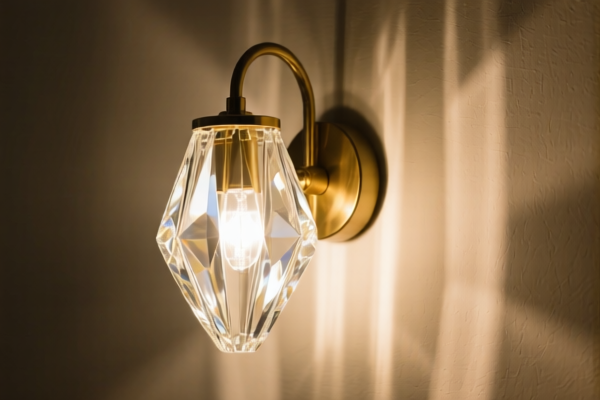
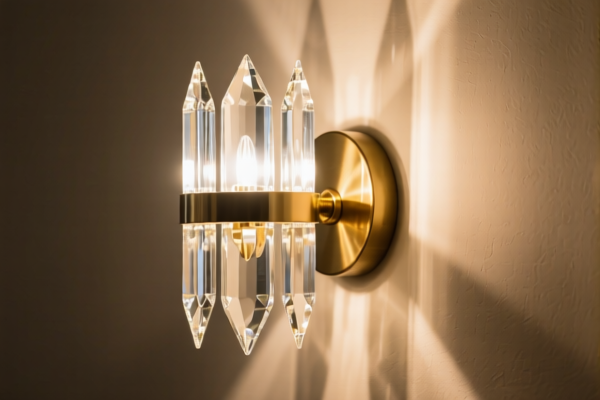
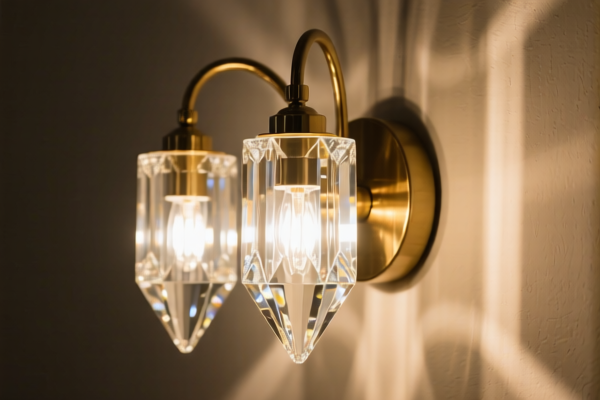
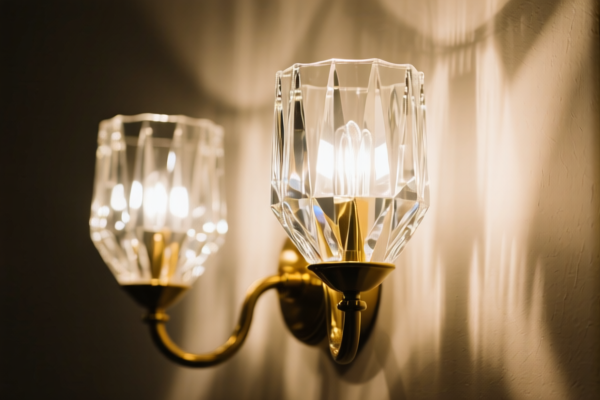
AI Analysis
💡 Wall Mounted Lights (Wall Sconces / Wall Lamps)
🌐 HS Code Reference & Customs Clearance Guide | 2026 Latest Tariff Analysis | Professional Clearance Strategy
📌 Part 1: Product Definition and Classification: Do You Really Understand "Wall Mounted Lights"?
Wall mounted lights are lighting fixtures designed to be affixed to walls, providing ambient, accent, or task lighting. In international trade, they fall under the broader category of "Electrical lighting and lighting fittings." The critical distinction for classification lies in material and specific design features, which determine whether they are classified as generic electrical fittings or specific household lighting.
⚠️ Key Distinction Point:
- If the light is made of glass or has specific decorative glass elements often associated with traditional sconces → It may fall under specific sub-headings like9405.19.60.10.
- If the light is made of metal, plastic, ceramic, or other materials and fits the general description of electric ceiling or wall lighting → It falls under the broader category9405.19.80.10or9405.19.80.20.
- "Household Use" vs. "Other": The distinction between9405.19.80.10(Household) and9405.19.80.20(Other/General) is often subtle and depends on the manufacturer's intent and labeling, but for many standard wall sconces, the difference in tariff base may not be the primary driver compared to the material-based9405.19.60.10.
📦 Part 2: HS Code Classification Details (2026 Latest Tariff Authority Comparison)
| HS Code | Product Description | Application Scenario | Material/Key Feature |
|---|---|---|---|
9405.19.60.10 |
Other lighting fittings, including searchlights and spotlights, and parts thereof, not elsewhere specified or included; Wall lights, sconces, and reflectors, of glass | Traditional glass sconces, decorative glass wall lamps | ✅ Glass |
9405.19.80.10 |
Other lighting fittings... Electric ceiling or wall lights, household | Modern LED wall sconces, metal/plastic wall lamps for homes | ✅ Non-Glass / Household |
9405.19.80.20 |
Other lighting fittings... Electric ceiling or wall lights, other | Commercial wall lights, non-household specific, or generic metal/plastic fixtures | ❌ Non-Household / Generic |
🔍 Key Reminder:
- Glass components are the trigger for9405.19.60.10. If the primary decorative or structural element is glass, this code is likely applicable.
- Household vs. Other:9405.19.80.10is specifically for household use. If you are exporting industrial or commercial-grade wall lights without a clear "household" designation,9405.19.80.20might be safer, though many standard sconces are classified under80.10due to their typical end-use.
- Do not misclassify a standard metal/plastic LED wall sconce as "glass" just because it has a glass shade. The classification depends on the primary material of the fitting itself.
💰 Part 3: 2026 Latest Tariff Rate Breakdown (Including Additional Taxes, Policy Add-ons)
✅ Applicable Country: United States (US)
✅ Origin: China (CN)
✅ Effective Time: 2025/2026 (Current Trade Policy)
🎯 1. 9405.19.60.10 —— Wall Lights, Sconces, and Reflectors, of Glass
| Item | Content |
|---|---|
| Base Duty Rate | 7.6% (ad valorem) |
| Section 301 Additional Duty | +25% |
| Section 122 Duty (IEEPA) | +10% (Specific to certain Chinese goods, including some lighting) |
| Total Tax Rate | 42.6% |
| Tax Calculation | CIF Value × 42.6% |
| De Minimis Exemption Eligible? | ❌ No |
| Legal Basis Path | USITC:9405.19.60.10 → Section 301: +25% → Section 122: +10% |
📌 Explanation:
- This code carries a higher base tariff (7.6%) compared to the other two codes due to its specific material classification.
- It is subject to both the 25% Section 301 tariff and the 10% Section 122 tariff.
- Total burden: 42.6%. This is a significant cost factor for glass-heavy lighting fixtures.
🎯 2. 9405.19.80.20 —— Electric Ceiling or Wall Lights, Other (Non-Household)
| Item | Content |
|---|---|
| Base Duty Rate | 3.9% (ad valorem) |
| Section 301 Additional Duty | +25% |
| Section 122 Duty (IEEPA) | +10% |
| Total Tax Rate | 38.9% |
| Tax Calculation | CIF Value × 38.9% |
| De Minimis Exemption Eligible? | ❌ No |
| Legal Basis Path | USITC:9405.19.80.20 → Section 301: +25% → Section 122: +10% |
📌 Note:
- This code has a lower base tariff (3.9%) but is subject to the same additional duties.
- It is classified under "Other," implying it is not specifically designated for "Household" use in the customs database, or it is a catch-all for non-glass, non-household-specific wall lights.
- Total burden: 38.9%.
🎯 3. 9405.19.80.10 —— Electric Ceiling or Wall Lights, Household
| Item | Content |
|---|---|
| Base Duty Rate | 3.9% (ad valorem) |
| Section 301 Additional Duty | +25% |
| Section 122 Duty (IEEPA) | +10% |
| Total Tax Rate | 38.9% |
| Tax Calculation | CIF Value × 38.9% |
| De Minimis Exemption Eligible? | ❌ No |
| Legal Basis Path | USITC:9405.19.80.10 → Section 301: +25% → Section 122: +10% |
📌 Key Point:
- This code is for Household electric ceiling or wall lights.
- It shares the same base rate (3.9%) and same total rate (38.9%) as9405.19.80.20.
- Choice between 80.10 and 80.20: Depends on your product labeling. If your marketing, packaging, and product type clearly target residential use,80.10is more accurate. If it's for hotels, offices, or general commercial use,80.20is more appropriate. Both have the same tax burden.
🛠️ Part 4: Customs Clearance Practical Advice (Real-World Pitfall Avoidance Guide)
✅ 1. Documentation Checklist (All are Mandatory)
| Document | Required | Explanation |
|---|---|---|
| ✅ Product Specification Sheet | ✔️ | Include dimensions, weight, material (e.g., "Metal body, glass shade"), IP rating. |
| ✅ Product Photos (Clear Labeling) | ✔️ | Show the entire fixture, the label, and any glass components clearly. |
| ✅ Commercial Invoice | ✔️ | Must state "Wall Mounted Light" or "Wall Sconce," not generic "Lighting." |
| ✅ Packing List | ✔️ | Detail contents, especially if multiple types are mixed. |
| ✅ Certificate of Origin (CO) | ✔️ | Essential for proving Chinese origin (which triggers the tariffs). |
| ✅ FCC Statement of Compliance | ✔️ | Required for electronic components (drivers, LEDs) if applicable. |
| ✅ UL/ETL/CE Reports | ✔️ | Safety certifications boost customs confidence. |
✅ 2. Declaration Tips (Key Mantra)
🔥 "Glass Gets Glass Code, Metal/Plastic Gets 9405.19.80, Be Clear on Household vs. Other!"
| Scenario | Correct Declaration | Wrong Practice |
|---|---|---|
| Glass Sconce | 9405.19.60.10 |
Misdeclare as metal → Risk of penalty for misclassification. |
| LED Wall Lamp (Household) | 9405.19.80.10 |
Declare as commercial → No tax difference, but incorrect data. |
| LED Wall Lamp (Commercial) | 9405.19.80.20 |
Declare as household → No tax difference, but incorrect data. |
| Mixed Packaging (Glass + Metal) | Declare as Glass (60.10) if glass is primary |
Split shipment → Complex and expensive. |
✅ 3. Special Situation Handling
| Situation | Handling Advice |
|---|---|
| OEM for US Brand | Provide authorization letter from US brand to prove "Household" intent for 80.10. |
| Glass Shade vs. Glass Body | If only the shade is glass but the body is metal, customs may still classify as 60.10 if glass is the main decorative feature. Be prepared to explain. |
| Smart Wall Lights | If it has Wi-Fi/Bluetooth, ensure FCC compliance is explicitly stated. Still falls under 9405 lighting, not 8517 (telecom). |
| Dropshipping | Even for small quantities, tariffs apply. No de minimis exemption for Section 301/122 goods from China. |
🌍 Part 5: Global Market Comparison (2026 Latest)
| Country/Region | Recommended HS Code | Tariff (China Origin) | Certification Requirements | Notes |
|---|---|---|---|---|
| 🇺🇸 USA | 9405.19.60.10 / 80.10 / 80.20 |
38.9% - 42.6% | FCC, UL/ETL | High tariffs apply. Section 301 & 122 are mandatory. |
| 🇨🇳 China | 9405.11.10.00 (Approx) |
~5-10% | CCC | Import tariffs differ; this guide is for exporting from China to US. |
| 🇪🇺 EU | 9405.11.00 |
0% (Most Favored Nation) | CE, RoHS, WEEE | No additional Section 301/122 tariffs. Much cheaper for EU market. |
| 🇬🇧 UK | 9405.11.00 |
0% | UKCA, RoHS | Post-Brexit rules align with EU for many goods. |
| 🇨🇦 Canada | 9405.11.00 |
0% (CUSMA) | IC Certification | Free trade under USMCA/CUSMA. |
📌 Conclusion:
- The US market is the most expensive for Chinese lighting due to Section 301 (25%) and Section 122 (10%) tariffs.
- Glass fixtures (60.10) are slightly more expensive than non-glass fixtures (80.10/20) due to a higher base duty.
- For non-US markets, tariffs are significantly lower or zero.
📌 Part 6: Common Mistakes & Pitfalls (Lessons Learned)
❌ Mistake 1: Declaring a glass wall sconce as "Other Lighting" (80.20) to save the 3.7% base difference.
👉 Consequence: Customs inspection reveals glass, reclassifies to 60.10, charges back taxes + penalties.
Risk: High.
❌ Mistake 2: Thinking "Household" vs "Other" changes the tax rate.
👉 Consequence: Waste of time trying to prove "household" use. Both 80.10 and 80.20 have the same 38.9% total rate.
Risk: Low (just administrative effort).
❌ Mistake 3: Ignoring Section 122 Duty.
👉 Consequence: If your lighting product is on the IEEPA list (many are), failing to declare Section 122 compliance can lead to seizure or fines.
Risk: Critical.
❌ Mistake 4: Using "Lamp" as the only description.
👉 Consequence: Vague descriptions cause customs delays.
Fix: Use "Wall Mounted LED Light, Metal Body, Glass Shade, Model XYZ, FCC Certified."
🎯 Part 7: Conclusion: Precision in Classification Saves Money!
🎯 Key Takeaways:
🔹 Glass = 42.6% (
9405.19.60.10)
🔹 Non-Glass Household = 38.9% (9405.19.80.10)
🔹 Non-Glass Commercial = 38.9% (9405.19.80.20)
🔹 No De Minimis Exemption for Chinese lighting under Section 301/122.
🔹 Section 122 is mandatory for many lighting items.💡 Pro Tip:
If you are selling non-glass wall lights, consider whether you can clearly market them as "Household" (80.10) to avoid any ambiguity, though the tax rate is the same as80.20.
For glass items, the 3.7% higher base duty is unavoidable. Consider sourcing non-glass components from non-China countries (e.g., Vietnam, Mexico) if possible to avoid Section 301/122, though this is complex for lighting.
📣 Immediate Action:
📞 Contact a Customs Broker to review your specific product photos.
📋 Prepare FCC and Safety Certifications in advance.
📝 Label Products Clearly as "Wall Mounted Light" with material composition.
🚀 Clear Classification = Smooth Customs + Lower Costs!
✨ Professional Clearance Starts with Accurate Classification!
💼 Your Profit Margin Depends on These Decimals!
Customer Reviews
About HS Code Classification
The Harmonized System (HS) is an internationally standardized nomenclature developed by the World Customs Organization (WCO) to classify traded products. Over 200 countries use the HS system as the basis for customs tariffs, trade statistics, and import/export regulations.
Each HS code follows a hierarchical structure:
- Chapter (2 digits) — Broad category of goods (e.g., Chapter 84: Machinery and Mechanical Appliances)
- Heading (4 digits) — More specific grouping within the chapter
- Subheading (6 digits) — Internationally standardized breakdown, used by all WCO member countries
- National subdivisions (8-10 digits) — Country-specific extensions for further classification, such as US HTSUS 10-digit codes
Correct HS code classification is essential for smooth customs clearance, accurate duty payment, and compliance with trade regulations. Misclassification can lead to customs delays, overpayment of duties, or penalties.
When importing from CN to US, the applicable tariff rates may include:
- Most-Favored-Nation (MFN) rate — The standard duty rate applied to WTO members
- General rate — Applied to countries without trade agreements
- Trade remedy duties — Additional tariffs such as Section 301 (anti-dumping), Section 232 (national security), or countervailing duties
The information provided on this page is for reference purposes only. For official classification, please consult with your local customs authority or a licensed customs broker.