Warm Wax Lamp
CN → US| HS Code | Tariff Rate | Origin | Destination | Doc |
|---|---|---|---|---|
| 9405296010 | 41.0% | CN | US | Official Doc |
| 9405298010 | 38.9% | CN | US | Official Doc |
| 3307490000 | 41.0% | CN | US | Official Doc |
| 3307900000 | 40.4% | CN | US | Official Doc |
| 8516790000 | 12.7% | CN | US | Official Doc |
| 8516290060 | 38.7% | CN | US | Official Doc |
Product Images
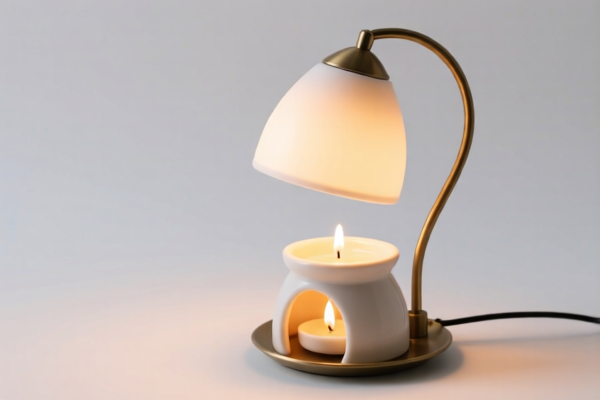
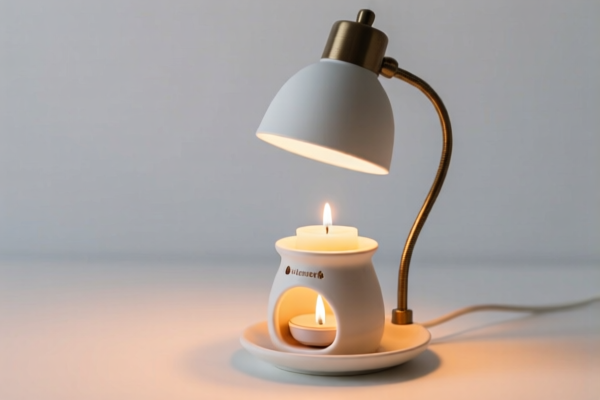
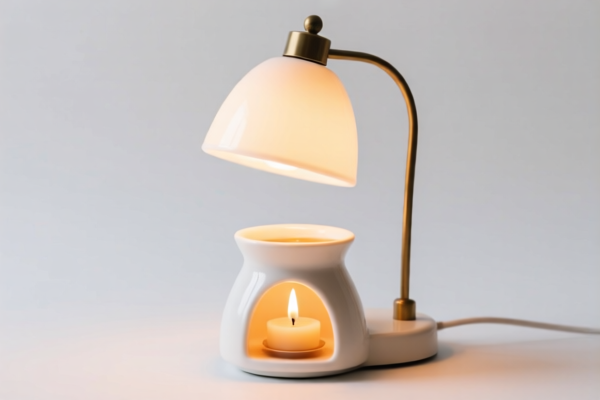

AI Analysis
🕯️ Warm Wax Lamp (Electric Wax Melt Warmers / Ambient Lamps)
🌐 HS Code Reference & Customs Clearance Guide | 2026 Latest Tariff Breakdown | Strategic Compliance Strategy
📌 I. Product Definition & Classification: Do You Really Understand “Warm Wax Lamps”?
A "Warm Wax Lamp" (often referred to as an Electric Wax Warmer, Aromatherapy Lamp, or Scented Candle Warmer) is a decorative home appliance used to melt wax melts or melt candles using electric heating elements (usually incandescent bulbs or resistive coils), rather than an open flame.
In international trade, these products are typically classified based on their primary function and power source. Because they use electricity to generate heat for a domestic purpose (melting wax to release fragrance), they fall under Chapter 85 (Electrical machinery and equipment).
⚠️ Critical Distinction:
- If the device is a non-electric ceramic/glass warmer heated by a tea light candle → It belongs to Chapter 94 (Furniture/Luminaires) or Chapter 71/70 (Glass/Ceramics).
- If the device is electric (plugged in or USB powered) → It belongs to Chapter 85.
- Most commercial "Warm Wax Lamps" are electric. The data below assumes the product is an electric appliance.
📦 II. HS Code Classification Details (Based on Provided Data)
The provided dataset contains two main categories relevant to this product type: Electrothermic Appliances (for heating) and Luminaires (for lighting/decoration). The correct classification depends on the primary design intent.
| HS Code | Product Description | Primary Function | Key Indicator |
|---|---|---|---|
8516.79.00.00 |
Other electrothermic appliances of a kind used for domestic purposes | Heating/Melting | The primary function is to melt wax via heat. The lamp/warmth is the mechanism, not the output. |
9405.29.60.10 |
Electric table, desk, bedside or floor-standing luminaires: Of base metal | Lighting/Decoration | The device is primarily a light fixture that happens to warm wax. Constructed of metal. |
9405.29.80.10 |
Electric table, desk, bedside or floor-standing luminaires: Other Household | Lighting/Decoration | The device is primarily a light fixture. Constructed of non-metal materials (glass, plastic, ceramic). |
3307.49.00.00 |
Preparations for perfuming or deodorizing rooms | Consumable Fragrance | ❌ Incorrect for the device itself. This HS code is for the wax melts/candles inside the lamp, not the lamp itself. |
3307.90.00.00 |
Other perfumery, cosmetic or toilet preparations | Consumable Fragrance | ❌ Incorrect for the device. |
8516.29.00.60 |
Other Portable space heaters | Space Heating | ❌ Unlikely. Unless the device is marketed specifically as a "heater" for the room rather than for melting wax, this is rarely used. |
🔍 Key Analysis:
- Customs authorities usually classify electric wax warmers under8516.79.00.00because their technical function is electrothermic heating of a domestic item (wax).
- However, if the product is marketed as a decorative night light or ambient lamp where the heating function is secondary or minimal, customs may classify it under9405(Luminaires).
- Warning: Misclassification between8516(Heating) and9405(Lighting) can lead to significant duty differences and compliance risks.
💰 III. 2026 Latest Tariff Rate Breakdown (Including Additional Duties)
✅ Applicable Country: USA
✅ Origin: China (CN)
✅ Effective Date: 2025+ (Subject to current trade policies)
🎯 1. 8516.79.00.00 —— Electrothermic Domestic Appliances (Most Likely)
| Item | Detail |
|---|---|
| Base Tariff | 2.7% |
| Additional Tariff (Section 301) | 0.0% |
| Total Tax Rate | 2.7% |
| Calculation | CIF Value × 2.7% |
| De Minimis Eligibility | ✅ Yes (If value < $800, may be exempt under current rules, but subject to change) |
| Legal Basis | HTSUS 8516.79; Section 301 List 4B (No additional 25% duty for this specific subheading) |
📌 Explanation:
- This is the most favorable rate for electric wax warmers in the provided dataset.
- The "0.0% Additional Tariff" means these products are not subject to the heavy 25% Section 301 tariffs that apply to many electronics.
- Low Risk, Low Cost: This is the ideal classification for importers.
🎯 2. 9405.29.60.10 —— Electric Luminaires (Base Metal)
| Item | Detail |
|---|---|
| Base Tariff | 6.0% |
| Additional Tariff (Section 301) | 25.0% |
| Total Tax Rate | 31.0% |
| Calculation | CIF Value × 31.0% |
| De Minimis Eligibility | ❌ No (Section 301 goods are generally excluded from de minimis) |
| Legal Basis | HTSUS 9405.29; Section 301 List 4A |
📌 Explanation:
- If customs determines your product is a "lighting fixture" made of metal, you face a 31% total duty.
- This is 11.3% higher than the electrothermic classification.
- High Cost Risk: Avoid this classification if the product’s primary function is melting wax.
🎯 3. 9405.29.80.10 —— Electric Luminaires (Other Materials)
| Item | Detail |
|---|---|
| Base Tariff | 3.9% |
| Additional Tariff (Section 301) | 25.0% |
| Total Tax Rate | 28.9% |
| Calculation | CIF Value × 28.9% |
| De Minimis Eligibility | ❌ No |
| Legal Basis | HTSUS 9405.29; Section 301 List 4A |
📌 Explanation:
- Similar to above, but slightly lower base rate (3.9% vs 6.0%).
- Still subject to the 25% additional tariff.
- Total duty is still significantly higher than8516.79.00.00.
🛠️ IV. Customs Clearance Practical Advice (Avoid Pitfalls)
✅ 1. Documentation Checklist (All Required)
| Document | Mandatory? | Description |
|---|---|---|
| ✅ Product Specification Sheet | ✔️ | Must clearly state: "Electric Wax Warmer," Voltage (110V/220V), Wattage, Material (e.g., Glass, Plastic, Metal), and Primary Function: Melting Wax. |
| ✅ Technical Diagram | ✔️ | Show the heating element (bulb/coil) and the wax container. Proves it is an electrothermic device. |
| ✅ Product Photos | ✔️ | Clear images of the plug, switch, and how the wax melts. Show the heating bulb inside. |
| ✅ Commercial Invoice | ✔️ | Describe as "Electric Wax Melting Appliance" or "Domestic Electrothermic Heater for Wax." Avoid vague terms like "Decorative Lamp." |
| ✅ FCC Certification | ✔️ | Required for all electrical products sold in the US. |
| ✅ UL/ETL Report | ✔️ | Strongly recommended for safety compliance, though not always mandatory for customs entry, it prevents post-entry audits. |
✅ 2. Classification Strategy (Key Rules)
🔥 “Function Over Form: If it melts, it’s 8516!”
| Scenario | Correct HS Code | Wrong Code | Consequence of Error |
|---|---|---|---|
| Electric Wax Warmer (Main purpose: melt wax) | 8516.79.00.00 (2.7%) |
9405.29.80.10 (28.9%) |
Backpay + Penalties: Customs will reclassify and charge the difference. |
| Decorative Night Light (No heating element, just LED) | 9405.42.00.00 (Not in data) |
8516.79.00.00 |
Overpayment (2.7% vs likely 0-5%). |
| Non-Electric Ceramic Warmer (Used with tea light) | 7013.99 or 6913.90 (Not in data) |
8516.79.00.00 |
Classification error (No electricity). |
| Scented Wax Melts (The consumable product) | 3307.49.00.00 (31.0%) |
8516.79.00.00 |
Massive Overpayment: Wax melts are cheap; duty should be on the container/device, not the wax, unless sold together as a kit. |
📌 Pro Tip:
- If selling Wax Warmer + Wax Melts as a gift set:
- Best Practice: Ship the warmers and wax melts separately or declare them as GRI 3(b) sets.
- Warning: If declared as one, customs may apply the duty rate of the component that gives the essential character. Often, the electronic warmer gives the essential character, so declare under8516.79.00.00for the whole set (2.7%) if possible, but check with a broker. Alternatively, declare wax separately under3307.49.00.00(31.0%) if the value is high. Consult a customs broker for kit valuation.
✅ 3. Special Case Handling
| Case | Recommendation |
|---|---|
| LED Wax Warmers | If the "heating" is just a low-wattage LED bulb designed to melt wax, it is still 8516.79.00.00. The function is heat transfer, not illumination. |
| Glass Body, Metal Base | Still 8516.79.00.00 because the electrical function dominates. Do not classify as 9405 (Luminaire). |
| USB-Powered Warmers | Still 8516.79.00.00. The power source (USB vs AC) does not change the chapter classification for domestic electrothermic appliances. |
| OEM Customization | Provide the client’s design brief. If the design emphasizes "lighting effect" over "melting," argue for 9405, but risk is high. Stick to 8516 for safety. |
🌍 V. Global Market Clearance Comparison (2026)
| Market | Recommended HS Code | Tariff (China Origin) | Certification | Note |
|---|---|---|---|---|
| 🇺🇸 USA | 8516.79.00.00 |
2.7% | FCC, UL/ETL | Best rate. Avoid 9405 (31%). |
| 🇨🇳 China | 8516.79.00.00 |
~10-12% | CCC | Domestic import. |
| 🇪🇺 EU | 8516.80.00 |
0-4% | CE, RoHS, Ecodesign | VAT applies (19-27%). |
| 🇬🇧 UK | 8516.80.00 |
0-4% | UKCA, RoHS | Post-Brexit rules apply. |
| 🇯🇵 Japan | 8516.79 |
5-10% | PSE | Safety standards strict. |
📌 Conclusion:
- The USA is the most critical market for duty planning.
- Classifying as8516.79.00.00saves you up to 28% in duties compared to lighting classification.
- Ensure your product name and description in the invoice reflect "Electric Wax Warmer" or "Domestic Heating Appliance" to support this classification.
📌 VI. Common Errors & Pitfalls (Blood Lessons)
❌ Error 1: Calling the product "Scented Lamp" or "Decorative Light" on the invoice.
👉 Consequence: Customs may assume it is a 9405 luminaire → 31% Duty instead of 2.7%.
✅ Fix: Use "Electric Wax Melting Appliance" or "Domestic Electrothermic Device."
❌ Error 2: Classifying the Wax Melts under 8516.79.00.00.
👉 Consequence: The wax is a cosmetic/perfumery product, not an appliance. Should be 3307.49.00.00 (31%).
✅ Fix: Separate shipment or accurate kit valuation.
❌ Error 3: Ignoring FCC/UL Requirements.
👉 Consequence: Cargo detained at port until certification is provided.
✅ Fix: Have test reports ready before shipping.
🎯 VII. Conclusion: Smart Classification, Maximize Profit!
🎯 Remember the Golden Rule:
🔹 "If it uses electricity to melt wax, it’s an Electrothermic Appliance (8516)."
🔹 "2.7% Duty vs. 31% Duty: Choose 8516!"
🔹 "Lighting Code (9405) is a Trap for Wax Warmers!"
📌 Pro Tip:
If your product is non-electric (ceramic/glass warmer), it falls outside this dataset (likely Chapter 70 or 69). Ensure your importer knows the difference. For electric warmers, 8516.79.00.00 is your golden ticket.
📣 Immediate Action:
📞 Contact your customs broker with the specification sheet highlighting "Electrothermic Function."
🚀 Clear Customs Smoothly, Keep Duties Low, Boost Margins!
✨ Professional Customs Compliance Starts with Accurate Classification!
💼 Every Percent of Duty Saved is Pure Profit!
Customer Reviews
About HS Code Classification
The Harmonized System (HS) is an internationally standardized nomenclature developed by the World Customs Organization (WCO) to classify traded products. Over 200 countries use the HS system as the basis for customs tariffs, trade statistics, and import/export regulations.
Each HS code follows a hierarchical structure:
- Chapter (2 digits) — Broad category of goods (e.g., Chapter 84: Machinery and Mechanical Appliances)
- Heading (4 digits) — More specific grouping within the chapter
- Subheading (6 digits) — Internationally standardized breakdown, used by all WCO member countries
- National subdivisions (8-10 digits) — Country-specific extensions for further classification, such as US HTSUS 10-digit codes
Correct HS code classification is essential for smooth customs clearance, accurate duty payment, and compliance with trade regulations. Misclassification can lead to customs delays, overpayment of duties, or penalties.
When importing from CN to US, the applicable tariff rates may include:
- Most-Favored-Nation (MFN) rate — The standard duty rate applied to WTO members
- General rate — Applied to countries without trade agreements
- Trade remedy duties — Additional tariffs such as Section 301 (anti-dumping), Section 232 (national security), or countervailing duties
The information provided on this page is for reference purposes only. For official classification, please consult with your local customs authority or a licensed customs broker.