Washable Seamless Bonding Strip
CN → US| HS Code | Tariff Rate | Origin | Destination | Doc |
|---|---|---|---|---|
| 3926201020 | 10.0% | CN | US | Official Doc |
| 3926201050 | 10.0% | CN | US | Official Doc |
| 6307904020 | 17.5% | CN | US | Official Doc |
| 6307905020 | 17.5% | CN | US | Official Doc |
| 3921901100 | 39.2% | CN | US | Official Doc |
| 3921901910 | 40.3% | CN | US | Official Doc |
| 5911900040 | 38.8% | CN | US | Official Doc |
| 5911900080 | 38.8% | CN | US | Official Doc |
Product Images
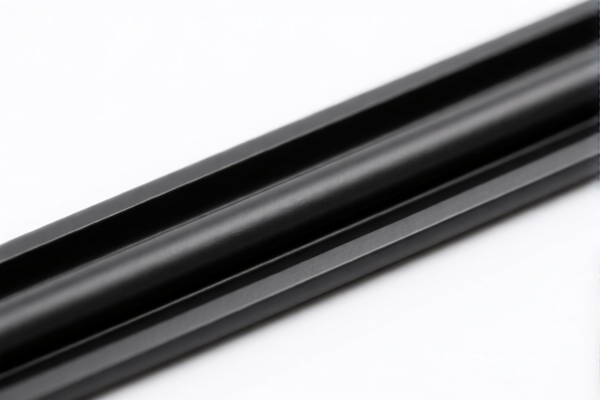
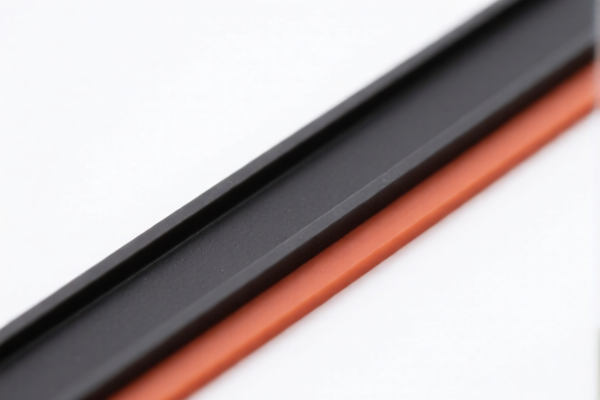
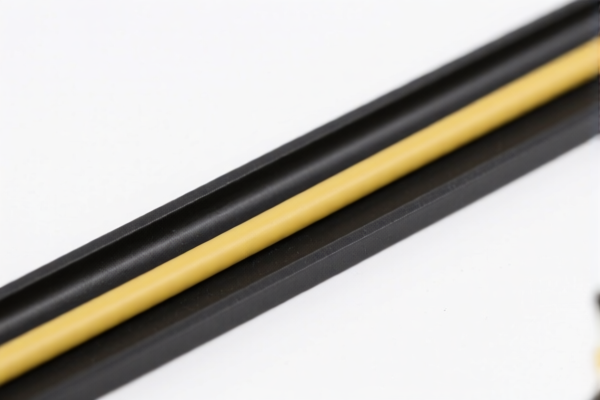
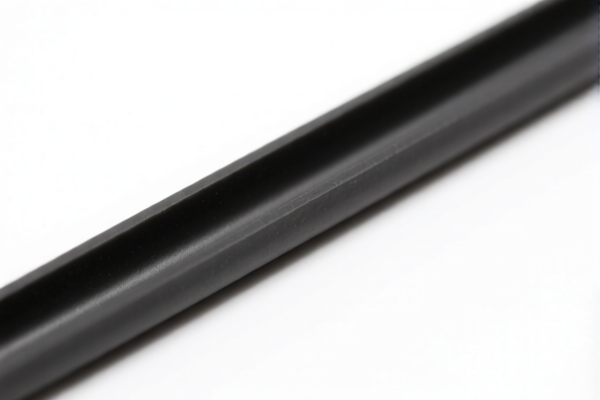
AI Analysis
🩹 Washable Seamless Bonding Strip
🌐 HS Code Reference & Customs Clearance Guide | 2026 Latest Tariff Analysis | Professional Clearance Strategy
📌 I. Product Definition & Classification: What exactly is a "Washable Seamless Bonding Strip"?
A "Washable Seamless Bonding Strip" is a specialized textile or plastic-based adhesive/fixing product, often used in garment manufacturing, medical applications, or industrial sewing. Key characteristics include: 1. "Seamless" (无接缝): Indicates it is knitted, woven without side seams, or thermally bonded, distinguishing it from sewn tape. 2. "Bonding" (粘合/贴合): Suggests it may have an adhesive backing or is used for thermal bonding, but crucially, in the provided data, we see categories for textile articles and plastic articles. 3. "Washable" (可水洗): Implies durability and material stability (likely synthetic fibers or specialized plastics).
⚠️ Key Distinction Point:
- If the product is a textile cord, braid, or similar article used for binding, packing, or decorative "tassels/cords" purposes → It falls under Chapter 63 (Other made-up articles).
- If it is a technical textile used for industrial packing or lubrication → It falls under Chapter 59 (Technical uses).
- If it is a plastic strip used for apparel/accessories (like a seamless plastic gaiter or strip) → It falls under Chapter 39 (Plastics).
- Crucial Check: Does it contain an adhesive? The provided HS codes do not explicitly cover "adhesive tapes" (which are often Ch. 39 or 48). However, "Seamless" often points to knitted/woven structures (Textiles) or extruded plastic sheets/film. Given the term "Strip" and "Bonding," it often refers to a textile braid/cord or a plastic composite strip. Based on the provided data, the most likely candidates are textile articles (Ch. 63) or plastic-textile composites (Ch. 39).
📦 II. HS Code Classification Details (2026 Latest Tariff Authority Comparison)
Based on the provided <DATA>, here are the exact HS Codes and their descriptions:
| HS Code | Product Description | Applicable Scenario | Key Feature |
|---|---|---|---|
6307.90.40.20 |
Other made up articles, including dress patterns: Other: Cords and tassels | Decorative cords, binding straps, garment accessories | Textile-based, "made-up" article, not a raw fabric. |
6307.90.50.20 |
Other made up articles, including dress patterns: Other: Corset lacings, footwear lacings or similar lacings | Shoelaces, corset strings, flexible binding ties | Specific use for lacing; seamless construction common here. |
3921.90.11.00 |
Plates, sheets, film, foil... of plastics: Combined with textile materials... >70% plastics by weight | Plastic-coated textile strips, laminated bonding strips | Textile + Plastic composite; Plastic dominates by weight. |
3921.90.19.10 |
Plates, sheets, film, foil... of plastics: Combined with textile materials... Vegetable fibers predominate | Biodegradable or cotton-based plastic laminates | Vegetable fiber textile base + Plastic coating. |
5911.90.00.40 |
Textile products for technical uses: Cords, braids... for industry as packing or lubricating material | Industrial sealing cords, gasket cords, technical braids | Technical textile use, not apparel. |
5911.90.00.80 |
Textile products for technical uses: Other | General technical textile strips not elsewhere specified | Broad category for technical textiles. |
3926.20.10.20 |
Articles of apparel...: Gloves, mittens...: Seamless...: Disposable | Disposable seamless plastic gloves or strips | Note: This is for gloves. If the "strip" is part of a glove accessory, it may apply. Otherwise, likely incorrect for a generic strip. |
3926.20.10.50 |
Articles of apparel...: Gloves, mittens...: Seamless...: Other | Non-disposable seamless plastic apparel accessories | Similar to above, specific to glove-like items. |
🔍 Priority Analysis for "Washable Seamless Bonding Strip":
- Most Likely:6307.90.40.20or6307.90.50.20if it is a textile cord/lace.
- Alternative:3921.90.11.00if it is a plastic-textile composite strip (e.g., a plastic-backed fabric tape).
- Technical Use:5911.90.00.40if used in industrial packing/lubrication contexts.
- Exclusion:3926.20.10.x0is likely incorrect unless the "strip" is literally a seamless plastic glove component.
💰 III. 2026 Latest Tariff Rate Details (Including Surtaxes, Policy Surcharges)
✅ Applicable Country: United States (US)
✅ Country of Origin: China (CN)
✅ Effective Time: 2025-11-10 (and subsequent imports)
🎯 1. 6307.90.40.20 & 6307.90.50.20 — Textile Articles (Cords, Lacings, etc.)
| Item | Content |
|---|---|
| Base Rate | 0.0% (ad valorem) |
| USITC Surcharge | +7.5% (Added Tax) |
| Total Rate | 7.5% |
| Tax Calculation | CIF Value × 7.5% |
| De Minimis Exemption | ❌ Not Applicable (Standard de minimis rules may apply if value < $800, but for general imports, this is the duty rate) |
| Legal Basis | HS: 6307.90.40.20 / 6307.90.50.20 → 7.5% Total Tax |
📌 Explanation:
- These textile articles benefit from a 0% base tariff but are subject to a 7.5% additional surcharge.
- This is significantly lower than high-tech or steel tariffs.
- No Section 301 25% tariff is listed in the provided data for these specific subheadings, implying they are either exempt or the 7.5% is the total added cost.
🎯 2. 3921.90.11.00 & 3921.90.19.10 — Plastic-Textile Composites
| Item | Content |
|---|---|
| Base Rate | 0.0% |
| USITC Surcharge | 0.0% |
| Total Rate | 0.0% |
| Tax Calculation | CIF Value × 0% |
| De Minimis Exemption | ✅ Exempt (if value < $800 and meets all other criteria) |
| Legal Basis | HS: 3921.90.11.00 / 3921.90.19.10 → 0% Total Tax |
📌 Explanation:
- Zero Duty! These composite materials (plastic + textile) have a 0% total tax rate.
- This makes them highly competitive for import.
- Key Condition: The product must strictly meet the definition of "Combined with textile materials" with specified weight ratios.
🎯 3. 5911.90.00.40 & 5911.90.00.80 — Technical Textiles
| Item | Content |
|---|---|
| Base Rate | 0.0% |
| USITC Surcharge | 0.0% |
| Total Rate | 0.0% |
| Tax Calculation | CIF Value × 0% |
| De Minimis Exemption | ✅ Exempt (if value < $800) |
| Legal Basis | HS: 5911.90.00.40 / 5911.90.00.80 → 0% Total Tax |
📌 Explanation:
- Technical textiles for industrial use are also tax-free in this dataset.
- Ensure the product is classified as "Technical Use" (packing, lubrication, filtration, etc.) to avoid misclassification.
🎯 4. 3926.20.10.20 & 3926.20.10.50 — Plastic Apparel Accessories (Gloves/Mittens)
| Item | Content |
|---|---|
| Base Rate | 0.0% |
| USITC Surcharge | 0.0% |
| Total Rate | 0.0% |
| Tax Calculation | CIF Value × 0% |
| De Minimis Exemption | ✅ Exempt (if value < $800) |
| Legal Basis | HS: 3926.20.10.20 / 3926.20.10.50 → 0% Total Tax |
📌 Explanation:
- While these codes are for gloves/mittens, if your "strip" is a component of a seamless plastic glove, it falls here at 0%.
- Warning: Do not misdeclare a generic "strip" as a "glove" unless it fits the legal definition.
🛠️ IV. Customs Clearance Practical Advice (Battle-Tested Pitfall Avoidance Guide)
✅ 1. Document Checklist (Non-negotiable)
| Document | Mandatory? | Description |
|---|---|---|
| ✅ Product Spec Sheet | ✔️ | Detail: Material composition (e.g., 70% polyester, 30% PVC), dimensions, washability test results. |
| ✅ Material Composition Proof | ✔️ | Critical for distinguishing between 6307 (Textile) and 3921 (Plastic-Textile Composite). |
| ✅ Product Photos | ✔️ | Clear images showing "seamless" construction, edges, and any adhesive/bonding layer. |
| ✅ Commercial Invoice | ✔️ | Describe as "Washable Seamless Textile Strip" or "Plastic-Coated Binding Tape" accurately. |
| ✅ Origin Certificate | ✔️ | Required to claim any potential FTA benefits (though base rates are 0/7.5%). |
| ✅ Packaging List | ✔️ | Ensure weight matches the HS code requirements (e.g., <1.492 kg/m² for 3921.90). |
✅ 2. Declaration Tips (Key Mnemonics)
🔥 "Material Dictates Code, Weight Matters for Plastics!"
| Scenario | Correct Declaration | Incorrect Approach |
|---|---|---|
| Textile Cord/Lace | 6307.90.40.20 / 6307.90.50.20 |
Declare as "Plastic Tape" → Risk of 7.5% vs 0% confusion. |
| Plastic-Textile Composite | 3921.90.11.00 (if Man-made fiber > Veg) |
Declare as "Textile" → Risk of 7.5% instead of 0%. |
| Technical Industrial Strip | 5911.90.00.40 / 5911.90.00.80 |
Declare as "Apparel Accessory" → Incorrect chapter. |
| Disposable Plastic Strip | 3926.20.10.20 (If glove-related) |
Declare as "Generic Plastic" → Misclassification. |
📌 Critical Note:
- For3921.90.11.00, the text must specify "Over 70 percent by weight of plastics". If your product has less plastic, it may fall under3921.90.19.10or other subheadings.
- For5911, ensure it is used for technical purposes (packing, lubrication). If used in apparel, it may fall under6307.
✅ 3. Special Case Handling
| Situation | Handling Advice |
|---|---|
| Ambiguous Material | Provide a third-party lab report confirming fiber content (e.g., "70% Polyester, 30% PVC") to justify 3921.90.11.00. |
| "Bonding" Means Adhesive | If the strip has a pressure-sensitive adhesive, it might be classified under Chapter 39 (Adhesive Tapes) or Chapter 48. However, the provided data does not include adhesive tape HS codes. If it is a thermally bonded textile (no loose adhesive), 6307 or 5911 is correct. |
| Washable Feature | Mention "Washable" in the description to indicate durability, but do not rely on it for classification. It supports the "made-up article" or "technical textile" nature. |
🌍 V. Global Market Comparison (2026 Latest)
| Country/Region | Recommended HS Code | Tariff | Certification | Remarks |
|---|---|---|---|---|
| 🇺🇸 USA | 6307.90.40.20 / 3921.90.11.00 |
0% - 7.5% | None | Low tariff barrier. |
| 🇨🇳 China | 6307.90.40.20 / 3921.90.11.00 |
0% - 7.5% | None | Export-friendly. |
| 🇪🇺 EU | 6307.90.40.20 / 3921.90.11.00 |
Varies | CE/RoHS (if plastic) | EU may have different rates; check TARIC. |
| 🇬🇧 UK | 6307.90.40.20 / 3921.90.11.00 |
Varies | UKCA | Post-Brexit rules apply. |
📌 Conclusion:
- USA is highly favorable with 0% to 7.5% rates.
- No Section 301 25% tariff is listed in the provided data for these items, making them low-cost imports compared to electronics or steel.
📌 VI. Common Mistakes & Pitfalls (Lessons Learned)
❌ Mistake 1: Declaring a Plastic-Textile Composite as pure Textile (6307)
👉 Consequence: You pay 7.5% instead of 0%.
✅ Fix: Provide weight composition proof to qualify for 3921.90.11.00 (0%).
❌ Mistake 2: Declaring a Technical Strip as Apparel Accessory (6307)
👉 Consequence: May trigger 7.5% if not properly documented as "Technical Use."
✅ Fix: Use 5911.90.00.80 (0%) for industrial technical strips.
❌ Mistake 3: Misusing 3926.20.10.x0 (Gloves) for a generic strip
👉 Consequence: Customs rejection or fine for misclassification.
✅ Fix: Ensure the product fits the "Gloves/Mittens" definition or use the correct composite code.
🎯 VII. Conclusion: Professional Declaration, Cost Savings, Efficiency!
🎯 Remember the Mnemonic:
🔹 "Textile 7.5, Composite 0, Technical 0, Gloves 0!"
🔹 "Material Weight Matters for 3921: 70% Plastic = 0% Duty!"
🔹 "Accurate Description = Low Tariff, Wrong Description = High Cost!"
📌 Pro Tip:
If your "Bonding Strip" is adhesive-backed, verify if it falls under adhesive tape codes (not in provided data). If it is thermally bonded (seamless textile), stick to 6307 or 5911.
For Plastic-Textile Strips, ensure plastic weight >70% to secure the 0% rate under 3921.90.11.00.
📣 Immediate Action:
📞 Consult your customs broker with material composition data.
🚀 Apply for Advance Ruling if unsure between6307(7.5%) and3921(0%).
💼 Save 7.5% on every shipment by choosing the right HS Code!
✨ Professional Clearance Starts with Accurate Classification!
💼 Every Percent Saved is Pure Profit!
Customer Reviews
About HS Code Classification
The Harmonized System (HS) is an internationally standardized nomenclature developed by the World Customs Organization (WCO) to classify traded products. Over 200 countries use the HS system as the basis for customs tariffs, trade statistics, and import/export regulations.
Each HS code follows a hierarchical structure:
- Chapter (2 digits) — Broad category of goods (e.g., Chapter 84: Machinery and Mechanical Appliances)
- Heading (4 digits) — More specific grouping within the chapter
- Subheading (6 digits) — Internationally standardized breakdown, used by all WCO member countries
- National subdivisions (8-10 digits) — Country-specific extensions for further classification, such as US HTSUS 10-digit codes
Correct HS code classification is essential for smooth customs clearance, accurate duty payment, and compliance with trade regulations. Misclassification can lead to customs delays, overpayment of duties, or penalties.
When importing from CN to US, the applicable tariff rates may include:
- Most-Favored-Nation (MFN) rate — The standard duty rate applied to WTO members
- General rate — Applied to countries without trade agreements
- Trade remedy duties — Additional tariffs such as Section 301 (anti-dumping), Section 232 (national security), or countervailing duties
The information provided on this page is for reference purposes only. For official classification, please consult with your local customs authority or a licensed customs broker.