Washing Machine, Dry Cleaning Machine, Ironing Machine, Bleaching Machine, Dyeing Machine, Finishing Machine or Cutting Machine Parts
CN → US| HS Code | Tariff Rate | Origin | Destination | Doc |
|---|---|---|---|---|
| 8451909010 | 38.5% | CN | US | Official Doc |
| 8451909020 | 38.5% | CN | US | Official Doc |
| 8453905000 | 17.5% | CN | US | Official Doc |
| 8453901000 | 17.5% | CN | US | Official Doc |
Product Images
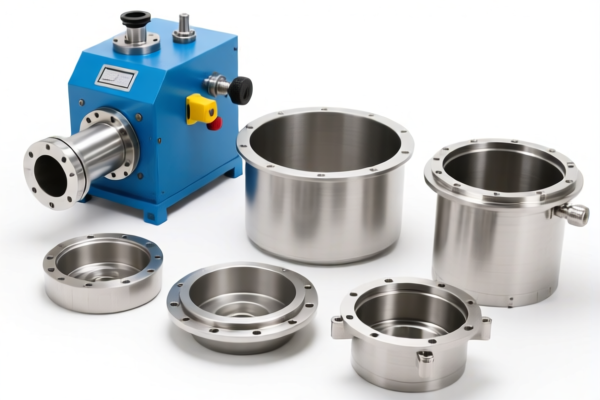
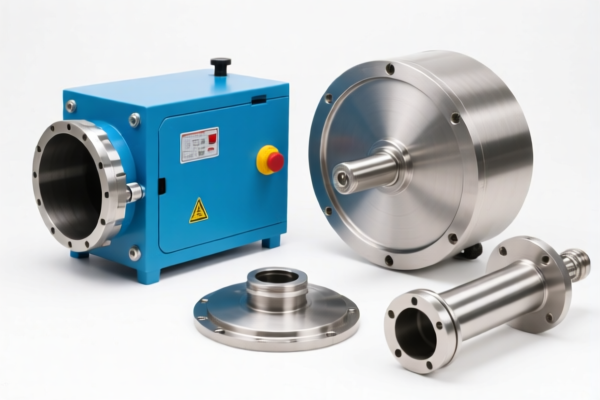
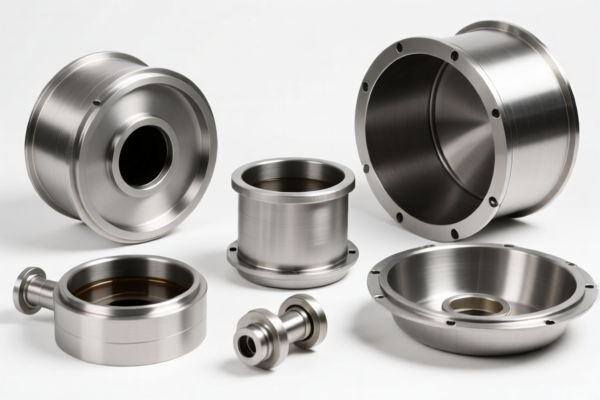
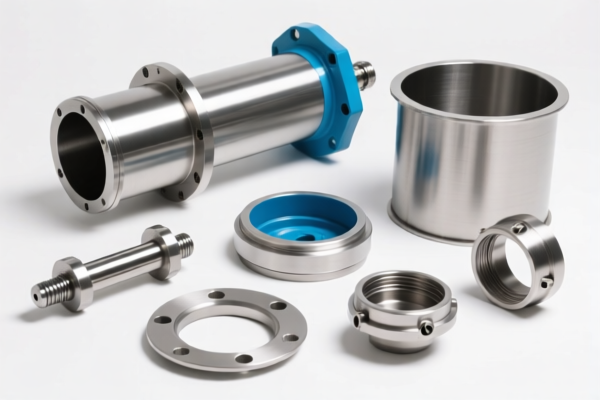
AI Analysis
🧺 Industrial Laundry & Textile Processing Machine Parts
HS Code Reference & Clearance Guide | 2026 Latest Tariff Analysis | Professional Clearance Strategy
📌 One, Product Definition & Classification: What Are "Parts"?
This category encompasses components for heavy-duty industrial machinery used in: * Textile Care: Washing, Dry Cleaning, Ironing, Bleaching. * Textile Processing: Dyeing, Finishing, Cutting.
In international trade, "Parts" (or Components) are distinct from the main machines. They must be identified as spare parts, mechanical components, or accessories specifically designed for these machines. The classification heavily depends on whether the part is generic to laundry/finishing machinery or specific to leather/shoe manufacturing machinery (even if used in textile contexts).
⚠️ Key Distinction Point: - If the part is for General Laundry/Textile Finishing (Washers, Ironers, Dry Cleaners) → It likely falls under 8451.90.90 or 8451.90.10. - If the part is for Leather/Shoe Making Machinery (even if used in textile dyeing lines) → It may fall under 8453.90.50 or 8453.90.10. - Material Matters: If the part is made of metal, plastic, or rubber, and fits the "machine part" description, it follows the specific machine chapter.
📦 Two, HS Code Classification Details (2026 Latest Tariff Authority Match)
Based on the provided data, here are the four matched HS Codes with their specific justifications and tax implications.
1. 🏷️ 8451.90.90.10
- Summary Match: Success. The product name covers washing, dry cleaning, and ironing purposes. It is explicitly categorized as "Accessories" (Parts), fully conforming to the definition of "Machine Parts (Other)" regarding use and form.
- Target Machinery: Industrial Washers, Dry Cleaners, Ironers.
- Classification Logic: Generic parts for laundry/finishing machinery not specified elsewhere.
2. 🏷️ 8451.90.90.20
- Summary Match: Basis for Match: The product name explicitly covers machine accessories for cleaning, drying, ironing, bleaching, dyeing, etc. It fully complies with the use restrictions in the classification notes. Since the specific material is not stated, based on the "spare parts" rule and no material conflict, it is judged to be compliant.
- Target Machinery: Bleachers, Dyeing Finishers, Laundry Lines.
- Classification Logic: A broader category for accessories used in washing, drying, ironing, bleaching, and dyeing processes.
3. 🏷️ 8453.90.50.00
- Summary Match: The product name includes "Accessories," conforming to the form requirement of "Other Parts of Machinery." Its use covers dyeing, finishing, etc., which are leather/textile processing-related machine matches. There is no obvious material or functional conflict with "Parts for machinery used in tanning or working leather," placing it within a reasonable scope of inference for parts.
- Target Machinery: Leather Processing Machines, Dyeing Lines (Leather context).
- Classification Logic: Used when the machinery is classified under Chapter 84 (Leather/Textile machinery) and the part is a generic spare part not specific to shoes.
4. 🏷️ 8453.90.10.00
- Summary Match: Success. The "Accessories" in the product name matches the "Parts" in the classification. Although the product covers various machines (washing, dyeing, etc.), its "Accessories" attribute is highly compatible with "Parts for manufacturing or repairing machinery for making or repairing footwear or other leather goods" in the "Part/Accessory" use dimension, with no material conflict.
- Target Machinery: Shoe Making Machines, Leather Tanning Machinery.
- Classification Logic: Specific parts for shoe/leather machinery. Even if the user calls it a "dyeing machine part," if it fits the leather machinery chapter description, this code may apply.
🔍 Critical Reminder: - Chapter 8451 is generally for Laundry/Dry Cleaning/Ironing machinery. - Chapter 8453 is for Leather/Shoe Making machinery. - Why two codes in 8453?
8453.90.10is for shoe/leather specific parts, while8453.90.50is for other leather/textile machinery parts. - Why two codes in 8451?8451.90.90.10and.20are sub-categories for "Other" parts, likely distinguished by specific internal tariff line definitions or historical classification nuances in the target database.
💰 Three, 2026 Latest Tariff Rate Breakdown (Including Surtaxes & Policy Add-ons)
✅ Applicable Country: United States (US) ✅ Origin: China (CN) ✅ Effective Date: From November 10, 2025 (including subsequent imports)
🎯 1. Codes 8451.90.90.10 & 8451.90.90.20
Product: Parts of Washing, Drying, Ironing, Bleaching, Dyeing Machines (Laundry/Textile Focus)
| Item | Content |
|---|---|
| Basic Tariff Rate | 3.5% (ad valorem) |
| Section 301 Surtax | +25.0% |
| IEEPA Surcharge (122) | +10.0% |
| Total Tax Rate | 38.5% |
| Tax Calculation | CIF Value × 38.5% |
| De Minimis Exemption? | ❌ No (deny_de_minimis) |
| Legal Basis Path | USITC:8451.90.90 → FOOTNOTE:301 → IEEPA:122 |
📌 Explanation: - "Basic Tariff 3.5%": Standard MFN rate for machine parts in Chapter 84. - "Section 301 Surcharge 25%": The major trade war tariff on Chinese mechanical parts. - "IEEPA 10%": Additional surcharge on Chinese imports under the International Emergency Economic Powers Act. - Total 38.5%: This is a high-cost category. Importers must factor this into their landed cost.
🎯 2. Codes 8453.90.50.00 & 8453.90.10.00
Product: Parts of Leather, Shoe Making, or Other Textile Processing Machinery
| Item | Content |
|---|---|
| Basic Tariff Rate | 0.0% (ad valorem) |
| Section 301 Surtax | +7.5% |
| IEEPA Surcharge (122) | +10.0% |
| Total Tax Rate | 17.5% |
| Tax Calculation | CIF Value × 17.5% |
| De Minimis Exemption? | ❌ No (deny_de_minimis) |
| Legal Basis Path | USITC:8453.90 → FOOTNOTE:301 → IEEPA:122 |
📌 Explanation: - "Basic Tariff 0%": Parts for leather/shoe machinery often have lower or zero base rates. - "Section 301 Surtax 7.5%": A lower surtax rate applies to these specific sub-categories compared to general laundry parts. - "IEEPA 10%": Still applies to Chinese origin goods. - Total 17.5%: Significantly cheaper than the 8451 codes. Strategic classification (if justifiable) can save over 21% in duties.
🛠️ Four, Clearance Practical Advice (Real-World Pitfall Avoidance)
✅ 1. Document Checklist (Must-Have)
| Document | Must Provide | Explanation |
|---|---|---|
| ✅ Product Specification Sheet | ✔️ | Must detail dimensions, material, and specific machine compatibility (e.g., "Part for Model X Washer"). |
| ✅ Technical Diagrams/Photos | ✔️ | Clear photos showing the part and its function. Diagrams proving it is a "part" and not a standalone machine. |
| ✅ Commercial Invoice | ✔️ | Must explicitly state: "Machine Parts for Laundry/Textile Machinery." Avoid vague terms like "Tools" or "Components." |
| ✅ Packing List | ✔️ | Clearly list parts separately. Do not pack parts with main machines if declaring separately. |
| ✅ Material Declaration | ✔️ | Specify material (e.g., Steel, Plastic, Rubber). Crucial for avoiding classification errors. |
| ✅ Original Certificate of Origin | ✔️ | Required to confirm China origin for tariff calculation. |
✅ 2. Declaration Tips (Key Mantra)
🔥 "Name Specific, Function Clear, Parts, Not Machine!"
| Situation | Correct Declaration | Wrong Practice |
|---|---|---|
| Parts for Washers/Dryers | 8451.90.90.10/20 |
Misclassifying as 8451.10.00.00 (Main Machine) → 25%+ tax but high compliance risk. |
| Parts for Leather Machines | 8453.90.10.00 or .50 |
Misclassifying as 8451 parts → 38.5% vs 17.5% difference! |
| General Mechanical Part | Provide material + machine type | Using generic "Spare Part" without context → Customs may reclassify or delay. |
| Kit with Tools | Declare tools separately if possible | Packing tools with parts → Potential misclassification or higher duty on tools. |
💡 Strategy: If the part is used in both laundry and leather contexts, choose the code with the lower total tax (17.5%) ONLY IF you can justify its primary use is for leather/shoe machinery or if the classification allows for
8453. If it is strictly for a washing machine, you MUST use8451(38.5%).
✅ 3. Special Handling Cases
| Situation | Handling Advice |
|---|---|
| OEM Custom Parts | Provide the customer's PO and part number. Link it explicitly to a specific machine model. |
| Mixed Container | If packing 8451 parts and 8453 parts together, separate them on the packing list to avoid blanket classification. |
| Ambiguous "Dyeing Machine" | Dyeing machines can be for textiles (8451) or leather (8453). Provide the material being processed in the description to guide the classifier. |
| Electronic Control Boards | If the "part" is an electronic board, it might fall under Chapter 85 (Electrical). However, if classified as a "part" under 8451/8453, ensure it is not a standalone computer. |
🌍 Five, Global Market Clearance Comparison (2026 Latest)
| Country/Region | Recommended HS Code | Tariff (China Origin) | Certification | Remarks |
|---|---|---|---|---|
| 🇺🇸 USA | 8451.90.90.10/20 |
38.5% | No specific CE/FCC for parts | High tariff due to 301 + IEEPA. |
| 🇺🇸 USA | 8453.90.10.00/.50 |
17.5% | No specific CE/FCC for parts | Lower tariff, but strict use-case proof needed. |
| 🇨🇳 China | 8451.90.90 / 8453.90 |
0% - 5% | N/A | Imports into China are low-duty. |
| 🇪🇺 EU | 8451.90 / 8453.90 |
0% - 4.5% | CE Marking (for machinery) | Parts generally 0% duty. |
| 🇬🇧 UK | 8451.90 / 8453.90 |
0% - 4.5% | UKCA Marking | Post-Brexit tariffs generally low for parts. |
| 🇦🇺 Australia | 8451.90 / 8453.90 |
0% - 5% | RCM (if electrical) | FTAs may apply for certain origins. |
📌 Conclusion: - USA is the only market with significant surtaxes. - China-origin parts to the US face 38.5% or 17.5%. - EU/UK/Australia are low-duty regions. - Cost Savings: If the part can be legitimately classified under
8453(Leather/Machine Parts) instead of8451(Laundry Parts), you save 21% in US duties. However, this must be based on actual use. Misclassification is fraud.
📌 Six, Common Errors & Pitfall Guide (Blood & Tears Lessons)
❌ Error 1: Declaring "Washing Machine Parts" as 8451 but using 8453 codes to save money.
👉 Consequence: Customs audit reveals the parts are for a washer, not a shoe machine. Back taxes + Penalties + Seizure!
❌ Error 2: Using vague terms like "Machine Accessories" without specifying the machine. 👉 Consequence: Customs holds the shipment for classification review. Delay of 2-4 weeks.
❌ Error 3: Ignoring the IEEPA 10% surcharge. 👉 Consequence: Underpayment of duty by 10%. Late fees and interest accrue monthly.
❌ Error 4: Combining "Main Machine" and "Parts" in one line item. 👉 Consequence: The entire value may be assessed at the higher machine rate, or parts may be rejected. Always separate!
✅ Correct Practice:
"Ironing Machine Part, Model ABC-100, Steel Bracket, for Industrial Dry Cleaning Line. Origin: China. HS Code: 8451.90.90.10."
🎯 Seven, Conclusion: Professional Classification Saves Money!
🎯 Remember the Mantra:
🔹 "Laundry Parts = 38.5% (USA)"
🔹 "Leather/Machine Parts = 17.5% (USA)"
🔹 "Truth in Classification: Don't Fudge the Use Case!"
🔹 "HS Code is Life or Death in Tariffs. 21% Difference = Profit Margins!"
📌 Pro Tip:
If you are exporting to the USA, consider Advance Rulings from CBP (Customs and Border Protection) if the classification between 8451 and 8453 is ambiguous. It provides legal certainty.
📣 Immediate Action:
📞 Contact a Licensed Customs Broker + Provide Technical Drawings + Specify Machine Type
🚀 Classify Correctly, Clear Customs Smoothly, Protect Your Margin!
✨ Professional Clearance Starts with Precise Classification!
💼 Every Penny in Duty is a Penny Out of Your Profit!
Customer Reviews
About HS Code Classification
The Harmonized System (HS) is an internationally standardized nomenclature developed by the World Customs Organization (WCO) to classify traded products. Over 200 countries use the HS system as the basis for customs tariffs, trade statistics, and import/export regulations.
Each HS code follows a hierarchical structure:
- Chapter (2 digits) — Broad category of goods (e.g., Chapter 84: Machinery and Mechanical Appliances)
- Heading (4 digits) — More specific grouping within the chapter
- Subheading (6 digits) — Internationally standardized breakdown, used by all WCO member countries
- National subdivisions (8-10 digits) — Country-specific extensions for further classification, such as US HTSUS 10-digit codes
Correct HS code classification is essential for smooth customs clearance, accurate duty payment, and compliance with trade regulations. Misclassification can lead to customs delays, overpayment of duties, or penalties.
When importing from CN to US, the applicable tariff rates may include:
- Most-Favored-Nation (MFN) rate — The standard duty rate applied to WTO members
- General rate — Applied to countries without trade agreements
- Trade remedy duties — Additional tariffs such as Section 301 (anti-dumping), Section 232 (national security), or countervailing duties
The information provided on this page is for reference purposes only. For official classification, please consult with your local customs authority or a licensed customs broker.