Washing Machine Drain Pipe Connector
CN → US| HS Code | Tariff Rate | Origin | Destination | Doc |
|---|---|---|---|---|
| 7412200085 | 88.0% | CN | US | Official Doc |
| 3917400050 | 15.3% | CN | US | Official Doc |
| 7307199080 | 41.2% | CN | US | Official Doc |
| 7307995045 | 89.3% | CN | US | Official Doc |
| 3917400095 | 40.3% | CN | US | Official Doc |
Product Images
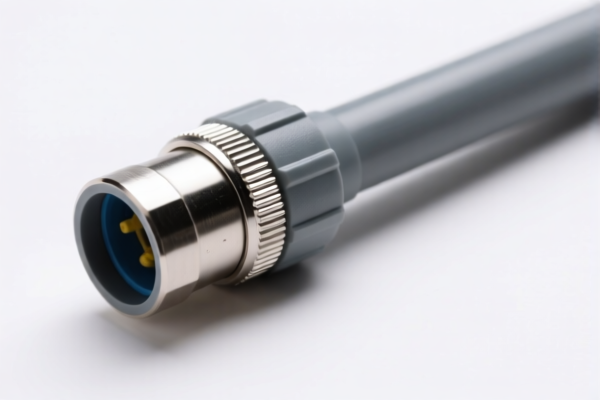
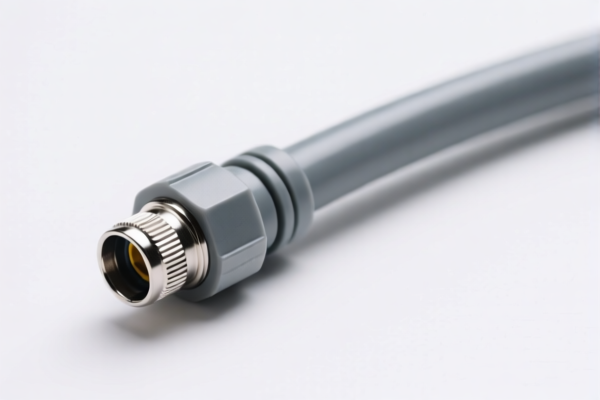
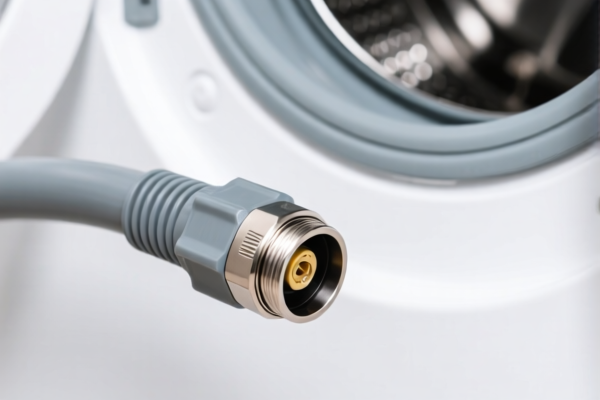
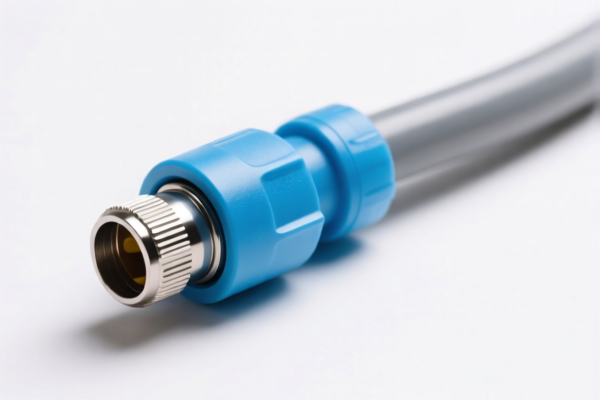
AI Analysis
🔌 Washing Machine Drain Pipe Connectors
🌐 HS Code Reference & Customs Clearance Guide | 2026 Latest Tariff Analysis | Professional Entry Strategy
📌 I. Product Definition & Classification: Material is King!
Washing machine drain pipe connectors are critical components for fluid management in home appliances. In international trade, they are strictly classified by their material composition. The customs authority will inspect the physical material to determine the correct Harmonized System (HS) Code. Misclassification based on material can lead to massive tariff discrepancies (from 15.3% to 89.3%).
⚠️ Key Distinction Point:
- Plastic (Polymer): Generally lower base duties but subject to specific "122 Clause" taxes.
- Copper Alloy: Subject to the highest combined tariffs due to Section 232/301 overlapping measures.
- Iron/Steel: Different sub-categories exist based on whether the steel is "non-alloy" or general, leading to vastly different tax rates.
📦 II. HS Code Classification Matrix (2026 Latest Data)
Based on the provided data, here are the 5 specific classifications for Washing Machine Drain Pipe Connectors. Note the extreme variance in tax rates based on minor material differences.
| HS Code | Summary Description | Material Type | Total Tax Rate |
|---|---|---|---|
7412.20.00.85 |
Copper Alloy Connector | Copper Alloy | 88.0% |
3917.40.00.50 |
Plastic Connector | Plastic | 15.3% |
7307.19.90.80 |
Iron/Steel Connector (Specific) | Iron or Steel | 41.2% |
7307.99.50.45 |
Iron/Non-Alloy Steel Connector | Iron or Non-Alloy Steel | 89.3% |
3917.40.00.95 |
Plastic Connector (Other) | Plastic | 40.3% |
🔍 Critical Observation:
- Cheapest: Plastic (3917.40.00.50) at 15.3%.
- Most Expensive: Non-Alloy Steel (7307.99.50.45) at 89.3%.
- Trap: Two different plastic codes exist with a 25% tax difference (15.3%vs40.3%). Precision in declaration is vital.
💰 III. Detailed Tariff Breakdown & Legal Basis
✅ Applicable Jurisdiction: USA (Implied by "Section 122" and "25% tariffs")
✅ Origin: China (Implied by the high "Added Tariffs" and "122 Clause" structure)
🎯 1. 7412.20.00.85 – Copper Alloy Connectors
The Highest Risk Category for Copper Goods
| Item | Detail |
|---|---|
| Base Duty | 3.0% |
| Added Tariff (Section 301) | 25.0% |
| Section 122 / Aluminum-Copper Surcharge | 50.0% |
| Total Tax | 88.0% |
| Calculation | CIF Value × 88.0% |
| Legal Path | Base → Sec 301 → Sec 122 Copper/Surcharge |
📌 Explanation:
This code triggers three layers of taxation. The 50% surcharge on "Steel, Aluminum, and Copper products" (Section 122 context) is the killer here. Even though the base duty is low (3%), the cumulative effect is prohibitive.
🎯 2. 3917.40.00.50 – Plastic Connectors (Low Tax Tier)
The Most Cost-Effective Option
| Item | Detail |
|---|---|
| Base Duty | 5.3% |
| Added Tariff (Section 301) | 0.0% |
| Section 122 Clause | 10% |
| Total Tax | 15.3% |
| Calculation | CIF Value × 15.3% |
📌 Explanation:
This is the optimal classification if the product is indeed plastic. It has no Section 301 added tariff (0%), only the base duty and the 122 clause surcharge.
⚠️ Warning: Ensure the plastic is not mixed with metal inserts that might change the classification.
🎯 3. 7307.19.90.80 – Iron or Steel Connectors (Standard)
Moderate-High Risk
| Item | Detail |
|---|---|
| Base Duty | 6.2% |
| Added Tariff (Section 301) | 25.0% |
| Section 122 Clause | 10% |
| Total Tax | 41.2% |
| Calculation | CIF Value × 41.2% |
📌 Explanation:
Standard iron/steel parts are hit hard by the 25% Section 301 tariff. Unlike the copper category, there is no additional 50% surcharge, but the total remains high at 41.2%.
🎯 4. 7307.99.50.45 – Iron or Non-Alloy Steel Connectors
The Penalty Category
| Item | Detail |
|---|---|
| Base Duty | 4.3% |
| Added Tariff (Section 301) | 25.0% |
| Section 122 / Copper-Surcharge Trap | 50.0% |
| Total Tax | 89.3% |
| Calculation | CIF Value × 89.3% |
📌 Explanation:
This is the worst-case scenario. Despite "Non-Alloy Steel" usually being lower duty, this specific HS code triggers the 50% surcharge listed in the tax detail ("Steel, Aluminum, Copper products surcharge 50%").
🔥 Do Not Declare Incorrectly: Misclassifying steel as "Other" (7307.19) instead of "Non-Alloy/Other" (7307.99) can save you ~48% in taxes.
🎯 5. 3917.40.00.95 – Plastic Connectors (Other/High Tax)
The "Hidden" High-Tax Plastic Code
| Item | Detail |
|---|---|
| Base Duty | 5.3% |
| Added Tariff (Section 301) | 25.0% |
| Section 122 Clause | 10% |
| Total Tax | 40.3% |
| Calculation | CIF Value × 40.3% |
📌 Explanation:
Why is this plastic code 40.3% while3917.40.00.50is 15.3%?
This code incurs the 25% Added Tariff (Section 301).
- If your plastic connector is for a specific use or type that falls under.50, you pay 15.3%.
- If it falls under.95(often "Other"), you pay an extra 25%.
Strategy: Verify with the customs broker if your specific plastic mold/type qualifies for.50to save $25 per $100 of value.
🛠️ IV. Customs Clearance Practical Advice (Pitfall Avoidance)
✅ 1. Material Verification is Mandatory
Customs officers will often perform X-ray or physical inspection.
- Plastic: Must not contain significant metal reinforcement (unless declared separately).
- Steel: Must distinguish between "Alloy" and "Non-Alloy". If you declare .19 (1/4 inch/standard) but send .99 (non-alloy/other), you risk the 89.3% rate.
- Copper: Any copper content > certain threshold triggers the 50% surcharge.
✅ 2. The "Plastic Trap" (.50 vs .95)
| HS Code | Tax Rate | Section 301? | Recommendation |
|---|---|---|---|
3917.40.00.50 |
15.3% | NO | Priority Declares this code if applicable. Check if your product fits the "specific" description of this subheading. |
3917.40.00.95 |
40.3% | YES | Only declare here if the product cannot fit .50. |
📌 Tip: Ask your manufacturer for the technical specification sheet. Does it match the description for
.50? If yes, use.50to save 25%.
✅ 3. Documentation Requirements
| Document | Required For | Why? |
|---|---|---|
| Material Certificate | All Codes | Proves it is Plastic, Steel, or Copper. Essential for .74 (Copper) and .73 (Steel) codes. |
| Product Photos | All Codes | Shows the connector structure (bends, threads, material color). |
| Detailed Description | All Codes | Must specify: "Washing Machine Drain Connector, Made of [Material], For [Brand] Appliances". |
| Invoice | All Codes | Must match the HS Code value exactly. |
🌍 V. Global Market Comparison (Quick Reference)
| Market | HS Code | Est. Duty | Key Constraint |
|---|---|---|---|
| 🇺🇸 USA | See Above | 15.3% - 89.3% | Section 301 & 122 Clauses dominate costs. |
| 🇨🇳 China | 3917.40.00.50 |
~5-10% | Standard import duty. No 25% penalty. |
| 🇪🇺 EU | 3917.23 |
~5-6% | Lower base duty, no Section 301. |
| 🇬🇧 UK | 3917.23 |
~5-6% | Similar to EU post-Brexit. |
📌 Conclusion:
The US market is exceptionally punitive for these goods due to trade wars.
- Plastic is the only viable path for cost-efficiency (15.3%).
- Steel/Copper are nearly impossible to profit from without significant value-add or duty drawback programs.
📌 VI. Common Errors & Pitfalls (Blood & Tears Lessons)
❌ Error 1: Declaring Copper connectors as Plastic
👉 Consequence: Customs seizure, fines, and retroactive 88% tax + penalties.
👉 Reality Check: Copper is dense and metallic. It will fail a visual or simple metal-test inspection.
❌ Error 2: Declaring Non-Alloy Steel as General Steel (7307.19 vs 7307.99)
👉 Consequence:
- Correct .19: 41.2%
- Incorrect .99: 89.3%
👉 Result: You lose 48.1% of your profit margin instantly. Verify the steel grade!
❌ Error 3: Ignoring the Plastic Sub-code Distinction (.50 vs .95)
👉 Consequence: Paying 40.3% instead of 15.3%.
👉 Result: Unnecessary 25% tax loss. Always argue for the .50 classification if technically feasible.
❌ Error 4: Vague Description ("Pipe Fitting")
👉 Consequence: Customs assigns a default high-duty code or requests a border exam.
👉 Result: Delay of 2-4 weeks.
✅ Correct Practice:
"Washing Machine Drain Connector, Model XYZ, Material: [Specific Plastic/Steel/Copper], Intended Use: Residential Washing Machine Drainage, Country of Origin: China"
🎯 VII. Conclusion: Strategic Sourcing & Classification
🎯 Key Takeaway:
🔹 Plastic is King: Aim for HS
3917.40.00.50(15.3%) to maximize margin.
🔹 Avoid Copper & Non-Alloy Steel: These trigger the 50% Surcharge, leading to 88-89% taxes.
🔹 Verify Steel Type: If using steel, ensure it classifies under7307.19(41.2%), NOT7307.99(89.3%).
📌 Pro Tip:
If your product can be made of Plastic instead of Metal, switch materials. The tax difference is up to 74%.
If you must use Metal, consider Value-Added Processing or Duty Drawback programs, but expect heavy scrutiny.
📣 Immediate Action:
1. Confirm Material with supplier (Certificate of Analysis).
2. Check Plastic Sub-code eligibility for .50 vs .95.
3. Verify Steel Grade for .19 vs .99.
4. Submit Pre-Booking with accurate HS Code to avoid border delays.
✨ Precision Classification, Maximum Profit!
💼 Don't let 25% or 50% tariffs eat your margin.
Customer Reviews
About HS Code Classification
The Harmonized System (HS) is an internationally standardized nomenclature developed by the World Customs Organization (WCO) to classify traded products. Over 200 countries use the HS system as the basis for customs tariffs, trade statistics, and import/export regulations.
Each HS code follows a hierarchical structure:
- Chapter (2 digits) — Broad category of goods (e.g., Chapter 84: Machinery and Mechanical Appliances)
- Heading (4 digits) — More specific grouping within the chapter
- Subheading (6 digits) — Internationally standardized breakdown, used by all WCO member countries
- National subdivisions (8-10 digits) — Country-specific extensions for further classification, such as US HTSUS 10-digit codes
Correct HS code classification is essential for smooth customs clearance, accurate duty payment, and compliance with trade regulations. Misclassification can lead to customs delays, overpayment of duties, or penalties.
When importing from CN to US, the applicable tariff rates may include:
- Most-Favored-Nation (MFN) rate — The standard duty rate applied to WTO members
- General rate — Applied to countries without trade agreements
- Trade remedy duties — Additional tariffs such as Section 301 (anti-dumping), Section 232 (national security), or countervailing duties
The information provided on this page is for reference purposes only. For official classification, please consult with your local customs authority or a licensed customs broker.