Washing Machine High Pressure Cleaning Gun
CN → US| HS Code | Tariff Rate | Origin | Destination | Doc |
|---|---|---|---|---|
| 7326908688 | 87.9% | CN | US | Official Doc |
| 8424209000 | 35.0% | CN | US | Official Doc |
| 7326908676 | 87.9% | CN | US | Official Doc |
| 3926909989 | 22.8% | CN | US | Official Doc |
| 3926901000 | 20.9% | CN | US | Official Doc |
Product Images
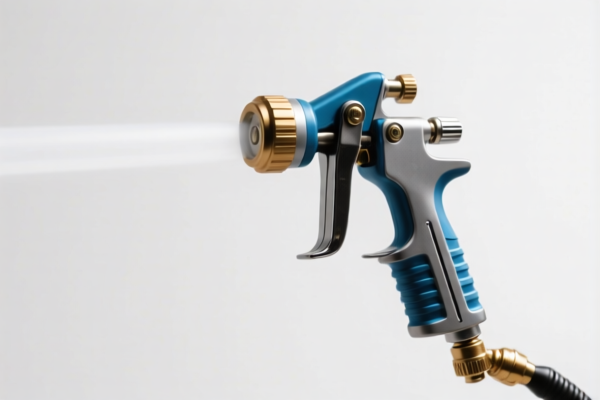
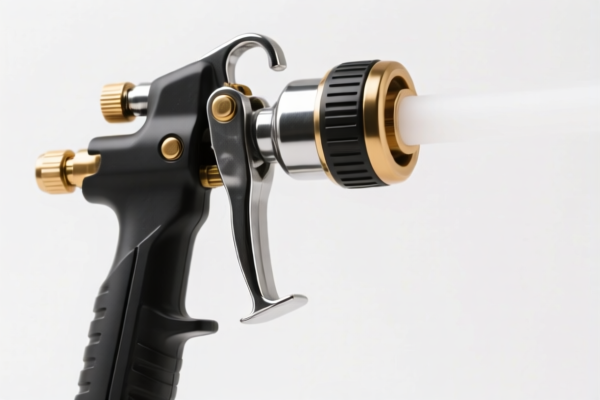
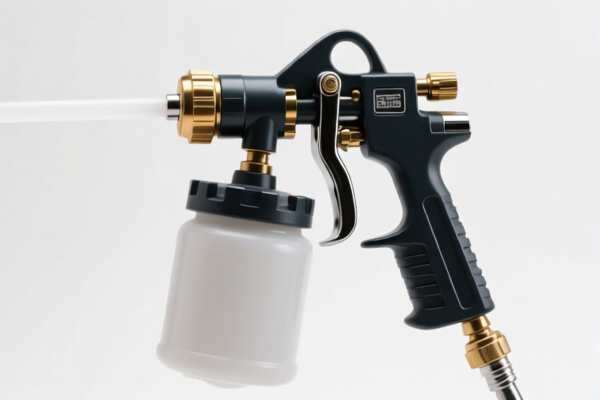
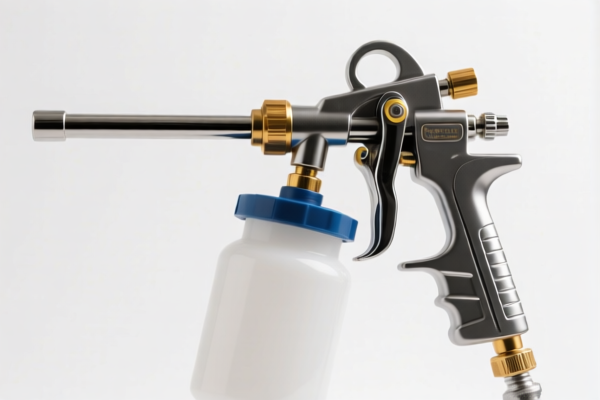
AI Analysis
🔫 Washing Machine High Pressure Cleaning Gun (Industrial/Consumer Grade)
🌐 HS Code Reference & Customs Clearance Guide | 2026 Latest Tariff Analysis | Professional Clearance Strategy
📌 I. Product Definition & Classification: What Exactly Is a "High Pressure Cleaning Gun"?
A High Pressure Cleaning Gun (often referred to as a spray gun, trigger gun, or lance assembly) is a critical nozzle component used in high-pressure cleaning systems, car washes, industrial degreasing, and sometimes integrated into specialized washing machine accessories. Its primary function is to control the flow and pressure of water or cleaning solutions.
In international trade, classification depends heavily on material composition and functional integration:
Metal Nozzles/Guns (Steel/Stainless Steel):
Constructed primarily from iron or steel, often featuring internal mechanisms for pressure control. These are classified under "Articles of Iron or Steel."
Spray Devices (Mechanical/Plastic):
Regarded as mechanical apparatus for projecting, dispersing, or spraying liquids. If the primary identity is the function (spraying) rather than the material, it falls under "Spraying machinery."
Plastic/Composite Components:
If the body is predominantly plastic or made of composite materials, it falls under "Articles of Plastics."
⚠️ Key Distinction Point:
- If the item is a metallic gun/nozzle with simple mechanical parts → Classify as Iron/Steel Articles (Chapter 73).
- If the item is a mechanical spray device (regardless of minor plastic parts) → Classify as Spraying Machinery (Chapter 84).
- If the item is predominantly plastic or a spare part for machinery → Classify as Plastic Articles (Chapter 39) or Parts of Machinery.
📦 II. HS Code Classification Matrix (2026 Latest Tariff Data)
| HS Code | Product Description | Material/Feature | Key Classification Logic |
|---|---|---|---|
7326.90.86.88 |
Other articles of iron or steel | Metal (Stainless/Steel) | Classified as "Other articles of iron or steel" based on material inference. |
8424.20.90.00 |
Sprayers of hand-operated mechanical form | Mechanical | Classified as "Spraying guns and similar apparatus" based on function (liquid projection). |
7326.90.86.76 |
Other articles of iron or steel (Nozzles/Parts) | Metal | Classified as "Other articles of iron or steel" for nozzles/gun bodies made of iron/steel. |
3926.90.99.89 |
Other articles of plastics | Plastic/Composite | Classified under "Other articles of plastics" if material is inferred as plastic/composite. |
3926.90.10.00 |
Other parts of machinery | Plastic/Metal Mix | Classified as "Other parts of machinery/plastics" under the residual category. |
🔍 Critical Reminder:
- Metal vs. Plastic: The biggest dispute area. If the gun is stainless steel,7326is likely, but beware of high tariffs. If it’s plastic,3926applies with lower base tariffs but still subject to surcharges.
- Function vs. Material: Customs may argue that a metal gun is primarily a "spraying apparatus" (8424) rather than just an "article of steel." However,8424often attracts fewer specific "Section 232" (steel/aluminum) surcharges if not explicitly deemed a steel article.
- Spare Parts: If sold strictly as a replacement part,3926.90.10.00or7326.90.86.76might be considered, but functional classification (8424) is often safer for complete units.
💰 III. 2026 Tariff Rate Breakdown (Including Surcharge Policies)
✅ Applicable Country: United States (US)
✅ Origin: China (CN)
✅ Effective Date: Current Section 301 & 232 Tariffs Apply
🎯 1. 7326.90.86.88 & 7326.90.86.76 —— Articles of Iron or Steel
| Item | Detail |
|---|---|
| Base Duty | 2.9% (ad valorem) |
| Section 301 Surcharge | +25.0% |
| Section 232 Surcharge | +50.0% (Specifically for Steel/Aluminum/Copper products under 1221/1222) |
| Total Tax Rate | 87.9% |
| Tax Calculation | CIF Value × 87.9% |
| De Minimis Eligibility | ❌ Not Eligible (High value + specific surcharges usually trigger full duty collection) |
| Legal Pathway | USITC:7326.90.86.88 → SECTION_232:STEEL → SECTION_301:25% |
📌 Explanation:
- The 50% Section 232 tariff is the killer here. Because the summary infers "Metal (Stainless or Steel)," this product falls under the steel/aluminum surcharge.
- 87.9% is extremely high. Importers must carefully consider cost structures.
- Note:7326.90.86.76(Nozzles/Parts) shares the same 87.9% rate because it is also classified as an article of iron or steel.
🎯 2. 8424.20.90.00 —— Spraying Machinery/Apparatus
| Item | Detail |
|---|---|
| Base Duty | 0.0% |
| Section 301 Surcharge | +25.0% |
| Section 232 Surcharge | 0% (Not classified as primary steel/aluminum article) |
| Total Tax Rate | 35.0% |
| Tax Calculation | CIF Value × 35.0% |
| De Minimis Eligibility | ❌ Not Eligible (Under $800 threshold usually blocked for CN origin under 301) |
| Legal Pathway | USITC:8424.20.90.00 → SECTION_301:25% |
📌 Explanation:
- This is the most cost-effective classification for functional spray guns.
- By classifying as "Spraying apparatus" (8424) rather than "Steel article" (7326), you avoid the 50% Section 232 tariff.
- Total 35% is significantly cheaper than 87.9%.
🎯 3. 3926.90.99.89 & 3926.90.10.00 —— Plastic/Composite Articles
| Item | Detail |
|---|---|
| Base Duty | 3.4% - 5.3% |
| Section 301 Surcharge | +7.5% |
| Section 232 Surcharge | 0% (Plastic is not metal) |
| Total Tax Rate | 20.9% - 22.8% |
| Tax Calculation | CIF Value × Rate |
| De Minimis Eligibility | ❌ Not Eligible (Standard China tariffs apply) |
| Legal Pathway | USITC:3926.90.xxxx → SECTION_301:7.5% |
📌 Explanation:
- If the cleaning gun is plastic-bodied or made of composite materials, this offers the lowest tax burden.
-3926.90.10.00(20.9%) is the lowest if classified as a "part."
-3926.90.99.89(22.8%) is the "other plastic article" residual category.
- Strategy: If the product is primarily plastic, declare it as such to save ~15-67% compared to steel classifications.
🛠️ IV. Customs Clearance Practical Advice (Avoiding Pitfalls)
✅ 1. Documentation Checklist (Mandatory)
| Document | Required | Description |
|---|---|---|
| ✅ Product Specification Sheet | ✔️ | Detail material composition (e.g., "304 Stainless Steel Body," "Polymer Nozzle"). |
| ✅ Material Breakdown | ✔️ | Clearly state % of steel vs. plastic. If >50% steel by weight/value, Customs may force 7326. |
| ✅ Commercial Invoice | ✔️ | Use precise terminology: "High Pressure Spray Gun for Cleaning Machine" vs. "Steel Nozzle." |
| ✅ Product Photos | ✔️ | Show the entire assembly, trigger mechanism, and any branding/model numbers. |
| ✅ Structure Diagram | ✔️ | Proves it is a mechanical spraying device (8424) if claiming that classification. |
| ✅ Certificate of Origin (CO) | ✔️ | Required for Section 301 applicability verification. |
✅ 2. Declaration Strategy (Crucial Tips)
🔥 "Material Dictates Duty, Function Dictates Chapter!"
| Scenario | Recommended HS Code | Reason | Risk |
|---|---|---|---|
| Stainless Steel Gun | 8424.20.90.00 |
Argue it is a "Spraying Apparatus" (Function) not just "Steel Article." | Moderate. Customs may audit to ensure it's not primarily a steel article. |
| Plastic Gun | 3926.90.10.00 |
Clearly "Article of Plastic." | Low. If plastic content is high, this is safe. |
| Mixed Metal/Plastic | 8424.20.90.00 |
Primary function is spraying. Avoid steel surcharge. | Low-Moderate. Best balance. |
| Pure Steel Nozzle (Small) | 7326.90.86.76 |
Small steel parts often fall here. | High Risk – Triggers 50% Section 232. Avoid if possible. |
⚠️ Warning:
- Do NOT declare a stainless steel gun as "Plastic" (3926) if it is visibly metal. This is fraud and leads to seizures.
- However, you CAN argue that a stainless steel gun is a Machine Part/Sprayer (8424) to avoid the 232 tariff, provided it has a mechanical trigger/nozzle function.
✅ 3. Special Considerations
| Situation | Handling Advice |
|---|---|
| OEM/Private Label | Ensure the invoice lists the buyer and seller clearly. Misdeclaration of origin can lead to penalties. |
| Set with Hose/Nozzle | If sold as a "Kit," declare the primary component (the gun). Do not split into separate parts unless instructed by the broker. |
| Sample Shipment | Even under $800, China-origin goods under Section 301/232 are often not exempt from duties if the broker chooses to collect them. Assume duty is payable. |
| Section 232 Exemptions | Check if your specific steel product has an exclusion code. Unlikely for generic cleaning guns, but verify. |
🌍 V. Global Market Comparison (2026)
| Market | Recommended HS Code | Est. Total Duty | Key Note |
|---|---|---|---|
| 🇺🇸 USA | 8424.20.90.00 |
35.0% | Best to avoid 7326 (87.9%) due to Steel Tariffs. |
| 🇨🇳 China | 8422.30.90.00 |
~10-15% | Domestic classification may differ; check local tariff book. |
| 🇪🇺 EU | 8424.20.00 |
0-4% | No Section 301/232 equivalents. Lower tariffs generally. |
| 🇨🇦 Canada | 8424.20.00 |
0% | Free trade agreement benefits may apply depending on origin. |
📌 Conclusion:
- USA is the most expensive market due to trade wars.
- Strategy Shift: Try to classify as8424(Sprayer) or3926(Plastic) to save up to 50-67% in duties compared to7326(Steel Article).
📌 VI. Common Errors & Pitfalls (Learn from Mistakes)
❌ Error 1: Declaring a Stainless Steel Gun as 7326.90.86.88
👉 Consequence: You pay 87.9% tax.
👉 Fix: If it’s a functional spray gun, declare as 8424.20.90.00 (35%) to save ~52%.
❌ Error 2: Declaring a Plastic Gun as 7326 because it has a metal spring
👉 Consequence: Customs rejects it or reclassifies it, causing delays.
👉 Fix: Declare as 3926.90.99.89 (22.8%). The primary material is plastic.
❌ Error 3: Ignoring Section 232 on Steel Articles
👉 Consequence: Surprise bill for 50% additional duty upon arrival.
👉 Fix: Always check if the product is "Steel/Aluminum" and if a functional classification (84xx) is available and defensible.
🎯 VII. Conclusion: Strategic Classification for Cost Savings
🎯 Key Takeaway:
🔹 "For Steel Guns: Fight for
8424(35%) to beat7326(87.9%)."
🔹 "For Plastic Guns: Claim3926(22.8%) for minimal duty."
🔹 "Never assume 'Steel = Steel Article Tax'. Function matters!"
📌 Pro Tip:
If you are importing large volumes, consider pre-classification rulings with CBP (U.S. Customs) to lock in the 8424 classification, providing legal certainty against the 232 surcharge.
📣 Immediate Action:
📞 Consult your Customs Broker: Ask specifically, "Can we classify this high-pressure gun under 8424.20.90.00 as a spraying apparatus to avoid the 232 steel tariff?"
📄 Provide Material Specs: Ensure your supplier provides a detailed material breakdown to support your chosen HS Code.
✨ Smart Clearance, Higher Margins!
💼 Don’t let trade tariffs eat your profits. Classify smartly.
Customer Reviews
About HS Code Classification
The Harmonized System (HS) is an internationally standardized nomenclature developed by the World Customs Organization (WCO) to classify traded products. Over 200 countries use the HS system as the basis for customs tariffs, trade statistics, and import/export regulations.
Each HS code follows a hierarchical structure:
- Chapter (2 digits) — Broad category of goods (e.g., Chapter 84: Machinery and Mechanical Appliances)
- Heading (4 digits) — More specific grouping within the chapter
- Subheading (6 digits) — Internationally standardized breakdown, used by all WCO member countries
- National subdivisions (8-10 digits) — Country-specific extensions for further classification, such as US HTSUS 10-digit codes
Correct HS code classification is essential for smooth customs clearance, accurate duty payment, and compliance with trade regulations. Misclassification can lead to customs delays, overpayment of duties, or penalties.
When importing from CN to US, the applicable tariff rates may include:
- Most-Favored-Nation (MFN) rate — The standard duty rate applied to WTO members
- General rate — Applied to countries without trade agreements
- Trade remedy duties — Additional tariffs such as Section 301 (anti-dumping), Section 232 (national security), or countervailing duties
The information provided on this page is for reference purposes only. For official classification, please consult with your local customs authority or a licensed customs broker.