Washing Machine Inner Drum
CN → US| HS Code | Tariff Rate | Origin | Destination | Doc |
|---|---|---|---|---|
| 8421914000 | 17.5% | CN | US | Official Doc |
| 8450906000 | 20.1% | CN | US | Official Doc |
| 8450902000 | 20.1% | CN | US | Official Doc |
Product Images
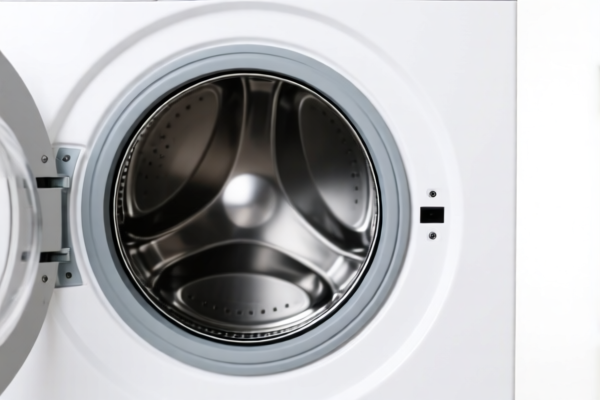
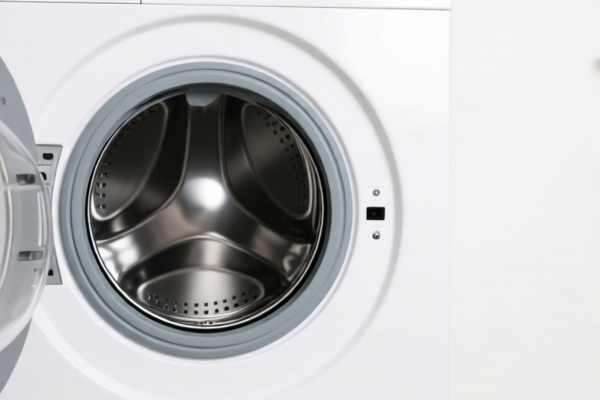
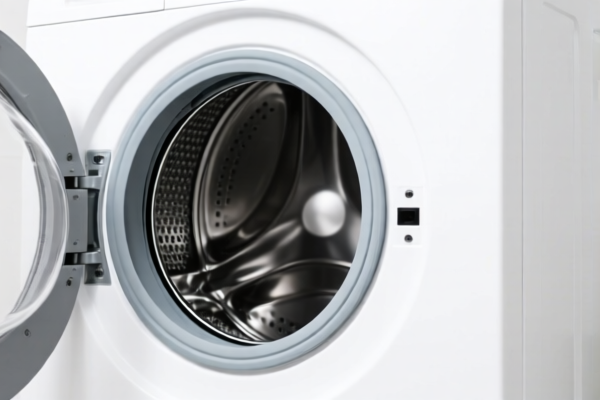
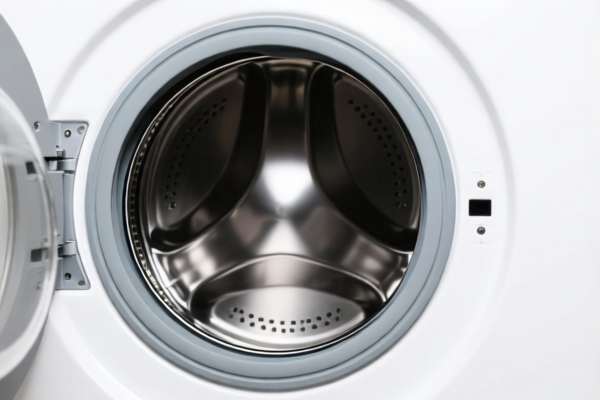
AI Analysis
🧺 Washing Machine Inner Drum (Tub)
🌐 HS Code Reference & Clearance Guide | 2026 Latest Tariff Analysis | Professional Clearance Strategy
📌 I. Product Definition & Classification: Do You Really Understand the "Inner Drum"?
The washing machine inner drum (often called the tub) is a critical functional component in domestic laundry appliances. In international trade, its classification depends heavily on its structural logic and specific intended use. While it is essentially a "part," customs authorities may differentiate between drums used in washing machines versus those used in centrifugal dryers, or between different material/form interpretations.
⚠️ Key Distinction:
- If viewed as a structural part analogous to centrifugal dryer drums → May qualify for lower base tariffs under 8421.91.40.00.
- If viewed strictly as a functional part of a washing machine → Classified under 8450.90 series, attracting higher base tariffs.
📦 II. HS Code Classification Details (2026 Latest Authorized Comparison)
| HS Code | Product Description | Applicable Scenario | Key Classification Logic |
|---|---|---|---|
8421.91.40.00 |
Parts of centrifugal drying machines | Inner drum viewed as a mechanical component structurally similar to dryer drums; fits "parts/components" characteristics. | Lower Base Tariff (0%) |
8450.90.60.00 |
Parts of washing machines | Core component of washing machines; assumes metallic or plastic material; fits "washing machine parts" usage. | Standard Base Tariff (2.6%) |
8450.90.20.00 |
Parts of washing machines | Functional component; fits "washing machine parts" definition; no conflict with material/form. | Standard Base Tariff (2.6%) |
🔍 Critical Reminder:
- The difference between 8421.91.40.00 and 8450.90.xxxx lies in the structural analogy to dryer components vs. strict washing machine functionality.
- 8421.91.40.00 offers a strategic advantage due to its 0% base tariff, but requires justifying the drum’s structure as akin to dryer parts.
- 8450.90.60.00 and 8450.90.20.00 are more traditional classifications for washing machine parts, incurring a 2.6% base tariff.
💰 III. 2026 Latest Tariff Rate Breakdown (Including Surtaxes & Policy Surcharges)
✅ Applicable Country: United States (US)
✅ Origin: China (CN)
✅ Effective Date: Ongoing (Current 301/122 Clause Rates)
🎯 1. 8421.91.40.00 — Parts of Centrifugal Drying Machines (Strategic Low-Base Option)
| Item | Content |
|---|---|
| Base Tariff | 0.0% (ad valorem) |
| Section 301 Surtax | +7.5% |
| Section 122 Surtax | +10% |
| Total Tariff Rate | 17.5% |
| Tax Calculation | CIF Value × 17.5% |
| De Minimis Eligibility | ❌ No (Subject to surtaxes) |
| Legal Basis Path | Section 301: 8421.91.40.00 → Section 122: 10% |
📌 Explanation:
- This classification is attractive because the base tariff is 0%.
- However, it is still subject to Section 301 (7.5%) and Section 122 (10%) surcharges, totaling 17.5%.
- Strategic Tip: Use this if the drum’s structure can be logically compared to dryer components (e.g., similar perforation patterns, rotation mechanics).
🎯 2. 8450.90.60.00 — Parts of Washing Machines (Standard Metallic/Plastic Interpretation)
| Item | Content |
|---|---|
| Base Tariff | 2.6% (ad valorem) |
| Section 301 Surtax | +7.5% |
| Section 122 Surtax | +10% |
| Total Tariff Rate | 20.1% |
| Tax Calculation | CIF Value × 20.1% |
| De Minimis Eligibility | ❌ No (Subject to surtaxes) |
| Legal Basis Path | Section 301: 8450.90.60.00 → Section 122: 10% |
📌 Note:
- This is the most common classification for washing machine drums.
- The base tariff is 2.6%, higher than the dryer-part analogy.
- Applicable when the drum is clearly identified as a washing machine core component, made of metal or plastic, with no special structural justification for dryer equivalence.
🎯 3. 8450.90.20.00 — Parts of Washing Machines (Functional Component)
| Item | Content |
|---|---|
| Base Tariff | 2.6% (ad valorem) |
| Section 301 Surtax | +7.5% |
| Section 122 Surtax | +10% |
| Total Tariff Rate | 20.1% |
| Tax Calculation | CIF Value × 20.1% |
| De Minimis Eligibility | ❌ No (Subject to surtaxes) |
| Legal Basis Path | Section 301: 8450.90.20.00 → Section 122: 10% |
📌 Note:
- Functionally identical to8450.90.60.00in terms of tariff.
- Used when the drum is defined purely as a "functional part" without emphasis on material composition.
- No conflict with material or form, making it a safe, standard declaration.
🛠️ IV. Customs Clearance Practical Advice (Field Pitfall Avoidance Guide)
✅ 1. Required Documentation Checklist (Non-Negotiable)
| Document | Required | Description |
|---|---|---|
| ✅ Product Specification Sheet | ✔️ | Details dimensions, material (metal/plastic), weight, and function. |
| ✅ Structural Diagrams | ✔️ | Crucial for justifying 8421.91.40.00 if arguing dryer-like structure. |
| ✅ Product Photos (Label/Marking) | ✔️ | Clear images showing model number, brand, and any "Washing Machine Part" labels. |
| ✅ Commercial Invoice | ✔️ | Must accurately describe the item as "Inner Drum for Washing Machine" or "Centrifugal Dryer Part" depending on HS code. |
| ✅ Packing List | ✔️ | Confirm if drums are shipped assembled with other parts or separately. |
✅ 2. Declaration Strategy (Key Mantras)
🔥 “Structure Dictates Code, Justify Logic, Avoid Disputes!”
| Scenario | Correct Declaration | Incorrect Practice |
|---|---|---|
| Drum structurally similar to dryer drum | 8421.91.40.00 (17.5% total) |
Misdeclare as 8450.90 → 20.1% (Loss of savings) |
| Standard washing machine drum | 8450.90.60.00 or 8450.90.20.00 (20.1% total) |
Misdeclare as 8421.91.40.00 without proof → Risk of audit/penalty |
| Complete washing machine | 8450.11.00.00 / 8450.12.00.00 etc. |
Declare as "Parts" → 100% penalty risk |
✅ 3. Special Handling Cases
| Situation | Handling Advice |
|---|---|
| OEM Custom Drums | Provide client order + design drawings. If the design mimics dryer drums, lean towards 8421.91.40.00. |
| Mixed Shipments | If drums are shipped with washing machines, declare as complete machines, not parts. |
| Material Disputes | If material is unclear, 8450.90 is safer. Proving "metal/plastic" helps with 8450.90.60.00. |
| Pre-Ruling Strategy | Highly Recommended: Apply for a Binding Ruling from CBP to lock in 8421.91.40.00 if structurally viable, saving 2.6% base tariff. |
🌍 V. Global Market Comparison (2026 Latest)
| Country/Region | Recommended HS Code | Total Tariff (China Origin) | Notes |
|---|---|---|---|
| 🇺🇸 USA | 8421.91.40.00 (if justified) |
17.5% | Savings vs. 20.1% if structural argument holds. |
| 🇺🇸 USA | 8450.90.60.00 / 8450.90.20.00 |
20.1% | Standard for washing machine parts. |
| 🇨🇳 China | 8450.90.20.00 |
~2.6% + VAT | No 301/122 surcharges domestically. |
| 🇪🇺 EU | 8450.90.20.00 |
~2.6% + VAT | No Section 301/122; lower overall cost. |
| 🇦🇺 Australia | 8450.90.20.00 |
~5% | Standard FTAs may apply. |
📌 Conclusion:
- The USA imposes Section 301 (7.5%) and Section 122 (10%) surcharges on all these HS codes.
- The only way to reduce cost in the US is to minimize the base tariff by using 8421.91.40.00 (0% base).
- EU/China markets are significantly cheaper due to lack of US-style surtaxes.
📌 VI. Common Mistakes & Pitfall Guide (Blood & Tears Lessons)
❌ Mistake 1: Declaring a washing machine drum as 8421.91.40.00 without structural justification.
👉 Consequence: CBP audits and reclassifies to 8450.90 → Back taxes + Interest.
❌ Mistake 2: Assuming "Parts" means lower tariffs universally.
👉 Consequence: In the US, all washing machine parts are hit with 301/122. The base rate is the only variable.
❌ Mistake 3: Ignoring the 122 Clause (10%).
👉 Consequence: Many importers forget this recent surcharge, leading to unexpected 10% cost on top of 301.
❌ Mistake 4: Vague Description "Washing Machine Part".
👉 Consequence: Customs may classify under the highest applicable duty or reject the entry for lack of specificity.
✅ Correct Practice:
"Inner Drum for Washing Machine, Stainless Steel, Perforated, Model XYZ, Function: Laundry Agitation"
OR
"Centrifugal Drying Machine Drum Component, Structural Analog to Dryer Tubs, Model XYZ"
🎯 VII. Conclusion: Professional Declaration, Cost Optimization!
🎯 Remember the Mantra:
🔹 "Drier Structure? 17.5%! Washing Machine Core? 20.1%!
Base Rate Matters, Surtaxes Stay!"
🔹 "0% Base + 17.5% Surcharge vs. 2.6% Base + 17.5% Surcharge = 2.6% Savings!"
📌 Pro Tip:
If your inner drum’s design shares key structural features with centrifugal dryer drums (e.g., similar agitation patterns, mounting points, or perforation layouts), argue for 8421.91.40.00. The 2.6% base tariff saving adds up significantly on high-volume shipments.
Apply for a Pre-Ruling to secure this classification legally.
📣 Immediate Action:
📞 Consult a US Customs Broker + Provide Structural Diagrams + Request Pre-Ruling for
8421.91.40.00.
🚀 Maximize Profit, Minimize Duty, Clear Customs Efficiently!
✨ Professional Customs Clearance Starts with Precise Classification!
💼 Every Percentage Point Counts!
Customer Reviews
About HS Code Classification
The Harmonized System (HS) is an internationally standardized nomenclature developed by the World Customs Organization (WCO) to classify traded products. Over 200 countries use the HS system as the basis for customs tariffs, trade statistics, and import/export regulations.
Each HS code follows a hierarchical structure:
- Chapter (2 digits) — Broad category of goods (e.g., Chapter 84: Machinery and Mechanical Appliances)
- Heading (4 digits) — More specific grouping within the chapter
- Subheading (6 digits) — Internationally standardized breakdown, used by all WCO member countries
- National subdivisions (8-10 digits) — Country-specific extensions for further classification, such as US HTSUS 10-digit codes
Correct HS code classification is essential for smooth customs clearance, accurate duty payment, and compliance with trade regulations. Misclassification can lead to customs delays, overpayment of duties, or penalties.
When importing from CN to US, the applicable tariff rates may include:
- Most-Favored-Nation (MFN) rate — The standard duty rate applied to WTO members
- General rate — Applied to countries without trade agreements
- Trade remedy duties — Additional tariffs such as Section 301 (anti-dumping), Section 232 (national security), or countervailing duties
The information provided on this page is for reference purposes only. For official classification, please consult with your local customs authority or a licensed customs broker.