Washing Machine Parts
CN → US| HS Code | Tariff Rate | Origin | Destination | Doc |
|---|---|---|---|---|
| 8450902000 | 12.6% | CN | US | Official Doc |
| 8537103000 | 37.7% | CN | US | Official Doc |
| 8450906000 | 20.1% | CN | US | Official Doc |
| 8537109170 | 37.7% | CN | US | Official Doc |
| 8481909085 | 85.0% | CN | US | Official Doc |
Product Images
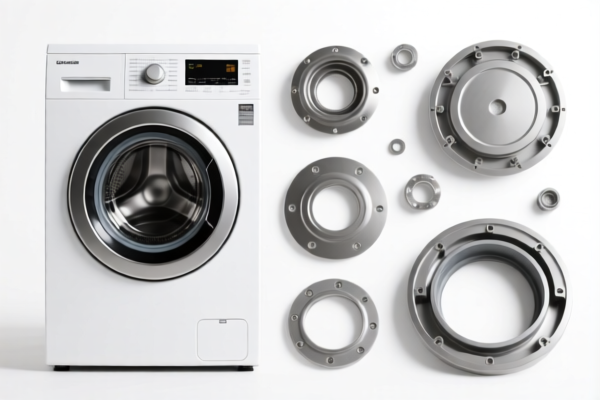
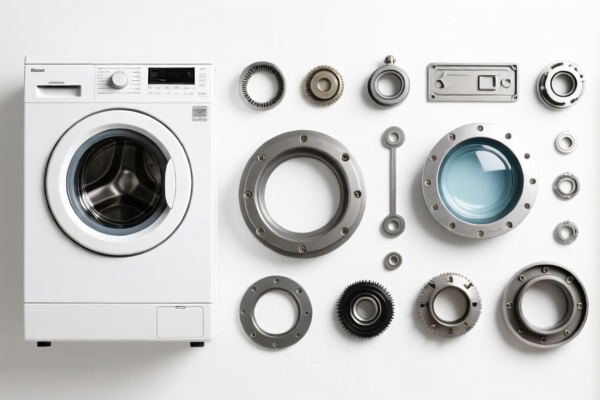
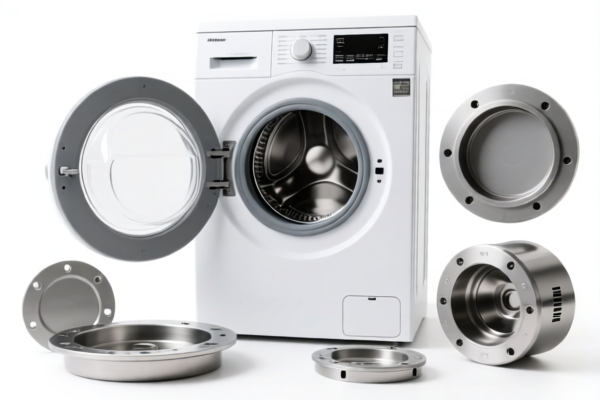
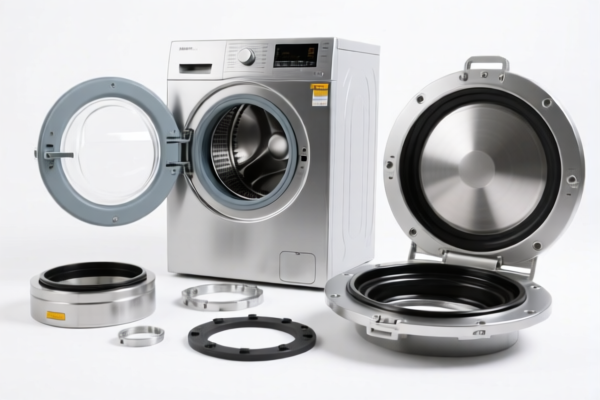
AI Analysis
🧺 Washing Machine Parts: HS Code Classification & 2026 Customs Clearance Guide
🌐 HS Code Reference & Customs Clearance Strategy | 2026 Latest Tariff Analysis | Professional-Level Compliance Guide
📌 Part 1: Product Definition & Classification – Do You Really Know "Washing Machine Parts"?
Washing machine parts are critical components for household and industrial laundry appliances. In international trade, these parts are not uniformly classified. They are broadly divided into:
Dedicated Washing Machine Components (e.g., drums, baskets, specific motor parts): Typically classified under Heading 8450. Generic Electrical Control/Valve Components (e.g., control panels, solenoid valves, circuit boards): Often misclassified or eligible for alternative headings like 8537 (Control Panels) or 8481 (Valves).
⚠️ Key Distinction Point:
- If the part is explicitly designed for and exclusive to a washing machine (e.g., a specific drum spider) → Prefer 8450.90.xxxxxx.
- If the part is a generic electrical control unit or valve that could be used in other appliances → Customs may classify it under 8537 or 8481, which often carry higher tariffs due to trade restrictions.
📦 Part 2: HS Code Classification Details (2026 Latest Tariff对照表)
Based on the provided data, here are the five possible HS Code classifications for "Washing Machine Parts" and the logic behind each.
| HS Code | Product Description & Logic | Tax Rate | Key Reason for Classification |
|---|---|---|---|
8450.90.20.00 |
Dedicated Washing Machine Parts | 12.6% | Summary: Direct match for washing machine parts. No conflict in material or form. This is the ideal classification for specialized parts. |
8450.90.60.00 |
Washing Machine Parts (Specific Sub-category) | 20.1% | Summary: Explicitly identified as washing machine parts, matching the type of parts for this specific machine category. A strong, safe option. |
8537.10.30.00 |
Electrical Control Components | 37.7% | Summary: Classified as spare parts/components. Priority matching principle applies to control panels/boards. Note: High tariff due to Section 301 tariffs. |
8537.10.91.70 |
Generic Electrical Control/Allocation Devices | 37.7% | Summary: Classified as "parts category," no conflict with electrical control/distribution equipment components. Note: High tariff due to Section 301 tariffs. |
8481.90.90.85 |
Valves and Similar Device Parts | 85.0% | Summary: Classified as spare parts/components, fitting the category of valves. Note: HIGHEST RATE. Includes 50% additional tariff for steel/aluminum/copper products. |
🔍 Critical Insight:
- 8450.xxxxxx codes offer the lowest risk and lowest tariff (12.6% - 20.1%) because they are specifically for washing machines. - 8537.xxxxxx and 8481.xxxxxx codes attract punitive tariffs (37.7% - 85.0%) due to US trade policy (Section 301/122 Section) targeting Chinese electrical and metal goods.
💰 Part 3: 2026 Latest Tariff Rate Breakdown (Including Surcharges)
✅ Applicable Country: USA
✅ Origin: China
✅ Effective Date: 2025/2026 (Current Policy)
🎯 1. 8450.90.20.00 – Dedicated Washing Machine Parts (RECOMMENDED)
| Item | Detail |
|---|---|
| Basic Tariff | 2.6% |
| Section 301 Surcharge | 0.0% (Exempt for this specific sub-heading in some contexts, or lower rate) |
| Section 122 Tariff | +10% |
| Total Effective Rate | 12.6% |
| Tax Calculation | CIF Value × 12.6% |
| De Minimis Exemption | ❌ Not Applicable (Section 301/122 goods usually exempt from de minimis) |
| Legal Basis | Direct match for "Washing Machine Parts" with no material conflict. |
📌 Why this is best:
- Lowest total tax burden. - Summary states: "Use purpose completely matches, no material or form conflict." - Avoids the 25% Section 301 tariff often applied to electrical parts (8537) or metal valves (8481).
🎯 2. 8450.90.60.00 – Washing Machine Parts (Alternative)
| Item | Detail |
|---|---|
| Basic Tariff | 2.6% |
| Section 301 Surcharge | +7.5% |
| Section 122 Tariff | +10% |
| Total Effective Rate | 20.1% |
| Tax Calculation | CIF Value × 20.1% |
| De Minimis Exemption | ❌ Not Applicable |
| Legal Basis | "Explicitly a washing machine part, fits the usage of washing machine type parts." |
📌 Note: Slightly higher than 8450.90.20.00 but still far cheaper than electrical control codes.
🎯 3. 8537.10.30.00 – Electrical Control Parts (HIGH RISK)
| Item | Detail |
|---|---|
| Basic Tariff | 2.7% |
| Section 301 Surcharge | +25.0% |
| Section 122 Tariff | +10% |
| Total Effective Rate | 37.7% |
| Tax Calculation | CIF Value × 37.7% |
| De Minimis Exemption | ❌ Not Applicable |
| Legal Basis | "Priority matching principle for parts/components." |
📌 Warning:
- If you declare a washing machine control board as "Electrical Control Unit," you trigger the 25% Section 301 tariff. - Only use this if the part is not exclusively for washing machines (e.g., a generic relay module).
🎯 4. 8537.10.91.70 – Generic Electrical Control (HIGH RISK)
| Item | Detail |
|---|---|
| Basic Tariff | 2.7% |
| Section 301 Surcharge | +25.0% |
| Section 122 Tariff | +10% |
| Total Effective Rate | 37.7% |
| Tax Calculation | CIF Value × 37.7% |
| De Minimis Exemption | ❌ Not Applicable |
| Legal Basis | "Parts category, no conflict with electrical control/distribution." |
📌 Warning: Same high tariff as above. Misclassification here is costly.
🎯 5. 8481.90.90.85 – Valve Parts (EXTREME RISK)
| Item | Detail |
|---|---|
| Basic Tariff | 0.0% |
| Section 301 Surcharge | +25.0% |
| Section 122 Tariff | +10% |
| Steel/Al/Cu Surcharge | +50% (For steel, aluminum, copper products) |
| Total Effective Rate | 85.0% |
| Tax Calculation | CIF Value × 85.0% |
| De Minimis Exemption | ❌ Not Applicable |
| Legal Basis | "Parts category, fits valve and similar device parts." |
📌 CRITICAL WARNING:
- If your washing machine part is a valve (e.g., water inlet valve) and made of metal, the total tariff is 85.0%. - This is the worst-case scenario. Always try to classify valves under 8450 if they are exclusive to washing machines.
🛠️ Part 4: Customs Clearance Practical Advice (Avoid Pitfalls)
✅ 1. Documentation Checklist (Non-Negotiable)
| Document | Required? | Description |
|---|---|---|
| ✅ Product Spec Sheet | ✔️ | Must clearly state: "Part for Model XYZ Washing Machine." Include part numbers. |
| ✅ Compatibility List | ✔️ | List all washing machine models this part fits. Proves exclusive use. |
| ✅ Product Photos | ✔️ | Clear images showing the part, label, and any unique features. |
| ✅ Commercial Invoice | ✔️ | Description: "Washing Machine Part – [Model/Part Number]." Avoid generic terms like "Electrical Component" unless necessary. |
| ✅ Material Declaration | ✔️ | Specify if made of steel, aluminum, copper, plastic, etc. (Critical for 8481 classification risk). |
| ✅ Bill of Lading | ✔️ | Ensure packaging matches invoice description. |
✅ 2. Declaration Strategy (Key Mnemonic)
🔥 "Dedicate to Washer, Avoid Generic Control, Watch the Metal Valve!"
| Scenario | Correct HS Code | Why? |
|---|---|---|
| Drum, Belt, Door Lock | 8450.90.20.00 / 8450.90.60.00 |
Directly for washing machine. Low tax (12.6-20.1%). |
| Control Panel (Board) | Try 8450.90.20.00 |
Argue it is a dedicated spare part. If rejected, may fall to 8537 (37.7%). Avoid generic electrical codes. |
| Solenoid Valve (Metal) | Try 8450.90.20.00 |
If exclusive, classify as washing machine part. If generic, 8481 triggers 85% tax. High Risk. |
| Generic Relay/Switch | 8537.10.30.00 |
If not exclusive to washers, it’s an electrical control part. Expect 37.7%. |
✅ 3. Special Case Handling
| Situation | Recommendation |
|---|---|
| Mixed Containers | If shipping both washing machine parts and other goods, separate invoices are crucial. Do not blend generic electrical parts with dedicated washer parts. |
| OEM Parts | Provide customer authorization letters to prove "exclusive use" for washing machines. |
| Valve Parts | Strongly advise against declaring metal valves under 8481 unless absolutely necessary. Provide engineering diagrams to prove washing-machine-specific design. |
| Origin Marking | Ensure all parts are clearly marked "Made in China" to avoid origin fraud issues. |
🌍 Part 5: Market Comparison (2026 Update)
| Country/Region | Recommended HS Code | Estimated Tax (China Origin) | Certification |
|---|---|---|---|
| 🇺🇸 USA | 8450.90.20.00 |
12.6% (Best) | FCC/UL (if electrical) |
| 🇺🇸 USA (Risk) | 8481.90.90.85 |
85.0% (Worst) | No special certification, but high tax |
| 🇪🇺 EU | 8450.90 |
~1.7% (Standard MFN) | CE, RoHS |
| 🇨🇳 China | 8450.90 |
0% - 2.6% | CCC (if electrical) |
📌 Conclusion:
- USA is the critical market for tariff optimization.
- Classification matters most:8450vs8481is a 72.4% tax difference (12.6% vs 85.0%).
- Never declare a metal washing machine valve as a generic valve (8481) if it can be classified as a washing machine part (8450).
📌 Part 6: Common Errors & Pitfalls (Lessons Learned)
❌ Error 1: Declaring a washing machine control board as "Electrical Control Panel" (8537).
👉 Result: Tax jumps from 12.6% to 37.7%.
✅ Fix: Declare as "Washing Machine Control Board, Model XYZ, for Washer Use."
❌ Error 2: Declaring a metal water inlet valve as "Valve Part" (8481).
👉 Result: Tax hits 85.0% due to metal surcharge.
✅ Fix: Declare as "Washing Machine Water Valve, Model ABC, Exclusive for Washer."
❌ Error 3: Using vague terms like "Appliance Part" on invoice.
👉 Result: Customs delays, potential reclassification to higher tax codes.
✅ Fix: Be specific. "Washing Machine Motor Brush," "Washing Machine Door Latch."
🎯 Part 7: Conclusion: Precision Classification Saves Money!
🎯 Remember the Key Rules:
🔹 "Washer-Specific = 8450 (Low Tax)"
🔹 "Generic Control = 8537 (Medium Tax)"
🔹 "Metal Valve = 8481 (High Tax - Avoid!)"
🔹 "Prove Exclusive Use to Save 72%!"
📌 Pro Tip:
If you are exporting to the USA, always apply for an Advance Ruling (CBP Ruling) for high-value or high-risk parts (like valves or control boards). This provides legal certainty and prevents unexpected 85% tariffs.
✨ Professional Customs Clearance Starts with Accurate Classification!
💼 Every dollar of tariff saved is pure profit!
Customer Reviews
About HS Code Classification
The Harmonized System (HS) is an internationally standardized nomenclature developed by the World Customs Organization (WCO) to classify traded products. Over 200 countries use the HS system as the basis for customs tariffs, trade statistics, and import/export regulations.
Each HS code follows a hierarchical structure:
- Chapter (2 digits) — Broad category of goods (e.g., Chapter 84: Machinery and Mechanical Appliances)
- Heading (4 digits) — More specific grouping within the chapter
- Subheading (6 digits) — Internationally standardized breakdown, used by all WCO member countries
- National subdivisions (8-10 digits) — Country-specific extensions for further classification, such as US HTSUS 10-digit codes
Correct HS code classification is essential for smooth customs clearance, accurate duty payment, and compliance with trade regulations. Misclassification can lead to customs delays, overpayment of duties, or penalties.
When importing from CN to US, the applicable tariff rates may include:
- Most-Favored-Nation (MFN) rate — The standard duty rate applied to WTO members
- General rate — Applied to countries without trade agreements
- Trade remedy duties — Additional tariffs such as Section 301 (anti-dumping), Section 232 (national security), or countervailing duties
The information provided on this page is for reference purposes only. For official classification, please consult with your local customs authority or a licensed customs broker.