Waste Cardboard
CN → US| HS Code | Tariff Rate | Origin | Destination | Doc |
|---|---|---|---|---|
| 4707900000 | 35.0% | CN | US | Official Doc |
| 4707100000 | 35.0% | CN | US | Official Doc |
| 4810991060 | 35.0% | CN | US | Official Doc |
| 4810396500 | 35.0% | CN | US | Official Doc |
| 4805911010 | 35.0% | CN | US | Official Doc |
Product Images
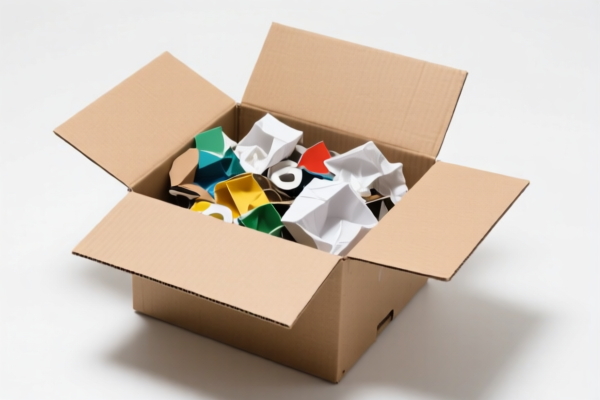
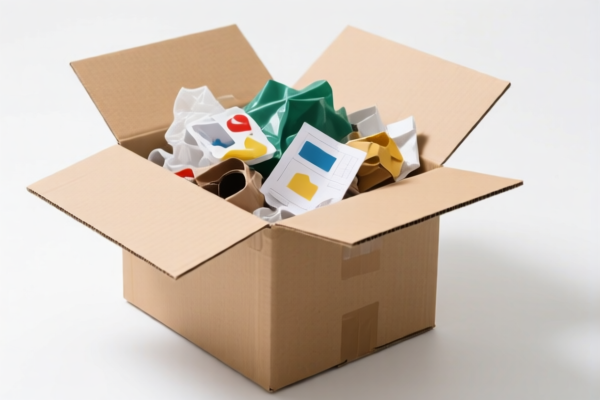
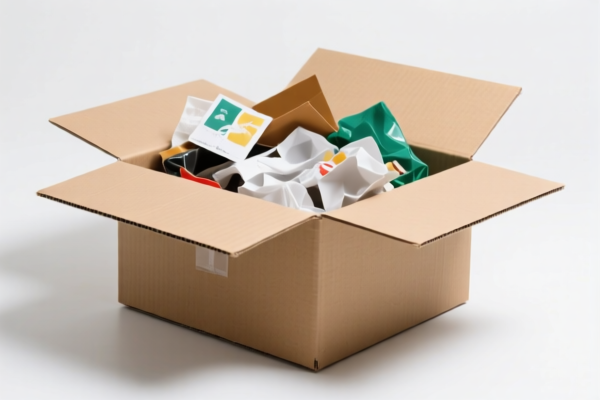
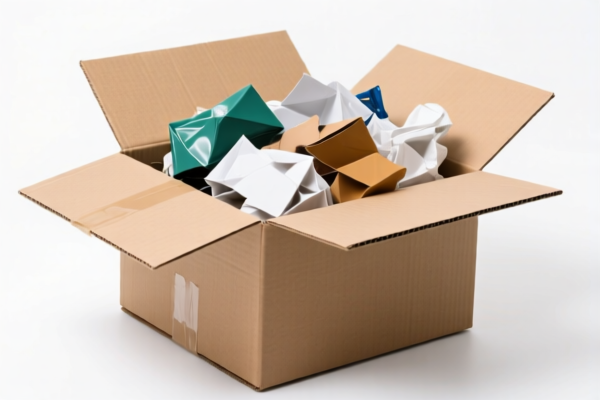
AI Analysis
📦 Waste Cardboard & Paperboard (Industrial Grade)
🌐 HS Code Reference & Customs Clearance Guide | 2026 Latest Tariff Analysis | Professional Clearance Strategy
📌 I. Product Definition & Classification: Do You Truly Understand "Waste Cardboard"?
Waste Cardboard and Waste Paperboard are critical raw materials in the global recycling industry, primarily used for paper manufacturing or reprocessing. In international trade, these materials are strictly classified based on their material composition and physical state (scrap vs. usable).
However, due to recent trade policies targeting Chinese-origin goods, the total tariff burden for these items has become extremely high, regardless of the specific subheading chosen. The following analysis breaks down why various HS codes apply and why the tax rate remains stubbornly at 35.0% for all listed categories.
⚠️ Key Distinction:
- Industrial/Recyclable Grade: Materials intended for pulping, recycling, or industrial reuse (e.g., corrugated boxes, cardboard scraps) → HS 4707 Series.
- Board/Paperboard Products: Semi-finished or finished board products, or those fitting "catch-all" descriptions → HS 48xx Series.
- Critical Warning: All listed HS codes above carry a 35.0% total tax rate. Misclassification cannot reduce this cost; only changing the Country of Origin or securing specific exclusions might alter the outcome.
📦 II. HS Code Classification Details (2026 Latest Tariff Authority Comparison)
| HS Code | Product Description | Application Scenario | Why This Classification? |
|---|---|---|---|
4707.90.00.00 |
Waste Paperboard (Industrial Grade) | Industrial recycling, pulping feedstock | Matches the definition of "waste" and "paperboard" specifically for industrial recovery. |
4707.10.00.00 |
Waste Cardboard/Board (Recycled Form) | Sorted waste paper, corrugated waste | Specifically defined as "waste" meeting material and form requirements for recycling. |
4810.99.10.60 |
Cardboard (Catch-all Category) | General cardboard without specific waste status | Used when the item is "board" but doesn't fit precise waste definitions; based on residual/catch-all rules. |
4810.39.65.00 |
Cardboard (Description Missing/Catch-all) | Unspecified board material | Applied when descriptions are vague, forcing classification under the broadest available board category. |
4805.91.10.10 |
Cardboard (Explicit Material/Form) | Uncoated cardboard, specific material match | Matches explicit material and form definitions for uncoated paperboard. |
4805.93.40.10 |
Cardboard (Uncoated Category) | Uncoated board, generic category | Fits within the "uncoated paperboard" scope when specific waste attributes are less clear. |
4819.10.00.20 |
Cardboard (Corrugated Material) | Corrugated board, no material conflict | Matches corrugated requirements where no other specific waste code applies perfectly. |
🔍 Important Reminder:
- All codes share the same tax structure: 0% Base + 25% Section 301 + 10% Section 122 = 35% Total.
- No Tax Advantage: Switching between4707(Waste) and48xx(Board) does not lower the tariff rate for Chinese-origin goods.
- Documentation is Key: Customs will scrutinize the "waste" vs. "board" distinction based on moisture content, cleanliness, and intended use.
💰 III. 2026 Latest Tariff Rate Breakdown (Including Additional Taxes & Policy Surcharges)
✅ Applicable Country: United States (US)
✅ Country of Origin: China (CN)
✅ Effective Time: Current Trade Rules (Section 301 & Section 122)
🎯 1. Universal Tariff Structure for All Listed HS Codes (4707 & 48xx Series)
| Item | Content |
|---|---|
| Base Tariff Rate | 0% (Ad Valorem) |
| Section 301 Additional Tariff | +25.0% (From USITC Footnotes related to Chinese imports) |
| Section 122 Tariff | +10.0% (Specific administrative tariff clause) |
| Total Tax Rate | 35.0% |
| Tax Calculation | CIF Value × 35% |
| De Minimis Exemption Applicable? | ❌ NO (deny_de_minimis) |
| Legal Basis Path | Base: 0% → Section 301: 25% → Section 122: 10% → Total: 35% |
📌 Explanation:
- "Section 301 Additional Tariff 25%": Imposed under the U.S. Trade Act of 1974, Section 301, targeting specific Chinese goods including paper products.
- "Section 122 Tariff 10%": A specific administrative tariff provision applied to certain imports, adding to the burden.
- Total 35%: This is a very high tariff. For waste/recyclable materials, this significantly impacts profitability. There are no exemptions for de minimis shipments (small value parcels).
🛠️ IV. Customs Clearance Practical Advice (Real-World Pitfall Avoidance)
✅ 1. Required Documentation List (Non-negotiable)
| Document | Must Provide | Explanation |
|---|---|---|
| ✅ Product Specification Sheet | ✔️ | Must detail: Material type (OCC, KTE, etc.), moisture content, cleanliness level. |
| ✅ Commercial Invoice | ✔️ | Must clearly state "Waste Cardboard/Paperboard" and declare origin as China. |
| ✅ Packing List | ✔️ | Detailed weight and volume. Customs checks density to confirm "waste" vs. "new board". |
| ✅ Certificate of Origin | ✔️ | Crucial for proving Chinese origin (which triggers the 35% tax). |
| ✅ Photos of Goods | ✔️ | Show baled condition, labeling, and any contamination indicators. |
| ✅ Environmental Compliance Proof | ✔️ | If classified as "waste," ensure it meets U.S. EPA import standards for recyclables. |
✅ 2. Declaration Tips (Key Mantra)
🔥 "Accurate Description, High Tax Warning, No De Minimis, Origin Matters!"
| Scenario | Correct Declaration Method | Wrong Practice |
|---|---|---|
| Clean, Recyclable OCC | 4707.10.00.00 or 4707.90.00.00 |
Declaring as "New Cardboard" → Risk of fraud penalty. |
| Mixed Waste Paper | 4707.90.00.00 |
Vague description "Paper Products" → Customs delays. |
| Small Parcel (De Minimis) | NOT ELIGIBLE | Trying to split shipments to avoid declaration → Seizure Risk. |
| Origin: Non-China | Declare correct country | Hiding origin → Severe penalties, back taxes, and bans. |
📌 Note:
- De Minimis (Section 321): Does NOT apply to goods from China under Section 301/122. Even small packages are subject to the 35% tax and full customs declaration.
- Misclassification: If you declare high-quality board as "waste" to avoid higher taxes (if any existed, which they don't here), you face fraud charges. However, since the tax is the same, the main risk is customs detention due to documentation mismatch.
✅ 3. Special Situation Handling
| Situation | Handling Advice |
|---|---|
| Contaminated Waste | Ensure it meets EPA "Solid Waste" import rules. Clean waste is easier to clear as "Recyclable Material." |
| Baled vs. Loose | Baled waste is preferred for classification stability. Loose waste may be scrutinized for segregation. |
| Mixed Materials | If cardboard is mixed with plastic/metal, it may be classified as mixed municipal solid waste, which has stricter bans. |
| Pre-Clearance | Strongly Recommended: Apply for a Binding Ruling if unsure between 4707 and 48xx. Though tax is same, classification error causes delays. |
🌍 V. Global Market Customs Comparison (2026 Latest)
| Country/Region | Recommended HS Code | Tariff (CN Origin) | Certification | Remarks |
|---|---|---|---|---|
| 🇺🇸 USA | 4707.90.00.00 / 48xx |
35% | EPA Compliance | High Tax Market. De Minimis blocked. |
| 🇨🇳 China | 4707.00.00.00 |
0% (Import) | None | Major importer of waste paper (though policies tighten). |
| 🇪🇺 EU | 4707.10.00 / 4707.90.00 |
0% (Base) + VAT | REACH, EPR | No Section 301/122. Lower cost. |
| 🇲🇽 Mexico | 4707.10.00.00 |
Varies (USMCA) | None | Potential benefit if processed in NAFTA zone. |
| 🇻🇳 Vietnam | 4707.10.00.00 |
Varies | None | Often used for transshipment, but origin rules apply. |
📌 Conclusion:
- USA is the only market with the 35% punitive tariff for Chinese-origin cardboard/paperboard.
- EU and other markets generally have 0% base tariffs for recycled paper, making them more cost-effective for exporters if supply chains allow.
- Transshipment: Do NOT attempt to re-label Chinese goods as "Made in Vietnam" to avoid tariffs. Customs uses sophisticated tracking and will impose heavy penalties for fraud.
📌 VI. Common Errors & Pitfall Guide (Lessons Learned)
❌ Error 1: Assuming "De Minimis" applies to small shipments of waste cardboard from China.
👉 Consequence: 35% tax applied anyway, plus penalties for failing to declare.
❌ Error 2: Declaring "Waste Cardboard" as "New Paperboard" to confuse customs.
👉 Consequence: Fraud investigation, seizure of goods, and potential criminal charges.
❌ Error 3: Using vague descriptions like "Paper Goods" or "Recyclables".
👉 Consequence: Customs Detention. Requires extensive documentation, leading to demurrage charges.
❌ Error 4: Ignoring EPA Regulations for Waste Imports.
👉 Consequence: Rejection of Entry. The EPA may block import if the material is deemed non-recyclable solid waste.
✅ Correct Approach:
"OCC (Old Corrugated Containers) Waste, Baled, Moisture <10%, Certified Recyclable Material, HS Code: 4707.90.00.00, Origin: China, CIF: $X"
🎯 VII. Conclusion: Professional Declaration Saves Time and Money
🎯 Key Takeaway:
🔹 "Tax is 35% No Matter What – Focus on Documentation!"
🔹 "De Minimis is a Myth for China – Declare Everything!"
🔹 "EPA Compliance is Mandatory – Avoid 'Solid Waste' Rejection!"
📌 Pro Tip:
If your cardboard is exported to the US from China, the 35% tariff is unavoidable under current rules.
Consider:
1. Pricing Strategy: Build the 35% tax into your FOB/CIF price.
2. Alternative Markets: Explore EU, Mexico, or Southeast Asia for better tariff conditions.
3. Pre-Arrival Review: Submit ACE Data early to avoid port delays.
📣 Immediate Action Required:
📞 Contact a licensed Customs Broker in the US.
📄 Prepare EPA Import Documentation for recyclables.
🚀 Optimize Supply Chain: If possible, consider manufacturing or finishing outside China to avoid Section 301/122 tariffs.
✨ Professional Customs Clearance Starts with Accurate Classification!
💼 Every Percent of Tariff Matters – Plan Your Logistics Wisely!
Customer Reviews
About HS Code Classification
The Harmonized System (HS) is an internationally standardized nomenclature developed by the World Customs Organization (WCO) to classify traded products. Over 200 countries use the HS system as the basis for customs tariffs, trade statistics, and import/export regulations.
Each HS code follows a hierarchical structure:
- Chapter (2 digits) — Broad category of goods (e.g., Chapter 84: Machinery and Mechanical Appliances)
- Heading (4 digits) — More specific grouping within the chapter
- Subheading (6 digits) — Internationally standardized breakdown, used by all WCO member countries
- National subdivisions (8-10 digits) — Country-specific extensions for further classification, such as US HTSUS 10-digit codes
Correct HS code classification is essential for smooth customs clearance, accurate duty payment, and compliance with trade regulations. Misclassification can lead to customs delays, overpayment of duties, or penalties.
When importing from CN to US, the applicable tariff rates may include:
- Most-Favored-Nation (MFN) rate — The standard duty rate applied to WTO members
- General rate — Applied to countries without trade agreements
- Trade remedy duties — Additional tariffs such as Section 301 (anti-dumping), Section 232 (national security), or countervailing duties
The information provided on this page is for reference purposes only. For official classification, please consult with your local customs authority or a licensed customs broker.