Waste Concrete Blocks
CN → US| HS Code | Tariff Rate | Origin | Destination | Doc |
|---|---|---|---|---|
| 6810110070 | 38.2% | CN | US | Official Doc |
| 6810990080 | 35.0% | CN | US | Official Doc |
Product Images
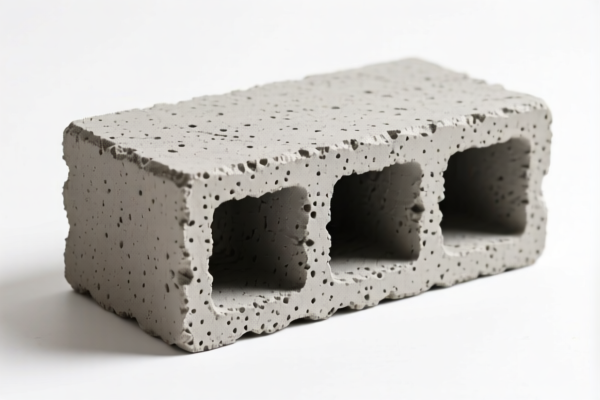
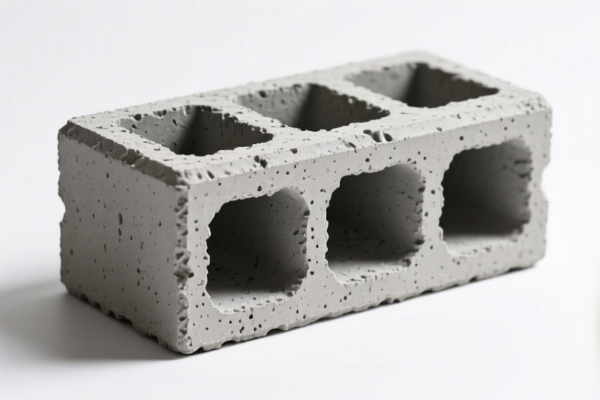
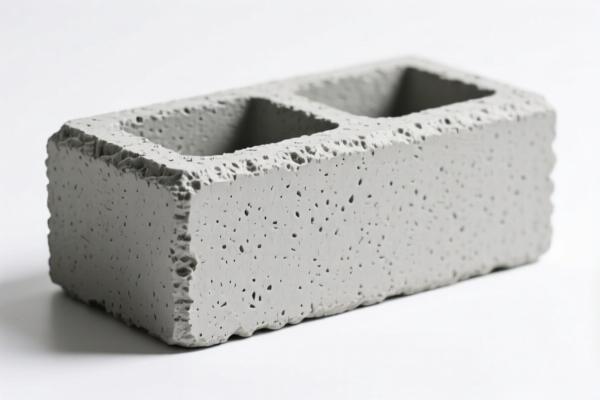
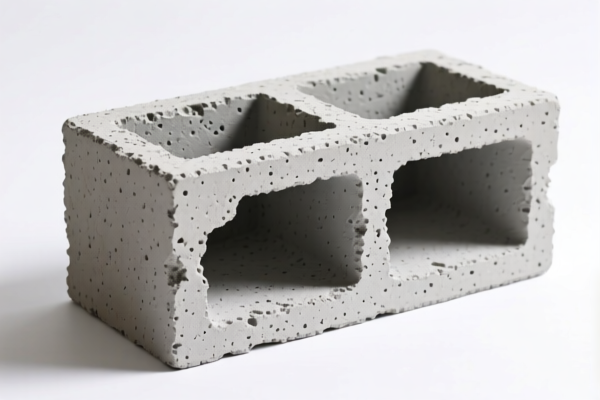
AI Analysis
🧱 Waste Concrete Blocks (Recycled Aggregates & Demolition Debris)
🌐 HS Code Reference & Customs Clearance Guide | 2026 Latest Tariff Analysis | Professional Clearance Strategy
📌 I. Product Definition & Classification: What Exactly is "Waste Concrete"?
"Waste Concrete Blocks" refer to fragments of hardened concrete, mortar, or reinforced concrete resulting from demolition, construction debris, or industrial processing. In international trade, these are not treated as "building materials" but as secondary raw materials or waste/recycled aggregates.
Crucially, classification depends on the physical state and intended use: * Standard Building Blocks (New): If these are manufactured new concrete blocks for construction, they fall under different headings (e.g., 6810.11). * Waste/Recycled Blocks: If these are reclaimed from demolition, intended for crushing into gravel, or used as fill material, they fall under Chapter 68 (Articles of Stone or Similar Materials) but specifically as other articles or waste.
⚠️ Key Distinction:
- If sold as "new" pre-cast concrete blocks for immediate construction → 6810.11.00.70
- If sold as "waste/demolition debris" or "recycled concrete aggregates" (not shaped for immediate installation) → 6810.99.00.80
- Note: The provided DATA specifically lists two codes under "Articles of cement, concrete...". We must map "Waste Concrete Blocks" to the most appropriate description.
📦 II. HS Code Classification Details (2026 Latest Tariff Authority Match)
Based on the provided <DATA>, there are two relevant HS Codes. We must determine which one fits "Waste Concrete Blocks" best.
| HS Code | Product Description | Application Scenario | Relevant to "Waste"? |
|---|---|---|---|
6810.11.00.70 |
Building blocks and bricks (Other) | New, manufactured concrete blocks for construction. | ❌ Unlikely (Unless reclassified as "new") |
6810.99.00.80 |
Other articles (Other) | Concrete products not elsewhere specified, including recycled aggregates, rubble, or non-standard concrete items. | ✅ Highly Likely for "Waste" |
🔍 Critical Analysis:
- "Waste Concrete Blocks" are typically not "building blocks and bricks" in the new manufacturing sense. They are rubble, debris, or recycled aggregate.
- Therefore, they fall under Other articles → 6810.99.00.80.
- If the importer processes them into new standardized blocks after import, the import classification remains 6810.99.00.80.
💰 III. 2026 Latest Tariff Rate Breakdown (Including Surtaxes)
✅ Applicable Country: United States (US)
✅ Origin: China (CN) (Assuming standard trade context based on example)
✅ Effective Date: Current tariffs apply (as per DATA)
🎯 1. 6810.11.00.70 — Building Blocks and Bricks (New)
| Item | Content |
|---|---|
| Basic Tariff | 0% |
| Additional Surcharge | 0% |
| Total Tariff | 0.0% |
| Tax Calculation | CIF Value × 0% = $0 |
| De Minimis Exemption | ✅ Yes (if under $800) |
| Legal Basis | Standard USITC Heading 6810.11 |
📌 Explanation:
- This code is only for new manufactured concrete blocks.
- Zero tariff makes it attractive for new construction materials.
- BUT: Does not apply to waste/recycled concrete.
🎯 2. 6810.99.00.80 — Other Concrete Articles (Waste/Recycled)
| Item | Content |
|---|---|
| Basic Tariff | 0.0% |
| Additional Surcharge (Section 301) | +25.0% |
| IEEPA Surcharge | 0% (Not listed in DATA) |
| Total Tariff | 25.0% |
| Tax Calculation | CIF Value × 25% |
| De Minimis Exemption | ❌ No (Deny De Minimis for Section 301 goods) |
| Legal Basis | USITC:6810.99.00.80 → FOOTNOTE:301 |
📌 Explanation:
- This is the correct code for "Waste Concrete Blocks" if they are considered other concrete articles (rubble, recycled aggregate).
- 25% tariff is high.
- De Minimis (Section 321) is blocked for these goods under USITC rules for Section 301 items.
- Total Cost Impact: 25% of CIF value.
🛠️ IV. Customs Clearance Practical Advice (Real-World Pitfall Guide)
✅ 1. Documentation Checklist (Non-Negotiable)
| Document | Required? | Purpose |
|---|---|---|
| ✅ Commercial Invoice | ✔️ | Must clearly state "Recycled Concrete Aggregate" or "Waste Concrete Debris", NOT "New Building Blocks" |
| ✅ Packing List | ✔️ | Detail weight, volume, and condition (crushed vs. intact) |
| ✅ Bill of Lading/Air Waybill | ✔️ | Standard transport document |
| ✅ Certificate of Origin | ✔️ | To confirm Chinese origin (triggers 25% surcharge) |
| ✅ Declaration of Recycled Content | ✔️ | If applicable, to support environmental claims (may help with local incentives) |
| ✅ Photos of Cargo | ✔️ | To prove condition (e.g., broken, dusty, not new manufactured blocks) |
✅ 2. Declaration Strategy (Key Rules)
🔥 "Waste is Not New, Recycled is 25%, Avoid De Minimis!"
| Scenario | Correct HS Code | Error if Misclassified |
|---|---|---|
| New Concrete Blocks | 6810.11.00.70 |
N/A (0% tariff) |
| Waste Concrete / Rubble | 6810.99.00.80 |
If declared as 6810.11.00.70 → Penalty + Back Taxes + Fraud Risk |
| Concrete Mixtures (not blocks) | 6810.99.00.80 |
Same as above |
| Ceramic Tiles (not concrete) | Different Chapter | Major misclassification |
📌 Warning:
- Do NOT declare "Waste Concrete" as "New Building Blocks" to save 25%. This is customs fraud.
- The 25% surcharge is non-negotiable for Chinese-origin concrete articles under Section 301.
✅ 3. Special Handling Tips
| Situation | Advice |
|---|---|
| High Moisture Content | Ensure cargo is dried if required by local environmental laws; wet waste may be rejected. |
| Reinforcement Steel | If steel bars are still embedded, declare as "Concrete with Embedded Steel" or separate the steel (steel may have different tariff). |
| Recycled Aggregate | If sold for road base, clearly state "Concrete Aggregate for Civil Engineering". |
| De Minimis (Section 321) | NOT ELIGIBLE for $800 de minimis due to Section 301 surcharge. Must file formal entry. |
🌍 V. Global Market Comparison (2026)
| Country/Region | Recommended HS Code | Tariff (China Origin) | Certification | Notes |
|---|---|---|---|---|
| 🇺🇸 USA | 6810.99.00.80 |
25% | N/A | High tariff, no de minimis. |
| 🇨🇳 China | 6810.99.00.80 |
0% | N/A | Recycled concrete encouraged for green building. |
| 🇪🇺 EU | Varies (usually 6810.99) | 0% | CE (if new) | Waste shipments require strict documentation (Basel Convention). |
| 🇬🇧 UK | Varies | 0% | N/A | Post-Brexit rules apply. |
📌 Conclusion:
- USA: Highest cost due to 25% surcharge.
- China: Zero tariff, promoting domestic use of recycled materials.
- EU/UK: May require waste shipment documentation if classified as "waste" rather than "product".
📌 VI. Common Errors & Pitfalls (Blood & Tears Lessons)
❌ Error 1: Declaring "Waste Concrete" as "New Concrete Blocks" (6810.11.00.70)
👉 Consequence: 0% tariff saved now, but 25% back-tax + penalties + seizure later. Customs will check photos and condition.
❌ Error 2: Using De Minimis (Section 321) for shipments under $800
👉 Consequence: Rejected entry. Section 301 goods (like 6810.99.00.80) are excluded from de minimis. Must file formal entry.
❌ Error 3: Not disclosing embedded steel
👉 Consequence: If steel is detected, it may be classified separately (e.g., ferrous scrap), leading to dual classification or misdeclaration.
❌ Error 4: Vague Description ("Concrete")
👉 Consequence: Customs may hold cargo for physical inspection to determine if it’s new or waste. Delay + Demurrage fees.
✅ Correct Declaration Example:
"Recycled Concrete Aggregate, Crushed Waste Concrete, for Road Base Construction, HS Code 6810.99.00.80, Country of Origin: China"
🎯 VII. Conclusion: Professional Clearance, Cost Control, Efficiency!
🎯 Remember the Mantra:
🔹 "Waste is 25%, New is 0%, De Minimis is Gone, Be Honest!"
🔹 "HS Code 6810.99.00.80 is the key for recycled concrete, pay the 25%, avoid the fraud!"
📌 Pro Tip:
If you are importing large volumes of recycled concrete for construction, consider bonded warehousing or processing under customs supervision to potentially defer duties or explore green incentives if available.
📣 Immediate Action:
📞 Consult with a licensed customs broker
📄 Prepare detailed product descriptions (waste vs. new)
🚀 Budget for 25% tariff in your cost analysis for US imports from China.
✨ Professional clearance starts with accurate classification!
💼 Your bottom line depends on getting the HS Code right!
Customer Reviews
About HS Code Classification
The Harmonized System (HS) is an internationally standardized nomenclature developed by the World Customs Organization (WCO) to classify traded products. Over 200 countries use the HS system as the basis for customs tariffs, trade statistics, and import/export regulations.
Each HS code follows a hierarchical structure:
- Chapter (2 digits) — Broad category of goods (e.g., Chapter 84: Machinery and Mechanical Appliances)
- Heading (4 digits) — More specific grouping within the chapter
- Subheading (6 digits) — Internationally standardized breakdown, used by all WCO member countries
- National subdivisions (8-10 digits) — Country-specific extensions for further classification, such as US HTSUS 10-digit codes
Correct HS code classification is essential for smooth customs clearance, accurate duty payment, and compliance with trade regulations. Misclassification can lead to customs delays, overpayment of duties, or penalties.
When importing from CN to US, the applicable tariff rates may include:
- Most-Favored-Nation (MFN) rate — The standard duty rate applied to WTO members
- General rate — Applied to countries without trade agreements
- Trade remedy duties — Additional tariffs such as Section 301 (anti-dumping), Section 232 (national security), or countervailing duties
The information provided on this page is for reference purposes only. For official classification, please consult with your local customs authority or a licensed customs broker.