Waste Leather Scrap
CN → US| HS Code | Tariff Rate | Origin | Destination | Doc |
|---|---|---|---|---|
| 4101907000 | 20.8% | CN | US | Official Doc |
| 4115200000 | 17.5% | CN | US | Official Doc |
| 4101901040 | 17.5% | CN | US | Official Doc |
| 4112003060 | 12.0% | CN | US | Official Doc |
| 3202905000 | 40.0% | CN | US | Official Doc |
Product Images
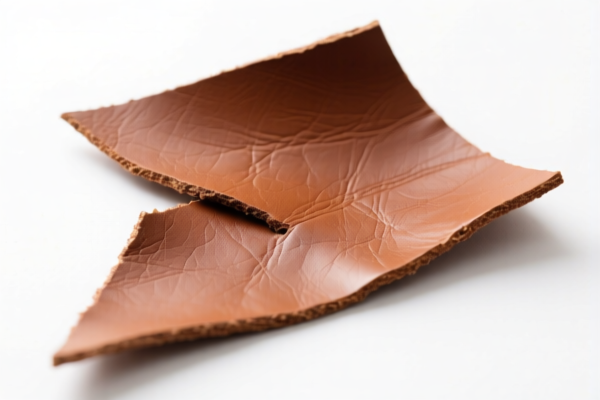
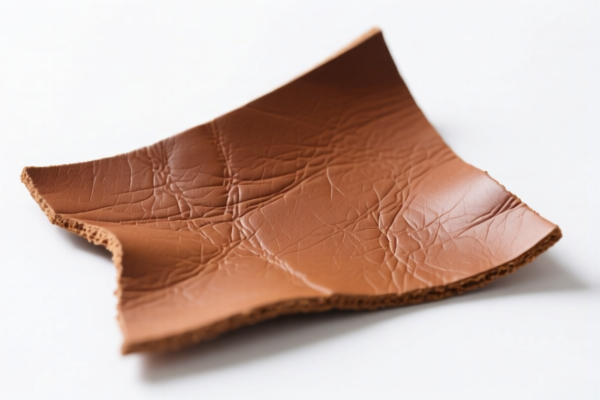
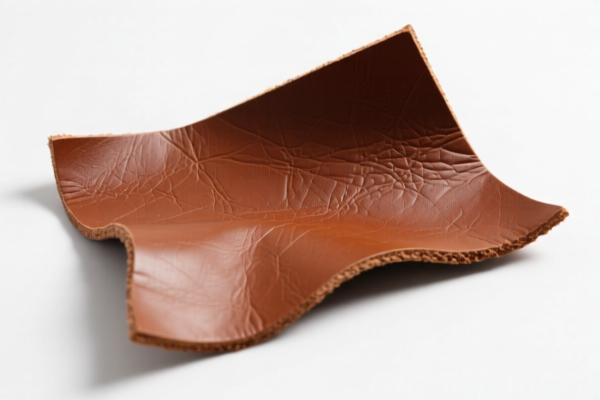

AI Analysis
🐎 Waste Leather Scrap: HS Code Classification & US Customs Clearance Strategy (2026)
🌐 HS Code Reference & Clearance Guide | 2026 Latest Tariff Analysis | Professional-Level通关 Strategy
📌 I. Product Definition & Classification: What Exactly is "Waste Leather Scrap"?
Waste leather scrap is a broad category in international trade, covering discarded materials from the leather manufacturing process. However, under US Customs regulations (Harmonized Tariff Schedule of the United States - HTSUS), the degree of processing determines the HS Code and the resulting tax burden.
The classification logic hinges on three key distinctions: 1. Raw State vs. Processed State: Is it raw hide (still in biological state) or processed leather? 2. Form Factor: Is it a large piece of waste or finely ground/shredded material? 3. Chemical Composition: Does it include treated liquids or chemical residues?
⚠️ Critical Distinction Point:
- If the material is raw, unprocessed hide from equine animals → Classified under Chapter 41 (Animal Skins).
- If the material is processed leather waste (tanned, finished) → Classified under Chapter 41 (Leather) but different subheading.
- If the material is chemical waste from tanning → Classified under Chapter 32 (Tanning Extracts).
📦 II. HS Code Classification Details (2026 Latest Tariff Authority)
Based on the provided data, here is the authoritative breakdown for US Customs clearance:
| HS Code | Product Description | Applicable Scenario | Processing Level |
|---|---|---|---|
4101.90.70.00 |
Waste of Horsehides | Raw, unprocessed equine skins/waste | ✅ Raw Hide (Unprocessed) |
4115.20.00.00 |
Waste of Leather | Fully processed leather trimmings, off-cuts, shavings | ✅ Processed Leather (Scrap) |
4101.90.10.40 |
Waste of Equine Skins | Unprocessed equine waste, specific subtype | ✅ Raw Hide (Unprocessed) |
4112.00.30.60 |
Metallized Leather Scrap | Waste from metallized/treated leather surfaces | ✅ Processed (Intermediate/Secondary) |
3202.90.50.00 |
Waste Leather Treatment Liquids | Chemical liquids/sludge from tanning or treating | ✅ Chemical Waste |
🔍 Key Reminder:
- "Waste of Leather" (4115.20.00.00) is the most common classification for finished leather scraps. It attracts lower base tariffs but still faces significant US附加税.
- "Raw Hide Waste" (4101.90.x.x) includes unprocessed skins. The tariff structure differs because it is considered a raw agricultural/industrial input.
- "Chemical Waste" (3202.90.50.00) is taxed as a chemical product, not a material, leading to higher base rates.
💰 III. 2026 Latest Tariff Rate Breakdown (Including Surtaxes)
✅ Applicable Country: United States (US)
✅ Origin: China (CN)
✅ Effective Date: From November 10, 2025 (for subsequent imports)
🎯 1. 4101.90.70.00 & 4115.20.00.00 / 4101.90.10.40 —— Raw or Processed Leather Scrap
There is a slight variation in base tariffs between raw and processed waste, but the surtaxes remain consistent due to trade policies.
| Item | Content |
|---|---|
Scenario A: 4101.90.70.00 (Raw Horsehide Waste) |
|
| Base Tariff | 3.3% (ad valorem) |
| Section 301 Surcharge (Additional Tax) | +7.5% |
| Section 122 Tariff | +10% |
| Total Tax Rate | 20.8% |
| Tax Calculation | CIF Value × 20.8% |
| De Minimis Exemption | ❌ Not Applicable (High tax rate disqualifies from $800 exemption) |
| Legal Basis | HTSUS 4101.90.70 → USITC Footnotes → IEEPA 10% |
| Item | Content |
|---|---|
Scenario B: 4115.20.00.00 (Processed Leather Waste) |
|
| Base Tariff | 0.0% |
| Section 301 Surcharge (Additional Tax) | +7.5% |
| Section 122 Tariff | +10% |
| Total Tax Rate | 17.5% |
| Tax Calculation | CIF Value × 17.5% |
| De Minimis Exemption | ❌ Not Applicable |
| Legal Basis | HTSUS 4115.20 → USITC Footnotes → IEEPA 10% |
| Item | Content |
|---|---|
Scenario C: 4101.90.10.40 (Other Equine Skin Waste) |
|
| Base Tariff | 0.0% |
| Section 301 Surcharge (Additional Tax) | +7.5% |
| Section 122 Tariff | +10% |
| Total Tax Rate | 17.5% |
| Tax Calculation | CIF Value × 17.5% |
| De Minimis Exemption | ❌ Not Applicable |
| Legal Basis | HTSUS 4101.90.10 → USITC Footnotes → IEEPA 10% |
📌 Explanation:
- Section 301 (7.5%): Additional duty imposed on certain Chinese goods under US Trade Law Section 301.
- Section 122 (10%): A specific tariff provision (often linked to national security or emergency powers under the Trade Expansion Act) applied to these categories.
- Base Tariff Variation: Raw hides (4101.90.70) have a small base duty (3.3%), while processed leather waste (4115.20) has a 0% base duty. However, processed leather waste is slightly cheaper (17.5%) than raw hide waste (20.8%) when surtaxes are applied.
🎯 2. 4112.00.30.60 —— Metallized Leather Scrap
| Item | Content |
|---|---|
| Base Tariff | 2.0% |
| Section 301 Surcharge | 0.0% (Exempted from this specific surcharge) |
| Section 122 Tariff | +10% |
| Total Tax Rate | 12.0% |
| Tax Calculation | CIF Value × 12.0% |
| De Minimis Exemption | ❌ Not Applicable |
| Legal Basis | HTSUS 4112.00.30 → IEEPA 10% |
📌 Note:
- This category benefits from no Section 301 surcharge, making it the lowest tax rate among the scrap categories (12.0%).
- This applies specifically to metallized leather waste. If the metallization is considered a chemical treatment, it might be reclassified, but under current definitions, it falls here.
🎯 3. 3202.90.50.00 —— Waste Leather Treatment Liquids
| Item | Content |
|---|---|
| Base Tariff | 5.0% |
| Section 301 Surcharge | +25.0% |
| Section 122 Tariff | +10% |
| Total Tax Rate | 40.0% |
| Tax Calculation | CIF Value × 40.0% |
| De Minimis Exemption | ❌ Not Applicable |
| Legal Basis | HTSUS 3202.90 → USITC Footnote 9903.88.01 → IEEPA 10% |
📌 Warning:
- This is a high-risk category. Chemical waste is heavily scrutinized for environmental compliance.
- The 25% Section 301 surcharge is standard for many chemical products from China.
- Total 40% makes this extremely expensive for bulk import. Exporters should verify if "waste liquid" can be treated as a by-product with different classification or if recycling facilities handle disposal locally.
🛠️ IV. Customs Clearance Practical Advice (Avoiding Pitfalls)
✅ 1. Documentation Checklist (Mandatory)
| Document | Required | Description |
|---|---|---|
| ✅ Product Specification Sheet | ✔️ | Must clearly state: Material type (Horse/Bovine), Processing Level (Raw/Tanned/Metallized), Form (Shreds/Slices/Liquids). |
| ✅ Commercial Invoice | ✔️ | Must match HS Code exactly. Use precise terms like "Waste of Tanned Leather" vs "Raw Horsehide Waste." |
| ✅ Certificate of Origin (CO) | ✔️ | Essential for verifying Chinese origin to apply correct surtaxes. |
| ✅ Material Safety Data Sheet (MSDS) | ✔️ | Critical for 3202.90.50.00 (Liquids). Required by CBP and EPA. |
| ✅ Photo Evidence | ✔️ | Show the actual waste state (e.g., piles of shreds vs. raw hides) to prove classification. |
| ✅ Bill of Lading | ✔️ | Ensure weight and quantity match the invoice. |
✅ 2. Declaration Tips (Key Mnemonics)
🔥 "Classify by State: Raw, Tanned, or Chemical? Get it Wrong, Pay More!"
| Scenario | Correct Declaration | Incorrect Practice |
|---|---|---|
| Raw Horsehide Scraps | 4101.90.70.00 |
Misdeclare as "Leather Scrap" (4115.20) → Potential penalty for misclassification. |
| Tanned Leather Off-cuts | 4115.20.00.00 |
Misdeclare as "Raw Hide" → Discrepancy in base tax (3.3% vs 0%). |
| Metallized Scrap | 4112.00.30.60 |
Misdeclare as generic leather waste → Overpaying by 5.5% (17.5% vs 12.0%). |
| Tanning Liquids | 3202.90.50.00 |
Misdeclare as "solid waste" → EPA violations + severe fines. |
✅ 3. Special Handling Cases
| Case | Handling Advice |
|---|---|
| Mixed Shipments | If a container has both raw hides and tanned scraps, split the declaration. Do not lump them into one HS Code. CBP will reject mixed descriptions. |
| Metallized vs. Tanned | Ensure the "metallized" process is clearly documented. If it's just a surface coating without structural change, it may still be 4115.20. Consult with a customs broker. |
| Chemical Waste Export | Ensure compliance with EPA regulations. Waste liquids may require special hazardous waste manifests even for export. |
🌍 V. Global Market Comparison (2026 Update)
| Country/Region | Recommended HS Code | Tariff (China Origin) | Key Certification | Notes |
|---|---|---|---|---|
| 🇺🇸 USA | 4115.20.00.00 (Processed) |
17.5% (incl. 301 + 122) | None specific | High scrutiny on waste origin. |
| 🇺🇸 USA | 4101.90.70.00 (Raw) |
20.8% (incl. 301 + 122) | None specific | Raw hides have higher base duty. |
| 🇺🇸 USA | 3202.90.50.00 (Liquid) |
40.0% (incl. 301 + 122) | EPA Compliance | Highest risk/cost. |
| 🇪🇺 EU | 4115.20.00.00 |
0% (Likely) | REACH Compliance | EU may have different waste definitions. |
| 🇨🇳 China | 4115.20.00.00 |
5% | None | Re-importing waste leather may have restrictions. |
📌 Conclusion:
- USA is the most costly market for leather scrap due to the combination of Section 301 and Section 122 tariffs.
- Processed leather scrap (4115.20) is the most tax-efficient option (17.5%) compared to raw hide (20.8%) or chemicals (40%).
- Metallized scrap (4112) offers the lowest US duty at 12.0%, but must be strictly proven to be metallized.
📌 VI. Common Errors & Pitfalls (Lessons Learned)
❌ Error 1: Labeling all "Leather Waste" as 4115.20.00.00
👉 Consequence: If the goods are raw horsehides, CBP may assess higher duties and penalties for misclassification.
👉 Fix: Separate raw vs. tanned waste in documentation.
❌ Error 2: Ignoring Section 122 Tariff
👉 Consequence: Underestimating total cost by 10%. Many brokers only calculate Section 301.
👉 Fix: Always add 10% for Section 122 on Chapter 41/32 goods from China.
❌ Error 3: Declaring Chemical Liquids as "Solid Waste"
👉 Consequence: EPA fines, shipment rejection, and potential legal action.
👉 Fix: Use correct HS Code 3202.90.50.00 and provide MSDS.
❌ Error 4: Missing "Metallized" Description
👉 Consequence: Paying 17.5% instead of 12.0% (loss of 5.5% savings).
👉 Fix: Explicitly state "Metallized Leather Scrap" in the product description.
✅ Correct Approach:
"Processed Leather Scrap (Tanned, Trimmed), HS Code 4115.20.00.00, CIF Value $10,000, Total Duty $1,750 (incl. 7.5% Sec 301 + 10% Sec 122)"
🎯 VII. Conclusion: Professional Declaration for Cost Efficiency
🎯 Remember Mnemonics:
🔹 "Raw Hide: 20.8%, Tanned Scrap: 17.5%, Metallized: 12.0%, Chemical: 40.0%."
🔹 "Classify by Process, Not by Name. Misclassification Costs More Than Duty."
🔹 "Section 122 is Always 10% for These Categories. Don't Forget It!"
📌 Pro Tip:
If your leather scrap is sourced from non-Chinese countries (e.g., Vietnam, India, Italy), you may avoid Section 301 tariffs, reducing the total duty to 0%~10% (depending on FTAs).
Recommend Advance Ruling for metallized scrap to confirm eligibility for the 12.0% rate.
📣 Immediate Action:
📞 Contact your Customs Broker + Provide Product Photos + Verify Origin
🚀 Ensure Smooth Customs Clearance, Avoid Surprises, Maximize Margins!
✨ Professional Clearance Starts with Accurate Classification!
💼 Every Percent Saved is Profit Gained!
Customer Reviews
About HS Code Classification
The Harmonized System (HS) is an internationally standardized nomenclature developed by the World Customs Organization (WCO) to classify traded products. Over 200 countries use the HS system as the basis for customs tariffs, trade statistics, and import/export regulations.
Each HS code follows a hierarchical structure:
- Chapter (2 digits) — Broad category of goods (e.g., Chapter 84: Machinery and Mechanical Appliances)
- Heading (4 digits) — More specific grouping within the chapter
- Subheading (6 digits) — Internationally standardized breakdown, used by all WCO member countries
- National subdivisions (8-10 digits) — Country-specific extensions for further classification, such as US HTSUS 10-digit codes
Correct HS code classification is essential for smooth customs clearance, accurate duty payment, and compliance with trade regulations. Misclassification can lead to customs delays, overpayment of duties, or penalties.
When importing from CN to US, the applicable tariff rates may include:
- Most-Favored-Nation (MFN) rate — The standard duty rate applied to WTO members
- General rate — Applied to countries without trade agreements
- Trade remedy duties — Additional tariffs such as Section 301 (anti-dumping), Section 232 (national security), or countervailing duties
The information provided on this page is for reference purposes only. For official classification, please consult with your local customs authority or a licensed customs broker.