Waste Organic Halides
CN → US| HS Code | Tariff Rate | Origin | Destination | Doc |
|---|---|---|---|---|
| 3825490000 | 35.0% | CN | US | Official Doc |
| 3825410000 | 35.0% | CN | US | Official Doc |
| 3824995000 | 41.5% | CN | US | Official Doc |
| 3824999397 | 40.0% | CN | US | Official Doc |
Product Images
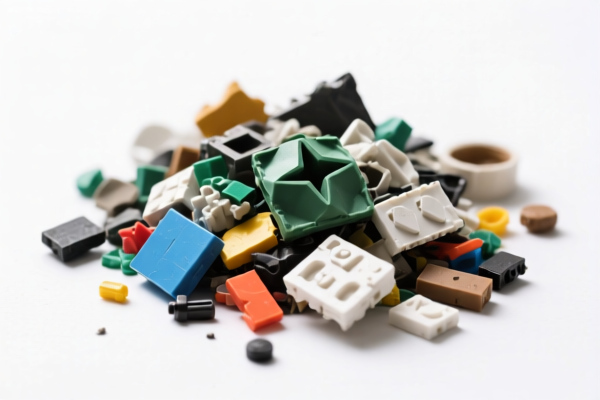
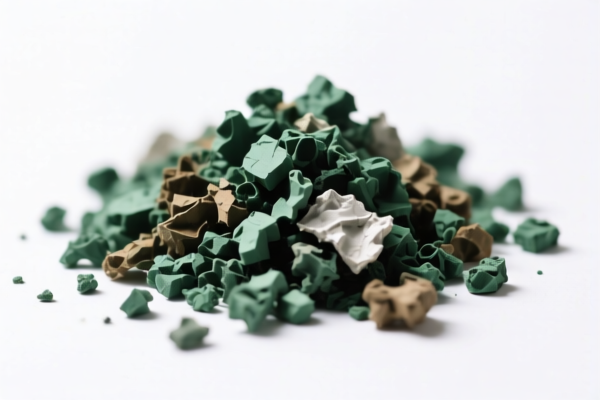

AI Analysis
🧪 Waste Organic Halides (Halogenated Waste Solvents & Residues)
🌐 HS Code Reference & Customs Clearance Guide | 2026 Latest Tariff Analysis | Professional Compliance Strategy
📌 Part 1: Product Definition & Classification: Do You Really Understand "Waste Organic Halides"?
Waste Organic Halides refer to chemical waste containing halogen elements (Fluorine, Chlorine, Bromine, Iodine) derived from organic compounds. In international trade, these are primarily categorized as hazardous chemical wastes, often including:
- Halogenated Waste Solvents: Spent solvents like dichloromethane, chloroform, carbon tetrachloride, etc., that are no longer fit for use.
- Halogenated Chemical Residues: Sludge, reaction by-products, or distillation bottoms from chemical synthesis containing halogens.
⚠️ Key Distinction Point:
- If the waste is strictly a solvent (liquid state, primary component is organic halide solvent) → It may fall under 3825.41.00.00.
- If the waste is a mixture/residue (sludge, mixed chemical waste, non-pure solvents) → It typically falls under 3825.49.00.00.
- If classified incorrectly as general chemical products → It might be misdeclared under 3824.99.50.00 or 3824.99.93.97, leading to severe compliance risks.
📦 Part 2: HS Code Classification Details (2026 Latest Tariff Authority Comparison)
| HS Code | Product Description | Application Scenario | Tax Rate |
|---|---|---|---|
3825.41.00.00 |
Waste organic halogenated solvents | Pure halogenated solvents (e.g., dichloromethane waste, chloroform waste) | 35.0% |
3825.49.00.00 |
Other waste organic halogenated substances | Mixed halogenated waste, halogenated chemical residues, sludge | 35.0% |
3824.99.50.00 |
Other chemical products and preparations | Misclassification as halogenated hydrocarbons/waste chemical products | 41.5% |
3824.99.93.97 |
Other chemical products and preparations | General organic halides in chemical industry context (non-waste specific) | 40.0% |
🔍 Key Reminder:
- 3825.41.00.00 and 3825.49.00.00 are the correct and specific categories for waste halogenated substances.
- 3824 codes are incorrect for waste unless the product is reclassified as a non-waste chemical product, which is a compliance violation.
- Misclassifying waste as general chemicals (3824) leads to higher tariffs (40-41.5%) and potential legal penalties for hiding hazardous waste.
💰 Part 3: 2026 Latest Tariff Rate Details (Including Additional Taxes & Policy Add-ons)
✅ Applicable Country: United States (US)
✅ Origin: China (CN)
✅ Effective Date: From November 10, 2025 (including subsequent imports)
🎯 1. 3825.41.00.00 —— Waste Organic Halogenated Solvents
| Item | Content |
|---|---|
| Base Tariff | 0.0% (ad valorem) |
| Section 301 Additional Tariff | +25.0% |
| Section 122 Tariff | +10.0% |
| Total Tariff Rate | 35.0% |
| Tax Calculation | CIF Value × 35.0% |
| De Minimis Eligibility | ❌ Not Eligible (deny_de_minimis for hazardous waste) |
| Legal Basis Path | Section 301: 3825.41.00.00 → Section 122: 10% |
📌 Explanation:
- "Section 301 Additional Tariff 25%" comes from the US Trade Act Section 301 against China.
- "Section 122 Tariff 10%" is a specific import restriction/add-on tariff.
- Total 35% is a high tariff for waste, reflecting environmental and trade policy restrictions.
🎯 2. 3825.49.00.00 —— Other Waste Organic Halogenated Substances
| Item | Content |
|---|---|
| Base Tariff | 0.0% |
| Section 301 Additional Tariff | +25.0% |
| Section 122 Tariff | +10.0% |
| Total Tariff Rate | 35.0% |
| Tax Calculation | CIF Value × 35.0% |
| De Minimis Eligibility | ❌ Not Eligible |
| Legal Basis Path | Section 301: 3825.49.00.00 → Section 122: 10% |
📌 Note:
- Same tariff rate as pure solvents.
- Applies to mixed halogenated waste, sludge, and residues.
- Must be declared as waste to avoid misclassification under 3824.
🎯 3. 3824.99.50.00 —— Other Chemical Products and Preparations (Misclassification Risk)
| Item | Content |
|---|---|
| Base Tariff | 6.5% |
| Section 301 Additional Tariff | +25.0% |
| Section 122 Tariff | +10.0% |
| Total Tariff Rate | 41.5% |
| Tax Calculation | CIF Value × 41.5% |
| De Minimis Eligibility | ❌ Not Eligible |
| Legal Basis Path | Section 301: 3824.99.50.00 → Section 122: 10% |
📌 Warning:
- This code applies if halogenated waste is incorrectly classified as general halogenated hydrocarbons.
- Higher tariff (41.5%) + Compliance Risk: Misdeclaring hazardous waste as general chemicals is illegal.
- Do not use unless you can prove it is not waste.
🎯 4. 3824.99.93.97 —— Other Chemical Products and Preparations (Misclassification Risk)
| Item | Content |
|---|---|
| Base Tariff | 5.0% |
| Section 301 Additional Tariff | +25.0% |
| Section 122 Tariff | +10.0% |
| Total Tariff Rate | 40.0% |
| Tax Calculation | CIF Value × 40.0% |
| De Minimis Eligibility | ❌ Not Eligible |
| Legal Basis Path | Section 301: 3824.99.93.97 → Section 122: 10% |
📌 Warning:
- Similar to above, this is a general chemical category.
- Tariff 40% is higher than the correct waste codes (35%).
- High Risk: Customs may reject this declaration for waste materials.
🛠️ Part 4: Customs Clearance Practical Advice (Combat Pitfall Guide)
✅ 1. Required Documents List (Must-Have)
| Document | Must Provide | Description |
|---|---|---|
| ✅ Waste Manifest | ✔️ | EPA-approved waste shipment tracking document |
| ✅ Material Safety Data Sheet (MSDS) | ✔️ | Must specify halogen content, hazard class, and waste status |
| ✅ Certificate of Analysis (CoA) | ✔️ | Lab report confirming chemical composition and waste nature |
| ✅ Import License for Hazardous Waste | ✔️ | EPA RCRA permit for import of hazardous waste |
| ✅ Commercial Invoice | ✔️ | Clearly state "Waste Organic Halides" and HS Code |
| ✅ Packing List | ✔️ | Detail container type, packaging, and leakage prevention |
✅ 2. Declaration Tips (Key Mantras)
🔥 "Declare as Waste, Not Chemicals! Hazardous Waste Needs Permit!"
| Scenario | Correct Declaration | Wrong Practice |
|---|---|---|
| Halogenated Solvent Waste | 3825.41.00.00 |
Declare as "Chemical Solvent" → 40-41.5% + Penalty |
| Mixed Halogenated Residue | 3825.49.00.00 |
Declare as "Chemical Product" → 40-41.5% + Penalty |
| General Chemical Halides | 3824.99.50.00 |
Illegal if it is waste |
✅ 3. Special Case Handling
| Situation | Handling Advice |
|---|---|
| Mixed Waste | Must use 3825.49.00.00. Do not split into solvents and residues. |
| High Hazard Class | Ensure EPA permit is obtained before shipment. Delays are common. |
| Transshipment | Provide full chain of custody documents. Customs will check origin. |
| Re-export | If re-exporting, declare as "Return" but still subject to 35% tariff if not properly documented. |
🌍 Part 5: Global Main Market Clearance Comparison (2026 Latest)
| Country/Region | Recommended HS Code | Tariff | Certification | Note |
|---|---|---|---|---|
| 🇺🇸 US | 3825.41.00.00 / 3825.49.00.00 |
35% | EPA RCRA Permit | Strict hazardous waste import rules |
| 🇨🇳 China | 3825.41.00.00 / 3825.49.00.00 |
5% (if imported as waste) | SWM License | China restricts waste imports significantly |
| 🇪🇺 EU | 3825.41.00 / 3825.49.00 |
0-6.5% | EAW (European Waste Catalog) | Stricter environmental checks |
| 🇯🇵 Japan | 3825.41.00 / 3825.49.00 |
6% | Waste Management Law | Requires import permit for hazardous waste |
📌 Conclusion:
- US imposes 35% tariff but allows import with proper EPA permits.
- EU/Japan may have lower base tariffs but stricter environmental controls.
- China has largely banned hazardous waste imports; verify current regulations.
📌 Part 6: Common Errors & Pitfall Guide (Lessons Learned)
❌ Error 1: Declaring waste solvents as "General Chemical Solvents" (3824)
👉 Consequence: 40-41.5% tariff + Customs Penalty for misdeclaration.
❌ Error 2: Failing to obtain EPA RCRA Permit
👉 Consequence: Shipment Rejected/Returned + Fines.
❌ Error 3: Mixing Halogenated and Non-Halogenated Waste
👉 Consequence: Incorrect HS Code + Environmental Violation.
❌ Error 4: Not Providing MSDS with Halogen Content
👉 Consequence: Customs Hold + Delay for lab testing.
✅ Correct Practice:
"Waste Organic Halogenated Solvents, Dichloromethane-based, Hazardous Waste, EPA RCRA Permit No. XYZ, MSDS Provided"
🎯 Part 7: Conclusion: Professional Declaration, Cost Reduction!
🎯 Remember the Mantra:
🔹 "Waste Needs Permit, Not General Chemical!"
🔹 "HS 3825 is Correct, 3824 is Wrong and Costly!"
🔹 "35% is High, but 41.5% is Worse + Legal Risk!"
📌 Tips:
If your waste is recovered/recycled and not classified as waste, you may qualify for different HS codes, but this requires legal verification.
Always apply for Advance Ruling if unsure.
Consult EPA and Customs Broker before shipment.
📣 Immediate Action:
📞 Contact EPA for Import Permit + Customs Broker for HS Code Verification
🚀 Ensure Compliance, Avoid Fines, Clear Customs Smoothly!
✨ Professional Clearance, Start with Accurate Classification!
💼 Every Dollar Saved, Every Risk Avoided!
Customer Reviews
About HS Code Classification
The Harmonized System (HS) is an internationally standardized nomenclature developed by the World Customs Organization (WCO) to classify traded products. Over 200 countries use the HS system as the basis for customs tariffs, trade statistics, and import/export regulations.
Each HS code follows a hierarchical structure:
- Chapter (2 digits) — Broad category of goods (e.g., Chapter 84: Machinery and Mechanical Appliances)
- Heading (4 digits) — More specific grouping within the chapter
- Subheading (6 digits) — Internationally standardized breakdown, used by all WCO member countries
- National subdivisions (8-10 digits) — Country-specific extensions for further classification, such as US HTSUS 10-digit codes
Correct HS code classification is essential for smooth customs clearance, accurate duty payment, and compliance with trade regulations. Misclassification can lead to customs delays, overpayment of duties, or penalties.
When importing from CN to US, the applicable tariff rates may include:
- Most-Favored-Nation (MFN) rate — The standard duty rate applied to WTO members
- General rate — Applied to countries without trade agreements
- Trade remedy duties — Additional tariffs such as Section 301 (anti-dumping), Section 232 (national security), or countervailing duties
The information provided on this page is for reference purposes only. For official classification, please consult with your local customs authority or a licensed customs broker.