Waste Paperboard Industrial Grade
CN → US| HS Code | Tariff Rate | Origin | Destination | Doc |
|---|---|---|---|---|
| 4707100000 | 35.0% | CN | US | Official Doc |
| 4707900000 | 35.0% | CN | US | Official Doc |
| 4707100000 | 35.0% | CN | US | Official Doc |
| 4707900000 | 35.0% | CN | US | Official Doc |
| 4811512040 | 35.0% | CN | US | Official Doc |
Product Images
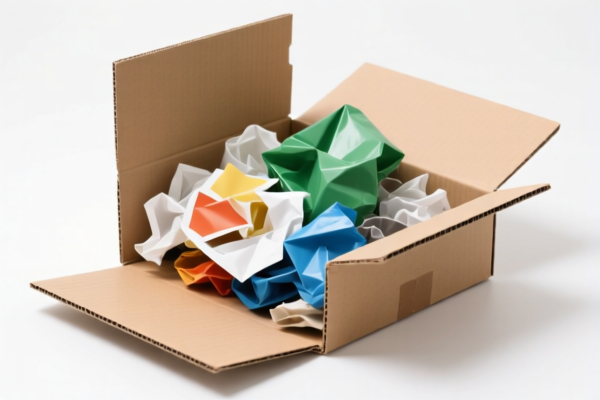
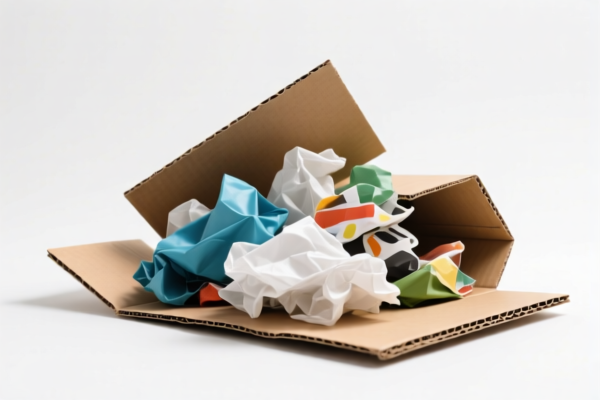

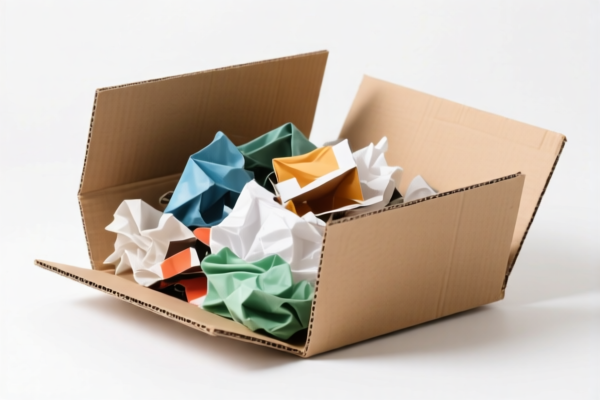
AI Analysis
📦 Waste Paperboard (Industrial Grade)
🌐 HS Code Reference & Customs Clearance Guide | 2026 Latest Tariff Analysis | Professional Strategy 📌 Product Definition: What is "Waste Paperboard Industrial Grade"?
Waste Paperboard (Industrial Grade) refers to discarded cardboard or paperboard materials recovered for recycling, specifically categorized by their industrial utility rather than consumer-grade packaging waste. In international trade, these materials are classified under Chapter 47 (Paper and Paperboard), specifically focusing on waste and scrap suitable for re-pulping and recycling.
The term "Industrial Grade" emphasizes the material's suitability for large-scale recycling processes, distinguishing it from general household paper waste. It falls under the classification of "Waste and scrap of paper and paperboard".
⚠️ Key Classification Distinction: - Material: Paperboard (Corrugated fiberboard, solid board, etc.); - State: Waste/Scrap (Unusable in original form, destined for recycling); - HS Chapter: 47 (Pulp of wood or of other fibrous cellulose material; waste and scrap of paper or paperboard).
📊 HS Code Classification Details (2026 Latest Tariff Authority)
Based on the provided data, the product is classified under two specific HS Codes within Chapter 47. Both codes refer to "Waste and scrap of paper and paperboard". The distinction often lies in the specific composition or preparation, but for "Waste Paperboard," both 4707.10 and 4707.90 are relevant matches in this context.
| HS Code | Product Description | Matching Summary | Material/Form Fit |
|---|---|---|---|
| 4707.10.00.00 | Waste and scrap of paperboard | Match Successful: "Waste paperboard" corresponds to "Paperboard Recycling." "Industrial grade" fits the attributes of recycled materials. | ✅ Perfect Match: Material is paperboard; Form is waste/scrap. |
| 4707.90.00.00 | Waste and scrap of other paper or paperboard | Match Successful: Material is paperboard, fitting the "Other" category under waste paper and paperboard. | ✅ Perfect Match: Material is paperboard; Fits "Other" waste paper categories. |
🔍 Critical Note: - Both codes (
4707.10and4707.90) describe Waste and Scrap of Paper/Paperboard. -4707.10typically covers white corrugated paper and paperboard waste; -4707.90typically covers other paper and paperboard waste (e.g., printed cardboard, mixed paperboard). - For "Industrial Grade Waste Paperboard," either may apply depending on the specific type (white vs. mixed/printed), but both carry the same tax rate in this dataset.
💰 2026 Latest Tariff Rate Breakdown (Including Surcharges & Policy Add-ons)
✅ Applicable Country: United States (US)
✅ Origin: China (CN)
✅ Effective Time: Post-November 10, 2025 (Including subsequent imports)
🎯 1. 4707.10.00.00 & 4707.90.00.00 —— Waste and Scrap of Paper/Paperboard
| Item | Content |
|---|---|
| Base Tariff Rate | 0.0% (Ad Valorem) |
| USITC Surcharge (Section 301) | +25.0% |
| IEEPA Surcharge (122 Clause) | +10.0% |
| Total Tax Rate | 35.0% |
| Tax Calculation | CIF Value × 35% |
| De Minimis Exemption Eligible? | ❌ No (deny_de_minimis) |
| Legal Basis Path | USITC:4707.10.00.00 / USITC:4707.90.00.00 → FOOTNOTE:301_Section_301 → IEEPA:122_Clauses |
📌 Detailed Explanation: - "Base Tariff: 0.0%": Waste paper is often duty-free to encourage recycling, but this is overridden by trade policies. - "USITC Surcharge +25.0%": This is the standard Section 301 tariff applied to most Chinese goods, including recycled paper materials. - "122 Clause Tariff +10.0%": This refers to additional tariffs under IEEPA (International Emergency Economic Powers Act) provisions, specifically targeting Chinese imports. - "Total: 35.0%": This is a very high tariff rate. Importers must account for this 35% cost on top of the CIF value. - "No De Minimis": These goods cannot use the $800 de minimis exemption (Section 321), meaning all shipments are subject to full customs declaration and tax payment.
🛠️ Customs Clearance Practical Advice (Pitfall Avoidance Guide)
✅ 1. Preparation Checklist (Essential Documents)
| Document | Required? | Purpose |
|---|---|---|
| ✅ Commercial Invoice | ✔️ | Must explicitly state "Waste Paperboard," "Industrial Grade," and HS Code. |
| ✅ Packing List | ✔️ | Detail the weight and volume to calculate CIF accurately. |
| ✅ Product Description | ✔️ | Confirm it is Waste/Scrap, not virgin paperboard. Misdeclaration leads to penalties. |
| ✅ Phytosanitary Certificate | ✔️ (If applicable) | If the paperboard contains organic contaminants, some countries may require this. |
| ✅ Environmental Compliance Proof | ✔️ | Ensure the waste meets the US EPA standards for imported recycling materials. |
✅ 2. Declaration Tips (Key Mantra)
🔥 "Clearly Label as Waste, Not Product! Industrial Grade Means Recyclable!"
| Situation | Correct Declaration | Wrong Practice |
|---|---|---|
| Waste Paperboard | 4707.10.00.00 or 4707.90.00.00 |
Declare as "New Paperboard" (e.g., 4805.xx) → Wrong HS Code & High Duty + Penalty |
| Mixed with Non-Paper Items | Separate or Declare Mixed | Hide non-paper items → Customs Hold & Inspection |
| Damp/Wet Paperboard | Declare Moisture Content | Fail to declare → Rejected for Bio-risk |
✅ 3. Special Considerations
| Scenario | Handling Advice |
|---|---|
| Mixed Quality | If the batch contains both high-grade white cardboard and mixed printing paper, consider separating them if 4707.10 (white) and 4707.90 (mixed) have different future rate changes. Currently, rates are the same. |
| Contamination | Ensure no plastic, metal, or hazardous waste is mixed in. Contaminated waste is banned from import in many jurisdictions. |
| Voluntary Export Restraints | Monitor for any sudden changes in US-EU or US-China waste trade policies. |
🌍 Global Main Market Customs Comparison (2026 Latest)
| Country/Region | Recommended HS Code | Tariff (China Origin) | Certification | Notes |
|---|---|---|---|---|
| 🇺🇸 United States | 4707.10.00.00 / 4707.90.00.00 |
35% (25% + 10%) | EPA Compliance | High Tariff. No De Minimis. |
| 🇨🇳 China | 4707.00.00.00 |
0% | N/A | China imports waste paper for recycling. |
| 🇪🇺 European Union | 4707.10.00 / 4707.90.00 |
Varies (Often 0-2%) | REACH, ISO 14001 | Strict waste import controls. |
| 🇬🇧 United Kingdom | 4707.10.00 / 4707.90.00 |
0-2% | UKCA, Waste Licensing | Post-Brexit rules apply. |
| 🇯🇵 Japan | 4707.10.00 / 4707.90.00 |
0% | JIS Standards | High quality standards for recycling. |
📌 Conclusion: - The US market imposes a 35% tariff, making it expensive to import waste paperboard from China compared to other regions. - No De Minimis Exemption: Small shipments are not exempt. All volumes are taxable. - Compliance is Critical: US Customs and Border Protection (CBP) strictly enforces waste import regulations to prevent environmental hazards.
📌 Common Errors & Pitfall Guide (Lessons Learned)
❌ Error 1: Declaring "Waste Paperboard" as "New Paperboard" (e.g., HS 4805)
👉 Consequence: Wrong HS Code. New paperboard may have different duties, but misdeclaration leads to heavy fines, seizure, and blacklisting.
❌ Error 2: Assuming De Minimis Applies
👉 Consequence: Small shipments (<$800) are still taxed 35%. Failure to declare results in penalties and delays.
❌ Error 3: Ignoring Contamination
👉 Consequence: If plastic, food waste, or hazardous materials are found, the entire shipment may be rejected or destroyed at the importer's expense.
❌ Error 4: Vague Description ("Paper Waste")
👉 Consequence: Customs may request additional documentation, causing delays and storage fees.
✅ Correct Practice:
"Waste Paperboard, Industrial Grade, Recyclable, Uncompressed, No Plastic Contamination, HS Code 4707.90.00.00"
🎯 Conclusion: Professional Declaration, Cost Control, Smooth Clearance!
🎯 Remember the Mantra:
🔹 "Waste Paperboard: 35% Tax, No Exemption, Declare Clearly!"
🔹 "Check for Contamination, Avoid Penalties, Save Time and Money!"
📌 Pro Tip:
- If you are importing large volumes, consider consolidating shipments with other recyclables to optimize logistics costs, but keep paperboard separate for accurate HS classification.
- Apply for an Advance Ruling if your waste paperboard is a mixed type (e.g., partially white, partially printed) to confirm whether
4707.10or4707.90is more appropriate for your specific batch.
📣 Immediate Action:
📞 Contact a Licensed Customs Broker + Provide Product Photos + Verify EPA Compliance
🚀 Ensure Your Waste Paperboard Clears US Customs Efficiently, Avoiding 35% Tax Surprises!
✨ Professional Customs Clearance Starts with Accurate Classification!
💼 Every Dollar of Tariff Should Be Calculated Precisely!
Customer Reviews
About HS Code Classification
The Harmonized System (HS) is an internationally standardized nomenclature developed by the World Customs Organization (WCO) to classify traded products. Over 200 countries use the HS system as the basis for customs tariffs, trade statistics, and import/export regulations.
Each HS code follows a hierarchical structure:
- Chapter (2 digits) — Broad category of goods (e.g., Chapter 84: Machinery and Mechanical Appliances)
- Heading (4 digits) — More specific grouping within the chapter
- Subheading (6 digits) — Internationally standardized breakdown, used by all WCO member countries
- National subdivisions (8-10 digits) — Country-specific extensions for further classification, such as US HTSUS 10-digit codes
Correct HS code classification is essential for smooth customs clearance, accurate duty payment, and compliance with trade regulations. Misclassification can lead to customs delays, overpayment of duties, or penalties.
When importing from CN to US, the applicable tariff rates may include:
- Most-Favored-Nation (MFN) rate — The standard duty rate applied to WTO members
- General rate — Applied to countries without trade agreements
- Trade remedy duties — Additional tariffs such as Section 301 (anti-dumping), Section 232 (national security), or countervailing duties
The information provided on this page is for reference purposes only. For official classification, please consult with your local customs authority or a licensed customs broker.