Waste Textiles and Similar Articles
CN → US| HS Code | Tariff Rate | Origin | Destination | Doc |
|---|---|---|---|---|
| 5202995000 | 35.0% | CN | US | Official Doc |
| 6310102010 | 17.5% | CN | US | Official Doc |
| 6310102030 | 17.5% | CN | US | Official Doc |
| 5202100000 | 35.0% | CN | US | Official Doc |
| 5202995000 | 35.0% | CN | US | Official Doc |
Product Images


AI Analysis
🧵 Waste Textiles and Similar Articles
🌐 HS Code Reference & Customs Clearance Guide | 2026 Latest Tariff Analysis | Professional-Level Entry Strategies
📌 I. Product Definition and Classification: Do You Really Understand "Waste Textiles"?
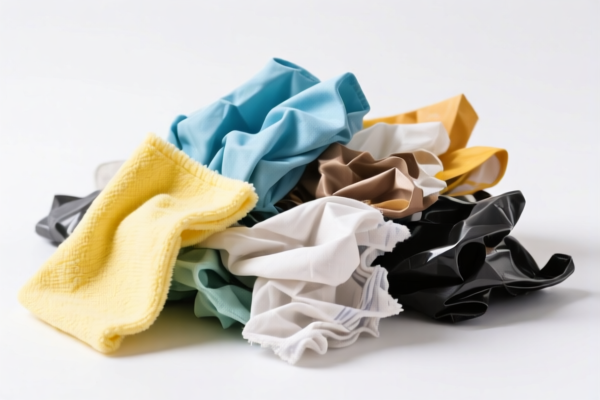
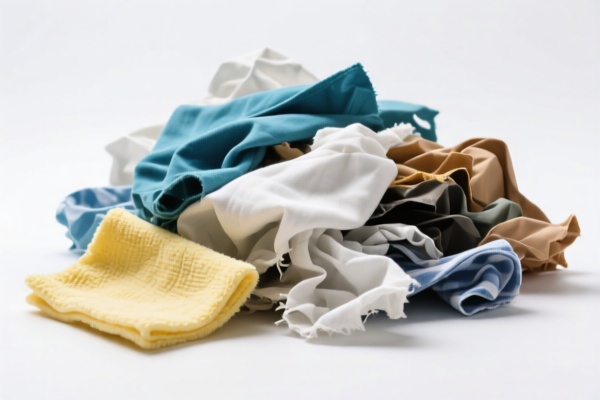
Waste textiles refer to used, discarded, or defective textile materials that are no longer suitable for their original purpose but may have value as raw material for recycling, stuffing, or industrial applications. In international trade, these goods are highly sensitive to trade remedies, particularly US Section 301 tariffs and Section 122 measures targeting Chinese-origin goods.
Key Distinctions in Classification:
- Cotton Waste/Yarn Waste: Specifically made from cotton fibers or yarn remnants. Treated more strictly due to high tariff rates.
- Other Textile Waste: General textile scraps, mixtures of fibers, or unidentified materials. Generally subject to lower base tariffs but still subject to significant add-on taxes.
⚠️ Critical Warning:
- All waste textiles originating from China are subject to aggressive additional tariffs (Section 301 + Section 122).
- Misclassification (e.g., declaring as "raw cotton" or "non-waste") leads to severe penalties, detention, or return of goods.
- De minimis exemption (Section 321) is explicitly denied for these HS codes under current US regulations.
📦 II. HS Code Classification Details (2026 Latest Tariff Authority Comparison)
| HS Code | Product Description | Applicable Scenario | Material Specificity |
|---|---|---|---|
5202.10.00.00 |
Cotton waste and yarn waste (noils, thread waste, etc.) | Pure cotton scraps, cotton yarn ends, cotton mill waste | ✅ Cotton Only |
5202.99.50.00 |
Other cotton waste | Non-classified cotton textile waste not fitting other subheadings | ✅ Cotton Only |
6310.10.20.10 |
Waste of textiles and textile articles | Unspecified material waste, likely includes cotton or blends | ❌ Unspecified/Mixed |
6310.10.20.30 |
Other waste of textiles | Catch-all for textile waste not specifically categorized | ❌ Unspecified/Mixed |
🔍 Important Reminder:
- If the material is purely cotton, use HS 5202.xx.
- If the material is unknown, mixed, or synthetic, use HS 6310.xx.
- Never classify waste textiles as "raw cotton" (HS 5201) or "used clothing" (HS 6309) unless specifically exempted and documented. Misclassification triggers audits.
💰 III. 2026 Latest Tariff Rate Breakdown (Including Surcharges, Policy Add-ons)
✅ Applicable Country: United States (US)
✅ Country of Origin: China (CN)
✅ Effective Date: Current policies apply (Section 301 + Section 122 measures active)
🎯 1. 5202.10.00.00 & 5202.99.50.00 —— Cotton Waste and Yarn Waste
| Item | Content |
|---|---|
| Base Tariff Rate | 0% (ad valorem) |
| USITC Additional Duty (Section 301) | +25% |
| Section 122 Tariff | +10% |
| Total Effective Rate | 35.0% |
| Tax Calculation | CIF Value × 35% |
| De Minimis Exemption Available? | ❌ NO (Denied under current policy) |
| Legal Basis Path | USITC:5202.10.00.00/5202.99.50.00 → Section 301: Footnote 9903.88.01 → Section 122: 19 U.S.C. 2253 |
📌 Explanation:
- The 25% Section 301 tariff is imposed under the US Trade Act of 1974, targeting goods from China affecting US intellectual property and manufacturing.
- The 10% Section 122 tariff is imposed under the International Emergency Economic Powers Act (IEEPA) or related trade laws for specific strategic categories.
- Total 35% is a high tariff burden, requiring strict compliance and cost absorption planning.
🎯 2. 6310.10.20.10 & 6310.10.20.30 —— Other Textile Waste
| Item | Content |
|---|---|
| Base Tariff Rate | 0% (ad valorem) |
| USITC Additional Duty (Section 301) | +7.5% |
| Section 122 Tariff | +10% |
| Total Effective Rate | 17.5% |
| Tax Calculation | CIF Value × 17.5% |
| De Minimis Exemption Available? | ❌ NO (Denied under current policy) |
| Legal Basis Path | USITC:6310.10.20.10/6310.10.20.30 → Section 301: Footnote 9903.88.01 → Section 122: 19 U.S.C. 2253 |
📌 Note:
- While the rate is lower than cotton waste, it is still significantly higher than standard MFN rates.
- This classification applies to mixed fabrics, synthetic blends, or unidentified textile scraps.
- Even if the material contains <5% cotton, if it cannot be definitively classified as "cotton waste," it defaults to 6310, avoiding the 35% rate but still incurring 17.5%.
🛠️ IV. Customs Clearance Practical Advice (Real-World Pitfall Avoidance Guide)
✅ 1. Required Documentation Checklist (All Must Be Provided)
| Document | Mandatory | Notes |
|---|---|---|
| ✅ Product Specification Sheet | ✔️ | Must detail fiber composition (e.g., "100% Cotton", "Polyester Blend"), form (scrap, noil, rag), and source. |
| ✅ Commercial Invoice | ✔️ | Clearly state "Waste Textiles" or "Cotton Waste" — never vague terms like "Fabric Scraps" without HS code reference. |
| ✅ Packing List | ✔️ | Detail weight, quantity, and packaging type. |
| ✅ Certificate of Origin (CO) | ✔️ | Essential to determine origin. If non-China origin, may qualify for lower rates (if applicable). |
| ✅ Third-Party Inspection Report | ✔️ | Confirm fiber content and waste status to avoid "misdeclaration" claims. |
| ✅ Photos of Goods | ✔️ | Show bulk waste, labels, and any branding to prove it is waste, not usable goods. |
✅ 2. Declaration Tips (Key Rules)
🔥 "Be Specific on Material, Declare Waste Status, Avoid De Minimis!"
| Scenario | Correct Declaration Method | Wrong Practice |
|---|---|---|
| Pure Cotton Waste | HS 5202.10.00.00 or 5202.99.50.00 + "Cotton Waste" |
Misdeclaring as "Textile Waste" (6310) to save 17.5% → Audit Risk + Penalties |
| Mixed/Synthetic Waste | HS 6310.10.20.10 or 6310.10.20.30 + "Textile Waste" |
Declaring as "Raw Cotton" → Severe Penalty |
| Used Clothing (Not Waste) | HS 6309.00.00.00 (if eligible) |
Declaring as "Waste" to avoid higher rates for used goods → Customs Rejection |
| Small Shipment via De Minimis | Do Not Ship | Attempting to use Section 321 → Package Confiscated |
✅ 3. Special Cases Handling
| Scenario | Handling Advice |
|---|---|
| OEM Textile Waste from China | Provide factory production records to prove waste status. Avoid claiming "new goods" or "salvage" without proof. |
| Mixed Container (Waste + Usable Goods) | Separate HS Codes. Do not lump under one HS. Separate shipments are safer. |
| Non-China Origin Waste | If from Vietnam, India, or Bangladesh, provide Certificate of Origin to claim lower MFN rates (often 0-5%). |
| Recycling Destination | If destined for domestic US recycling, ensure the importer has proper EPA and state-level waste handling permits. |
🌍 V. Global Major Market Clearance Comparison (2026 Latest)
| Country/Region | Recommended HS Code | Tariff (CN Origin) | Certification Requirements | Notes |
|---|---|---|---|---|
| 🇺🇸 USA | 5202.xx or 6310.xx |
17.5% - 35% | No specific product cert, but strict origin control | De Minimis Denied |
| 🇨🇳 China | 5202.xx or 6310.xx |
0-5% (Import) | No special cert | China imports waste textiles for recycling |
| 🇪🇺 EU | 6310.xx |
0-6.5% | REACH compliance for chemicals | Stricter on contaminated waste |
| 🇬🇧 UK | 6310.xx |
0-6.5% | Post-Brexit rules apply | Check UK Global Tariff |
| 🇯🇵 Japan | 6310.xx |
0-8.5% | No major barriers | Strict on hygiene standards for used textiles |
📌 Conclusion:
- USA is the most expensive market for Chinese waste textiles due to 35% top rate.
- EU and UK have lower tariffs but stricter environmental and hygiene regulations.
- Non-China origins (e.g., India, Bangladesh) offer significant tariff advantages in all markets.
📌 VI. Common Mistakes & Pitfall Avoidance (Lessons Learned)
❌ Mistake 1: Declaring "Cotton Waste" when it is actually "Polyester Blends"
👉 Consequence: Customs inspection finds mismatch → Penalty + Backdated Tariffs
❌ Mistake 2: Attempting to use De Minimis (Section 321) for shipments < $800
👉 Consequence: Package held, fines issued, importer blacklisted for policy violation
❌ Mistake 3: Using vague descriptions like "Fabric Scraps" on Invoice
👉 Consequence: Customs cannot determine HS code → Delays, Additional Fees, Random Inspection
❌ Mistake 4: Ignoring Section 122 Tariff in Costing
👉 Consequence: Underestimated landed cost → Profit Margin Erasure
✅ Correct Practice:
"Cotton Waste, Noils, 100% Cotton, Source: China, HS 5202.10.00.00, For Recycling Only"
🎯 VII. Conclusion: Professional Declaration, Save Time, Reduce Costs!
🎯 Remember the Mantra:
🔹 "Material Matters: Cotton 35%, Mixed 17.5%"
🔹 "No De Minimis for Waste: Plan for Full Tariff"
🔹 "Documentation is Key: Prove Origin, Prove Material"
📌 Pro Tip:
If your waste textiles originate from non-China countries (e.g., Vietnam, India, Bangladesh), you can potentially reduce tariffs to 0-6.5%.
Consider supply chain diversification or processing in third countries to avoid US Section 301/122 surcharges.
Request a Binding Ruling from US Customs (CBP) if your product classification is ambiguous.
📣 Immediate Action:
📞 Contact a licensed Customs Broker + Provide Material Composition Report + Verify Origin Certificate
🚀 Ensure your waste textiles clear customs smoothly, comply with regulations, and maximize profitability!
✨ Professional Clearance Starts with Accurate Classification!
💼 Every Percent of Tariff Saved is Pure Profit!
Customer Reviews
About HS Code Classification
The Harmonized System (HS) is an internationally standardized nomenclature developed by the World Customs Organization (WCO) to classify traded products. Over 200 countries use the HS system as the basis for customs tariffs, trade statistics, and import/export regulations.
Each HS code follows a hierarchical structure:
- Chapter (2 digits) — Broad category of goods (e.g., Chapter 84: Machinery and Mechanical Appliances)
- Heading (4 digits) — More specific grouping within the chapter
- Subheading (6 digits) — Internationally standardized breakdown, used by all WCO member countries
- National subdivisions (8-10 digits) — Country-specific extensions for further classification, such as US HTSUS 10-digit codes
Correct HS code classification is essential for smooth customs clearance, accurate duty payment, and compliance with trade regulations. Misclassification can lead to customs delays, overpayment of duties, or penalties.
When importing from CN to US, the applicable tariff rates may include:
- Most-Favored-Nation (MFN) rate — The standard duty rate applied to WTO members
- General rate — Applied to countries without trade agreements
- Trade remedy duties — Additional tariffs such as Section 301 (anti-dumping), Section 232 (national security), or countervailing duties
The information provided on this page is for reference purposes only. For official classification, please consult with your local customs authority or a licensed customs broker.