Waste Tires
CN → US| HS Code | Tariff Rate | Origin | Destination | Doc |
|---|---|---|---|---|
| 4012204500 | 35.0% | CN | US | Official Doc |
| 4012201500 | 35.0% | CN | US | Official Doc |
| 4004000000 | 35.0% | CN | US | Official Doc |
| 8436990090 | 35.0% | CN | US | Official Doc |
Product Images
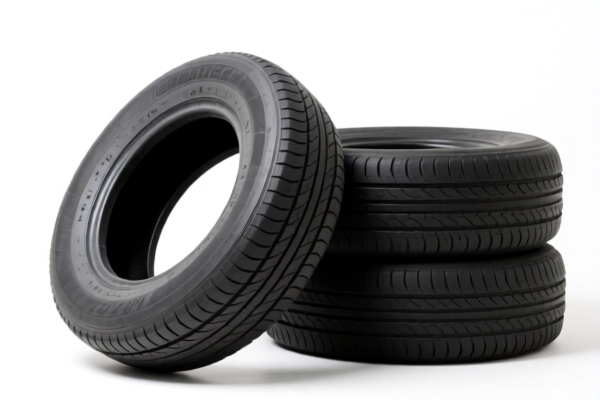
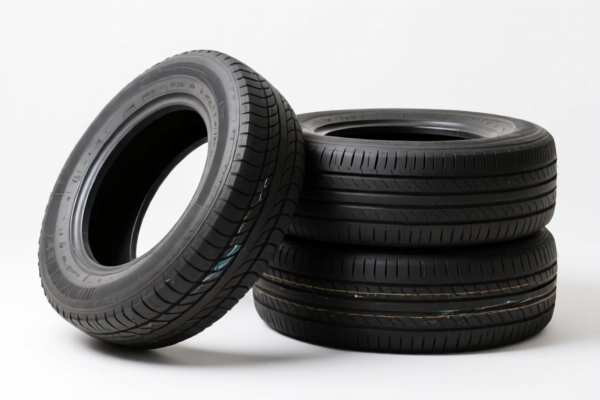
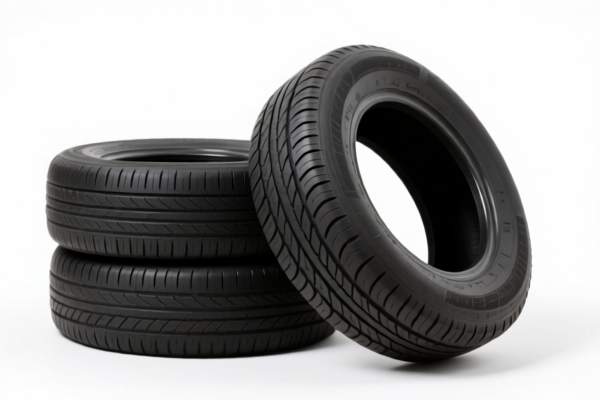
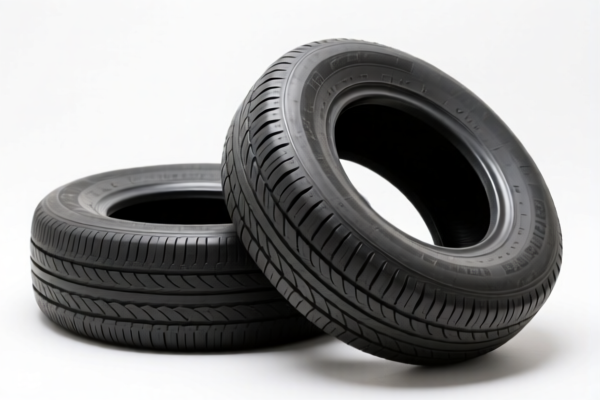
AI Analysis
🚛 Waste Tires (Old Agricultural & Garden Machinery Tires)
🌐 HS Code Reference & Customs Clearance Guide | 2026 Latest Tariff Analysis | Professional Entry Strategy
📌 I. Product Definition & Classification: Do You Really Understand "Waste Tires"?
"Waste Tires" are not just rubber discs; they are specific industrial byproducts with strict regulatory definitions. In international trade, especially when importing into the US from China, their classification depends entirely on their state (used vs. shredded) and intended application (agricultural/garden machinery).
⚠️ Key Distinction:
- If the tire is whole/usable as a tire (even if used/recycled) → It falls under Chapter 40 (Rubber Articles).
- If the tire is shredded/granulated into waste material → It falls under 4004.00.00.00 (Rubber Waste/Scrap).
- Critical Note: "Waste" in HS codes often refers to the status of the good (used/recycled) rather than just physical destruction. The data provided highlights specific HS codes for used pneumatic tires for agricultural/garden use.
📦 II. HS Code Classification Details (2026 Latest Tariff Authority Match)
Based on the provided data, here are the exact HS Codes and their specific applicability. Note that all listed codes carry a 35% Total Tax Rate for imports from China.
| HS Code | Product Description | Application Scenario | Form/State |
|---|---|---|---|
4012.20.45.00 |
Used Pneumatic Rubber Tires for Agricultural or Garden Machinery | Matching used tires for ag/garden machines | Whole/Recyclable Tire |
4012.20.15.00 |
Waste/Used Tires (Pneumatic Rubber) for Agricultural/Garden Machinery | General used tires for ag/garden use | Whole/Recyclable Tire |
4004.00.00.00 |
Waste/Scrap of Rubber (from tires) for Garden Machinery | Shredded, granulated, or powdered rubber waste | Shredded/Granulated |
8436.99.00.90 |
Parts/Accessories for Other Agricultural/Garden Machinery | Misclassification risk: If sold as spare parts for machinery rather than the tire itself | Machine Part Component |
🔍 Important Clarification:
-4012.20.xx.xx: These are the correct classifications for used whole tires intended for agricultural or garden machinery. They are considered "Used Rubber Goods."
-4004.00.00.00: This is for tires that have been processed into waste (shredded/crushed). Do not use this for whole used tires.
-8436.99.00.90: This is a high-risk classification. If you ship used tires but declare them as "parts of garden machinery," customs may reject this unless they are clearly defined as non-tire components. Avoid this unless the item is explicitly a mechanical part made from tire rubber, not the tire itself.
💰 III. 2026 Latest Tariff Rate Breakdown (Including Surcharges & Policy Add-ons)
✅ Applicable Country: United States (US)
✅ Country of Origin: China (CN)
✅ Effective Date: 2025/2026 Import Period
🎯 1. 4012.20.45.00 & 4012.20.15.00 —— Used Pneumatic Tires for Ag/Garden Use
| Item | Detail |
|---|---|
| Base Tariff (MFN) | 0% (Standard duty for rubber articles) |
| Section 301 Surcharge | +25% (USITC Footnote for Chinese goods) |
| Section 122 / IEEPA Add-on | +10% (Specific provision for Chinese imports under emergency economic powers) |
| Total Effective Tax Rate | 35.0% |
| Tax Calculation | CIF Value × 35% |
| De Minimis Exemption | ❌ NOT APPLICABLE (Deny de minimis; Section 321 does not apply to these categories) |
| Legal Basis Path | USITC:4012.20.45.00/15.00 → Section 301: 85% Ad Valorem → Section 122/IEEPA: 10% |
📌 Explanation:
- The 35% rate is a hard floor. You cannot avoid it by splitting shipments.
- Section 301 (25%) applies to almost all Chinese rubber products.
- Section 122/IEEPA (10%) is an additional layer for specific strategic or emergency imports.
- Result: High duty burden. Profit margins must account for this 35% cost.
🎯 2. 4004.00.00.00 —— Rubber Waste/Scrap (Shredded Tires)
| Item | Detail |
|---|---|
| Base Tariff (MFN) | 0% |
| Section 301 Surcharge | +25% |
| Section 122 / IEEPA Add-on | +10% |
| Total Effective Tax Rate | 35.0% |
| Tax Calculation | CIF Value × 35% |
| De Minimis Exemption | ❌ NOT APPLICABLE |
| Legal Basis Path | USITC:4004.00.00.00 → Section 301 → Section 122/IEEPA |
📌 Note: Even though it's "scrap," the tariff rate is identical to used tires. The difference is in environmental regulations (EPA) which may restrict import of rubber waste for recycling unless processed in licensed facilities.
🎯 3. 8436.99.00.90 —— Parts of Agricultural Machinery
| Item | Detail |
|---|---|
| Base Tariff (MFN) | 0% |
| Section 301 Surcharge | +25% |
| Section 122 / IEEPA Add-on | +10% |
| Total Effective Tax Rate | 35.0% |
| Tax Calculation | CIF Value × 35% |
| De Minimis Exemption | ❌ NOT APPLICABLE |
| Legal Basis Path | USITC:8436.99.00.90 → Section 301 → Section 122/IEEPA |
📌 Warning: This classification is only valid if the item is not a tire. Misdeclaring a tire as a "machine part" is customs fraud and can lead to seizure, fines, and blacklisting. Use this only for actual mechanical components.
🛠️ IV. Customs Clearance Practical Advice (Battle-Tested Pitfall Avoidance)
✅ 1. Required Documentation Checklist (Non-Negotiable)
| Document | Must Provide | Notes |
|---|---|---|
| ✅ Commercial Invoice | ✔️ | Must clearly state "Used Pneumatic Tires" or "Rubber Waste." Avoid vague terms like "Garden Supplies." |
| ✅ Packing List | ✔️ | Detail weight, dimensions, and quantity. Distinguish between whole tires and shreds. |
| ✅ Certificate of Origin | ✔️ | Essential for proving origin as China. |
| ✅ Condition Report | ✔️ | For used tires (4012.20.xx): Provide photos showing tread depth, damage, and usage history. |
| ✅ EPA Form 3540-1 | ✔️ | Critical for 4004.00.00.00. Importers of rubber waste must file this with the EPA prior to arrival. |
| ✅ Importer Security Filing (ISF) | ✔️ | File 10 days before loading. |
✅ 2. Declaration Tips (Key Mnemonics)
🔥 "True State, No Hiding, EPA Form for Scrap!"
| Situation | Correct Declaration | Incorrect Action |
|---|---|---|
| Used Whole Tires | Declare as 4012.20.45.00 or 15.00 as "Used Pneumatic Rubber Tires" |
Misdeclare as "New Tires" (0% base) → Fraud & Seizure |
| Shredded Tires | Declare as 4004.00.00.00 as "Rubber Waste/Scrap" |
Declare as "Used Tires" → Customs Rejection |
| Tire Treads Only | If detached, still 4012.20.xx |
Declare as "Parts" (8436.99.00.90) → High Risk of Audit |
| Mixed Container | Separate 4012 and 4004 on same invoice |
Mix descriptions → Delays & Penalties |
✅ 3. Special Scenario Handling
| Scenario | Recommendation |
|---|---|
| Import for Recycling | Ensure your facility is EPA-registered. Use 4004.00.00.00 and file Form 3540-1. |
| Import for Resale (Used) | Use 4012.20.xx. Ensure tires are not hazardous waste (oil-contaminated). |
| "New" Used Tires | Never declare used tires as new. The 25% Section 301 tax is already high; declaring falsely adds fraud risk. |
| Parts vs. Tires | If it rolls and fits a wheel, it’s a tire (4012). If it’s a bolt, bracket, or hydraulic part, it’s a part (8436). |
🌍 V. Global Market Comparison (2026 Latest)
| Country/Region | Recommended HS Code | Tariff Rate (China Origin) | Key Requirement | Notes |
|---|---|---|---|---|
| 🇺🇸 USA | 4012.20.45.00 / 15.00 |
35% (0% + 25% + 10%) | EPA Form 3540-1 (if scrap) | Strict enforcement on origin |
| 🇨🇳 China | 4012.20.xx |
Variable (Export Duty) | Export License | China often taxes out waste to keep resources |
| 🇪🇺 EU | 4012.20.xx |
0% (Most Favored Nation) | Waste Shipment Regulation (WSR) | EU has strict WSR for waste imports |
| 🇬🇧 UK | 4012.20.xx |
0% | Waste Export License | Post-Brexit rules apply |
| 🇨🇦 Canada | 4012.20.xx |
0% | CEPA Compliance | Canadian Environmental Protection Act |
📌 Conclusion:
- The US 35% total rate is significant but consistent across all four HS codes in the provided data.
- The biggest risk is not the tax, but the compliance (EPA forms, correct description).
- Never split shipments to avoid de minimis. The system flags repeated low-value shipments from China.
📌 VI. Common Errors & Pitfall Avoidance (Blood Lessons)
❌ Error 1: Declaring Used Tires as "New Tires" (4011.xx)
👉 Consequence: Base duty 0%, but Customs seizure, fines, and blacklisting. Even if the tax looks lower initially, the legal risk is catastrophic.
❌ Error 2: Using 4004.00.00.00 for Whole Used Tires
👉 Consequence: EPA rejection. Rubber waste must be processed in licensed facilities. Whole tires are "goods," not "waste" in this context.
❌ Error 3: Not Filing EPA Form 3540-1 for Shredded Tires
👉 Consequence: Cargo detained at port for months. EPA fines can exceed $25,000 per day.
❌ Error 4: Misclassifying as 8436.99.00.90 (Machine Parts)
👉 Consequence: If the item is a tire, this is fraud. Even if tax is the same (35%), the misdeclaration triggers an audit of all past shipments.
✅ Correct Practice:
"Used Agricultural Tires, Size XXX/XXR, 100% Recyclable, HS 4012.20.45.00, Origin: China"
"Rubber Waste (Tire Shreds), Granulated, HS 4004.00.00.00, EPA Form Filed, Origin: China"
🎯 VII. Conclusion: Professional Clearance, Cost Control, Efficiency!
🎯 Remember the Mantra:
🔹 "Whole Tires = 4012, Shreds = 4004, Parts = 8436. Never Mix!"
🔹 "35% Tax is Fixed, Compliance is Key, EPA Form Saves the Day!"
🔹 "HS Code Determines Duty, Description Determines Clearance, Fraud Determines Disaster!"
📌 Pro Tip:
If you are importing large volumes, consider Advance Ruling from CBP to confirm your specific product classification. For shredded tires, ensure your US partner has an EPA-licensed recycling facility.
📣 Immediate Action:
📞 Contact a licensed customs broker + Provide Product Photos + File EPA Forms (if waste)
🚀 Ensure your used tires or rubber waste clears customs smoothly, avoiding delays and fines!
✨ Professional clearance starts with accurate classification!
💼 Your every dollar spent on compliance saves thousands in potential penalties!
Customer Reviews
About HS Code Classification
The Harmonized System (HS) is an internationally standardized nomenclature developed by the World Customs Organization (WCO) to classify traded products. Over 200 countries use the HS system as the basis for customs tariffs, trade statistics, and import/export regulations.
Each HS code follows a hierarchical structure:
- Chapter (2 digits) — Broad category of goods (e.g., Chapter 84: Machinery and Mechanical Appliances)
- Heading (4 digits) — More specific grouping within the chapter
- Subheading (6 digits) — Internationally standardized breakdown, used by all WCO member countries
- National subdivisions (8-10 digits) — Country-specific extensions for further classification, such as US HTSUS 10-digit codes
Correct HS code classification is essential for smooth customs clearance, accurate duty payment, and compliance with trade regulations. Misclassification can lead to customs delays, overpayment of duties, or penalties.
When importing from CN to US, the applicable tariff rates may include:
- Most-Favored-Nation (MFN) rate — The standard duty rate applied to WTO members
- General rate — Applied to countries without trade agreements
- Trade remedy duties — Additional tariffs such as Section 301 (anti-dumping), Section 232 (national security), or countervailing duties
The information provided on this page is for reference purposes only. For official classification, please consult with your local customs authority or a licensed customs broker.