Waste Vegetable Oil
CN → US| HS Code | Tariff Rate | Origin | Destination | Doc |
|---|---|---|---|---|
| 3825690000 | 35.0% | CN | US | Official Doc |
| 1518002000 | 0.0% | CN | US | Official Doc |
| 1507904040 | 36.6% | CN | US | Official Doc |
| 1507904020 | 36.6% | CN | US | Official Doc |
| 3825610000 | 35.0% | CN | US | Official Doc |
Product Images
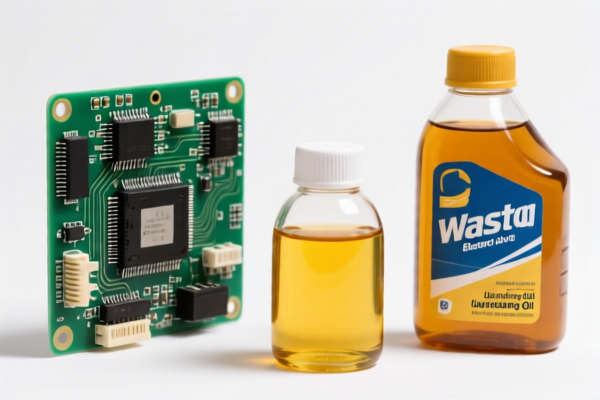


AI Analysis
🍳 Waste Vegetable Oil (WVO) | Biofuel Feedstock & Industrial Byproduct
🌐 HS Code Reference & Customs Clearance Guide | 2026 Latest Tariff Analysis | Professional Clearance Strategy
📌 Part 1: Product Definition & Classification: What is "Waste Vegetable Oil"?
Waste Vegetable Oil (WVO) is a used cooking oil derived from plant sources (such as soybean, canola, or sunflower oil) that has been used for frying or processing. In international trade, it is primarily classified in two ways depending on its state of processing and intended use:
- As an Industrial/Chemical Waste: If the oil is intended for disposal, recycling into biodiesel, or chemical feedstock without further refining, it falls under Chapter 38 (Chemical Products).
- As a Vegetable Oil Product: If the oil retains its basic structure and is treated as a commodity (e.g., for animal feed, soap making, or refined biodiesel production), it falls under Chapter 15 (Vegetable Oils).
⚠️ Critical Distinction:
- If the oil contains significant impurities, food residue, or is strictly categorized as "industrial waste" → Classify under 3825 (Waste).
- If the oil is filtered but still structurally a vegetable oil, and not yet chemically modified → Classify under 1507/1518 (Vegetable Oils).
- Conflict Risk: Misclassifying waste oil as pure vegetable oil can lead to severe penalties for circumventing tariffs on chemical wastes.
📦 Part 2: HS Code Classification Matrix (2026 Latest Tariff Data)
| HS Code | Product Description | Application Scenario | Classification Logic |
|---|---|---|---|
3825.69.00.00 |
Other chemical/industrial waste (Fats/Oils) | Used cooking oil destined for biodiesel, disposal, or industrial recycling | ✅ Waste Category |
1518.00.20.00 |
Vegetable oils, animal fats (refined, acidulated, etc.) | Recycled vegetable oils used as feedstock, not chemically modified but not pure food-grade | ✅ Oil Category |
1507.90.40.40 |
Soybean oils and their fractions (other than refined) | WVO specifically identified as soybean origin, unmodified | ✅ Oil Category |
1507.90.40.20 |
Soybean oils and their fractions (other than refined) | WVO identified as soybean origin, unmodified | ✅ Oil Category |
3825.61.00.00 |
Chemical/industrial organic waste | WVO with high organic content, primarily treated as chemical waste | ✅ Waste Category |
🔍 Key Insight:
- HS 3825 codes apply when the oil is considered "waste" (Chapter 38). This is common for WVO used strictly for energy recovery (biodiesel) without meeting food-grade purity standards. - HS 15xx codes apply when the oil is considered a "commodity" (Chapter 15). This applies if the oil is still considered a vegetable oil product, even if used (e.g., for soap or animal feed).
💰 Part 3: 2026 Tariff Rate Breakdown (Including Surtaxes)
✅ Applicable Country: United States (US)
✅ Origin: China (CN) (Note: Rates below reflect the provided data which implies a US-China trade context with 122 Clause taxes)
✅ Effective Date: 2025/2026 Regime
🎯 1. 3825.69.00.00 & 3825.61.00.00 —— Chemical/Industrial Waste
| Item | Details |
|---|---|
| Base Duty | 0.0% (Ad Valorem) |
| Section 301 Surtax | +25.0% |
| 122 Clause Tariff | +10.0% |
| Total Tax Rate | 35.0% |
| Tax Calculation | CIF Value × 35% |
| De Minimis Exemption | ❌ Not Applicable |
📌 Explanation:
- These HS codes classify WVO as "Chemical or Related Industrial Waste". - The 25% Section 301 tariff and 10% 122 Clause tariff are added to the base 0% duty. - Total Rate: 35%. This is a high tariff rate designed to discourage the import of foreign chemical waste.
🎯 2. 1518.00.20.00 —— Vegetable Oils (Refined/Acidulated)
| Item | Details |
|---|---|
| Base Duty | 6.3 ¢/kg (Specific Duty) |
| Section 301 Surtax | +7.5% (Ad Valorem) |
| 122 Clause Tariff | +10.0% (Ad Valorem) |
| Total Tax Structure | 6.3 ¢/kg + 17.5% (7.5% + 10%) |
| Tax Calculation | (Weight in kg × $0.063) + (CIF Value × 0.175) |
| De Minimis Exemption | ❌ Not Applicable |
📌 Explanation:
- This code applies to vegetable oils that are modified (e.g., acidulated) but still retain their oil character. - The tax is a combination of specific and ad valorem duties. - Total Effective Rate: Depends on the value-to-weight ratio, but generally lower than the 35% waste rate if the oil is high-value.
🎯 3. 1507.90.40.40 & 1507.90.40.20 —— Soybean Oil (Unmodified)
| Item | Details |
|---|---|
| Base Duty | 19.1% |
| Section 301 Surtax | +7.5% |
| 122 Clause Tariff | +10.0% |
| Total Tax Rate | 36.6% |
| Tax Calculation | CIF Value × 36.6% |
| De Minimis Exemption | ❌ Not Applicable |
📌 Explanation:
- If the WVO is classified specifically as soybean oil (even if waste), it falls under Chapter 15. - The base duty is higher (19.1%), and additional surtaxes apply. - Total Rate: 36.6%, which is higher than the waste classification (35%). - ⚠️ Risk: If you classify WVO as soybean oil to avoid waste labels, you may face a higher tax burden (36.6% vs 35%).
🛠️ Part 4: Customs Clearance Practical Advice (Actionable Insights)
✅ 1. Documentation Checklist (Mandatory)
| Document | Required | Purpose |
|---|---|---|
| ✅ Commercial Invoice | ✔️ | Must clearly state: "Waste Vegetable Oil" OR "Used Vegetable Oil" and HS Code. |
| ✅ Bill of Lading (B/L) | ✔️ | Consignee details, weight, volume. |
| ✅ Certificate of Origin (CO) | ✔️ | To determine if origin-based tariffs apply. |
| ✅ Product Specification Sheet | ✔️ | Details on FFAs (Free Fatty Acids), moisture content, and impurities. |
| ✅ Safety Data Sheet (SDS) | ✔️ | For handling and safety compliance. |
| ✅ Import/Export License | ✔️ | Some jurisdictions require licenses for chemical waste imports. |
| ✅ Third-Party Inspection Report | ✔️ | To verify oil quality (e.g., EPA standards for biodiesel feedstock). |
✅ 2. Classification Strategy (Pro Tip)
🔥 "Waste vs. Oil: Choose Wisely!"
| Scenario | Recommended HS Code | Tax Rate | Rationale |
|---|---|---|---|
| WVO for Biodiesel (Waste) | 3825.69.00.00 |
35.0% | Lower total tax than soybean oil. Clearly labeled as waste. |
| WVO for Animal Feed/Soap | 1518.00.20.00 |
6.3¢/kg + 17.5% | If value/weight ratio is low, this may be cheaper. |
| Soybean WVO (Commodity) | 1507.90.40.40 |
36.6% | Higher tax. Only use if product is specifically soy-based and treated as oil. |
📌 Warning:
- Do not misclassify as pure vegetable oil (1507) if it is actually waste (3825). Customs may audit and impose penalties. - Do not misclassify as waste (3825) if it is high-quality oil (1518) unless you are sure the 35% rate is lower than the 36.6% rate for your specific shipment.
✅ 3. Special Considerations
| Issue | Solution |
|---|---|
| Impurities | If WVO contains >5% food residue, it is strictly 3825. Keep it clean for potential 1518 classification. |
| Packaging | Use IBC totes or drums. Ensure labeling complies with DOT/IMO regulations for hazardous materials (if applicable). |
| Biodiesel Feedstock | If intended for biodiesel, provide proof of end-use to potentially qualify for exemptions (if any). |
| Customs Audits | Be prepared to show test results proving the oil is "used" and not "virgin." |
🌍 Part 5: Global Market Comparison (2026)
| Country | HS Code | Duty Rate | Notes |
|---|---|---|---|
| 🇺🇸 USA | 3825.69.00.00 |
35.0% | Includes 25% Section 301 + 10% 122 Clause. |
| 🇨🇳 China | 3825.69.00.00 |
Varies | China imports WVO for biodiesel. Check for VAT refunds. |
| 🇪🇺 EU | 3825.69.00 |
Varies | EU has strict waste tracking rules (Waste Shipment Regulation). |
| 🇬🇧 UK | 3825.69.00 |
Varies | Post-Brexit rules apply. |
📌 Conclusion:
- The USA imposes a high 35% tariff on WVO imported as waste.
- Classification is critical: Misclassification can lead to 36.6% tax or penalties.
- Always verify the oil's status (waste vs. commodity) before shipping.
📌 Part 6: Common Mistakes & Pitfalls (Lessons Learned)
❌ Mistake 1: Classifying WVO as "Virgin Soybean Oil" to avoid waste labels
👉 Result: Customs discovers residue → Fraud penalties + 36.6% tax.
❌ Mistake 2: Using 1518 for highly contaminated oil
👉 Result: Rejected at border → Return or Destruction.
❌ Mistake 3: Ignoring the 122 Clause (10%)
👉 Result: Underpayment → Interest + Penalties.
✅ Best Practice:
"Used Vegetable Oil, Waste, For Biodiesel Production, HS 3825.69.00.00, 35% Duty"
🎯 Part 7: Conclusion: Smart Classification, Cost Efficiency
🎯 Remember:
🔹 "Waste is 35%, Oil is 36.6%, Specific is 6.3¢ + 17.5%. Choose based on value/weight!"
🔹 "Clear Labeling Prevents Clearing Delays!"
📌 Pro Tip:
If your WVO is high-quality and intended for non-waste uses (e.g., cosmetic grade), consider 1518.00.20.00 to avoid the higher ad valorem rates of 3825.
📣 Action Required:
📞 Consult a Customs Broker to determine the optimal HS Code based on your oil's quality and end-use.
🚀 Ensure Documentation matches the HS Code precisely to avoid delays.
✨ Precision in Classification is Your Best Export Asset!
💼 Minimize Tariffs, Maximize Efficiency!
Customer Reviews
About HS Code Classification
The Harmonized System (HS) is an internationally standardized nomenclature developed by the World Customs Organization (WCO) to classify traded products. Over 200 countries use the HS system as the basis for customs tariffs, trade statistics, and import/export regulations.
Each HS code follows a hierarchical structure:
- Chapter (2 digits) — Broad category of goods (e.g., Chapter 84: Machinery and Mechanical Appliances)
- Heading (4 digits) — More specific grouping within the chapter
- Subheading (6 digits) — Internationally standardized breakdown, used by all WCO member countries
- National subdivisions (8-10 digits) — Country-specific extensions for further classification, such as US HTSUS 10-digit codes
Correct HS code classification is essential for smooth customs clearance, accurate duty payment, and compliance with trade regulations. Misclassification can lead to customs delays, overpayment of duties, or penalties.
When importing from CN to US, the applicable tariff rates may include:
- Most-Favored-Nation (MFN) rate — The standard duty rate applied to WTO members
- General rate — Applied to countries without trade agreements
- Trade remedy duties — Additional tariffs such as Section 301 (anti-dumping), Section 232 (national security), or countervailing duties
The information provided on this page is for reference purposes only. For official classification, please consult with your local customs authority or a licensed customs broker.