Watch Repair Kit
CN → US| HS Code | Tariff Rate | Origin | Destination | Doc |
|---|---|---|---|---|
| 8205513030 | 38.7% | CN | US | Official Doc |
| 8205595560 | 40.3% | CN | US | Official Doc |
| 9114905000 | 21.7% | CN | US | Official Doc |
| 8203206030 | 0.0% | CN | US | Official Doc |
| 9114904000 | 26.3% | CN | US | Official Doc |
Product Images
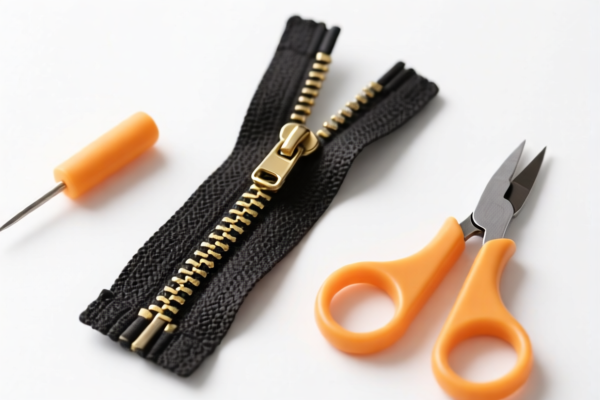
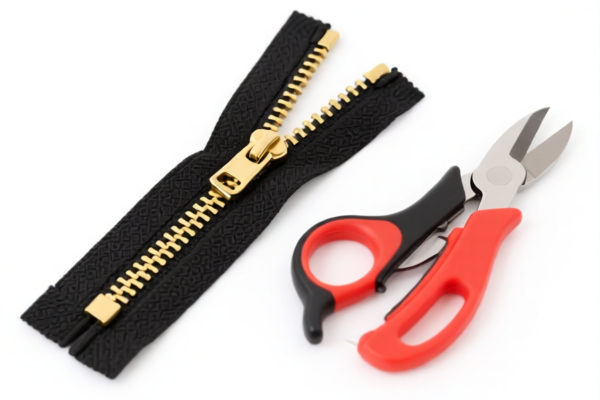
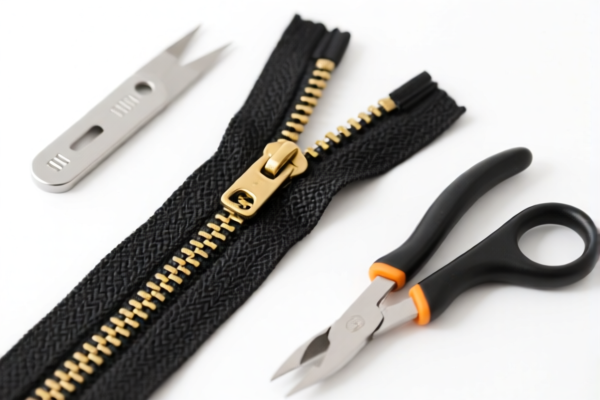
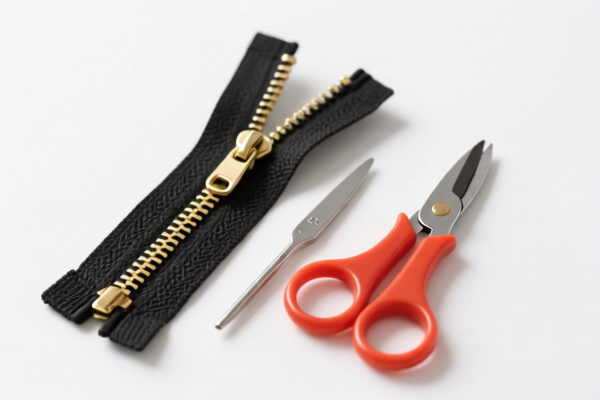
AI Analysis
🛠️ Watch Repair Kit (Alloy Tools for Timepiece Maintenance)
🌐 HS Code Reference & Customs Clearance Guide | 2026 Latest Tariff Analysis | Professional Clearance Strategy
📌 I. Product Definition & Classification: Do You Really Understand "Watch Repair Kits"?
A Watch Repair Kit (specifically those made of alloy) typically consists of precision tools such as tweezers, screwdrivers, cases, and openers used for maintaining mechanical watches. In international trade, classification depends heavily on the material composition and the specific function of the tools (general hand tools vs. specialized watch parts).
Key Classification Dilemma: * As Hand Tools: If the kit is primarily a set of pliers, tweezers, or screwdrivers, it falls under Chapter 82 (Articles of Iron or Steel/Alloys). * As Watch Parts: If the items are considered "parts" or "accessories" specifically identifiable for watches (even if used for repair), they may fall under Chapter 91 (Watches and Clocks).
⚠️ Critical Distinction:
- If the tools are general-purpose (e.g., standard tweezers, generic pliers) → Classify under Chapter 82.
- If the tools are specialized "watchmakers' instruments" or explicitly sold as "watch parts/accessories" → Classify under Chapter 91.
- Material Matters: The data specifies "Alloy" (合金). This affects the base tariff rate significantly compared to standard steel or iron.
📦 II. HS Code Classification Details (2026 Latest Tariff Authority Comparison)
| HS Code | Product Description | Application Scenario | Material | Base Tariff | Total Tariff (US/China) |
|---|---|---|---|---|---|
8205.51.30.30 |
Alloy Watch Repair Tools (Hand Tools, Other) | General precision hand tools for repair | Alloy | 3.7% | 38.7% |
8205.59.55.60 |
Alloy Watch Repair Tools (Other Hand Tools) | Non-specific alloy hand tools | Alloy | 5.3% | 40.3% |
9114.90.50.00 |
Other Watch Parts (Metal) | Metal components/parts for timepieces | Metal | 4.2% | 21.7% |
8203.20.60.30 |
Pliers, Tweezers & Similar Tools (Alloy) | Specific pliers/tweezers for repair | Alloy | 12¢/doz + 5.5% | 12¢/doz + 40.5% |
9114.90.40.00 |
Other Watch Parts (Alloy) | Watch parts/auxiliary accessories | Alloy | 8.8% | 26.3% |
🔍 Key Insight:
- Chapter 82 (Hand Tools) generally incurs higher tariffs due to additional Section 301/122 duties.
- Chapter 91 (Watch Parts) generally incurs lower total tariffs because the base rates are different, and the additional duty rates (Section 301/122) are often lower (7.5% vs 25%+10%).
- HS Code 9114.90.50.00 offers the lowest total tax rate (21.7%) if the goods can be legally classified as "parts" rather than "tools."
💰 III. 2026 Latest Tariff Rate Breakdown (Including Additional Duties & Policy Add-ons)
✅ Applicable Country: United States (US)
✅ Country of Origin: China (CN)
✅ Effective Time: November 10, 2025 (including subsequent imports)
🎯 1. 8205.51.30.30 —— Alloy Watch Repair Tools (Hand Tools)
| Item | Content |
|---|---|
| Base Tariff | 3.7% |
| Additional Duty (Section 301) | +25.0% |
| IEEPA Additional Duty (Section 122) | +10.0% |
| Total Effective Rate | 38.7% |
| Tax Calculation | CIF Value × 38.7% |
| De Minimis Eligibility | ❌ Not Eligible (High tariff rates exclude this from $800 de minimis exemption in many practical scenarios, or subject to strict scrutiny) |
| Legal Path | Base: 3.7% → Sec 301: 25% → Sec 122: 10% |
📌 Explanation:
- This code classifies the kit as "Other hand tools."
- The 25% Section 301 duty applies because it is a hand tool from China.
- The 10% Section 122 duty (122 Clause) is an additional surcharge on certain Chinese goods.
- Total: 38.7%. High cost, but accurate if the item is clearly a "hand tool."
🎯 2. 8205.59.55.60 —— Alloy Watch Repair Tools (Other Hand Tools)
| Item | Content |
|---|---|
| Base Tariff | 5.3% |
| Additional Duty (Section 301) | +25.0% |
| IEEPA Additional Duty (Section 122) | +10.0% |
| Total Effective Rate | 40.3% |
| Tax Calculation | CIF Value × 40.3% |
| De Minimis Eligibility | ❌ Not Eligible |
| Legal Path | Base: 5.3% → Sec 301: 25% → Sec 122: 10% |
📌 Note:
- Similar to8205.51.30.30, but categorized under "Other" hand tools.
- Slightly higher base rate (5.3% vs 3.7%) leads to a higher total tariff (40.3%).
- Use this only if8205.51.30.30does not fit the specific product structure.
🎯 3. 9114.90.50.00 —— Other Watch Parts (Metal)
| Item | Content |
|---|---|
| Base Tariff | 4.2% |
| Additional Duty (Section 301) | +7.5% |
| IEEPA Additional Duty (Section 122) | +10.0% |
| Total Effective Rate | 21.7% |
| Tax Calculation | CIF Value × 21.7% |
| De Minimis Eligibility | ⚠️ Check Status (Lower rate may allow for more flexibility, but Section 122 still applies) |
| Legal Path | Base: 4.2% → Sec 301: 7.5% → Sec 122: 10% |
📌 Advantage:
- This is the MOST COST-EFFECTIVE classification if justifiable.
- The Section 301 rate is only 7.5% (not 25%) for watch parts!
- Condition: You must argue that the kit contains "parts" or "accessories" for watches, not just general "hand tools." The description "Metal" is broader than "Alloy," but fits if the alloy is a type of metal.
🎯 4. 8203.20.60.30 —— Pliers, Tweezers & Similar Tools (Alloy)
| Item | Content |
|---|---|
| Base Tariff | 12¢/doz + 5.5% |
| Additional Duty (Section 301) | +25.0% |
| IEEPA Additional Duty (Section 122) | +10.0% |
| Total Effective Rate | 12¢/doz + 5.5% + 35.0% |
| Tax Calculation | Specific (per dozen) + Ad Valorem (40.5%) |
| De Minimis Eligibility | ❌ Not Eligible |
| Legal Path | Base: 12¢/doz + 5.5% → Sec 301: 25% → Sec 122: 10% |
📌 Warning:
- This code is for specific tools like pliers and tweezers.
- If your kit is mostly screwdrivers, this code is incorrect.
- The Specific Duty (12¢/doz) adds complexity. If the quantity is low, the ad valorem rate dominates. If quantity is high, the per-unit cost adds up.
- Total Effective Rate is high (~40.5% + specific duty).
🎯 5. 9114.90.40.00 —— Other Watch Parts (Alloy)
| Item | Content |
|---|---|
| Base Tariff | 8.8% |
| Additional Duty (Section 301) | +7.5% |
| IEEPA Additional Duty (Section 122) | +10.0% |
| Total Effective Rate | 26.3% |
| Tax Calculation | CIF Value × 26.3% |
| De Minimis Eligibility | ⚠️ Check Status |
| Legal Path | Base: 8.8% → Sec 301: 7.5% → Sec 122: 10% |
📌 Comparison:
- Similar to9114.90.50.00but with a higher base rate (8.8% vs 4.2%).
- Use this if the product is specifically "Alloy" and "Other Watch Parts" but doesn't fit the broader "Metal" category of9114.90.50.00.
- Still significantly cheaper than Chapter 82 codes.
🛠️ IV. Customs Clearance Practical Advice (Real-World Pitfall Guide)
✅ 1. Documentation Checklist (Mandatory)
| Document | Required | Description |
|---|---|---|
| ✅ Product Specification | ✔️ | List all items in the kit (e.g., 5x tweezers, 10x screwdrivers, 1x case). |
| ✅ Material Declaration | ✔️ | Explicitly state "Alloy" or "Metal" for each item. |
| ✅ Product Photos | ✔️ | Clear images of the tools, including close-ups of the "Watch Repair" branding if any. |
| ✅ Commercial Invoice | ✔️ | Describe as "Watch Repair Tool Set" or "Watch Parts Kit." Avoid vague terms like "Hardware." |
| ✅ Packing List | ✔️ | Detail the contents to prove the nature of the goods. |
✅ 2. Classification Strategy (Key Mnemonics)
🔥 "Tools = High Tax; Parts = Low Tax. Choose Wisely!"
| Scenario | Recommended HS Code | Tariff Rate | Risk Level |
|---|---|---|---|
| General Tool Set (Screwdrivers, Pliers) | 8205.51.30.30 |
38.7% | Low (Accurate) |
| Specific Pliers/Tweezers | 8203.20.60.30 |
~40.5% + Specific | Low (Accurate) |
| Specialized Watch Parts (e.g., Balance Wheel Tools, specialized Jaws) | 9114.90.50.00 |
21.7% | Medium (Requires Justification) |
| Alloy Watch Accessories | 9114.90.40.00 |
26.3% | Medium (Requires Justification) |
📌 Strategic Tip:
- If your kit contains highly specialized tools (e.g., case-back openers with specific tips, jewelers' loupes, specialized screwdrivers for watch heads), argue for Chapter 91 classification (9114.90.x0.xx).
- If the kit contains generic tweezers, pliers, and screwdrivers, you must classify under Chapter 82 (8203or8205). Misclassifying general tools as "watch parts" can lead to penalties and back-taxes.
✅ 3. Special Considerations
| Situation | Handling Advice |
|---|---|
| Kit with Mixed Items | If the kit contains both general tools and specialized parts, classify based on the essential character of the kit. If tools dominate, use Chapter 82. |
| De Minimis ($800) | Due to high tariffs (21.7%-40.5%) and Section 122/301 duties, de minimis exemptions are often denied or scrutinized for these items. Do not rely on it for tax savings. |
| Section 122 (10%) | This 10% duty applies to all these codes. It is a significant cost driver. Ensure your pricing strategy accounts for this. |
| Origin Marking | Clearly mark "Made in China" on the product and packaging. Failure to do so can result in seizure. |
🌍 V. Global Market Comparison (2026 Latest)
| Country/Region | Recommended HS Code | Tariff | Certification | Remarks |
|---|---|---|---|---|
| 🇺🇸 USA | 9114.90.50.00 (If Parts) |
21.7% | N/A | Best Rate if classified as parts. |
| 🇺🇸 USA | 8205.51.30.30 (If Tools) |
38.7% | N/A | Default for general tool kits. |
| 🇨🇳 China | 8205.51.30.30 |
Low | N/A | Import tariffs may be lower, but check for domestic VAT. |
| 🇪🇺 EU | 8205.51.30 |
Varies | CE/RoHS | EU tariffs are generally lower than US Section 301 duties. |
| 🇯🇵 Japan | 8205.51.30 |
Varies | PSE/JIS | Check for specific watch tool standards. |
📌 Conclusion:
- The US market is the most challenging due to the combination of Section 301 (25% or 7.5%) and Section 122 (10%) duties.
- Chapter 91 offers a significant savings opportunity (21.7% vs 38.7%) if the product can be legally justified as "Watch Parts" rather than "Hand Tools."
📌 VI. Common Errors & Pitfall Guide (Lessons Learned)
❌ Error 1: Classifying a general screwdriver set as "Watch Parts"
👉 Consequence: Customs may reclassify to Chapter 82, apply 38.7%, and issue a demand for back-taxes.
❌ Error 2: Ignoring the 12% Section 122 Duty
👉 Consequence: Underestimating landed cost by 10%, leading to profit margin erosion.
❌ Error 3: Using "Alloy" vs "Metal" Incorrectly
👉 Consequence: Misleading customs officers. Ensure material declaration matches the HS Code description.
❌ Error 4: Assuming De Minimis Applies
👉 Consequence: Shipment held at border, storage fees accrue, and duties are still collected.
✅ Correct Approach:
"Alloy Watch Repair Tool Set, Including Tweezers, Screwdrivers, and Case Opener, For Professional Horology Use, Origin: China."
🎯 VII. Conclusion: Professional Classification Saves Money!
🎯 Remember the Golden Rule:
🔹 "Tools = High Tax (38-40%), Parts = Lower Tax (21-26%)."
🔹 "Justify 'Parts' Carefully: Specificity is Key!"
🔹 "Section 122 is Always 10%: Factor it into Your Pricing!"
📌 Pro Tip:
- If your watch repair kit contains specialized, non-generic tools (e.g., specialized balance wheel holders, escapement tweezers), emphasize their specificity in the commercial invoice and product description to support Chapter 91 classification.
- For generic kits (standard tweezers, screwdrivers), accept the Chapter 82 rate (8205.51.30.30) to avoid audit risks.
📣 Immediate Action:
📞 Consult a Customs Broker with your specific product photos and item list.
📝 Request a Pre-Ruling if the shipment value is significant.
🚀 Accurate Classification = Lower Taxes + Smooth Customs Clearance!
✨ Professional Clearance Starts with Precise Classification!
💼 Every cent saved is a cent earned!
Customer Reviews
About HS Code Classification
The Harmonized System (HS) is an internationally standardized nomenclature developed by the World Customs Organization (WCO) to classify traded products. Over 200 countries use the HS system as the basis for customs tariffs, trade statistics, and import/export regulations.
Each HS code follows a hierarchical structure:
- Chapter (2 digits) — Broad category of goods (e.g., Chapter 84: Machinery and Mechanical Appliances)
- Heading (4 digits) — More specific grouping within the chapter
- Subheading (6 digits) — Internationally standardized breakdown, used by all WCO member countries
- National subdivisions (8-10 digits) — Country-specific extensions for further classification, such as US HTSUS 10-digit codes
Correct HS code classification is essential for smooth customs clearance, accurate duty payment, and compliance with trade regulations. Misclassification can lead to customs delays, overpayment of duties, or penalties.
When importing from CN to US, the applicable tariff rates may include:
- Most-Favored-Nation (MFN) rate — The standard duty rate applied to WTO members
- General rate — Applied to countries without trade agreements
- Trade remedy duties — Additional tariffs such as Section 301 (anti-dumping), Section 232 (national security), or countervailing duties
The information provided on this page is for reference purposes only. For official classification, please consult with your local customs authority or a licensed customs broker.