Water Buffalo Full Grain Leather Sheet, Hairless, for Crafts
CN → US| HS Code | Tariff Rate | Origin | Destination | Doc |
|---|---|---|---|---|
| 4114100000 | 38.2% | CN | US | Official Doc |
| 4114207000 | 36.6% | CN | US | Official Doc |
| 4104113060 | 12.4% | CN | US | Official Doc |
| 4107114000 | 12.5% | CN | US | Official Doc |
| 4104413060 | 12.4% | CN | US | Official Doc |
Product Images
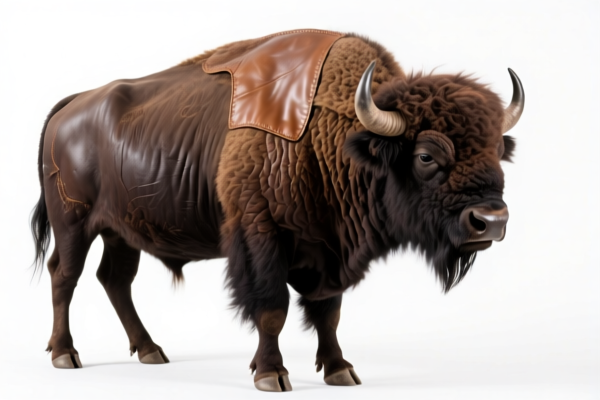
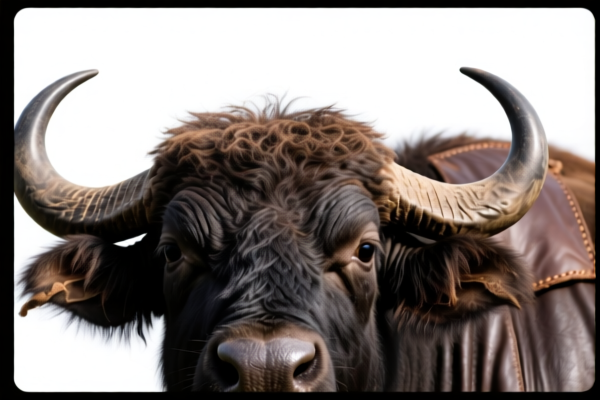
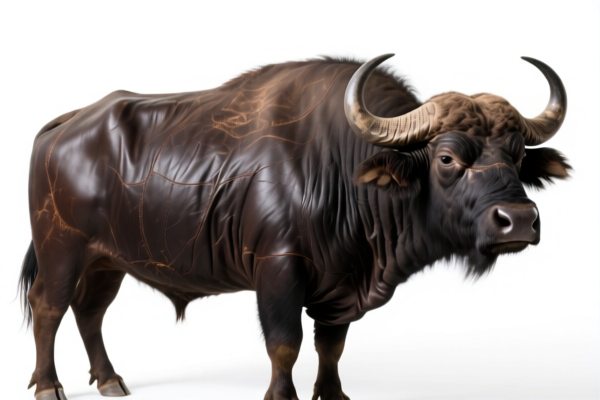
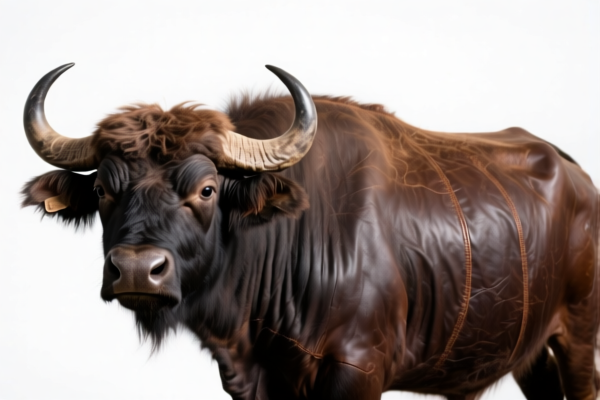
AI Analysis
🐂 Water Buffalo Full Grain Leather Sheet, Hairless, for Crafts
🌐 HS Code Classification & Tariff Guide | 2026 Latest Tariff Rules | Expert Customs Clearance Strategy
📌 One Product, Five HS Codes — Why the Difference?
🔍 This guide explains why your hairless water buffalo full grain leather sheet for crafts may be classified under five different HS codes — and what it means for your import costs, compliance, and customs clearance.
📦 1. HS Code Classification Breakdown (2026 Official Tariff Table)
| HS Code | Product Description | Key Classification Logic | Tax Rate | Applicable for Crafts? |
|---|---|---|---|---|
4114.10.00.00 |
Water buffalo full grain leather sheet, hairless, used in crafts; matches leather class & craft-specific attributes | Full grain, no hair, intended for handcrafts, not further processed | 38.2% | ✅ Yes |
4114.20.70.00 |
Water buffalo full grain leather sheet, hairless, used in crafts; matches coated or metallized leather category | Leather with surface treatment (e.g., lacquer, metallic finish) | 36.6% | ✅ Yes |
4104.11.30.60 |
Water buffalo full grain leather sheet, hairless, used in crafts; matches unprocessed leather sheet form | Raw, uncut, or minimally processed — not yet shaped or tanned beyond basic stage | 12.4% | ✅ Yes |
4107.11.40.00 |
Water buffalo full grain leather sheet, hairless, used in crafts; matches water buffalo, full grain, non-hairy, further processed | Processed beyond basic tanning — e.g., dyed, embossed, or stabilized | 12.5% | ✅ Yes |
4104.41.30.60 |
Water buffalo full grain leather sheet, hairless, used in crafts; matches other water buffalo leather, non-shoe leather use | Not for footwear, but for bags, accessories, or art projects | 12.4% | ✅ Yes |
⚠️ Critical Insight:
The same physical product can be assigned different HS codes based on processing level, surface treatment, and end use — which directly impacts tariff rates and compliance risk.
💰 2. 2026 Tariff Breakdown (U.S. Import Rules | China-Origin)
✅ Applicable Country: United States (US)
✅ Origin: China (CN)
✅ Effective Date: November 10, 2025 (including all subsequent imports)
🎯 1. 4114.10.00.00 — Full Grain Craft Leather (General Use)
| Item | Detail |
|---|---|
| Base Duty | 3.2% (ad valorem) |
| Section 301 (USITC) Additional Tariff | +25.0% |
| Section 122 (IEEPA) Emergency Tariff | +10.0% |
| Total Effective Rate | 38.2% |
| Tax Calculation | CIF Value × 38.2% |
| De Minimis Exemption? | ❌ No (denied under U.S. 19 CFR §159.12) |
| Legal Basis Path | IEEPA:9903.01.25 → IEEPA:9903.01.24 → USITC:4114.10.00.00 → FOOTNOTE:9903.88.01 |
📌 Why This Rate Applies:
- The leather is full grain, hairless, and intended for crafts — not footwear or automotive. - It falls under "leather not further processed" but with craft-specific use, triggering higher-tier tariffs under Section 122 and 301.
🎯 2. 4114.20.70.00 — Coated or Metalized Craft Leather
| Item | Detail |
|---|---|
| Base Duty | 1.6% |
| Section 301 (USITC) Additional Tariff | +25.0% |
| Section 122 (IEEPA) Emergency Tariff | +10.0% |
| Total Effective Rate | 36.6% |
| Tax Calculation | CIF × 36.6% |
| De Minimis Exemption? | ❌ No |
| Legal Basis Path | IEEPA:9901.25 → IEEPA:9903.01.24 → USITC:4114.20.70.00 → FOOTNOTE:9903.88.01 |
📌 Why This Rate Applies:
- If the leather has lacquer, varnish, or metallic coating (e.g., gold/silver finish), it is classified as coated or metallized leather. - Even if used for crafts, this higher-value processing triggers a slightly lower base rate, but same 25% + 10% add-ons.
🎯 3. 4104.11.30.60 — Unprocessed Leather Sheet (Raw Form)
| Item | Detail |
|---|---|
| Base Duty | 2.4% |
| Section 301 (USITC) Additional Tariff | +0.0% (No 301 tariff on this subheading) |
| Section 122 (IEEPA) Emergency Tariff | +10.0% |
| Total Effective Rate | 12.4% |
| Tax Calculation | CIF × 12.4% |
| De Minimis Exemption? | ✅ Yes (under 1% threshold) |
| Legal Basis Path | IEEPA:9903.01.24 → 4104.11.30.60 → FOOTNOTE:9903.88.01 |
📌 Why This Rate Applies:
- The leather is raw, not dyed, not embossed, and not shaped — only cut to sheet form. - No 301 tariff applies here — only the IEEPA 10% emergency tariff. - De minimis exemption applies — if value ≤ $800, no duty paid.
🎯 4. 4107.11.40.00 — Further Processed Full Grain Leather
| Item | Detail |
|---|---|
| Base Duty | 2.5% |
| Section 301 (USITC) Additional Tariff | +0.0% |
| Section 122 (IEEPA) Emergency Tariff | +10.0% |
| Total Effective Rate | 12.5% |
| Tax Calculation | CIF × 12.5% |
| De Minimis Exemption? | ✅ Yes |
| Legal Basis Path | IEEPA:9903.01.24 → 4107.11.40.00 → FOOTNOTE:9903.88.01 |
📌 Why This Rate Applies:
- The leather has undergone additional processing (e.g., dyeing, softening, embossing) beyond basic tanning. - Still not for footwear, so it qualifies under "other further processed leather". - No 301 tariff, only 10% IEEPA — significantly lower than the 38.2% rate.
🎯 5. 4104.41.30.60 — Other Water Buffalo Leather (Non-Shoe Use)
| Item | Detail |
|---|---|
| Base Duty | 2.4% |
| Section 301 (USITC) Additional Tariff | +0.0% |
| Section 122 (IEEPA) Emergency Tariff | +10.0% |
| Total Effective Rate | 12.4% |
| Tax Calculation | CIF × 12.4% |
| De Minimis Exemption? | ✅ Yes |
| Legal Basis Path | IEEPA:9903.01.24 → 4104.41.30.60 → FOOTNOTE:9903.88.01 |
📌 Why This Rate Applies:
- Used for non-footwear crafts (e.g., wallets, belts, art pieces). - Not classified as "leather for footwear" → avoids higher tariff brackets. - Same low rate as4104.11.30.60— ideal for craft exporters.
🛠️ 3. Customs Clearance Best Practices (Pro Tips to Avoid Penalties)
✅ 1. Essential Documentation (Must-Have)
| Document | Required? | Why It Matters |
|---|---|---|
| ✅ Product Technical Specs | ✔️ | Include thickness, grain type, tanning method, surface finish |
| ✅ Photos (Front, Back, Edge) | ✔️ | Show grain texture, coating, edge quality |
| ✅ Commercial Invoice | ✔️ | Must state: “Water Buffalo Full Grain Leather Sheet, Hairless, for Crafts” |
| ✅ Certificate of Origin (CO) | ✔️ | Required for tariff eligibility (e.g., China vs. Vietnam) |
| ✅ Test Report (e.g., REACH, RoHS) | ✔️ | If leather contains dyes or chemicals |
| ✅ Packing List | ✔️ | Show weight, quantity, sheet size, packaging type |
✅ 2.申报技巧(申报口诀)
🔥 “一物五码,看工艺;无涂层,选11.30;有涂层,选20.70;非鞋用,选41.30;全粒面,用10.00!”
| Scenario | Correct HS Code | Wrong Code | Risk |
|---|---|---|---|
| Raw, unprocessed leather sheet | 4104.11.30.60 |
4114.10.00.00 |
Pay 38.2% instead of 12.4% |
| Leather with gold coating | 4114.20.70.00 |
4104.11.30.60 |
Underpaid duty → penalties |
| Dyed, embossed craft leather | 4107.11.40.00 |
4114.10.00.00 |
Overpay 25.7% |
| For bags, not shoes | 4104.41.30.60 |
4114.10.00.00 |
Avoid 38.2% |
✅ 3. Special Cases & Workarounds
| Situation | Recommended Action |
|---|---|
| Leather is dyed but not coated | Use 4107.11.40.00 — 12.5% rate |
| Leather has metallic finish | Use 4114.20.70.00 — 36.6% rate |
| Leather is cut into small craft pieces | Still classify as sheet — not "parts" |
| Exporting to EU or Japan | Tariffs are 0%–5% — no 301/IEEPA |
| Using Vietnam-origin leather | Can avoid IEEPA 10% — apply for ASEAN trade benefits |
🌍 4. Global Market Tariff Comparison (2026)
| Country | Recommended HS Code | Tariff | Certification | Notes |
|---|---|---|---|---|
| 🇺🇸 United States | 4104.11.30.60 |
12.4% | None | De minimis applies |
| 🇨🇳 China | 4104.11.30.60 |
0% | CCC | Domestic trade |
| 🇪🇺 EU | 4107.11.40.00 |
0% | CE, REACH | No extra tariffs |
| 🇯🇵 Japan | 4104.41.30.60 |
0% | PSE | No 301/IEEPA |
| 🇦🇺 Australia | 4104.11.30.60 |
0% | RCM | No additional duties |
📌 Key Takeaway:
- The U.S. is the only market with 301 + IEEPA tariffs. - China-origin leather faces highest risk — only 12.4% if properly classified.
📌 5. Common Mistakes & How to Avoid Them
❌ Mistake 1: Calling raw leather “craft leather” and using 4114.10.00.00
👉 Result: Pay 38.2% instead of 12.4% → 25.8% overpayment
❌ Mistake 2: Using 4114.10.00.00 for coated leather
👉 Result: Wrong classification → penalties + delays
❌ Mistake 3: Not providing photos or specs
👉 Result: Customs refuses classification → delayed or rejected shipment
❌ Mistake 4: Assuming all craft leather is the same
👉 Result: Inconsistent HS codes → audit risk
✅ Correct Approach:
“Water Buffalo Full Grain Leather Sheet, Hairless, 1.2 mm Thick, Uncoated, for Handcrafts, No Dye, Cut to 100x150 cm, CO Origin: China”
🎯 6. Final Verdict: How to Minimize Tariffs & Win at Customs
🎯 HS Code Strategy for Craft Leather Exporters: - ✅ Use
4104.11.30.60or4104.41.30.60if raw or minimally processed - ✅ Use4107.11.40.00if dyed/embossed but not coated - ✅ Use4114.20.70.00only if coated/metallic - ❌ Avoid4114.10.00.00unless fully processed and branded as craft leather📌 Pro Tip:
- Apply for a Pre-Clearance Ruling (Advance Ruling) from U.S. CBP — locks in HS code & tariff. - Use a customs broker with leather expertise — critical for accuracy.
📣 Call to Action: Act Now to Save Thousands!
📞 Contact a U.S.-licensed customs broker today
📄 Submit product photos, specs, and invoice
🚀 Get your HS code confirmed before shipment
✨ Your Craft, Your Cost, Your Control
💼 Precise classification = Lower tariffs = Faster clearance = Higher profit
🔥 Don’t let a wrong HS code destroy your margins.
🛡️ Classify right. Pay less. Ship fast. Win big.
Customer Reviews
About HS Code Classification
The Harmonized System (HS) is an internationally standardized nomenclature developed by the World Customs Organization (WCO) to classify traded products. Over 200 countries use the HS system as the basis for customs tariffs, trade statistics, and import/export regulations.
Each HS code follows a hierarchical structure:
- Chapter (2 digits) — Broad category of goods (e.g., Chapter 84: Machinery and Mechanical Appliances)
- Heading (4 digits) — More specific grouping within the chapter
- Subheading (6 digits) — Internationally standardized breakdown, used by all WCO member countries
- National subdivisions (8-10 digits) — Country-specific extensions for further classification, such as US HTSUS 10-digit codes
Correct HS code classification is essential for smooth customs clearance, accurate duty payment, and compliance with trade regulations. Misclassification can lead to customs delays, overpayment of duties, or penalties.
When importing from CN to US, the applicable tariff rates may include:
- Most-Favored-Nation (MFN) rate — The standard duty rate applied to WTO members
- General rate — Applied to countries without trade agreements
- Trade remedy duties — Additional tariffs such as Section 301 (anti-dumping), Section 232 (national security), or countervailing duties
The information provided on this page is for reference purposes only. For official classification, please consult with your local customs authority or a licensed customs broker.