Water Buffalo Grain Split Leather
CN → US| HS Code | Tariff Rate | Origin | Destination | Doc |
|---|---|---|---|---|
| 4107124000 | 12.5% | CN | US | Official Doc |
| 4107924000 | 12.5% | CN | US | Official Doc |
Product Images
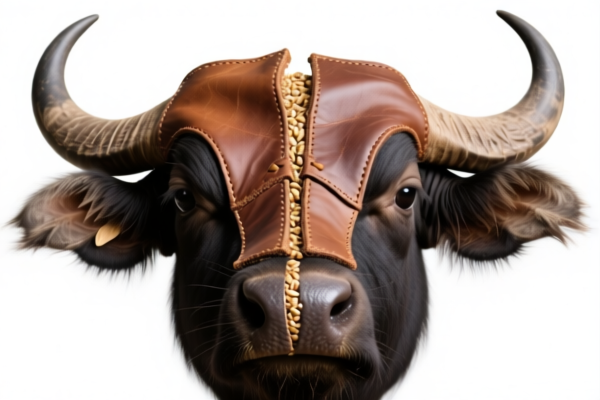
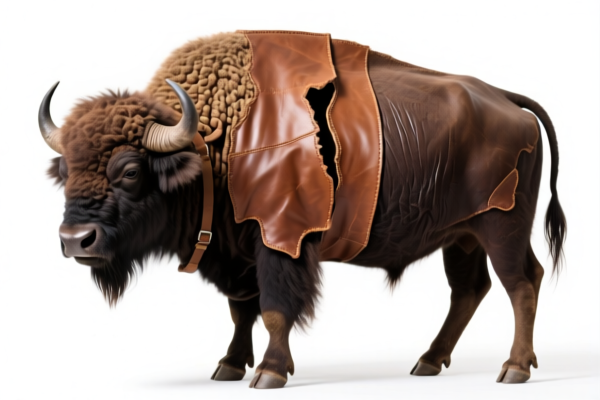

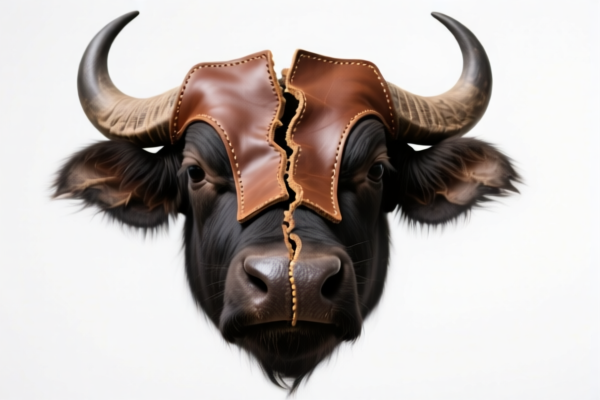
AI Analysis
🐃 Water Buffalo Grain Split Leather (无毛牛科/马科动物鞣制革:水牛 Grain Split)
🌐 HS Code Reference & Customs Clearance Guide | 2026 Latest Tariff Analysis | Professional Compliance Strategy
📌 I. Product Definition & Classification: Do You Know "Water Buffalo Grain Split"?
Water Buffalo Grain Split Leather refers to leather derived from bovine animals (specifically buffalo) that has undergone tanning or crusting, where the "grain" layer (the top, densest layer) has been separated from the "split" layer (the fibrous lower layer).
In international trade, this specific product is categorized based on its physical state: * "Without Hair On": The hair has been removed. * "Grain Splits": The leather is the split layer of the grain hide (not the grain side itself, but the layer beneath it). * "Buffalo": The source animal is specifically water buffalo.
⚠️ Key Distinction:
- If the leather is Buffalo Grain Split (split layer of buffalo hide), it falls under 4107.12.40.00 or 4107.92.40.00.
- If it is Buffalo Grain Side (the top layer with natural grain pattern), it would typically fall under different sub-headings (e.g., 4107.11...). This guide strictly addresses "Grain Splits" as per your input.
- "Whole Hides/Skins" vs. "Sides/Parts": The classification differs slightly based on whether the hide is whole or cut into sides/parts.
📦 II. HS Code Classification Details (2026 Latest Tariff Authority Comparison)
Based on the provided <DATA>, there are two specific HS Codes for Water Buffalo Grain Split Leather, distinguished by whether the hide is a "Whole Hide/Skin" or "Other, including Sides".
| HS Code | Product Description | Application Scenario | State of Leather |
|---|---|---|---|
4107.12.40.00 |
Whole hides and skins: Grain splits: Other: Buffalo | Large-scale industrial use, full hides processed for upholstery or heavy-duty goods | ✅ Whole Hide/Skin (Unsplit or split from whole) |
4107.92.40.00 |
Other, including sides: Grain splits: Buffalo | Leather already cut into sides or parts before final preparation, common in apparel/accessories | ✅ Sides/Parts (Not whole hide) |
🔍 Critical Clarification:
- Heading 4107 covers "Leather further prepared after tanning or crusting, including parchment-dressed leather, of bovine (including buffalo) or equine animals, without hair on".
- Sub-heading 4107.12 specifically targets Buffalo grain splits from whole hides/skins.
- Sub-heading 4107.92 targets Buffalo grain splits from other forms (e.g., sides).
- Note: Both codes explicitly exclude leather of heading 4114 (lambskin/parchment-dressed specifically).
💰 III. 2026 Latest Tariff Rate Details (Comprehensive Breakdown)
✅ Applicable Country: USA (US)
✅ Origin: China (CN)
✅ Effective Date: Current tariff schedule applies (No additional USITC/IEEPA surcharges listed in source data)
🎯 1. 4107.12.40.00 —— Water Buffalo Grain Split (Whole Hides/Skins)
| Item | Content |
|---|---|
| Base Tariff Rate | 0.0% (ad valorem) |
| Additional Tariff (Section 301/IEEPA) | 0.0% (Not listed in source data) |
| Total Effective Tariff | 0.0% |
| Tax Calculation | CIF Value × 0% = $0 |
| De Minimis Eligibility | ✅ Yes (Generally, leather goods under $800 may qualify for de minimis entry if other restrictions don't apply, but always verify current CBP rules) |
| Legal Basis Path | HTSUS:4107.12.40.00 → U.S. Note 2 to Chapter 41 |
📌 Explanation:
- Base Rate 0%: Water buffalo grain split leather from whole hides is duty-free under the current US Harmonized Tariff Schedule.
- No Additional Surcharges: Unlike many electronics or steel products, this specific leather category does not carry the 25% Section 301 or 10% IEEPA surcharges in the provided data. This makes it a highly cost-effective commodity.
- Verification: Always confirm if the leather is "parchment-dressed" or "of heading 4114," as those are excluded. If it is simply "grain split" from tanning/crusting, it remains at 0%.
🎯 2. 4107.92.40.00 —— Water Buffalo Grain Split (Sides/Other)
| Item | Content |
|---|---|
| Base Tariff Rate | 0.0% (ad valorem) |
| Additional Tariff (Section 301/IEEPA) | 0.0% (Not listed in source data) |
| Total Effective Tariff | 0.0% |
| Tax Calculation | CIF Value × 0% = $0 |
| De Minimis Eligibility | ✅ Yes (Same as above) |
| Legal Basis Path | HTSUS:4107.92.40.00 → U.S. Note 2 to Chapter 41 |
📌 Note:
- This code applies to sides of buffalo hides that have been grain-split.
- The tariff treatment is identical to whole hides (0% total).
- Key Difference: The physical form at the time of entry. If you import "sides" (cut hides), use4107.92.40.00. If you import whole hides, use4107.12.40.00.
🛠️ IV. Customs Clearance Practical Advice (Field Risk Avoidance Guide)
✅ 1. Document Checklist (Non-Negotiable)
| Document | Required | Explanation |
|---|---|---|
| ✅ Commercial Invoice | ✔️ | Must clearly state: "Water Buffalo Grain Split Leather," specify "Whole Hide" or "Side," and confirm "Without Hair On." |
| ✅ Packing List | ✔️ | Detail the number of hides/sides, weight, and dimensions. |
| ✅ Product Specification Sheet | ✔️ | Include: Tanning method (e.g., chrome, vegetable), crust preparation status, and whether it is split from grain. |
| ✅ Bill of Lading/Air Waybill | ✔️ | Standard shipping document. |
| ✅ Certificate of Origin (CO) | ✔️ | If claiming preferential treatment under any FTA (though rate is already 0%, CO may be needed for anti-dumping checks). |
✅ 2. Declaration Tips (Key Mantra)
🔥 “Be Specific: Buffalo, Grain Split, Whole or Side! Vague Terms Lead to Audits!”
| Scenario | Correct Declaration | Common Mistake |
|---|---|---|
| Importing Whole Hides | 4107.12.40.00 - "Water Buffalo Grain Split Leather, Whole Hide" |
Mislabeling as "Sides" → Audit risk |
| Importing Sides | 4107.92.40.00 - "Water Buffalo Grain Split Leather, Sides" |
Mislabeling as "Whole Hide" → Minor inconsistency |
| Describing Appearance | "No hair, split layer, grain side facing down" | Saying "Grain Side Leather" → Incorrect classification (would be 4107.11...) |
| Animal Source | "Bovine (Buffalo)" | Saying "Cow Leather" → Incorrect if it's buffalo; may affect traceability requirements |
✅ 3. Special Handling Cases
| Situation | Recommendation |
|---|---|
| Mixed Lots (Buffalo & Cow) | Must separate shipments or declare separately. Buffalo has specific sub-headings (.40), while cow uses different codes (.10, .90). Mixing can cause classification errors. |
| Leather with Hair On | NOT covered by 4107. This is Heading 4104. Do not use 4107 codes for hairy hides. |
| Parchment-Dressed Leather | If treated to be like parchment, it may fall under Heading 4114. This would exclude it from 4107. Check if any special surface treatment was applied. |
| Split from Chrome-Tanned vs. Vegetable-Tanned | Both are covered under 4107 if "further prepared after tanning or crusting." Ensure the description matches the stage of preparation. |
🌍 V. Global Market Comparison (2026 Latest)
| Country/Region | Recommended HS Code | Tariff Rate | Certification Requirements | Notes |
|---|---|---|---|---|
| 🇺🇸 USA | 4107.12.40.00 / 4107.92.40.00 |
0% | None Specific | No Section 301 surcharges for this leather type. |
| 🇨🇳 China | 4107.12.40 / 4107.92.40 |
~5-10% | GB Standards | Import duty varies; check latest Chinese tariff schedule. |
| 🇪🇺 EU | 4107.21 / 4107.29 |
~6% | REACH Compliance | EU uses different 8-digit codes; base rate ~6%. |
| 🇬🇧 UK | 4107.21.00 / 4107.29.00 |
~6% | UK REACH | Post-Brexit tariffs apply. |
| 🇦🇺 Australia | 4107.21 / 4107.29 |
5% | None | Standard MFN rate. |
📌 Conclusion:
- USA is the most favorable market for Water Buffalo Grain Split Leather, with 0% total duty.
- EU and UK apply standard MFN rates (~6%), making the US significantly more competitive for US-bound exports.
📌 VI. Common Errors & Pitfalls (Blood & Tears Lessons)
❌ Error 1: Calling it "Buffalo Hide" without specifying "Grain Split"
👉 Consequence: Customs may classify it as "Buffalo Grain Side" (higher duty or different code) → Audit Delay.
❌ Error 2: Misclassifying "Whole Hide" as "Sides" (or vice versa)
👉 Consequence: While the tax rate is the same (0%), it shows poor documentation practices. Consistent misclassification can trigger an audited compliance review.
❌ Error 3: Including "Hair On" in the description but using 4107 Code
👉 Consequence: Severe Misclassification. 4107 is strictly "Without Hair On." This leads to fines, penalties, and cargo hold.
❌ Error 4: Assuming all Leather Goods are 0% Duty
👉 Consequence: Only specific leather categories are duty-free. Check the exact sub-heading. For example, buffalo suede might have different rules.
✅ Correct Practice:
“Water Buffalo Grain Split Leather, Chrome-Tanned, Without Hair On, Whole Hides, Crust Finished, HS Code: 4107.12.40.00”
🎯 VII. Conclusion: Precision Classification for Maximum Savings!
🎯 Remember the Mantra:
🔹 “Buffalo, Split, No Hair, 0% Tax!”
🔹 “Whole vs. Side: Declare Clearly, Avoid Audits!”
🔹 “No Hair = 4107; Hair On = 4104; Parchment = 4114!”
📌 Pro Tip:
Even though the tariff is 0%, ensure your Country of Origin is correctly declared. If the buffalo hides are processed in a third country (e.g., Vietnam) from raw hides sourced elsewhere, origin rules may apply. For direct China-to-US exports, the 0% rate applies.
📣 Immediate Action:
📞 Verify Physical State: Confirm if your product is "Whole Hide" or "Side" before finalizing the commercial invoice.
🚀 Export with Confidence: With a 0% tariff, Water Buffalo Grain Split Leather is a high-margin product for US importers.
✨ Professional Clearance Starts with Accurate HS Codes!
💼 Your Bottom Line Depends on Precision!
Customer Reviews
About HS Code Classification
The Harmonized System (HS) is an internationally standardized nomenclature developed by the World Customs Organization (WCO) to classify traded products. Over 200 countries use the HS system as the basis for customs tariffs, trade statistics, and import/export regulations.
Each HS code follows a hierarchical structure:
- Chapter (2 digits) — Broad category of goods (e.g., Chapter 84: Machinery and Mechanical Appliances)
- Heading (4 digits) — More specific grouping within the chapter
- Subheading (6 digits) — Internationally standardized breakdown, used by all WCO member countries
- National subdivisions (8-10 digits) — Country-specific extensions for further classification, such as US HTSUS 10-digit codes
Correct HS code classification is essential for smooth customs clearance, accurate duty payment, and compliance with trade regulations. Misclassification can lead to customs delays, overpayment of duties, or penalties.
When importing from CN to US, the applicable tariff rates may include:
- Most-Favored-Nation (MFN) rate — The standard duty rate applied to WTO members
- General rate — Applied to countries without trade agreements
- Trade remedy duties — Additional tariffs such as Section 301 (anti-dumping), Section 232 (national security), or countervailing duties
The information provided on this page is for reference purposes only. For official classification, please consult with your local customs authority or a licensed customs broker.