Water Buffalo Grain Split Leather (for Seats)
CN → US| HS Code | Tariff Rate | Origin | Destination | Doc |
|---|---|---|---|---|
| 4107124000 | 12.5% | CN | US | Official Doc |
| 4107924000 | 12.5% | CN | US | Official Doc |
| 4115100000 | 35.0% | CN | US | Official Doc |
| 4106920000 | 38.3% | CN | US | Official Doc |
| 4106910000 | 38.3% | CN | US | Official Doc |
| 4113903000 | 38.3% | CN | US | Official Doc |
Product Images
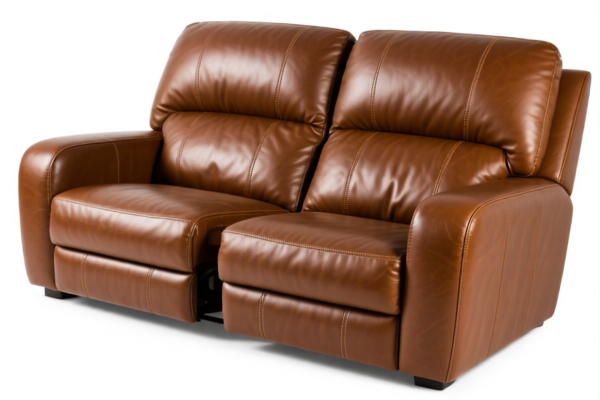
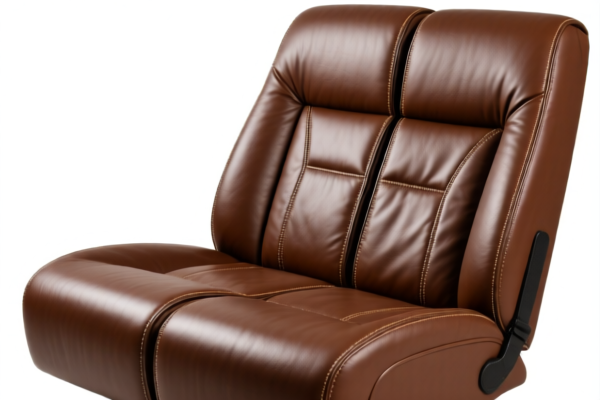
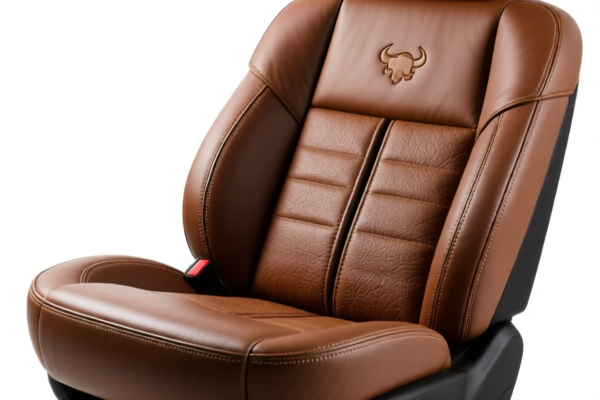
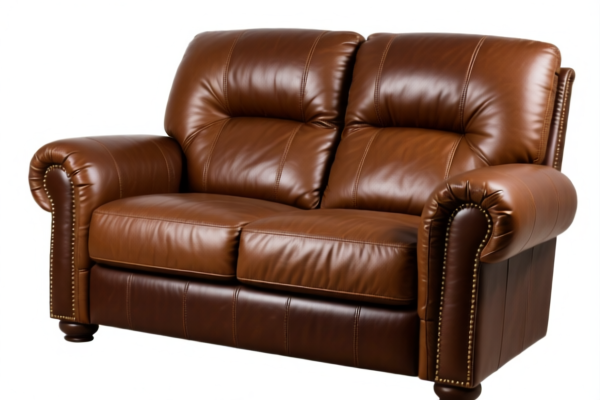
AI Analysis
🐃 Water Buffalo Grain Split Leather (for Seats)
🌐 HS Code Reference & Customs Clearance Guide | 2026 Latest Tariff Analysis | Professional Clearance Strategy
📌 I. Product Definition & Classification: What is "Water Buffalo Grain Split Leather"?
Water Buffalo Leather is a premium natural material widely used in the furniture, automotive, and footwear industries due to its durability, grain texture, and breathability. In international trade, the classification depends heavily on the processing state (raw, tanned, further processed) and the physical form (grain/split/full hide).
Key Distinctions: * Grain Leather (粒面皮): The top layer of the hide with the natural grain intact. * Split Leather (劈层革): The flesh side split from the grain layer. If further processed, it may become "second-layer leather." * For Seats (用于沙发/座椅): Indicates the end-use, but customs classification relies on the material state rather than the final product (unless it’s a finished seat).
⚠️ Critical Classification Point:
- If the leather is Tanned and in the Green State (unworked after tanning) → Chapter 4106/4107
- If the leather is Further Processed (e.g., coated, finished for upholstery) → Chapter 4115 or 4113
- If it is Composite Leather (reconstituted) → 4115.10
📦 II. HS Code Classification Details (2026 Latest Tariff Authority Comparison)
Based on the provided data, here are the applicable HS Codes for Water Buffalo Leather (for Seats):
| HS Code | Product Description | Applicable Scenario | Processing State |
|---|---|---|---|
4107.12.40.00 |
Water Buffalo Grain Split Leather, material & processing form match. | Split leather with intact grain surface; tanned but not further processed. | ✅ Tanned, Unworked |
4107.92.40.00 |
Water Buffalo Full Grain Split Leather, matches material & form definition. | Full grain split leather; high quality, natural grain. | ✅ Tanned, Unworked |
4115.10.00.00 |
Water Buffalo Cracked Grain Leather for sofas; matches composite leather/board characteristics. | Leather with cracked surface texture, possibly reconstituted or coated for upholstery. | ✅ Composite/Board |
4106.92.00.00 |
Water Buffalo Split Leather for sofas; tanned leather, unworked. | Basic split leather, tanned but no further finishing. | ✅ Tanned, Unworked |
4106.91.00.00 |
Water Buffalo Split Leather for sofas; matches other animal tanned leather attributes. | Generic split leather, tanned via vegetable/chrome methods. | ✅ Tanned, Unworked |
4113.90.30.00 |
Water Buffalo Second-Layer Leather for sofas; further processed after tanning. | Finished split leather, coated, or dyed specifically for upholstery. | ✅ Tanned & Further Processed |
🔍 Key Insight:
- Chapters 4106 & 4107 cover leather in the "Green State" (just tanned, ready for further processing). These have lower base tariffs but are subject to Section 301/122 tariffs.
- Chapter 4113 covers leather that has been further processed (e.g., coated, colored, buffed) after tanning. This is the most common classification for upholstery-grade leather ready for manufacturing.
- Chapter 4115 is for Composite Leathers (leather + paper/fabric backing), often used for budget furniture.
💰 III. 2026 Latest Tariff Rate Breakdown (Including Additional Taxes & Policy Surcharges)
✅ Applicable Country: USA (US)
✅ Origin: China (CN)
✅ Effective Date: 2025/2026 (Post-2024 Trade Policy)
🎯 1. 4107.12.40.00 & 4107.92.40.00 —— Water Buffalo Grain/Split Leather (Tanned, Unworked)
| Item | Content |
|---|---|
| Base Tariff | 2.5% (ad valorem) |
| Section 301 Surcharge | 0.0% (Note: Some leather products may be exempt or lower, but 122 applies) |
| Section 122 Tariff | +10% (针对中国产品,IEEPA 232/122 measures) |
| Total Tariff | 12.5% |
| Tax Calculation | CIF Value × 12.5% |
| De Minimis Exemption | ❌ Not Eligible (deny_de_minimis) |
| Legal Basis | Section 301 → Section 122 (IEEPA) → HS 4107 |
📌 Explanation:
- These codes represent semi-processed leather. The base tariff is low (2.5%), but the 10% Section 122 tariff is significant.
- Total: 12.5%. This is a medium-high tariff, but significantly lower than further processed leather.
🎯 2. 4115.10.00.00 —— Water Buffalo Composite/Cracked Leather (For Sofas)
| Item | Content |
|---|---|
| Base Tariff | 0.0% |
| Section 301 Surcharge | +25.0% |
| Section 122 Tariff | +10.0% |
| Total Tariff | 35.0% |
| Tax Calculation | CIF Value × 35.0% |
| De Minimis Exemption | ❌ Not Eligible |
| Legal Basis | Section 301 (Footnote 9903.88.01) → Section 122 → HS 4115 |
📌 Explanation:
- This code often captures composite leather or leather with significant processing. The 25% Section 301 tariff applies, making this very expensive.
- Total: 35%. High risk for cost-sensitive upholstery imports.
🎯 3. 4106.92.00.00 & 4106.91.00.00 —— Water Buffalo Split Leather (Tanned, Unworked)
| Item | Content |
|---|---|
| Base Tariff | 3.3% |
| Section 301 Surcharge | +25.0% |
| Section 122 Tariff | +10.0% |
| Total Tariff | 38.3% |
| Tax Calculation | CIF Value × 38.3% |
| De Minimis Exemption | ❌ Not Eligible |
| Legal Basis | Section 301 → Section 122 → HS 4106 |
📌 Explanation:
- Similar to 4107, but classified under 4106 (Other tanned leather). The 25% Section 301 applies, resulting in a very high total tariff.
- Total: 38.3%. Avoid if possible; reclassify under 4107 if structurally valid.
🎯 4. 4113.90.30.00 —— Water Buffalo Second-Layer Leather (Further Processed)
| Item | Content |
|---|---|
| Base Tariff | 3.3% |
| Section 301 Surcharge | +25.0% |
| Section 122 Tariff | +10.0% |
| Total Tariff | 38.3% |
| Tax Calculation | CIF Value × 38.3% |
| De Minimis Exemption | ❌ Not Eligible |
| Legal Basis | Section 301 → Section 122 → HS 4113 |
📌 Explanation:
- This is the most common code for finished upholstery leather. Despite being "further processed," it still faces the full 25% Section 301 + 10% Section 122 surcharge.
- Total: 38.3%. This is the standard high-tariff category for finished leather goods from China.
🛠️ IV. Customs Clearance Practical Advice (Battle-Tested Pitfall Guide)
✅ 1. Documentation Checklist (Mandatory)
| Document | Required | Notes |
|---|---|---|
| ✅ Commercial Invoice | ✔️ | Must specify: "Water Buffalo Leather, Split/Grain, Tanned, For Upholstery" |
| ✅ Packing List | ✔️ | Include weight, dimensions, and number of hides |
| ✅ Product Specification | ✔️ | Detail: Tanning method (Chrome/Vegetable), Finish type (Full grain/Corrected), Thickness |
| ✅ Certificate of Origin | ✔️ | If from China, confirm HTS code; if from other origins, may qualify for lower tariffs |
| ✅ Photos of Hides | ✔️ | Show grain pattern, split side, and any markings |
| ✅ Third-Party Test Report | ✔️ | REACH, CPSIA, or OEKO-TEX (if chemical restrictions apply) |
✅ 2. Declaration Tips (Critical Keywords)
🔥 "Describe the Finish, Not Just the Use!"
| Scenario | Correct Declaration | Incorrect Declaration |
|---|---|---|
| Unworked Split Leather | "Water Buffalo Split Leather, Tanned, Unworked, For Further Processing" | "Leather for Sofa" (Too vague, may trigger 4113) |
| Finished Upholstery Leather | "Water Buffalo Second-Layer Leather, Coated, Dyed, For Upholstery" | "Crust Leather" (Misleading if already finished) |
| Composite Leather | "Water Buffalo Composite Leather Board, For Furniture" | "Leather Sheet" (May be misclassified as natural leather) |
✅ 3. Special Cases & Risk Mitigation
| Case | Handling Advice |
|---|---|
| OEM Custom Leather | Provide buyer's spec sheet to prove it's not a finished good |
| Mixed Hides (Grain + Split) | Declare separately if possible; do not mix under one HS Code if tax rates differ significantly |
| Chemical Restrictions | Ensure compliance with REACH (EU) or CPSIA (US) for dyes/finishes; non-compliance leads to seizure |
| Section 301 Exemptions | Check if your specific HS Code has an exclusion (e.g., certain tanned leathers may be exempt under specific lists). Note: Most leather codes are NOT exempt. |
🌍 V. Global Market Comparison (2026 Latest)
| Country/Region | Recommended HS Code | Tariff (China Origin) | Certification | Notes |
|---|---|---|---|---|
| 🇺🇸 USA | 4107.12.40.00 / 4113.90.30.00 |
12.5% - 38.3% | CPSIA, REACH | High tariffs due to Section 301/122 |
| 🇨🇳 China | 4107.12.40.00 |
2.5% - 3.3% | N/A | Low base tariff, no surcharges |
| 🇪🇺 EU | 4107.12.40.00 |
4.2% - 6.5% | REACH, CPNP | No Section 301 surcharge, but REACH strict |
| 🇦🇺 Australia | 4107.12.40.00 |
5.0% | N/A | Moderate tariff, no surcharges |
| 🇯🇵 Japan | 4107.12.40.00 |
3.2% - 5.0% | N/A | Stable tariffs, no surcharges |
📌 Conclusion:
- USA is the most expensive market for Chinese leather due to Section 301 and 122 tariffs.
- EU and Asia offer more favorable rates, but REACH compliance is critical in Europe.
- Strategy: If targeting the US, consider supply chain diversification (e.g., sourcing from Vietnam, India, or Brazil) to avoid high tariffs.
📌 VI. Common Mistakes & Pitfalls (Lessons Learned)
❌ Mistake 1: Declaring "Finished Leather" as "Crust Leather"
👉 Consequence: If customs determines it's finished, they may reclassify to 4113 (38.3%) instead of 4107 (12.5%). Back taxes + penalties!
❌ Mistake 2: Ignoring Section 122 Tariff
👉 Consequence: Many importers forget the 10% Section 122 surcharge, leading to unexpected costs at customs. Always calculate Base + 301 + 122.
❌ Mistake 3: Mixing HS Codes in One Shipment
👉 Consequence: If a container has both 4107 (12.5%) and 4113 (38.3%) leather, customs may audit the entire shipment. Separate invoices are recommended.
❌ Mistake 4: Using "Leather" as a Generic Term
👉 Consequence: Customs may assign a default high tariff code. Be specific: "Water Buffalo, Split, Tanned, Chrome-Vegetable."
✅ Correct Approach:
"Water Buffalo Split Leather, Tanned, Chrome Tanned, Unfinished, For Upholstery Manufacturing, HS 4107.12.40.00"
🎯 VII. Conclusion: Professional Declaration, Cost Control, Efficiency!
🎯 Remember the Mantra:
🔹 "Grain vs. Split, Tanned vs. Finished. 12.5% for Unworked, 38.3% for Finished!"
🔹 "Section 301 + 122 = 35-38.3% for Finished Goods. Don't Get Caught!"
📌 Pro Tip:
If your leather is sourced from Vietnam, India, or Brazil, you can avoid US Section 301/122 tariffs entirely, reducing the cost to 0%~5%.
Recommendation: Apply for an Advance Ruling if your product's classification is ambiguous.
📣 Immediate Action:
📞 Contact a professional customs broker + Provide product specs + Request HS Code Ruling
🚀 Clear customs smoothly, reduce costs, and maximize profits!
✨ Professional clearance starts with accurate classification!
💼 Every cent saved is profit earned!
Customer Reviews
About HS Code Classification
The Harmonized System (HS) is an internationally standardized nomenclature developed by the World Customs Organization (WCO) to classify traded products. Over 200 countries use the HS system as the basis for customs tariffs, trade statistics, and import/export regulations.
Each HS code follows a hierarchical structure:
- Chapter (2 digits) — Broad category of goods (e.g., Chapter 84: Machinery and Mechanical Appliances)
- Heading (4 digits) — More specific grouping within the chapter
- Subheading (6 digits) — Internationally standardized breakdown, used by all WCO member countries
- National subdivisions (8-10 digits) — Country-specific extensions for further classification, such as US HTSUS 10-digit codes
Correct HS code classification is essential for smooth customs clearance, accurate duty payment, and compliance with trade regulations. Misclassification can lead to customs delays, overpayment of duties, or penalties.
When importing from CN to US, the applicable tariff rates may include:
- Most-Favored-Nation (MFN) rate — The standard duty rate applied to WTO members
- General rate — Applied to countries without trade agreements
- Trade remedy duties — Additional tariffs such as Section 301 (anti-dumping), Section 232 (national security), or countervailing duties
The information provided on this page is for reference purposes only. For official classification, please consult with your local customs authority or a licensed customs broker.