Water Buffalo Leather Car Interior Waste
CN → US| HS Code | Tariff Rate | Origin | Destination | Doc |
|---|---|---|---|---|
| 3926901000 | 20.9% | CN | US | Official Doc |
| 3926909989 | 22.8% | CN | US | Official Doc |
| 7326908688 | 87.9% | CN | US | Official Doc |
| 4202999000 | 55.0% | CN | US | Official Doc |
| 4202999000 | 55.0% | CN | US | Official Doc |
Product Images
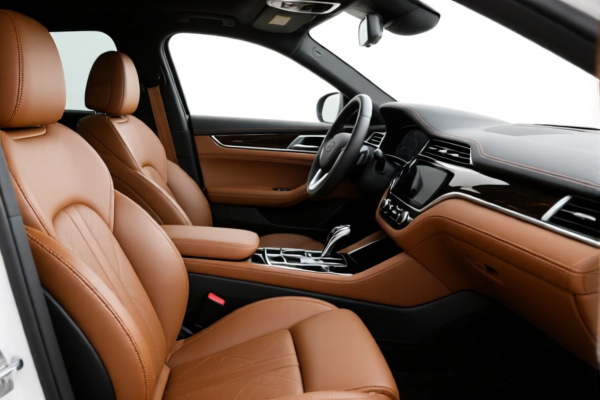
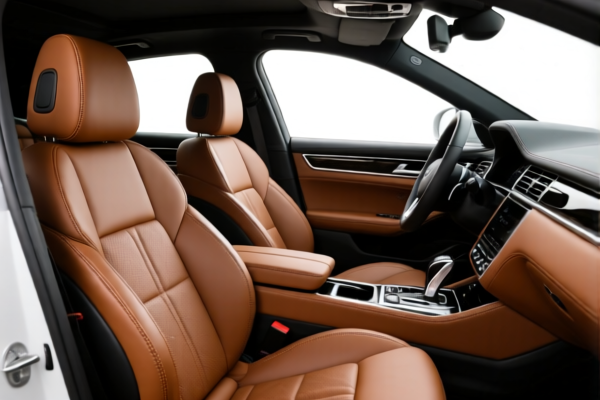
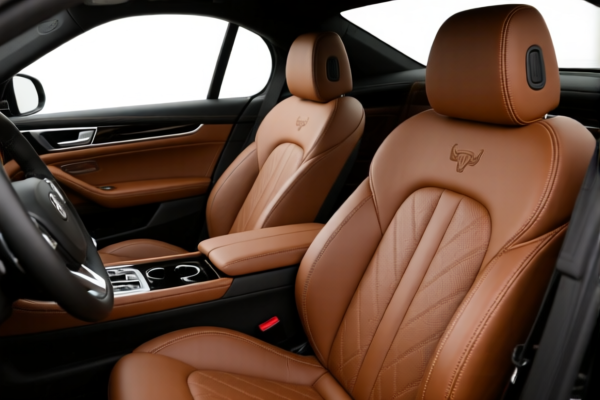
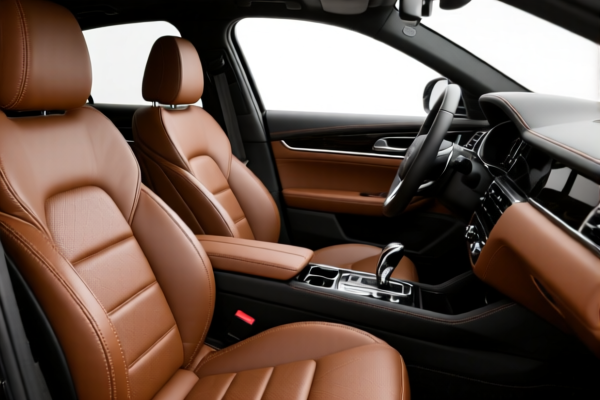
AI Analysis
🐃 Water Buffalo Leather Car Interior Waste Bin (Trash Can)
🌐 HS Code Reference & Clearance Guide | 2026 Latest Tariff Analysis | Professional Customs Strategy
📌 I. Product Definition & Classification: Do You Understand "Leather Car Accessories"?
A Water Buffalo Leather Car Interior Waste Bin is a specialized automotive accessory designed to collect trash and waste within a vehicle. It is distinguished by its material composition: * Material: Genuine water buffalo leather (outer casing/lining). * Function: Waste storage/containment. * Application: Automotive interior decoration/utility.
In international trade, this product is NOT classified under general plastic bins or metal containers. Because the defining characteristic is the leather material and its form as a container/bag, it falls under Chapter 42 (Articles of Leather; Saddle Harnesses; Travel Goods; Handbags; Containers).
⚠️ Critical Distinction:
- If it were plastic → HS3926.90
- If it were metal → HS7326.90
- If it were leather (like this product) → HS4202.99.90.00
📦 II. HS Code Classification Details (2026 Official Tariff Data)
Based on the provided data, here is the precise classification for Water Buffalo Leather car interior waste bins:
| HS Code | Product Description | Application Scenario | Material |
|---|---|---|---|
4202.99.90.00 |
Other containers and articles, of leather or composition leather | Water buffalo leather car interior waste bin | 🐃 Leather |
🔍 Key Insight:
The summary explicitly states: "Leather containers, suitable for water buffalo leather car interior waste bins."
This confirms that despite being a "trash can," its luxury material classification overrides its functional category. It is treated as a fashion/accessory item rather than a utilitarian plastic bin.
💰 III. 2026 Latest Tariff Rate Details (Including Surcharges)
✅ Applicable Country: United States (US)
✅ Country of Origin: China (CN)
✅ Effective Date: Includes current import periods (2025–2026)
🎯 HS Code: 4202.99.90.00 —— Leather Car Interior Waste Bin
| Item | Detail |
|---|---|
| Base Tariff Rate | 20.0% (General MFN Rate for Leather Containers) |
| Section 301 Surcharge (Add-on Tariff) | +25.0% (Targeting Chinese-made goods) |
| Section 122 Tariff (IEEPA) | +10.0% (Specific levy on China-origin goods) |
| Total Effective Tax Rate | 🔥 55.0% |
| Tax Calculation Basis | CIF Value × 55% |
| De Minimis Eligibility | ❌ Not Eligible (High duty rate usually excludes low-value exemptions) |
| Legal Authority Path | USITC:4202.99.90.00 → SECTION301:25% → SECTION122:10% → BASE:20% |
📌 Interpretation:
- The Base Tariff of 20% applies to leather goods under Chapter 42.
- The 25% Section 301 Tariff is added because the product is manufactured in China.
- The 10% Section 122 Tariff is an additional levy specifically targeting Chinese imports.
- Total Burden: A 55% tax rate is exceptionally high for automotive accessories. This significantly impacts profit margins and retail pricing.
🛠️ IV. Practical Clearance Advice (Avoiding Pitfalls)
✅ 1. Documentation Checklist (Mandatory)
| Document | Required | Notes |
|---|---|---|
| ✅ Product Composition Statement | ✔️ | Must explicitly state "100% Water Buffalo Leather" or percentage breakdown. |
| ✅ Material Test Report | ✔️ | Certificate proving genuine leather (not PU/Synthetic). |
| ✅ Commercial Invoice | ✔️ | Must describe as "Leather Car Trash Bin" NOT "Plastic Bin." |
| ✅ Country of Origin Certificate | ✔️ | To confirm CN origin and apply (or justify) surcharges. |
| ✅ Photos | ✔️ | Clear shots of texture, stitching, and label showing leather material. |
✅ 2. Declaration Tips (Golden Rules)
🔥 "Leather Over Plastic, Label Clearly, Don't Misclassify!"
| Scenario | Correct Declaration | Wrong Declaration | Consequence |
|---|---|---|---|
| Water Buffalo Leather Bin | HS 4202.99.90.00 (55%) |
HS 3926.90.10.00 (20.9%) |
Customs Penalties + Back Taxes! Misclassification is fraud. |
| PU/Synthetic Leather Bin | HS 3926.90.99.89 (22.8%) |
HS 4202.99.90.00 |
Underpaying tax if claimed as genuine leather without proof. |
| Plastic Bin | HS 3926.90.10.00 (20.9%) |
HS 4202.99.90.00 |
Overpaying tax unnecessarily. |
📌 Warning:
Do NOT try to declare a leather bin as a "plastic bin" to save taxes. Customs will inspect the material. If it is leather, they will reclassify it and charge the 55% rate plus penalties.
✅ 3. Special Handling
| Situation | Recommendation |
|---|---|
| Mixed Materials | If the bin has a plastic liner inside, declare based on the primary material (leather). Disclose the liner separately if required. |
| Low-Value Shipments | Even for small quantities, the 55% rate applies. De minimis exemptions may not apply due to the high duty rate. |
| Labeling | Ensure the product label says "Genuine Leather" to avoid disputes over material authenticity. |
🌍 V. Global Market Comparison (2026)
| Country/Region | Recommended HS Code | Tariff Rate | Certification | Notes |
|---|---|---|---|---|
| 🇺🇸 USA | 4202.99.90.00 |
55.0% | None specific, but proof of leather needed | Highest Duty due to 301+122 surcharges |
| 🇨🇳 China | 4202.99.90.00 |
~5-10% | N/A | Lower base duty, no US surcharges |
| 🇪🇺 EU | 4202.99.00 |
~4-12% | CE (if applicable) | No Section 301/122 equivalents |
| 🇬🇧 UK | 4202.99.00 |
~12-15% | UKCA | Post-Brexit tariffs apply |
📌 Conclusion:
The US market is the most expensive destination for this product due to the cumulative 55% tariff. Suppliers should factor this into pricing strategies or consider alternative markets if margins are tight.
📌 VI. Common Mistakes & Pitfalls (Lessons Learned)
❌ Mistake 1: Declaring a leather bin as a "Plastic Container" (HS 3926)
👉 Result: Customs seizes goods, imposes fines, and charges 55% + penalties.
👉 Why: Material inspection reveals leather.
❌ Mistake 2: Ignoring the "122 Clause" in calculations
👉 Result: Budgeting for 20.9% instead of 55.0% leads to massive cash flow issues.
👉 Why: The 122 tariff is automatic for China-origin goods in many categories.
❌ Mistake 3: Not providing a Leather Certificate
👉 Result: Customs may doubt the material and reclassify it as a generic textile or plastic item, causing delays.
👉 Solution: Always have a material test report ready.
✅ Correct Action:
"Water Buffalo Leather Car Interior Waste Bin, 100% Genuine Leather, Model XYZ, Made in China"
HS Code:4202.99.90.00
Total Duty: 55.0%
🎯 VII. Conclusion: Professional Declaration, Cost Control!
🎯 Remember the Mantra:
🔹 "Leather is Luxury, Leather is Tax; 55% Hits Hard, Don't Hide the Truth!"
🔹 "HS Code 4202 is Key, for Leather Items, Do Not Flee!"
📌 Pro Tip:
If you are exporting to the US, consider:
1. Advance Ruling: Apply to US CBP for a binding tariff ruling to confirm the 55% rate and avoid surprises.
2. Supply Chain Diversification: If volume is high, explore manufacturing in non-China countries to avoid Section 301/122 tariffs (though base leather duties may still apply).
📣 Immediate Action:
📞 Consult your customs broker with material certificates.
💰 Calculate landed cost including the 55% tariff.
🚀 Ensure your invoice description is precise to avoid audits.
✨ Professional clearance starts with accurate classification!
💼 Your profit margin depends on getting the HS Code right!
Customer Reviews
About HS Code Classification
The Harmonized System (HS) is an internationally standardized nomenclature developed by the World Customs Organization (WCO) to classify traded products. Over 200 countries use the HS system as the basis for customs tariffs, trade statistics, and import/export regulations.
Each HS code follows a hierarchical structure:
- Chapter (2 digits) — Broad category of goods (e.g., Chapter 84: Machinery and Mechanical Appliances)
- Heading (4 digits) — More specific grouping within the chapter
- Subheading (6 digits) — Internationally standardized breakdown, used by all WCO member countries
- National subdivisions (8-10 digits) — Country-specific extensions for further classification, such as US HTSUS 10-digit codes
Correct HS code classification is essential for smooth customs clearance, accurate duty payment, and compliance with trade regulations. Misclassification can lead to customs delays, overpayment of duties, or penalties.
When importing from CN to US, the applicable tariff rates may include:
- Most-Favored-Nation (MFN) rate — The standard duty rate applied to WTO members
- General rate — Applied to countries without trade agreements
- Trade remedy duties — Additional tariffs such as Section 301 (anti-dumping), Section 232 (national security), or countervailing duties
The information provided on this page is for reference purposes only. For official classification, please consult with your local customs authority or a licensed customs broker.