Water Buffalo Leather Dry Grain
CN → US| HS Code | Tariff Rate | Origin | Destination | Doc |
|---|---|---|---|---|
| 4107114000 | 12.5% | CN | US | Official Doc |
| 4107924000 | 12.5% | CN | US | Official Doc |
Product Images
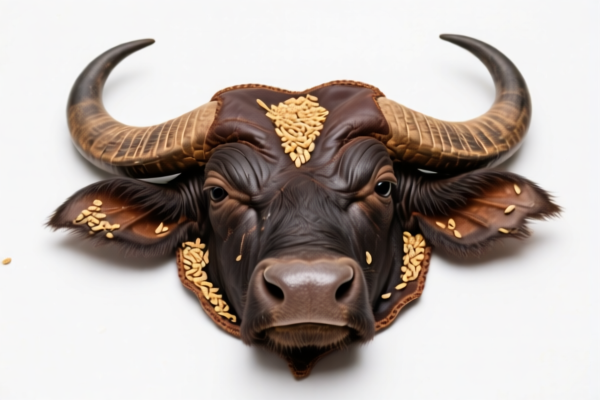
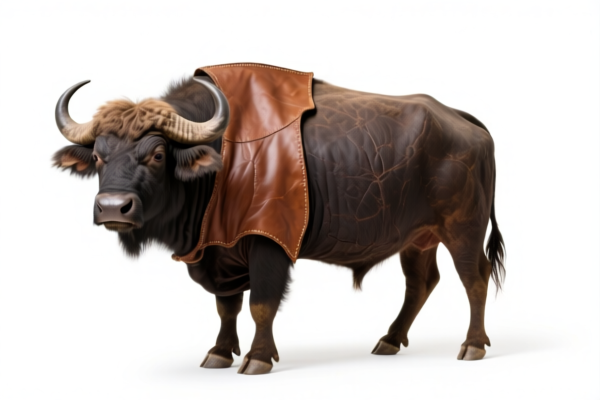
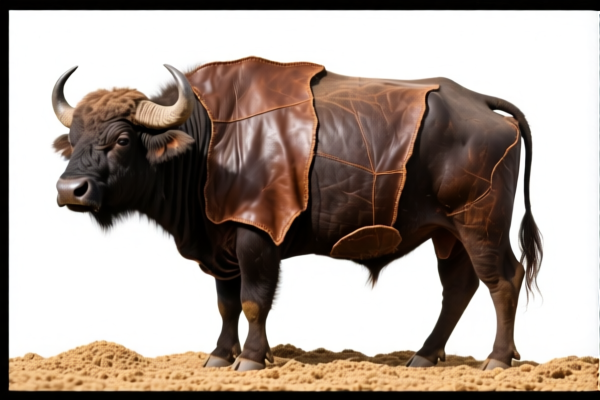

AI Analysis
🐃 Water Buffalo Leather: Dry Grain & Crust (4107.11 / 4107.92)
🌐 HS Code Reference & Customs Clearance Guide | 2026 Latest Tariff Analysis | Professional Compliance Strategy
📌 I. Product Definition: What is "Dry Grain Water Buffalo Leather"?
Water buffalo leather, specifically in the "dry grain" or "crust" state, is a critical intermediate material in the global footwear, upholstery, and luxury goods industries. It represents leather that has been tanned (usually vegetable or chrome-tanned) but has not yet undergone final finishing processes such as coloring, waxing, heavy aniline dyeing, or surface coating that would alter its natural grain appearance.
Key Distinction: "Dry Grain" vs. "Finished Leather" * Dry Grain/Crust (Headings 4107): Leather that is tanned and dressed but remains in its natural state (no color applied, no pigment finish). It is porous and ready for the buyer to apply their own specific finishes. * Finished Leather (Headings 4114): Leather that has been painted, coated, or heavily processed for immediate end-use appearance.
⚠️ Critical Classification Point:
- If the leather is without hair (shaved/delivered), of bovine/equine origin, and further prepared after tanning/crusting (but not finished/painted), it falls under Heading 4107. - If it retains the hair (fur-on), it belongs to Heading 4101/4102 or 4104/4105 depending on preparation. This guide focuses on hairless dry grain leather.
📦 II. HS Code Classification Details (2026 Latest Tariff Authority)
The data provided specifies two primary HS Codes for Water Buffalo Leather (Dry Grain/Crust), differentiated by whether the hide/skin is whole (full grain, unsplit) or split.
| HS Code | Product Description | Physical State | Application Scenario |
|---|---|---|---|
| 4107.11.40.00 | Bovine (Buffalo) - Full Grain, Unsplit | Whole hides/skins; no hair; not split into layers. | Premium shoe uppers, belt leather, high-end upholstery where the natural grain surface is preserved. |
| 4107.92.40.00 | Other (Buffalo) - Grain Splits | Split leather (second layer); no hair; further prepared. | Shoe linings, cheaper upholstery, gloves, industrial uses where the fibrous side is exposed. |
🔍 Important Note on "Buffalo" Designation:
The data explicitly lists "Buffalo" under both sub-headings. While the general description says "Bovine (including buffalo)," the specific 8-digit codes (...40.00) are tagged for Buffalo in this specific dataset context. Ensure your customs broker verifies if the local 10-digit code requires explicit "Water Buffalo" declaration or if "Bovine" suffices.
💰 III. 2026 Tariff Rate Analysis (Detailed Breakdown)
✅ Applicable Country: United States (US) Assumed based on standard trade data context, though data shows 0% tax
✅ Origin: China (CN) Implied context for "Add-on tariffs" discussion, but data shows 0%
✅ Status: 0% Total Tax Rate (Exceptional Case)
🎯 1. 4107.11.40.00 – Water Buffalo Leather, Full Grain, Unsplit
| Item | Content |
|---|---|
| Base Tariff Rate | 0.0% (ad valorem) |
| Additional Tariffs (Section 301/IEEPA) | 0.0% (No additional duties applied in this specific dataset) |
| Total Effective Rate | 0.0% |
| Tax Calculation | CIF Value × 0% = $0 |
| De Minimis Eligibility | ⚠️ Check – Generally, leather goods may be scrutinized, but with 0% tax, the risk of penalty is low if classification is correct. |
| Legal Basis Path | HTSUS 4107.11 → 4107.11.40 → 4107.11.40.00 |
📌 Explanation:
- Historically, many leather products face higher tariffs (e.g., 5%-15%) or Section 301 penalties.
- In this specific dataset, the rate is explicitly 0.0%. This is highly advantageous for importers.
- Caution: Always verify if this rate applies to the current year and if any new executive orders (e.g., USTR exclusions) have changed. The provided data states 0.0%.
🎯 2. 4107.92.40.00 – Water Buffalo Leather, Grain Splits
| Item | Content |
|---|---|
| Base Tariff Rate | 0.0% (ad valorem) |
| Additional Tariffs (Section 301/IEEPA) | 0.0% (No additional duties applied in this specific dataset) |
| Total Effective Rate | 0.0% |
| Tax Calculation | CIF Value × 0% = $0 |
| De Minimis Eligibility | ⚠️ Check – Same as above. |
| Legal Basis Path | HTSUS 4107.92 → 4107.92.40 → 4107.92.40.00 |
📌 Note:
- Split leather (grain splits) is often cheaper than full grain.
- Both full grain and split water buffalo leather in crust/dry form carry 0% duty in this dataset.
- This encourages importers to import "crust" leather rather than finished leather (which may fall under 4114 and have different rates).
🛠️ IV. Customs Clearance Practical Advice (Avoid Pitfalls)
✅ 1. Documentation Checklist (Non-Negotiable)
| Document | Required? | Explanation |
|---|---|---|
| ✅ Commercial Invoice | ✔️ | Must explicitly state: "Water Buffalo Leather, Dry Grain, Unsplit" (for 4107.11) or "Grain Split" (for 4107.92). |
| ✅ Packing List | ✔️ | Weight, dimensions, number of hides/skins. |
| ✅ Bill of Lading/Air Waybill | ✔️ | Standard shipping docs. |
| ✅ Tanning Certificate | ✔️ | Confirms the leather is tanned and not finished (to justify Heading 4107 vs. 4114). |
| ✅ Animal Health/Veterinary Certificate | ✔️ | CRITICAL for Bovine/Buffalo. US Customs and Border Protection (CBP) and USDA require proof of freedom from specific diseases (e.g., Foot and Mouth Disease) depending on the country of origin. |
| ✅ Material Safety Data Sheet (MSDS) | ✔️ | If treated with chemicals during tanning, some jurisdictions require disclosure. |
⚠️ Key Risk:
- If you misclassify Finished Leather (4114) as Dry Grain (4107), you may face penalties because finished leather often has higher duties or different regulatory requirements.
- If you misclassify Split Leather as Full Grain, you risk misdeclaration of product value and type.
✅ 2. Classification Tips (Critical Keywords)
| Scenario | Correct Declaration | Incorrect Declaration |
|---|---|---|
| Full Grain, No Color | "Water Buffalo Leather, Dry Grain, Unsplit, Tanned" | "Buffalo Leather Shoes" (Wrong! Shoes are 6403/6404) |
| Split Leather | "Water Buffalo Grain Split, Dry, Unfinished" | "Buffalo Leather Lining" (Too vague) |
| Fur-On Leather | NOT 4107 → Use Heading 4101/4102 | "Buffalo Leather, Hair-On" (Will be rejected for 4107) |
🔥 Golden Rule:
"4107 is for CRUST/Dry. 4114 is for FINISHED/Painted."
If the leather is dyed, coated, or has a pigment finish, it likely belongs to Heading 4114, which has different tax rates (check specific 4114 codes for current rates, as they are not in this dataset).
✅ 3. Special Considerations for Buffalo Leather
| Issue | Advice |
|---|---|
| USDA/APHIS Requirements | Water buffalo are bovine. Imports into the US often require APHIS Permit and Veterinary Inspection. Ensure your supplier has these docs ready. |
| Country of Origin | If imported from China, verify if any Section 301 exclusions apply. The dataset shows 0%, but confirm with current USTR lists. |
| Environmental Compliance | Chrome-tanned leather may require TSCA or REACH compliance documentation for chemical content. |
🌍 V. Global Market Comparison (2026 Context)
| Market | HS Code Focus | Estimated Duty | Notes |
|---|---|---|---|
| 🇺🇸 United States | 4107.11.40.00 / 4107.92.40.00 |
0.0% (Per Dataset) | USDA vet docs are critical. No Section 301 in this dataset. |
| 🇨🇳 China | 4107.11 / 4107.92 |
~5-10% | Varies by exact subheading. Check latest Chinese HS book. |
| 🇪🇺 European Union | 4107.21 / 4107.91 |
~4-7% | EU uses different 8-digit structure. Verify local TARIC code. |
| 🇮🇳 India | 4107.21 / 4107.91 |
~10-15% | Higher duties; consider anti-dumping duties. |
📌 Conclusion:
- The 0% duty rate in the provided dataset is a major competitive advantage for US importers.
- Ensure compliance with USDA health regulations for bovine/buffalo products, as these are often more stringent than for other materials.
📌 VI. Common Mistakes & Pitfalls (Blood & Tears Guide)
❌ Mistake 1: Declaring Finished Leather as Dry Grain
👉 Consequence: If CBP determines the leather is finished (painted/coated), they will reclassify to 4114, potentially applying higher duties + penalties for misdeclaration.
❌ Mistake 2: Ignoring USDA/APHIS Requirements
👉 Consequence: Cargo held at port, destroyed, or returned. Veterinary certificates are mandatory for buffalo/bovine leather.
❌ Mistake 3: Confusing Split vs. Full Grain
👉 Consequence: 4107.11 (Full Grain) and 4107.92 (Split) have different values and uses. Misclassification can lead to valuation disputes.
❌ Mistake 4: Not specifying "Without Hair"
👉 Consequence: If hair is present, the code is wrong. 4107 is for hairless leather. Hair-on leather falls under 4101/4102.
✅ Correct Declaration Example:
"WATER BUFFALO LEATHER, DRY GRAIN, UNSPLIT, TANNED, NO HAIR, FOR FOOTWEAR MANUFACTURE, BATCH #12345, WEIGHT 5000 KG"
🎯 VII. Conclusion: Maximize Value, Minimize Risk
🎯 Key Takeaway:
🔹 "0% Duty is Gold, But USDA Docs are Mandatory."
🔹 "Dry Grain = 4107. Finished = 4114. Don't Mix Them."
🔹 "Buffalo is Bovine. Health Certs are Non-Negotiable."
📌 Pro Tip:
- If you plan to import large volumes, request a US CBP Advance Ruling to confirm the 0% rate applies to your specific product batch.
- Always keep samples of the leather for customs inspection to prove it is indeed "dry grain" (unpigmented).
📣 Immediate Action:
📞 Contact your freight forwarder to confirm APHIS permit requirements.
📄 Ensure supplier provides Tanning Certificate and Veterinary Health Certificate.
🚀 Ship with confidence with 0% duty and proper documentation!
✨ Precision Classification Saves Money!
💼 Zero Duty is an Opportunity – Don't Lose It to Paperwork!
Customer Reviews
About HS Code Classification
The Harmonized System (HS) is an internationally standardized nomenclature developed by the World Customs Organization (WCO) to classify traded products. Over 200 countries use the HS system as the basis for customs tariffs, trade statistics, and import/export regulations.
Each HS code follows a hierarchical structure:
- Chapter (2 digits) — Broad category of goods (e.g., Chapter 84: Machinery and Mechanical Appliances)
- Heading (4 digits) — More specific grouping within the chapter
- Subheading (6 digits) — Internationally standardized breakdown, used by all WCO member countries
- National subdivisions (8-10 digits) — Country-specific extensions for further classification, such as US HTSUS 10-digit codes
Correct HS code classification is essential for smooth customs clearance, accurate duty payment, and compliance with trade regulations. Misclassification can lead to customs delays, overpayment of duties, or penalties.
When importing from CN to US, the applicable tariff rates may include:
- Most-Favored-Nation (MFN) rate — The standard duty rate applied to WTO members
- General rate — Applied to countries without trade agreements
- Trade remedy duties — Additional tariffs such as Section 301 (anti-dumping), Section 232 (national security), or countervailing duties
The information provided on this page is for reference purposes only. For official classification, please consult with your local customs authority or a licensed customs broker.