Water Buffalo Leather Material
CN → US| HS Code | Tariff Rate | Origin | Destination | Doc |
|---|---|---|---|---|
| 4104493060 | 12.4% | CN | US | Official Doc |
| 4107124000 | 12.5% | CN | US | Official Doc |
| 4107194000 | 12.5% | CN | US | Official Doc |
| 4101503500 | 19.9% | CN | US | Official Doc |
| 4101203500 | 19.9% | CN | US | Official Doc |
| 4104413060 | 12.4% | CN | US | Official Doc |
Product Images
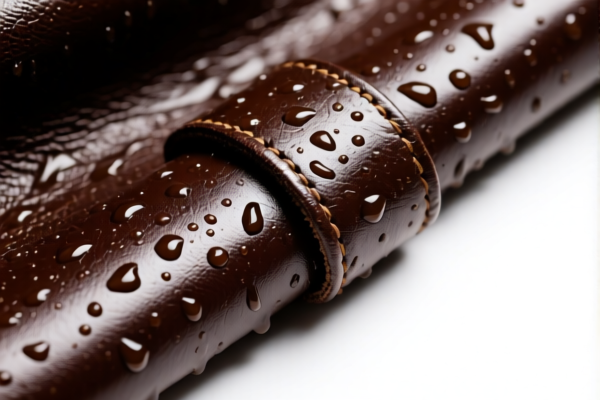
AI Analysis
🐃 Water Buffalo Leather Material
🌐 HS Code Reference & Customs Clearance Guide | 2026 Latest Tariff Analysis | Professional Clearance Strategy
📌 I. Product Definition & Classification: Do You Really Understand "Water Buffalo Leather"?
Water buffalo leather is a high-quality, durable, and textured natural material widely used in premium footwear, luxury bags, upholstery, and automotive interiors. In international trade, its classification depends heavily on two factors: 1. Processing State: Raw (uncured/cured), Tanned, or Further Processed. 2. Form: Whole hides, split leather, or other forms.
⚠️ Key Distinction Point:
- If it is Raw/Hide (salted, dried, or pickled, not yet tanned for final use) → It falls under Chapter 41 (Raw Hides and Skins), specifically 4101 or 4104 depending on weight/processing.
- If it is Tanned/Processed Leather (ready for use in manufacturing) → It falls under 4107.
- Crucial Note: The provided data specifies classifications for both "Raw" (4101) and "Tanned" (4107, 4104) states. Misclassification between raw and tanned leads to significant tax differences.
📦 II. HS Code Classification Details (2026 Latest Tariff Authority Comparison)
| HS Code | Product Description | Applicable Scenario | Tax Rate (Total) | Tax Detail Breakdown |
|---|---|---|---|---|
4104.49.30.60 |
Tanned Water Buffalo Leather (Other than full-grain) | Tanned leather for general use, bags, accessories. Matches material and state. | 12.4% | Base: 2.4%, Surtax: 0.0%, Section 122: 10% |
4107.12.40.00 |
Tanned Water Buffalo Leather (Cattle, not split) | Direct match for tanned leather state. Consistent with definition. | 12.5% | Base: 2.5%, Surtax: 0.0%, Section 122: 10% |
4107.19.40.00 |
Other Tanned Cattle/Horse Leather | If water buffalo is categorized under broader "cattle" in some jurisdictions or specific sub-codes. | 12.5% | Base: 2.5%, Surtax: 0.0%, Section 122: 10% |
4101.50.35.00 |
Raw Water Buffalo Hides (Weight > 8kg, processed) | Raw/unprocessed hides ready for tanning. | 19.9% | Base: 2.4%, Surtax: 7.5%, Section 122: 10% |
4101.20.35.00 |
Raw Water Buffalo Hides (Weight ≤ 8kg, processed) | Lighter raw hides. | 19.9% | Base: 2.4%, Surtax: 7.5%, Section 122: 10% |
4104.41.30.60 |
Tanned Water Buffalo Leather (Full-grain, chromium-tanned) | High-quality full-grain tanned leather. | 12.4% | Base: 2.4%, Surtax: 0.0%, Section 122: 10% |
🔍 Key Insight:
- Tanned Leather (4104/4107): Lower total tax (12.4%-12.5%). No Surtax (Section 301). Only Base + Section 122.
- Raw Hides (4101): Higher total tax (19.9%). Includes a 7.5% Surtax in addition to Base + Section 122.
- Material Match: All codes explicitly reference Water Buffalo or Cattle (which often includes buffalo in trade codes if not separately listed).
💰 III. 2026 Latest Tariff Rate Breakdown (Detailed Policy)
✅ Applicable Country: United States (US)
✅ Origin: China (CN)
✅ Effective Time: Based on current Section 122 and Surtax policies.
🎯 1. Tanned Water Buffalo Leather (4104.49.30.60, 4107.12.40.00, 4107.19.40.00, 4104.41.30.60)
| Item | Content |
|---|---|
| Base Tariff | 2.4% - 2.5% (Ad Valorem) |
| Section 301 Surtax | 0.0% |
| Section 122 Tariff | +10.0% (Under Section 122 of the Trade Expansion Act, applicable to certain imports from China) |
| Total Tariff Rate | 12.4% - 12.5% |
| Tax Calculation | CIF Value × 12.4%~12.5% |
| De Minimis Eligibility | ❌ No (Deny De Minimis) |
| Legal Path | HTSUS:4104.49.30.60 → Section 122: 10% |
📌 Explanation:
- Section 122 (10%): Applies to goods from China. This is a key component of the tax burden.
- No Section 301 Surtax: Unlike many tech or manufactured goods, these leather products do not currently have an additional 7.5% surtax under the provided data.
- Lower Risk: Total tax is significantly lower than raw hides.
🎯 2. Raw Water Buffalo Hides (4101.50.35.00, 4101.20.35.00)
| Item | Content |
|---|---|
| Base Tariff | 2.4% (Ad Valorem) |
| Section 301 Surtax | +7.5% |
| Section 122 Tariff | +10.0% |
| Total Tariff Rate | 19.9% |
| Tax Calculation | CIF Value × 19.9% |
| De Minimis Eligibility | ❌ No (Deny De Minimis) |
| Legal Path | HTSUS:4101.50.35.00 → Section 301: 7.5% → Section 122: 10% |
📌 Note:
- Higher Cost: The 7.5% Surtax makes raw hides much more expensive to import compared to tanned leather.
- Why So High? Raw hides are often subject to stricter anti-dumping or strategic trade measures.
- Classification Risk: If you import tanned leather but declare it as raw to save on base tax, you risk heavy penalties. The Section 122 applies to both.
🛠️ IV. Customs Clearance Practical Advice (Pitfall Avoidance Guide)
✅ 1. Preparation Checklist (Non-negotiable)
| Material | Required | Explanation |
|---|---|---|
| ✅ Product Specifications | ✔️ | Must specify: Water Buffalo, Tanned/Raw, Weight, Processing Method (Chrome/Vegetable). |
| ✅ Photos (Front/Back) | ✔️ | Show texture, grain, and any labels. Tanned leather has a distinct finish vs. raw hide. |
| ✅ Commercial Invoice | ✔️ | Must clearly state "Water Buffalo Leather" and HS Code. |
| ✅ Packing List | ✔️ | Detail weight (gross/net) to verify if it falls under <8kg or >8kg for raw hides. |
| ✅ Certificate of Origin | ✔️ | Proves China origin for Section 122 calculation. |
| ✅ Import License | ✔️ | Some raw hides may require USDA/APHIS inspection. |
✅ 2. Declaration Tips (Golden Rules)
🔥 "Clarify State: Raw vs. Tanned. Name Correctly: Water Buffalo. Tax Savings: 7.5%!"
| Scenario | Correct Declaration | Wrong Practice |
|---|---|---|
| Tanned Leather | Use 4107 or 4104 codes. Tax ~12.5%. | Misdeclare as Raw → 19.9% (Overpay) |
| Raw Hides | Use 4101 codes. Tax 19.9%. | Misdeclare as Tanned → 12.5% (Underpay, Penalty Risk!) |
| Mixed Batch | Separate Raw and Tanned. | Mixed shipment → Customs will reclassify entire batch to highest rate or hold. |
| Material Name | "Water Buffalo Leather" or "Buffalo Hides" | "Cattle Leather" if it's actually buffalo → Potential mismatch, audit risk. |
✅ 3. Special Cases Handling
| Case | Handling Advice |
|---|---|
| Split Leather | Ensure it's not classified as "further manufactured leather" (Chapter 42) if it's just split and tanned. Check specific subcodes. |
| Dye/Finish | If dyed or embossed, it's still Chapter 41 (Tanned). Don't move to Chapter 42 unless it's cut into items. |
| USDA Inspection | Raw hides (4101) often require USDA/APHIS pre-clearance. Tanned leather (4104/4107) usually does not. |
| Section 122 Exemptions | Currently, no exemptions are mentioned for leather under Section 122 in the data. Budget for 10% tax. |
🌍 V. Global Market Comparison (2026 Latest)
| Country/Region | Recommended HS Code | Tariff (US Origin vs China) | Notes |
|---|---|---|---|
| 🇺🇸 USA | 4107.12.40.00 (Tanned) |
12.5% (China) | Includes Section 122 (10%). Raw hides: 19.9%. |
| 🇨🇳 China | 4107 |
Varies (Import Duty ~5-10%) | Check local Chinese tariff schedule for imports into China. |
| 🇪🇺 EU | 4107 |
~2.5% - 4% | No Section 122 equivalent. Lower overall cost than US. |
| 🇬🇧 UK | 4107 |
~2.5% | Post-Brexit tariffs may vary. |
| 🇻🇳 Vietnam | 4107 |
Low/Zero (FTAs) | Vietnam has FTAs with many countries. Potential supply chain shift. |
📌 Conclusion:
- USA has the highest effective tax burden due to Section 122 and Surtax on raw hides.
- Tanned Leather is significantly cheaper to import into the US than Raw Hides.
- Supply Chain Tip: If importing Raw Hides, consider pre-tanning in a third country (e.g., Vietnam) to avoid Section 122 and Surtax, if possible.
📌 VI. Common Mistakes & Pitfalls (Lessons Learned)
❌ Mistake 1: Declaring "Tanned Leather" as "Raw Hides" to avoid higher base tax?
👉 Result: False! Tanned leather has lower total tax (12.5%) than raw (19.9%). Misdeclaring raw as tanned saves money, but misdeclaring tanned as raw overpays. However, misdeclaring raw as tanned to save tax is illegal and risks penalties.
❌ Mistake 2: Ignoring Section 122 (10%)
👉 Result: Your cost calculation is off by 10% on every shipment. This is not optional.
❌ Mistake 3: Confusing "Water Buffalo" with "Cattle"
👉 Result: If the product is water buffalo, but you declare "Cattle," customs may question the value or origin. Use specific names.
❌ Mistake 4: Forgetting USDA Requirements for Raw Hides
👉 Result: Delay or Rejection at the port. Raw hides need biological inspection. Tanned leather does not.
✅ Correct Practice:
"Tanned Water Buffalo Leather, Chrome Tanned, Full Grain, for Footwear Use, HS 4107.12.40.00"
🎯 VII. Conclusion: Precise Classification, Cost Control, Smooth Clearance!
🎯 Remember the Motto:
🔹 "Tanned = 12.5% (Base+122). Raw = 19.9% (Base+Surtax+122). Declare State Correctly!"
🔹 "Section 122 is 10% Non-Negotiable. Plan Your Budget!"
📌 Pro Tip:
If your Water Buffalo Leather is Tanned, use 4107.12.40.00 or 4104.49.30.60 for the most accurate and cost-effective clearance.
If you are importing Raw Hides, budget for 19.9% and prepare USDA documentation.
📣 Immediate Action:
📞 Contact your customs broker with product photos and processing details.
🚀 Get an Advance Ruling to confirm the HS Code and avoid delays.
💡 Optimize Supply Chain: Consider tanning abroad if importing raw hides to avoid Section 122.
✨ Professional Clearance, Start with Accurate Classification!
💼 Every dollar saved starts with the right HS Code!
Customer Reviews
About HS Code Classification
The Harmonized System (HS) is an internationally standardized nomenclature developed by the World Customs Organization (WCO) to classify traded products. Over 200 countries use the HS system as the basis for customs tariffs, trade statistics, and import/export regulations.
Each HS code follows a hierarchical structure:
- Chapter (2 digits) — Broad category of goods (e.g., Chapter 84: Machinery and Mechanical Appliances)
- Heading (4 digits) — More specific grouping within the chapter
- Subheading (6 digits) — Internationally standardized breakdown, used by all WCO member countries
- National subdivisions (8-10 digits) — Country-specific extensions for further classification, such as US HTSUS 10-digit codes
Correct HS code classification is essential for smooth customs clearance, accurate duty payment, and compliance with trade regulations. Misclassification can lead to customs delays, overpayment of duties, or penalties.
When importing from CN to US, the applicable tariff rates may include:
- Most-Favored-Nation (MFN) rate — The standard duty rate applied to WTO members
- General rate — Applied to countries without trade agreements
- Trade remedy duties — Additional tariffs such as Section 301 (anti-dumping), Section 232 (national security), or countervailing duties
The information provided on this page is for reference purposes only. For official classification, please consult with your local customs authority or a licensed customs broker.