Water Buffalo Leather Offcuts for Car Interior
CN → US| HS Code | Tariff Rate | Origin | Destination | Doc |
|---|---|---|---|---|
| 6309000010 | 17.5% | CN | US | Official Doc |
| 4115200000 | 17.5% | CN | US | Official Doc |
| 4115100000 | 35.0% | CN | US | Official Doc |
| 6309000020 | 17.5% | CN | US | Official Doc |
Product Images

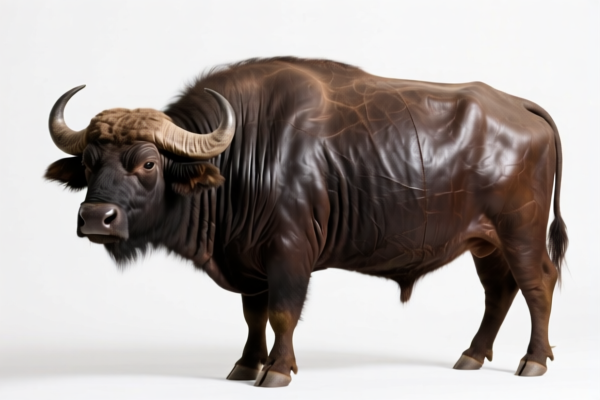


AI Analysis
🐃 Water Buffalo Leather Offcuts for Car Interior
🌐 HS Code Reference & Customs Clearance Guide | 2026 Latest Tariff Analysis | Professional Customs Strategy
📌 I. Product Definition & Classification: Do You Really Understand "Leather Offcuts"?
Water Buffalo Leather Offcuts are remnants, scraps, or trimmings resulting from the cutting and shaping processes of buffalo hide during the manufacturing of automotive interiors (seats, dashboards, door panels). In international trade, these offcuts are not merely "waste" but classified based on their material state, treatment, and intended use.
⚠️ Key Distinction Points:
- If the offcuts are raw, unworked, or simply cut from treated leather, they are classified as Leather Scraps/Offcuts (Chapter 41).
- If the offcuts are mixed with other materials (e.g., textile backing, foam) and qualify as "composite leather," they may fall under Composite Leather (Chapter 41).
- If the offcuts are used goods or considered "second-hand" remnants, they may be classified as Used Goods (Chapter 63).
- Critical Note: The classification drastically affects the Total Tax Rate (from 17.5% to 35.0%) due to different USITC and IEEPA tariff applications.
📦 II. HS Code Classification Matrix (2026 Latest Tariff Authority Mapping)
| HS Code | Product Description | Application Scenario | Tax Category |
|---|---|---|---|
6309.00.00.10 |
Leather offcuts for automotive interiors, classified as raw leather scraps | Basic form of leather offcuts, unworked remnants | Leather Class |
4115.20.00.00 |
Leather offcuts for automotive interiors, fully complying with material & form requirements for leather scraps | Standard leather offcuts, sorted by type | Leather Class |
4115.10.00.00 |
Leather offcuts for automotive interiors, qualifying as composite leather | Offcuts with backing layers (e.g., fabric, foam) | Composite Leather |
6309.00.00.20 |
Leather offcuts for automotive interiors, classified as other used goods | Second-hand or reclaimed leather offcuts | Used Goods |
🔍 Key Takeaway:
-4115.20.00.00is the most common classification for pure leather offcuts.
-4115.10.00.00applies only if the offcuts are composite (leather + backing).
-6309codes apply if the goods are considered used or remnants from used goods.
💰 III. 2026 Latest Tariff Rate Breakdown (Including Surtaxes & Policy Surcharges)
✅ Applicable Country: United States (US)
✅ Country of Origin: China (CN)
✅ Effective Date: From November 10, 2025 (including subsequent imports)
🎯 1. 6309.00.00.10 & 4115.20.00.00 & 6309.00.00.20
(Raw Leather Offcuts / Composite Leather / Used Goods - Mixed Classification)
| Item | Content |
|---|---|
| Base Tariff Rate | 0% (ad valorem) |
| Section 301 Surtax (USITC) | +7.5% (Applied to specific leather products) |
| IEEPA Surtax (China-Specific) | +10% (Under International Emergency Economic Powers Act) |
| Total Tax Rate | 17.5% |
| Tax Calculation | CIF Value × 17.5% |
| De Minimis Exemption | ❌ Not Eligible (deny_de_minimis) |
| Legal Basis Path | USITC:4115.20.00.00 → FOOTNOTE:9903.88.01 → IEEPA:9903.01.25 → IEEPA:9903.01.24 |
📌 Explanation:
- These three HS codes (6309.00.00.10,4115.20.00.00,6309.00.00.20) share the same total tariff rate of 17.5%.
- The 7.5% USITC surtax is specific to certain leather offcuts/composites under Section 301.
- The 10% IEEPA surtax is a blanket surcharge on Chinese-origin goods under current emergency powers.
- No de minimis exemption applies, meaning even small shipments are subject to full duty.
🎯 2. 4115.10.00.00
(Composite Leather Offcuts)
| Item | Content |
|---|---|
| Base Tariff Rate | 0% (ad valorem) |
| Section 301 Surtax (USITC) | +25.0% (Higher surtax for composite leather) |
| IEEPA Surtax (China-Specific) | +10% |
| Total Tax Rate | 35.0% |
| Tax Calculation | CIF Value × 35.0% |
| De Minimis Exemption | ❌ Not Eligible (deny_de_minimis) |
| Legal Basis Path | USITC:4115.10.00.00 → FOOTNOTE:9903.88.01 → IEEPA:9903.01.25 → IEEPA:9903.01.24 |
📌 Warning:
- If your offcuts are composite (e.g., leather bonded to fabric or foam), the USITC surtax jumps to 25%.
- Total rate becomes 35.0%, which is 17.5 percentage points higher than pure leather offcuts.
- Strict Documentation Required: You must prove the material composition. Misclassification can lead to severe penalties.
🛠️ IV. Customs Clearance Practical Advice (Avoid Pitfalls in Real Operations)
✅ 1. Preparation Checklist (Mandatory Documents)
| Document | Required | Notes |
|---|---|---|
| ✅ Product Specification Sheet | ✔️ | Must clearly state: "Water Buffalo Leather Offcuts," material composition, dimensions, and form (scrap vs. composite). |
| ✅ Material Composition Report | ✔️ | Critical for distinguishing between 4115.20.00.00 (17.5%) and 4115.10.00.00 (35.0%). |
| ✅ Photos of Offcuts | ✔️ | Show cross-sections to prove if backing layers are present. |
| ✅ Commercial Invoice | ✔️ | Must use precise description: "Water Buffalo Leather Offcuts for Automotive Interiors." Avoid vague terms like "Leather Waste." |
| ✅ Packing List | ✔️ | Detail weight and quantity. Ensure no mixed shipments of different HS codes without proper segregation. |
| ✅ Certificate of Origin (CO) | ✔️ | If not Chinese origin, may qualify for lower tariffs. |
✅ 2. Declaration Strategy (Key Rules)
🔥 "Material Truth, Code Precision, Tax Accuracy!"
| Scenario | Correct Declaration | Wrong Practice |
|---|---|---|
| Pure Leather Offcuts (No backing) | 4115.20.00.00 (17.5%) |
Misdeclaring as 4115.10.00.00 → 35.0% |
| Composite Leather Offcuts (With backing) | 4115.10.00.00 (35.0%) |
Misdeclaring as 4115.20.00.00 → Underpayment of duties |
| Used/Reclaimed Leather | 6309.00.00.20 (17.5%) |
Misdeclaring as new leather → Misclassification |
| Mixed Batches | Split into separate line items | Mixed declaration → High risk of audit & penalty |
✅ 3. Special Considerations
| Situation | Handling Advice |
|---|---|
| OEM Cut-Offs from Car Parts | Provide proof of origin from automotive manufacturer. Label as "Industrial Offcuts." |
| Offcuts with Foam/Textile Backing | Must declare as Composite Leather (4115.10.00.00). Do not attempt to classify as pure leather. |
| Small Quantity Samples | Still subject to 17.5% or 35%. No de minimis exemption. |
| Non-Chinese Origin | If from Italy, France, or USA, provide CO to avoid IEEPA 10% surtax. |
🌍 V. Global Market Comparison (2026 Latest)
| Country/Region | Recommended HS Code | Tariff (China Origin) | Certification | Notes |
|---|---|---|---|---|
| 🇺🇸 USA | 4115.20.00.00 |
17.5% | No specific | High surtax due to trade policy |
| 🇨🇳 China | 4115.20.00.00 |
5% | No specific | Lower tariff for domestic trade |
| 🇪🇺 EU | 4115.20.00.00 |
0% (if genuine scrap) | REACH | No additional surtax |
| 🇯🇵 Japan | 4115.20.00.00 |
0% | JIS | No additional surtax |
📌 Conclusion:
- USA is the most costly market due to Section 301 and IEEPA surcharges.
- Composite leather faces double the tax of pure leather offcuts in the US.
- Always verify material composition to avoid the 35.0% rate.
📌 VI. Common Errors & Pitfalls (Lessons Learned)
❌ Error 1: Declaring composite offcuts as pure leather offcuts
👉 Consequence: Underpayment of 17.5% duties → Back taxes + Penalties
❌ Error 2: Using vague descriptions like "Leather Waste"
👉 Consequence: Customs may reclassify as "Used Goods" or "Scrap," leading to delays and audits
❌ Error 3: Ignoring IEEPA surtaxes
👉 Consequence: Assuming 0% base tariff → Unexpected 17.5% or 35% bill at border
❌ Error 4: Mixing different HS codes in one shipment without clear separation
👉 Consequence: Customs may apply the highest tariff rate to the entire shipment
✅ Correct Practice:
"Water Buffalo Leather Offcuts, Pure Leather, Cut Remnants for Automotive Interiors, Model XYZ, Origin: China"
🎯 VII. Conclusion: Precision in Classification Saves Money!
🎯 Remember:
🔹 "Pure Leather: 17.5% | Composite: 35.0% | No De Minimis!"
🔹 "One percent misclassification, thousand dollars in penalties!"
📌 Pro Tip:
If your offcuts are not of Chinese origin, provide a Certificate of Origin to avoid the 10% IEEPA surtax. Consider applying for a Pre-Ruling (Advance Ruling) from US Customs to confirm the correct HS code before shipment.
📣 Immediate Action:
📞 Contact a licensed customs broker + Provide material reports + Apply for HS Code Pre-Ruling
🚀 Ensure smooth clearance, minimized duties, and max profit!
✨ Professional Customs Clearance Starts with Accurate Classification!
💼 Every dollar of duty saved is pure profit!
Customer Reviews
About HS Code Classification
The Harmonized System (HS) is an internationally standardized nomenclature developed by the World Customs Organization (WCO) to classify traded products. Over 200 countries use the HS system as the basis for customs tariffs, trade statistics, and import/export regulations.
Each HS code follows a hierarchical structure:
- Chapter (2 digits) — Broad category of goods (e.g., Chapter 84: Machinery and Mechanical Appliances)
- Heading (4 digits) — More specific grouping within the chapter
- Subheading (6 digits) — Internationally standardized breakdown, used by all WCO member countries
- National subdivisions (8-10 digits) — Country-specific extensions for further classification, such as US HTSUS 10-digit codes
Correct HS code classification is essential for smooth customs clearance, accurate duty payment, and compliance with trade regulations. Misclassification can lead to customs delays, overpayment of duties, or penalties.
When importing from CN to US, the applicable tariff rates may include:
- Most-Favored-Nation (MFN) rate — The standard duty rate applied to WTO members
- General rate — Applied to countries without trade agreements
- Trade remedy duties — Additional tariffs such as Section 301 (anti-dumping), Section 232 (national security), or countervailing duties
The information provided on this page is for reference purposes only. For official classification, please consult with your local customs authority or a licensed customs broker.