Water Buffalo Leather Safety Protection
CN → US| HS Code | Tariff Rate | Origin | Destination | Doc |
|---|---|---|---|---|
| 4104493060 | 12.4% | CN | US | Official Doc |
| 4107124000 | 12.5% | CN | US | Official Doc |
| 4107194000 | 12.5% | CN | US | Official Doc |
| 4101503500 | 19.9% | CN | US | Official Doc |
| 4101203500 | 19.9% | CN | US | Official Doc |
| 4104413060 | 12.4% | CN | US | Official Doc |
Product Images
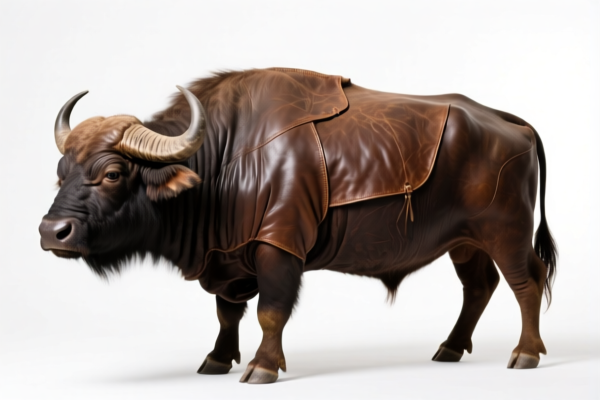
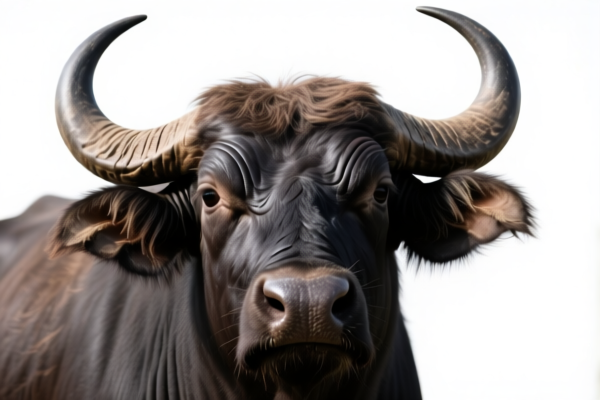
AI Analysis
🐃 Water Buffalo Leather Safety Protection (Raw, Tanned, and Processed)
🌐 HS Code Reference & Customs Clearance Guide | 2026 Latest Tariff Analysis | Professional Clearance Strategy
📌 I. Product Definition & Classification: What Exactly is "Water Buffalo Leather"?
Water Buffalo Leather (Bubalus bubalis) is a premium material known for its durability, breathability, and distinctive grain. In international trade, it is strictly categorized by its processing stage and physical form. Misclassification often leads to severe penalties due to the significant tariff differences between raw hides and processed leather.
The Three Critical Categories:
- Raw Hides (Saladas/Fresh): Unprocessed, fresh, or salted skins. These are the "raw materials."
- Tanned/Leather (Curadas): Processed to prevent decay. This includes full-grain, split, and corrected leather.
- Dried Hides (Secas): Raw hides that have been dried but not tanned.
⚠️ Key Distinction Point:
- If the item is untanned (only salted or dried) → It is classified under Chapter 41.01 (Raw Hides).
- If the item is tanned (chemically or vegetable processed) → It is classified under Chapter 41.07 (Tanned Leather).
- Do not mix "Raw" and "Tanned" descriptions. Customs will reject ambiguous declarations like "Leather Hides" without specifying the process.
📦 II. HS Code Classification Details (2026 Latest Tariff Authority Cross-Reference)
Based on the provided data, here is the precise breakdown for Water Buffalo Leather products. Note that these codes reflect specific US tariff treatments for Chinese-origin goods.
| HS Code | Product Description | Application Scenario | Processing Status |
|---|---|---|---|
4101.50.35.00 |
Raw Water Buffalo Hides, including fresh/salted | Raw Material Import. Used for initial tanning processes. | ✅ Raw (Untanned) |
4101.20.35.00 |
Raw Water Buffalo Hides (Species-specific) | Raw Material Import. Strict species verification required. | ✅ Raw (Untanned) |
4104.49.30.60 |
Dried Water Buffalo Skins | Pre-Tanned Stage. Dried but not yet chemically tanned. | ✅ Dried (Untanned) |
4107.12.40.00 |
Tanned Water Buffalo Leather | Finished Material. Crust or fully finished leather ready for manufacturing. | ✅ Tanned (Processed) |
4107.19.40.00 |
Tanned Water Buffalo Leather (Other) | Finished Material. Various types of tanned leather not elsewhere specified. | ✅ Tanned (Processed) |
🔍 Critical Reminder:
- Raw Hides (4101.xx) and Dried Skins (4104.xx) are subject to Higher Tariffs (19.9%) due to "Section 301" and "Section 122" additional duties.
- Tanned Leather (4107.xx) is slightly more expensive (12.5%) than dried skins (12.4%) but significantly cheaper than raw hides.
- Species Match: The summary explicitly states "Material matches Water Buffalo." Ensure your documentation (Commercial Invoice & Packing List) explicitly lists "Water Buffalo" (Bubalus bubalis). Generic "Bovine" or "Cattle" labels may lead to audits.
💰 III. 2026 Latest Tariff Rate Breakdown (Including Add-on Taxes & Policy Surcharges)
✅ Applicable Country: United States (US)
✅ Country of Origin: China (CN)
✅ Effective Date: From November 10, 2025 (for subsequent imports)
🎯 1. 4101.50.35.00 & 4101.20.35.00 —— Raw Water Buffalo Hides (Untanned)
| Item | Content |
|---|---|
| Base Tariff | 2.4% (Most Favored Nation Rate) |
| Additional Tariff (Section 301) | +7.5% |
| Section 122 Tariff | +10% |
| Total Tariff Rate | 19.9% |
| Tax Calculation | CIF Value × 19.9% |
| De Minimis Exemption | ❌ NOT Eligible (De minimis does not apply to raw hides from China under these sections) |
| Legal Basis Path | Section 301: 9903.01.25 → Section 122: 19 U.S.C. 1304 → USITC: 4101.50.35.00 |
📌 Explanation:
- Base Rate (2.4%): Standard MFN duty for raw bovine hides.
- Section 301 (7.5%): Trump/Biden administration tariffs on Chinese goods.
- Section 122 (10%): Trade Remedies Act tariffs specifically targeting certain agricultural and raw material imports to protect domestic producers.
- Total 19.9%: This is a HIGH tariff bracket. Importers must factor this into COGS (Cost of Goods Sold).
🎯 2. 4104.49.30.60 —— Dried Water Buffalo Skins (Untanned)
| Item | Content |
|---|---|
| Base Tariff | 2.4% |
| Additional Tariff (Section 301) | 0.0% (Note: Data shows 0.0% for Section 301 on this specific code) |
| Section 122 Tariff | +10% |
| Total Tariff Rate | 12.4% |
| Tax Calculation | CIF Value × 12.4% |
| De Minimis Exemption | ❌ Not Eligible |
| Legal Basis Path | Section 122: 19 U.S.C. 1304 → USITC: 4104.49.30.60 |
📌 Explanation:
- Dried hides avoid the Section 301 surcharge (+7.5%) compared to raw wet hides, resulting in a 7.5% savings.
- However, they still bear the Section 122 tariff (+10%).
- Strategic Tip: If you have the capacity to store and process, importing Raw Hides might be cheaper if you can claim exemptions, but generally, Dried Hides offer a lower landed cost due to lower weight and volume (less water), despite similar tariff rates on base duties.
🎯 3. 4107.12.40.00 & 4107.19.40.00 —— Tanned Water Buffalo Leather (Processed)
| Item | Content |
|---|---|
| Base Tariff | 2.5% |
| Additional Tariff (Section 301) | 0.0% |
| Section 122 Tariff | +10% |
| Total Tariff Rate | 12.5% |
| Tax Calculation | CIF Value × 12.5% |
| De Minimis Exemption | ❌ Not Eligible |
| Legal Basis Path | Section 122: 19 U.S.C. 1304 → USITC: 4107.12.40.00 / 4107.19.40.00 |
📌 Explanation:
- Base Rate (2.5%): Slightly higher than raw hides (2.4%) due to value-added processing.
- No Section 301: Tanned leather often benefits from different trade policy classifications, avoiding the 7.5% Section 301 tax.
- Section 122 (10%): Still applies to protect the US leather industry.
- Total 12.5%: This is the most cost-effective option for finished leather goods from China.
- Value Added: You pay ~12.5% on a higher CIF value (finished leather is more expensive than raw hide), but you save on labor/import duties at the manufacturing stage.
🛠️ IV. Customs Clearance Practical Advice (Battle-Tested Pitfall Guide)
✅ 1. Documentation Checklist (Mandatory)
| Document | Required? | Notes |
|---|---|---|
| ✅ Commercial Invoice | ✔️ | Must specify "Water Buffalo", not just "Leather". Must state Processing State (Raw/Dried/Tanned). |
| ✅ Packing List | ✔️ | Detail weights (Gross/Net). Raw hides have high water weight; dried/tanned do not. |
| ✅ Certificate of Origin (CO) | ✔️ | Essential for proving Chinese origin to apply correct tariffs. |
| ✅ Treatment Certificate | ✔️ | Crucial! Must state: "Dried," "Salted," "Chrome Tanned," or "Vegetable Tanned." |
| ✅ Species Verification | ✔️ | If challenged, provide genetic or morphological proof that it is Bubalus bubalis. |
✅ 2. Declaration Tips (Key Mantra)
🔥 "Be Specific: Raw, Dried, or Tanned? Name the Species. Avoid 'Bovine' Generic Labels!"
| Scenario | Correct Declaration | Wrong Declaration | Consequence |
|---|---|---|---|
| Raw Hides | 4101.50.35.00 - "Raw Water Buffalo Hides, Salted" |
"Cow Hides" | Audit for species; potential misclassification fines. |
| Dried Skins | 4104.49.30.60 - "Dried Water Buffalo Skins" |
"Leather" | Rejection: Dried skins are not yet "Leather" in customs terms. |
| Tanned Leather | 4107.12.40.00 - "Tanned Water Buffalo Leather, Full Grain" |
"Raw Hides" | Tariff Error: Underpaying by 7.4% → Back Taxes + Penalties! |
✅ 3. Special Circumstances Handling
| Situation | Handling Advice |
|---|---|
| Mixed Containers | If a container has both Raw and Tanned leather, they MUST be declared separately. Do not lump into one HS Code. |
| Split Leather | If the leather is "Split" (not full grain), ensure the HS Code 4107.19.40.00 is used if it doesn't fit 4107.12.40.00. |
| Sample Shipments | Even samples are subject to 12.5%-19.9% tariffs. No de minimis exemption. |
| Re-Export from Mexico/Vietnam | If tanned in Mexico/Vietnam and then shipped to the US, you may avoid Chinese tariffs. Requires proof of Substantial Transformation. |
🌍 V. Global Market Comparison for Water Buffalo Leather (2026)
| Country/Region | Recommended HS Code | Tariff (China Origin) | Certification Requirements | Notes |
|---|---|---|---|---|
| 🇺🇸 USA | 4107.12.40.00 (Tanned) |
12.5% | FDA (if food contact), CPSIA (if children's) | High tariffs on raw hides (19.9%). |
| 🇨🇳 China | 4107.12.40.00 |
5.0% | None | Low import duty for raw materials. |
| 🇪🇺 EU | 4107.21 / 4107.29 |
4.0% | REACH (Chemicals) | Strict chemical residue testing (Chromium VI). |
| 🇦🇺 Australia | 4107.21.00 |
5.0% | None | Chilling requirements for raw hides. |
| 🇯🇵 Japan | 4107.21 |
3.0% | None | High demand for full-grain buffalo leather. |
📌 Conclusion:
- The USA has the highest complexity due to Section 122 and Section 301 tariffs.
- Tanned Leather (4107.xx) is the sweet spot for trade with the US, balancing cost and compliance.
- Raw Hides (4101.xx) are penalized heaviest. Consider processing abroad if possible.
📌 VI. Common Mistakes & Pitfall Guide (Blood-Tears Lessons)
❌ Mistake 1: Declaring "Dried Hides" as "Leather"
👉 Result: Customs may classify under 4107 (12.5%) which is correct, BUT if they suspect they are actually Raw Wet Hides, they will back-charge 19.9% + penalties.
👉 Fix: Always specify "Dried" in the description.
❌ Mistake 2: Using Generic "Bovine" Description
👉 Result: Customs may apply the worst-case scenario tariff or demand species verification, causing 7-14 day delays.
👉 Fix: Explicitly state "Water Buffalo (Bubalus bubalis)".
❌ Mistake 3: Ignoring Section 122 Tariffs
👉 Result: Importers budgeting for only Base + Section 301 taxes are shocked by the 10% Section 122 add-on.
👉 Fix: Include Section 122 in all cost calculations for HS Codes 4101, 4104, and 4107.
❌ Mistake 4: Mixing Raw and Tanned in One BL (Bill of Lading) Without Separation
👉 Result: The entire shipment may be held for further examination to separate the classifications.
👉 Fix: Use separate House Bills of Lading (HBL) or clearly separate line items on the Commercial Invoice.
✅ Correct Practice:
"Tanned Water Buffalo Leather, Full Grain, Chrome Tanned, 40-45 sq meters per hide, HS Code 4107.12.40.00, Origin: China"
🎯 VII. Conclusion: Professional Declaration, Save Money, Avoid Delays!
🎯 Remember the Mantra:
🔹 "Raw is 19.9%, Dried is 12.4%, Tanned is 12.5%."
🔹 "Always specify 'Water Buffalo', never just 'Bovine'."
🔹 "Section 122 hits all: Don't forget the extra 10%!"
📌 Pro Tip:
If you are manufacturing finished goods (e.g., shoes, bags) in the US using Chinese leather, consider Section 321 (De Minimis) only if the value is under $800 AND the goods are not restricted. However, for bulk leather imports, Section 321 does not apply.
Recommendation: Apply for an Advance Ruling from US Customs and Border Protection (CBP) if your shipment value exceeds $50,000. This locks in the HS Code and tariff rate, protecting you from audits.
📣 Take Action Now:
📞 Contact a Licensed Customs Broker
📄 Provide Detailed Product Specs (Tanning Type, Species, Drying Method)
🚀 Clear Customs Smoothly, Control Costs, and Protect Your Supply Chain!
✨ Professional Clearance Starts with Precise Classification!
💼 Every Percentage Point of Tariff Matters!
Customer Reviews
About HS Code Classification
The Harmonized System (HS) is an internationally standardized nomenclature developed by the World Customs Organization (WCO) to classify traded products. Over 200 countries use the HS system as the basis for customs tariffs, trade statistics, and import/export regulations.
Each HS code follows a hierarchical structure:
- Chapter (2 digits) — Broad category of goods (e.g., Chapter 84: Machinery and Mechanical Appliances)
- Heading (4 digits) — More specific grouping within the chapter
- Subheading (6 digits) — Internationally standardized breakdown, used by all WCO member countries
- National subdivisions (8-10 digits) — Country-specific extensions for further classification, such as US HTSUS 10-digit codes
Correct HS code classification is essential for smooth customs clearance, accurate duty payment, and compliance with trade regulations. Misclassification can lead to customs delays, overpayment of duties, or penalties.
When importing from CN to US, the applicable tariff rates may include:
- Most-Favored-Nation (MFN) rate — The standard duty rate applied to WTO members
- General rate — Applied to countries without trade agreements
- Trade remedy duties — Additional tariffs such as Section 301 (anti-dumping), Section 232 (national security), or countervailing duties
The information provided on this page is for reference purposes only. For official classification, please consult with your local customs authority or a licensed customs broker.