Water Buffalo Marble Pattern Handbag
CN → USProduct Images
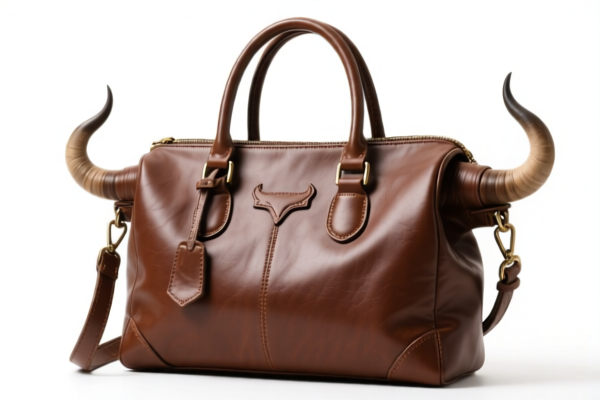
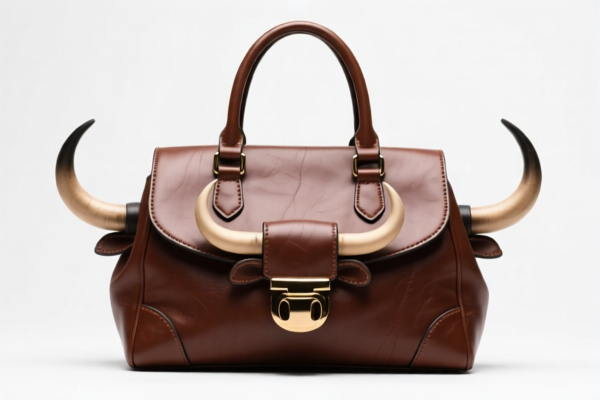
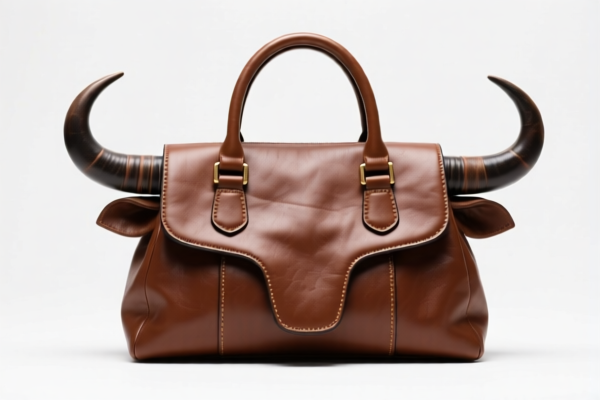
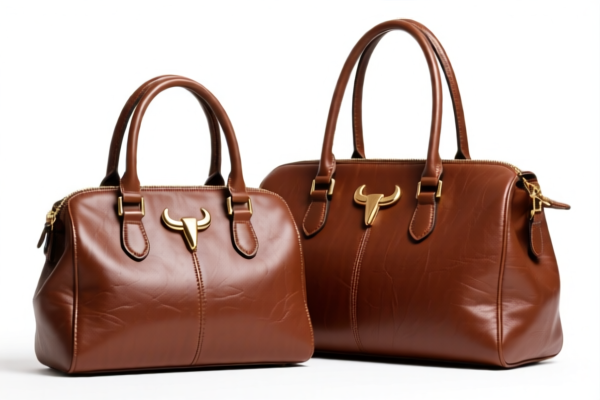
AI Analysis
{"content":[{"type":"text","text":"4202.11.00.00 | Handbags with outer surface of leather or composition leather | Premium leather handbags, including those with embossed/printed patterns like marble | ✅ Genuine/Composite Leather | Marble Emboss/Print |\n| 4202.12.00.00 | Handbags with outer surface of plastic sheeting or textile materials | If the \"marble\" effect is on PVC/PU or fabric | ❌ Plastic/Textile | Print/Coating |\n| 4202.92.00.00 | Handbags, whether or not in the form of shoulder-bags, with outer surface of plastic sheeting | Unstructured or small clutch-style bags, plastic-based | ❌ Plastic | Print |\n| 4202.99.00.00 | Other articles of leather or composition leather | Accessories, pouches, or non-handbag leather items | ✅ Leather | Various |\n\n> 🔍 Key Reminder: \n> - The outer surface material determines the HS code.\n> - \"Water Buffalo\" in the product name often refers to the texture or origin of the hide (buffalo leather is thick and durable), not a separate category.\n> - \"Marble Pattern\" is a design feature, not a material classification factor.\n> - Most common classification: 4202.11.00.00 (if leather) or 4202.12.00.00 (if synthetic).\n\n> 📌 Assumption: For this analysis, we assume the bag is made of genuine leather (buffalo/cowhide) with a marble-pattern finish, as this is the most common interpretation of \"Water Buffalo Marble Pattern Handbag\" in high-end fashion.\n\n---\n\n## 💰 3. 2026 Latest Tariff Rate Details (Including Surcharges & Policy Add-ons)\n\n> ✅ Applicable Country: United States (US) \n> ✅ Country of Origin: China (CN) \n> ✅ Effective Time: From November 10, 2025 (including subsequent imports)\n\n### 🎯 1. 4202.11.00.00 —— Handbags with Outer Surface of Leather\n\n| Item | Content |\n|------|------|\n| Base Tariff Rate | 10% (ad valorem) |\n| USITC Surcharge | +25% (under USITC Footnote 9903.88.01, Section 301 tariffs) |\n| IEEPA Surcharge | +10% (China/Hong Kong products, under IEEPA from Nov 10, 2025) |\n| Total Tariff Rate | 45% |\n| Tax Calculation | CIF Value × 45% |\n| De Minimis Exemption | ❌ Not Eligible (deny_de_minimis) |\n| Legal Basis Path | IEEPA:9903.01.25 → IEEPA:9903.01.24 → USITC:4202.11.00.00 → FOOTNOTE:9903.88.01 |\n\n> 📌 Explanation: \n> - The 10% is the standard MFN rate for leather handbags.\n> - The 25% USITC surcharge is part of the Section 301 tariffs on Chinese goods.\n> - The 10% IEEPA surcharge is an additional levy on Chinese-origin leather goods.\n> - Total 45% is a high tariff rate, significantly impacting profitability.\n\n---\n\n### 🎯 2. 4202.12.00.00 —— Handbags with Outer Surface of Plastic/Textile\n\n| Item | Content |\n|------|------|\n| Base Tariff Rate | 17.5% (ad valorem) |\n| USITC Surcharge | +25% (Section 301) |\n| IEEPA Surcharge | +10% (China/Hong Kong) |\n| Total Tariff Rate | 52.5% |\n| Tax Calculation | CIF Value × 52.5% |\n| De Minimis Exemption | ❌ Not Eligible |\n| Legal Basis Path | IEEPA:9903.01.25 → IEEPA:9903.01.24 → USITC:4202.12.00.00 → FOOTNOTE:9903.88.01 |\n\n> 📌 Note: \n> - If the bag is made of synthetic leather (PU) or textile with a marble print, it falls under this code.\n> - The base rate is higher (17.5%) than leather, and the surcharges are the same, leading to an even higher total rate of 52.5%.\n> - This makes synthetic \"marble pattern\" bags less competitive in the US market compared to genuine leather ones.\n\n---\n\n## 🛠️ 4. Customs Clearance Practical Advice (Battle-Tested Pitfall Avoidance Guide)\n\n### ✅ 1. Required Documentation Checklist (No Omissions Allowed)\n\n| Document | Mandatory | Notes |\n|----------|-----------|-------|\n| ✅ Product Specification Sheet | ✔️ | Must include: Material (e.g., \"Genuine Buffalo Leather\"), Dimensions, Weight, Interior Lining Material |\n| ✅ Photos of the Bag | ✔️ | Clear images of the exterior (showing marble pattern), interior, hardware, and labels |\n| ✅ Material Composition Declaration | ✔️ | Must explicitly state: \"100% Genuine Leather\" or \"PU Leather\" – crucial for HS code determination |\n| ✅ Commercial Invoice | ✔️ | Describe as \"Leather Handbag with Marble Pattern\" – avoid vague terms like \"Fashion Bag\" |\n| ✅ Packing List | ✔️ | List contents accurately; if accessories (e.g., dust bag, card holder) are included, declare them |\n| ✅ Certificate of Origin (CO) | ✔️ | If not Chinese-origin, may qualify for preferential rates |\n| ✅ FCC/RoHS Certificates | ❌ | Not required for leather bags, but helpful if containing electronic components (e.g., NFC chip) |\n\n---\n\n### ✅ 2. Declaration Tips (Key Mantra)\n\n> 🔥 \"Leather First, Pattern Second, Material Clear, Tariff Lower!\"\n\n| Scenario | Correct Declaration | Incorrect Practice |\n|----------|---------------------|--------------------|\n| Genuine leather bag with marble pattern | 4202.11.00.00 | Misclassified as textile → 17.5% base + 25% = 42.5% (lower, but high risk of penalty) |\n| Synthetic (PU) bag with marble print | 4202.12.00.00 | Misclassified as leather → 10% base + 25% = 35% (risk of fraud investigation) |\n| Bag made of fabric with marble print | 4202.92.00.00 | Misclassified as leather → 10% base + 25% = 35% (risk of penalty) |\n| Mixed material (leather + textile) | 4202.11.00.00 (if leather is principal) | Misclassified as textile → Higher risk |\n\n> 📌 Critical Rule: \n> - The outer surface material is the primary determinant.\n> - \"Water Buffalo\" refers to the type of hide (buffalo leather), not a separate category.\n> - \"Marble Pattern\" is a design attribute, not a material.\n\n---\n\n### ✅ 3. Special Cases Handling\n\n| Scenario | Handling Advice |\n|----------|-----------------|\n| OEM Custom Bags | Provide client order + design drawings to prove material composition |\n| Bags with Metal Hardware | Still classified under 4202.11.00.00; hardware is incidental |\n| Bags with Electronic Components (e.g., NFC) | May require additional declarations; still classified under 4202 if leather |\n| Sample vs. Commercial Quantity | Ensure documentation matches; samples should be declared as \"Samples Not for Resale\" |\n\n---\n\n## 🌍 5. Global Major Market Clearance Comparison (2026 Latest)\n\n| Country/Region | Recommended HS Code | Tariff | Certification Requirements | Notes |\n|----------------|---------------------|--------|-----------------------------|-------|\n| 🇺🇸 USA | 4202.11.00.00 | 45% (CN origin) | None | High surcharges apply |\n| 🇨🇳 China | 4202.11.00.00 | 10% | CCC (if applicable) | No surcharges |\n| 🇪🇺 EU | 4202.11.00.00 | 12% | CE (if electronic) | No surcharges |\n| 🇦🇺 Australia | 4202.11.00.00 | 5% | RCM (if electronic) | No surcharges |\n| 🇯🇵 Japan | 4202.11.00.00 | 18% | PSE (if electronic) | No surcharges |\n\n> 📌 Conclusion: \n> - USA is the highest-tariff market for Chinese-origin handbags due to 301 & IEEPA surcharges.\n> - China, EU, Australia, and Japan have no surcharges, making them more attractive for export.\n> - Cost Optimization Strategy: Consider routing production through Vietnam, Mexico, or Thailand to qualify for IEEPA exemptions.\n\n---\n\n## 📌 6. Common Mistakes & Pitfall Avoidance (Lessons from Blood & Tears)\n\n❌ Mistake 1: Misclassifying a leather bag as textile to lower base rate \n👉 Consequence: 10% vs. 17.5% base rate, but high risk of penalty, seizure, or retroactive duties.\n\n❌ Mistake 2: Describing the product as \"Marble Bag\" without specifying material \n👉 Consequence: Customs cannot determine HS code → delayed clearance or return.\n\n❌ Mistake 3: Not providing material composition declaration \n👉 Consequence: Customs may assign a default higher tariff code or require re-declaration.\n\n❌ Mistake 4: Ignoring the \"Water Buffalo\" aspect \n👉 Consequence: No specific HS code for \"Water Buffalo\"; it’s just a type of leather. Misunderstanding leads to confusion.\n\n✅ Correct Practice:\n> \"Handbag, Outer Surface: 100% Genuine Buffalo Leather, Surface Treatment: Marble Emboss Pattern, Lining: Polyester, Hardware: Zinc Alloy, Model: XYZ, No Electronic Components\"\n\n---\n\n## 🎯 7. Conclusion: Professional Declaration Saves Time, Money, and Stress!\n\n🎯 Remember the Mantra:\n> 🔹 "Leather First, Pattern Second. Material Clear, Tariff Lower!" \n> 🔹 "HS Code Determines Life. Tariff Difference is 45%. One Mistake, Thousands Lost!"\n\n---\n\n📌 Pro Tip: \nIf your handbags are originating from Vietnam, Mexico, Thailand, or Malaysia, you may qualify for IEEPA exemptions, reducing tariffs to 0%–12%.\n\nRecommend applying for an Advance Ruling before shipment to avoid clearance risks.\n\n---\n\n📣 Immediate Action: \n> 📞 Contact a professional customs broker + Provide product photos + Apply for HS Code Advance Ruling \n> 🚀 Let your \"Water Buffalo Marble Pattern Handbags\" pass customs smoothly, boost profits, and expand globally!\n\n--- \n✨ Professional Clearance Starts with Accurate Classification! \n💼 Every Cent of Cost Deserves Precise Calculation!\n
Customer Reviews
About HS Code Classification
The Harmonized System (HS) is an internationally standardized nomenclature developed by the World Customs Organization (WCO) to classify traded products. Over 200 countries use the HS system as the basis for customs tariffs, trade statistics, and import/export regulations.
Each HS code follows a hierarchical structure:
- Chapter (2 digits) — Broad category of goods (e.g., Chapter 84: Machinery and Mechanical Appliances)
- Heading (4 digits) — More specific grouping within the chapter
- Subheading (6 digits) — Internationally standardized breakdown, used by all WCO member countries
- National subdivisions (8-10 digits) — Country-specific extensions for further classification, such as US HTSUS 10-digit codes
Correct HS code classification is essential for smooth customs clearance, accurate duty payment, and compliance with trade regulations. Misclassification can lead to customs delays, overpayment of duties, or penalties.
When importing from CN to US, the applicable tariff rates may include:
- Most-Favored-Nation (MFN) rate — The standard duty rate applied to WTO members
- General rate — Applied to countries without trade agreements
- Trade remedy duties — Additional tariffs such as Section 301 (anti-dumping), Section 232 (national security), or countervailing duties
The information provided on this page is for reference purposes only. For official classification, please consult with your local customs authority or a licensed customs broker.