Water Erasable Pen
CN → US| HS Code | Tariff Rate | Origin | Destination | Doc |
|---|---|---|---|---|
| 4823908680 | 35.0% | CN | US | Official Doc |
| 4016996050 | 37.5% | CN | US | Official Doc |
| 9608200000 | 21.5% | CN | US | Official Doc |
| 3926909989 | 22.8% | CN | US | Official Doc |
| 4016920000 | 14.2% | CN | US | Official Doc |
Product Images
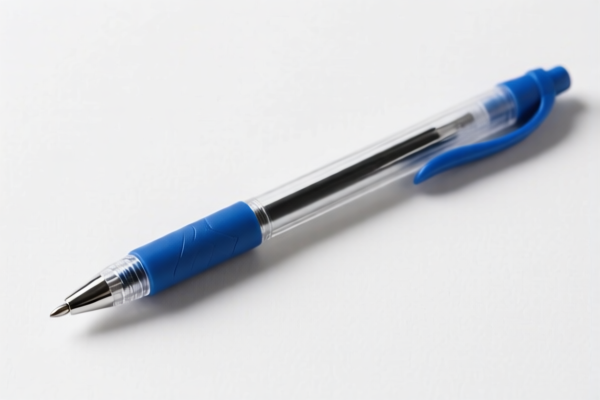
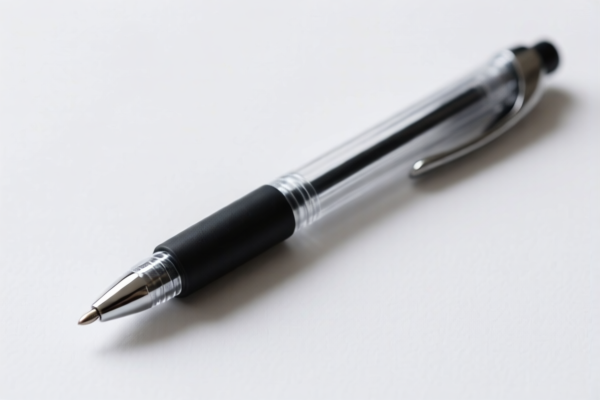
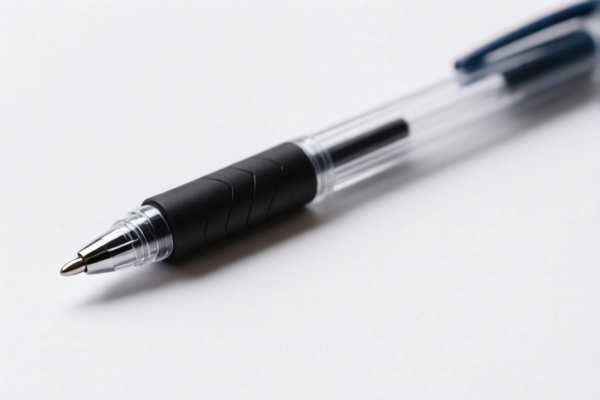
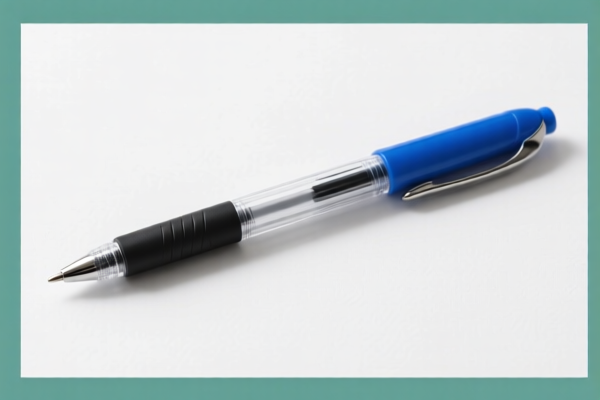
AI Analysis
✒️ Water Erasable Pen (Liquid Erasable Pen / Heat-Activated Pen)
🌐 HS Code Reference & Customs Clearance Guide | 2026 Latest Tariff Analysis | Professional Clearance Strategy
📌 I. Product Definition & Classification: Do You Really Know "Water Erasable Pens"?
Water Erasable Pens, often marketed as "liquid erasable" or "heat-activated" pens, are a specific category of writing instruments. They typically use thermo-sensitive ink that can be erased by friction (rubber eraser) or, in some cases, specific chemical agents, rather than traditional water solubility. However, in international trade classification, the material composition and functionality are the primary drivers for HS Code assignment.
In the provided dataset, these pens are classified under different HS codes depending on whether they are viewed as "paper-based tools," "rubber erasers," or "plastic/rubber writing instruments." This ambiguity is critical for accurate tariff calculation.
⚠️ Key Distinction Point:
- If the pen body is primarily paper-based or contains significant paper fibers → 4823.90.86.80
- If the eraser component is the dominant feature and made of rubber → 4016.99.60.50
- If classified as a writing instrument (pen) with specific functional attributes → 9608.20.00.00
- If made of plastic/rubber but classified as a general plastic article → 3926.90.99.89
- If made of vulcanized rubber → 4016.92.00.00
📦 II. HS Code Classification Details (2026 Latest Tariff Authority Comparison)
Based on the provided dataset, here are the five potential classifications for "Water Erasable Pen":
| HS Code | Product Description | Key Material/Function | Total Tax Rate |
|---|---|---|---|
4823.90.86.80 |
Paper Eraser Pen | Paper or paper-fiber content | 35.0% |
4016.99.60.50 |
Rubber Eraser Pen | Rubber products | 37.5% |
9608.20.00.00 |
Functional Pen Tool | Pen-shaped erasing tool | 21.5% |
3926.90.99.89 |
Plastic/Rubber Pen | Plastic or rubber materials | 22.8% |
4016.92.00.00 |
Vulcanized Rubber Pen | Mainly vulcanized rubber | 14.2% |
🔍 Critical Analysis:
- The most cost-effective classification is4016.92.00.00(14.2%) if the product is made of vulcanized rubber.
- The most expensive is4016.99.60.50(37.5%).
-9608.20.00.00(21.5%) represents a balanced "pen" classification, often preferred if the product is clearly marketed as a writing instrument rather than just an eraser.
💰 III. 2026 Latest Tariff Rate Details (Including Additional Taxes & Policies)
✅ Applicable Country: United States (US)
✅ Origin: China (CN)
✅ Effective Date: November 10, 2025 onwards
🎯 1. 4823.90.86.80 —— Paper Eraser Pen (Paper-Based)
| Item | Detail |
|---|---|
| Base Tariff | 0.0% |
| Additional Tariff (Section 301) | +25.0% |
| Section 122 Tariff | +10.0% |
| Total Rate | 35.0% |
| Calculation | CIF Value × 35.0% |
| De Minimis Exemption? | ❌ No (High tariff prevents de minimis benefit) |
| Legal Path | Base Tariff → Section 301 (25%) → Section 122 (10%) |
📌 Explanation:
- This classification is used when the pen is made primarily of paper or contains significant paper fiber components.
- Although the base tariff is 0%, the 35% total burden is high due to additional tariffs.
🎯 2. 4016.99.60.50 —— Rubber Eraser Pen (Rubber Product)
| Item | Detail |
|---|---|
| Base Tariff | 2.5% |
| Additional Tariff (Section 301) | +25.0% |
| Section 122 Tariff | +10.0% |
| Total Rate | 37.5% |
| Calculation | CIF Value × 37.5% |
| De Minimis Exemption? | ❌ No |
| Legal Path | Base Tariff → Section 301 (25%) → Section 122 (10%) |
📌 Note:
- This is the highest tax rate in the dataset.
- It applies if the product is classified as a general rubber article (not vulcanized rubber pen) rather than a specific writing instrument.
🎯 3. 9608.20.00.00 —— Functional Pen Tool (Writing Instrument)
| Item | Detail |
|---|---|
| Base Tariff | 4.0% |
| Additional Tariff (Section 301) | +7.5% |
| Section 122 Tariff | +10.0% |
| Total Rate | 21.5% |
| Calculation | CIF Value × 21.5% |
| De Minimis Exemption? | ❌ No |
| Legal Path | Base Tariff → Section 301 (7.5%) → Section 122 (10%) |
📌 Advantage:
- This classification is often the most practical for "Water Erasable Pens" as they are fundamentally writing instruments.
- The lower additional tariff (7.5% vs 25%) significantly reduces the total cost.
🎯 4. 3926.90.99.89 —— Plastic/Rubber Pen (General Plastic Article)
| Item | Detail |
|---|---|
| Base Tariff | 5.3% |
| Additional Tariff (Section 301) | +7.5% |
| Section 122 Tariff | +10.0% |
| Total Rate | 22.8% |
| Calculation | CIF Value × 22.8% |
| De Minimis Exemption? | ❌ No |
| Legal Path | Base Tariff → Section 301 (7.5%) → Section 122 (10%) |
📌 Note:
- This applies if the pen is made of plastic and not clearly classified as a writing instrument under Chapter 96.
- Slightly higher than the pen classification (9608.20.00.00).
🎯 5. 4016.92.00.00 —— Vulcanized Rubber Pen (Vulcanized Rubber)
| Item | Detail |
|---|---|
| Base Tariff | 4.2% |
| Additional Tariff (Section 301) | 0.0% |
| Section 122 Tariff | +10.0% |
| Total Rate | 14.2% |
| Calculation | CIF Value × 14.2% |
| De Minimis Exemption? | ❌ No |
| Legal Path | Base Tariff → No Section 301 → Section 122 (10%) |
📌 Best Case Scenario:
- This is the lowest tax rate in the dataset.
- It applies if the product is made of vulcanized rubber and qualifies for the exemption from the 25% Section 301 tariff.
- Critical: The product must be clearly identified as made of vulcanized rubber to avoid the 25% additional tariff.
🛠️ IV. Customs Clearance Practical Advice (Real-World Pitfall Avoidance)
✅ 1. Required Documentation Checklist (No Exceptions)
| Document | Required? | Explanation |
|---|---|---|
| ✅ Product Specification Sheet | ✔️ | Must detail material composition (paper/rubber/plastic), ink type, and erasing mechanism. |
| ✅ Material Composition Certificate | ✔️ | Critical for distinguishing between 4016.92.00.00 (vulcanized rubber) and 4016.99.60.50 (other rubber). |
| ✅ Product Photos (Clear Labels) | ✔️ | Show brand, model, and any "erased" samples to prove functionality. |
| ✅ Commercial Invoice | ✔️ | Must specify "Water Erasable Pen" or "Heat-Activated Erasing Pen" accurately. |
| ✅ Packing List | ✔️ | Detail quantity and weight. |
✅ 2. Declaration Strategy (Key Mnemonics)
🔥 "Material is King, Function is Queen, Tariff Follows the Truth!"
| Situation | Correct Declaration | Wrong Declaration | Consequence |
|---|---|---|---|
| Pen made of vulcanized rubber | 4016.92.00.00 (14.2%) |
4016.99.60.50 (37.5%) |
Overpayment by 23.3% |
| Pen made of plastic | 9608.20.00.00 (21.5%) or 3926.90.99.89 (22.8%) |
4823.90.86.80 (35.0%) |
Overpayment by ~13% |
| Pen made of paper | 4823.90.86.80 (35.0%) |
9608.20.00.00 (21.5%) |
Underpayment → Penalty! |
📌 Recommendation:
- If your product is plastic or rubber body, aim for9608.20.00.00(Pen classification) as it is the most defensible "writing instrument" code.
- If your product is purely vulcanized rubber, fight for4016.92.00.00to save 23.3% in tariffs.
✅ 3. Special Cases Handling
| Situation | Handling Advice |
|---|---|
| Hybrid Material (Plastic Body + Rubber Tip) | Declare as Pen (9608.20.00.00) unless the rubber component dominates. If dominated by rubber, seek 4016.92.00.00. |
| "Water Erase" Claim | Clarify if it uses heat friction or actual water. If heat-activated, it is still a "pen" under 9608.20.00.00. |
| Bulk Import | Ensure the Material Composition Certificate is from a third-party lab to support 4016.92.00.00 classification. |
| Customs Audit | Have physical samples ready to demonstrate erasing capability and material composition. |
🌍 V. Global Market Comparison (2026 Latest)
| Country/Region | Recommended HS Code | Tariff (China Origin) | Notes |
|---|---|---|---|
| 🇺🇸 USA | 9608.20.00.00 |
21.5% (Best balance) | Avoid 4016.99.60.50 (37.5%) |
| 🇨🇳 China | 9608.20.00.00 |
~5-10% | Standard import duty |
| 🇪🇺 EU | 9608.20.00.00 |
~2.7% | No additional tariffs |
| 🇬🇧 UK | 9608.20.00.00 |
~2.7% | Post-Brexit rules apply |
| 🇦🇺 Australia | 9608.20.00.00 |
5.0% | No additional tariffs |
📌 Conclusion:
- The USA is the only market with significant additional tariffs (Section 301 & 122).
- Classification choice is critical in the US market.
-9608.20.00.00is the safest and most common classification for "Water Erasable Pens" in the US.
📌 VI. Common Mistakes & Pitfall Guide (Lessons Learned)
❌ Mistake 1: Declaring a plastic pen as 4823.90.86.80 (Paper)
👉 Result: Customs may reject the declaration or impose penalties for misclassification.
👉 Cost: Unnecessary risk of audit.
❌ Mistake 2: Declaring a vulcanized rubber pen as 4016.99.60.50
👉 Result: Paying 37.5% instead of 14.2%.
👉 Cost: 23.3% overpayment on every shipment.
❌ Mistake 3: Not providing material composition certificates
👉 Result: Customs defaults to the highest applicable tariff or delays clearance.
👉 Cost: Storage fees, delays, and potential re-classification costs.
✅ Correct Practice:
"Water Erasable Pen, Plastic Body, Thermo-Sensitive Ink, Rubber Tip, Model XYZ, Erases by Friction"
HS Code:9608.20.00.00(21.5%)
🎯 VII. Conclusion: Precision Classification Saves Money!
🎯 Key Takeaway:
🔹 "Material Defines Code, Code Defines Cost."
🔹 Vulcanized Rubber = 14.2% (Best)
🔹 Pen (Plastic/Rubber) = 21.5% (Best Balance)
🔹 Paper = 35.0% (High)
🔹 Other Rubber = 37.5% (Highest)🔹 "Don't let 'Water Erase' mislead you. It's still a pen. Declare it as a pen (
9608.20.00.00) for the best balance of accuracy and cost."
📌 Pro Tip:
If your pens are made of vulcanized rubber, provide a third-party material test report to support classification under 4016.92.00.00 (14.2%). This can save you 7.3% - 23.3% compared to other classifications.
📣 Immediate Action:
📞 Contact your customs broker with material composition details.
🚀 Apply for Advance Ruling if importing large volumes.
💼 Precision in classification = Profit in your pocket.
✨ Professional Customs Clearance Starts with Accurate HS Codes!
💼 Your every dollar of duty savings is earned by precision!
Customer Reviews
About HS Code Classification
The Harmonized System (HS) is an internationally standardized nomenclature developed by the World Customs Organization (WCO) to classify traded products. Over 200 countries use the HS system as the basis for customs tariffs, trade statistics, and import/export regulations.
Each HS code follows a hierarchical structure:
- Chapter (2 digits) — Broad category of goods (e.g., Chapter 84: Machinery and Mechanical Appliances)
- Heading (4 digits) — More specific grouping within the chapter
- Subheading (6 digits) — Internationally standardized breakdown, used by all WCO member countries
- National subdivisions (8-10 digits) — Country-specific extensions for further classification, such as US HTSUS 10-digit codes
Correct HS code classification is essential for smooth customs clearance, accurate duty payment, and compliance with trade regulations. Misclassification can lead to customs delays, overpayment of duties, or penalties.
When importing from CN to US, the applicable tariff rates may include:
- Most-Favored-Nation (MFN) rate — The standard duty rate applied to WTO members
- General rate — Applied to countries without trade agreements
- Trade remedy duties — Additional tariffs such as Section 301 (anti-dumping), Section 232 (national security), or countervailing duties
The information provided on this page is for reference purposes only. For official classification, please consult with your local customs authority or a licensed customs broker.