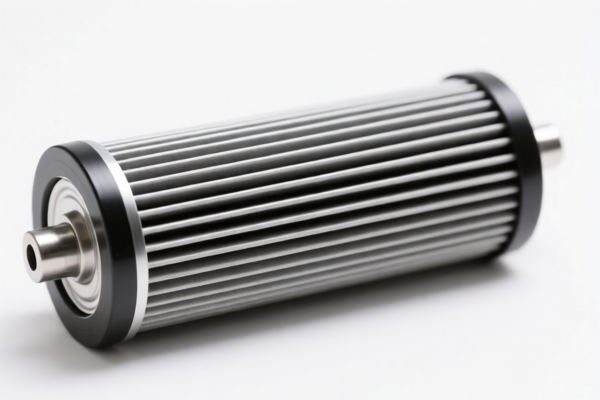
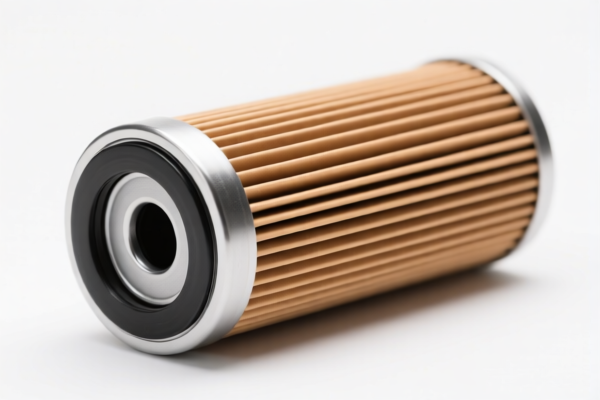
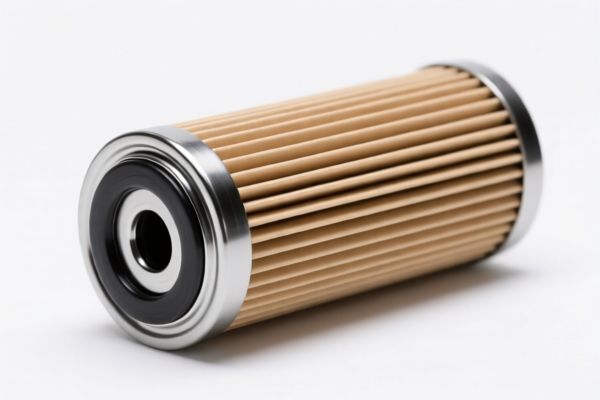
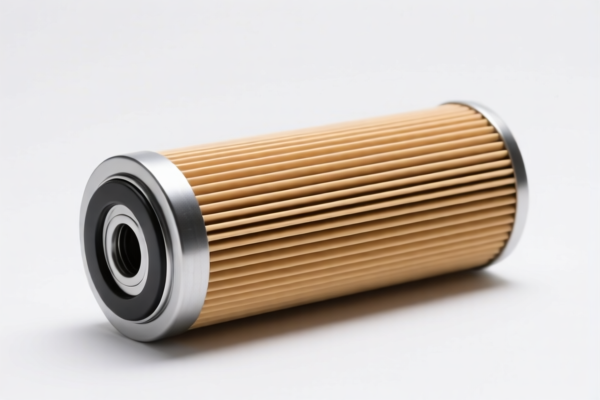
Water Filter Cartridge
CN → US| HS Code | Tariff Rate | Origin | Destination | Doc |
|---|---|---|---|---|
| 8421210000 | 35.0% | CN | US | Official Doc |
| 8421990140 | 35.0% | CN | US | Official Doc |
| 3926909989 | 22.8% | CN | US | Official Doc |
| 3926904590 | 38.5% | CN | US | Official Doc |
| 8509805095 | 14.2% | CN | US | Official Doc |
Product Images
AI Analysis
🚰 Water Filter Cartridge (Water Purification Cartridges)
🌐 HS Code Reference & Customs Clearance Guide | 2026 Latest Tariff Analysis | Professional Strategy for High-Tax Scenarios
📌 I. Product Definition: What Exactly is a "Water Filter Cartridge"?
A water filter cartridge is a consumable or integral component used in water purification systems. In international trade, its classification is not straightforward. It depends heavily on two factors: 1. Structure/Function: Is it a standalone filtering component, or part of a complete mechanical system? 2. Material: Is it defined by its mechanical function (Chapter 84) or its material composition (Chapter 39)?
⚠️ Critical Distinction:
- If it is recognized as a part of a filtering machine → Chapter 84 (Mechanical Appliances)
- If it is recognized as a plastic sealed component/gasket → Chapter 39 (Plastics)
- If it is part of a complete household appliance → Chapter 85 (Electrical Home Appliances)
📦 II. HS Code Classification Details (2026 Authorized对照)
Based on the provided data, here are the four possible classifications for Water Filter Cartridges, ranging from functional parts to plastic seals.
| HS Code | Product Description | Application Scenario | Classification Logic |
|---|---|---|---|
8421.21.00.00 |
Parts of water purification equipment (Filter Cartridges) | Generic water filter cartridges for purification systems | Functional Part: Recognized as a core component of water purification machinery. |
8421.99.01.40 |
Parts of water filtering/purifying machines (Filter Cartridges) | Specific mechanical filter cartridges for industrial/commercial units | Mechanical Part: Defined as a part of water filtration machinery, distinct from general filters. |
3926.90.99.89 |
Other plastic articles (Filter Cartridges) | Plastic-bodied filter cartridges viewed primarily as plastic products | Material-Based: Classified as "Other Plastic Articles" due to plastic material composition. |
3926.90.45.90 |
Other non-O-ring seals/sealing components (Filter Cartridges) | Plastic filter cartridges acting as sealing/filtering assemblies | Seal/Component: Classified under specific plastic sealing/filtering components (Non-O-ring). |
8509.80.50.95 |
Household Electric Appliances (Water Purifiers) | NOT a cartridge alone, but the complete unit containing the cartridge | Finished Appliance: Only applicable if the item is a complete home water purifier, not just the replaceable cartridge. |
🔍 Key Insight:
-8421codes are generally preferred for functional "filter cartridges" as they reflect the primary utility (water purification). -3926codes are alternative classifications often used when the cartridge is viewed strictly as a plastic manufactured good, potentially leading to different tax treatments (see below). -8509is a trap: Do not use this for cartridges alone. It applies only to the complete electric appliance.
💰 III. 2026 Latest Tariff Rate Breakdown (Including Surtaxes)
✅ Applicable Country: United States (US)
✅ Origin: China (CN)
✅ Effective Time: Post-2025 Import (Current Trade Policy)
🎯 1. 8421.21.00.00 & 8421.99.01.40 — Functional Filter Parts
Total Tax Rate: 35.0%
| Item | Content |
|---|---|
| Base Tariff | 0.0% |
| Section 301 Surtax | +25.0% (USITC Footnote) |
| IEEPA Surtax | +10.0% (122 Clause/China-specific) |
| Total Effective Rate | 35.0% |
| Calculation Base | CIF Value × 35% |
| De Minimis Exemption | ❌ Denied |
| Legal Path | IEEPA:9903.01.25 → USITC:8421.21/99 → FOOTNOTE:Section301 |
📌 Explanation:
- Although the base tariff is 0%, the Section 301 (25%) and IEEPA (10%) surtaxes are aggressively applied to Chinese-origin water treatment parts. - These codes are considered "industrial/functional" and are not eligible for consumer electronics exemptions.
🎯 2. 3926.90.99.89 — Plastic Articles (Other)
Total Tax Rate: 22.8%
| Item | Content |
|---|---|
| Base Tariff | 5.3% |
| Section 301 Surtax | +7.5% (Reduced 301 rate for some plastics?) |
| IEEPA Surtax | +10.0% |
| Total Effective Rate | 22.8% |
| Calculation Base | CIF Value × 22.8% |
| De Minimis Exemption | ❌ Denied |
| Legal Path | IEEPA:9903.01.25 → USITC:3926.90.99.89 → FOOTNOTE:Section301 |
📌 Strategic Note:
- This rate (22.8%) is lower than the 35% for Chapter 84. - Risk: Customs may challenge this classification if the cartridge is primarily functional (filtering) rather than just a plastic part. Misclassification risk is high.
🎯 3. 3926.90.45.90 — Plastic Sealing/Filter Components
Total Tax Rate: 38.5%
| Item | Content |
|---|---|
| Base Tariff | 3.5% |
| Section 301 Surtax | +25.0% |
| IEEPA Surtax | +10.0% |
| Total Effective Rate | 38.5% |
| Calculation Base | CIF Value × 38.5% |
| De Minimis Exemption | ❌ Denied |
| Legal Path | IEEPA:9903.01.25 → USITC:3926.90.45.90 → FOOTNOTE:Section301 |
📌 Warning:
- This is the highest tax rate among the cartridge-specific codes. - Avoid this classification unless the cartridge is strictly defined as a "non-O-ring seal" with negligible filtering capability.
🎯 4. 8509.80.50.95 — Household Electric Appliances
Total Tax Rate: 14.2%
| Item | Content |
|---|---|
| Base Tariff | 4.2% |
| Section 301 Surtax | 0.0% |
| IEEPA Surtax | +10.0% |
| Total Effective Rate | 14.2% |
| Calculation Base | CIF Value × 14.2% |
| De Minimis Exemption | ❌ Denied |
| Legal Path | IEEPA:9903.01.25 → USITC:8509.80.50.95 |
📌 Crucial Distinction:
- This rate is the lowest (14.2%). - HOWEVER, this HS code is for Household Electric Appliances (e.g., a complete water purifier machine). - You CANNOT use this for a standalone filter cartridge. Doing so constitutes serious misclassification, leading to fines and seizure. - Use Case: Only if you are importing a complete, branded water filtration unit, not the replacement cartridge.
🛠️ IV. Customs Clearance Practical Advice
✅ 1. Documentation Checklist (Non-Negotiable)
| Document | Required | Notes |
|---|---|---|
| ✅ Product Specification Sheet | ✔️ | Must detail: Material, Dimensions, Flow Rate, Micron Rating, Intended Use (Water Type). |
| ✅ Material Composition Report | ✔️ | To determine if Chapter 84 (Function) or 39 (Material) applies. |
| ✅ Commercial Invoice | ✔️ | Clear description: "Water Filter Cartridge for Model XYZ". Avoid vague terms like "Plastic Part". |
| ✅ Packing List | ✔️ | Show net/gross weight. Ensure no mixing with complete appliances unless declared separately. |
| ✅ Proof of Origin | ✔️ | Essential for determining 301/IEEPA applicability. |
| ✅ FCC/CE Certifications | (If Electric Unit) | Only if 8509 is used. Not required for passive cartridges. |
✅ 2. Classification Strategy & Pitfalls
🔥 "Function First, Material Second, Complete Unit Third!"
| Scenario | Recommended HS Code | Tax Rate | Risk Level |
|---|---|---|---|
| Standalone Filter Cartridge (Most Common) | 8421.21.00.00 or 8421.99.01.40 |
35.0% | ⚠️ Medium (High tax, but correct if functional) |
| Plastic Cartridge Body (No filter media) | 3926.90.99.89 |
22.8% | ⚠️ High (Customs may argue it's a filter part) |
| Cartridge as Seal | 3926.90.45.90 |
38.5% | 🔴 High (Avoid unless specifically a gasket) |
| Complete Electric Water Purifier | 8509.80.50.95 |
14.2% | ⚠️ Low (If actually a machine), High (If mislabeled cartridge) |
📌 Critical Tip:
- If you import only cartridges, do NOT try to force them into8509to save tax. Customs will inspect the shipment, find no electrical components, and penalize you. - Between8421and3926,8421is more defensible for "water purification" purposes. If you use3926, be prepared to prove it is primarily a plastic article, not a functional filter.
✅ 3. Special Handling for Surcharge Mitigation
| Situation | Strategy |
|---|---|
| High Tariff (35%) | Consider supply chain diversification. If possible, source from non-China countries to avoid IEEPA/301 surtaxes. |
| Misclassification Risk | Apply for a Binding Ruling from CBP before shipping. This provides legal certainty on whether 8421 or 3926 is correct. |
| Kitting | If cartridges are sold with a complete machine, ensure they are not shipped together in a way that implies they are part of the 8509 appliance unless declared as such. |
🌍 V. Global Market Comparison (2026)
| Market | Recommended HS Code | Approx. Total Tax (China Origin) | Notes |
|---|---|---|---|
| 🇺🇸 USA | 8421.21.00.00 |
35.0% | Highest global tax burden due to 301 + IEEPA. |
| 🇨🇳 China | 8421.21.00.00 |
0% | No surtaxes for imports into China. |
| 🇪🇺 EU | 8421.21.00.00 |
0% | No Section 301 equivalent. Standard EU duty may apply (varies). |
| 🇬🇧 UK | 8421.21.00.00 |
Low | Post-Brexit rules; generally lower than US surtaxes. |
📌 Conclusion:
- The US market is uniquely punitive for Chinese water filter parts due to combined trade policies. - Cost optimization must focus on supply chain location (non-China origin) rather than just HS code optimization, as the base duties are low but surtaxes are high.
📌 VI. Common Mistakes & Blood-Tears Guide
❌ Mistake 1: Declaring a Filter Cartridge as 8509 (Appliance) to get 14.2% tax.
👉 Consequence: Customs inspection reveals no electronics. Fines + Seizure + Back Taxes.
❌ Mistake 2: Declaring as 3926.90.45.90 (Seal) to avoid higher scrutiny.
👉 Consequence: Tax rate is actually 38.5%, higher than 8421 (35%). Double Loss.
❌ Mistake 3: Ignoring IEEPA 10% surtax in cost calculation.
👉 Consequence: Margin erosion. The 10% is often forgotten in preliminary quotes, leading to unexpected losses.
❌ Mistake 4: Mixing Cartridges with Complete Units in one shipment without clear declaration.
👉 Consequence: Customs may value the entire shipment at the highest applicable rate or delay clearance for inspection.
✅ Correct Approach:
"Water Filter Cartridge, PP/Sediment/Carbon, For Residential RO Systems, Model XYZ, China Origin"
→ Declare under8421.21.00.00
→ Account for 35.0% total duty.
🎯 VII. Conclusion: Professional Declaration Saves Money!
🎯 Remember the Mantra:
🔹 "Cartridge is Part, Not Machine. 35% is Real, 14% is Trap."
🔹 "Check Material vs. Function. Avoid 3926.45 unless it's a Gasket."
🔹 "US Market is Hard. Plan Sourcing Early."
📌 Pro Tip:
If your volume is high, invest in a CBP Binding Ruling. It costs money upfront but protects you from massive back-taxes and penalties during audits.
📣 Take Action Now:
📞 Consult your customs broker.
📄 Provide exact product specs.
🚀 Ensure compliant, efficient, and cost-effective clearance!
✨ Precise Classification is the Key to Profit!
💼 Every percentage point counts in international trade!
Customer Reviews
About HS Code Classification
The Harmonized System (HS) is an internationally standardized nomenclature developed by the World Customs Organization (WCO) to classify traded products. Over 200 countries use the HS system as the basis for customs tariffs, trade statistics, and import/export regulations.
Each HS code follows a hierarchical structure:
- Chapter (2 digits) — Broad category of goods (e.g., Chapter 84: Machinery and Mechanical Appliances)
- Heading (4 digits) — More specific grouping within the chapter
- Subheading (6 digits) — Internationally standardized breakdown, used by all WCO member countries
- National subdivisions (8-10 digits) — Country-specific extensions for further classification, such as US HTSUS 10-digit codes
Correct HS code classification is essential for smooth customs clearance, accurate duty payment, and compliance with trade regulations. Misclassification can lead to customs delays, overpayment of duties, or penalties.
When importing from CN to US, the applicable tariff rates may include:
- Most-Favored-Nation (MFN) rate — The standard duty rate applied to WTO members
- General rate — Applied to countries without trade agreements
- Trade remedy duties — Additional tariffs such as Section 301 (anti-dumping), Section 232 (national security), or countervailing duties
The information provided on this page is for reference purposes only. For official classification, please consult with your local customs authority or a licensed customs broker.