Water Glass
CN → US| HS Code | Tariff Rate | Origin | Destination | Doc |
|---|---|---|---|---|
| 7013371001 | 46.0% | CN | US | Official Doc |
| 7013372090 | 40.0% | CN | US | Official Doc |
| 7010905039 | 35.0% | CN | US | Official Doc |
| 7010905029 | 35.0% | CN | US | Official Doc |
| 7323930060 | 62.0% | CN | US | Official Doc |
Product Images
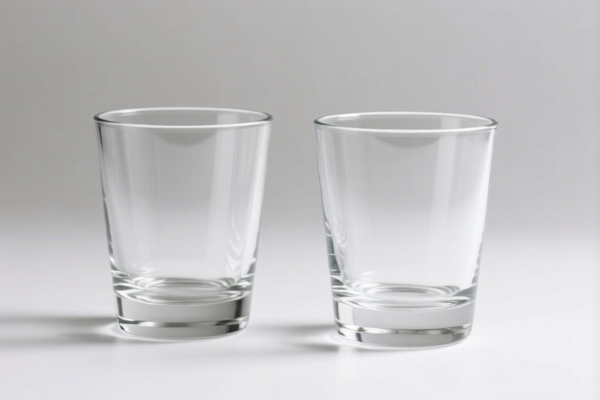
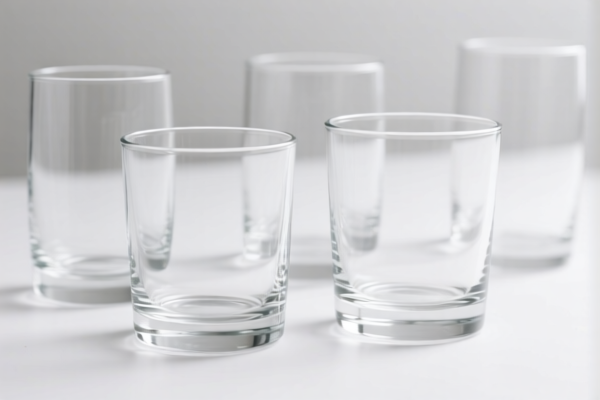


AI Analysis
🥂 Water Glass (Drinking Glassware)
🌐 HS Code Reference & Customs Clearance Guide | 2026 Latest Tariff Analysis | Professional Entry Strategy
📌 Part I: Product Definition & Classification: What Exactly is a "Water Glass"?
In international trade, "Water Glass" typically refers to glassware for drinking, including tumblers, highball glasses, and stemmed wine glasses. It is distinct from industrial containers or laboratory ware. The key to classification lies in distinguishing between finished drinking vessels (Chapter 70.13) and general-purpose glass containers (Chapter 70.10), especially regarding material composition (e.g., Stainless Steel inserts).
⚠️ Key Distinction Point:
- If it is a pure glass vessel for drinking → Classified under 7013.37 (Drinking glasses).
- If it is a glass jar/container for food storage (not primarily for drinking) → Classified under 7010.90.
- If it is Stainless Steel (even with glass parts, if the primary function/material is steel for water bottles) → Classified under 7323.93.
📦 Part II: HS Code Classification Details (2026 Latest Tariff Authority Comparison)
| HS Code | Product Description | Applicable Scenario | Material Key |
|---|---|---|---|
7013.37.10.01 |
Glassware for drinking, of lead crystal glass | Premium drinking glasses, stemware | ✅ Lead Crystal |
7013.37.20.90 |
Glassware for drinking, of other glass | Standard water tumblers, pint glasses | ✅ Soda-Lime Glass |
7010.90.50.39 |
Glass containers, of a kind used for the conveyance or packaging of goods | Glass jars, bottles (non-drinking specific) | ✅ Glass (Container) |
7010.90.50.29 |
Other glass containers | General purpose glass storage | ✅ Glass (Container) |
7323.93.00.60 |
Table, kitchen or other household articles and parts thereof, of stainless steel | Stainless steel water bottles, travel mugs | ✅ Stainless Steel |
🔍 Critical Reminder:
- Pure Glass Drinking Vessels MUST be classified under 7013.37. Do not use 7010 if the primary use is direct drinking from the vessel.
- Stainless Steel Water Bottles fall under 7323, not glass codes, even if they have double-wall glass liners. The material "Stainless Steel" dictates the chapter.
- 7010.90 is for packaging (like jam jars or beer bottles). If the consumer drinks directly from the container, it is 7013.
💰 Part III: 2026 Latest Tariff Rate Breakdown (Including Surcharges & Policy Add-ons)
✅ Applicable Country: United States (US)
✅ Country of Origin: China (CN)
✅ Effective Date: 2025/2026 (Current Trade Policy)
🎯 1. 7013.37.10.01 & 7013.37.20.90 —— Glass Drinking Glasses (Pure Glass)
| Item | Content |
|---|---|
| Base Tariff | 28.5% (for 7013.37.10.01) / 22.5% (for 7013.37.20.90) |
| Section 301 Surcharge | +7.5% |
| Section 122 Surcharge | +10% |
| Total Effective Rate | 46.0% (for Lead Crystal) 40.0% (for Other Glass) |
| Tax Calculation | CIF Value × Total Rate |
| De Minimis Exemption? | ❌ No (High-risk category for Section 301/122) |
| Legal Basis Path | USITC:7013.37 → Section 301: Footnote 9903.88.01 → Section 122: IEEPA |
📌 Explanation:
- Section 301 (7.5%): Standard additional tariff on Chinese glassware imports.
- Section 122 (10%): Applied under Section 232 or related national security provisions for specific steel/aluminum-related supply chains, often applied broadly to industrial/consumer goods in recent updates. Note: The data explicitly lists "122 Clause Tariff 10%".
- Lead Crystal (101) vs. Regular Glass (209): Lead crystal has a higher base tariff (28.5% vs 22.5%), resulting in a total of 46% vs 40%.
🎯 2. 7010.90.50.39 & 7010.90.50.29 —— Glass Containers (Non-Drinking Specific)
| Item | Content |
|---|---|
| Base Tariff | 0.0% |
| Section 301 Surcharge | +25.0% |
| Section 122 Surcharge | +10% |
| Total Effective Rate | 35.0% |
| Tax Calculation | CIF Value × 35% |
| De Minimis Exemption? | ❌ No |
| Legal Basis Path | USITC:7010.90 → Section 301: Footnote 9903.88.01 → Section 122: IEEPA |
📌 Explanation:
- These codes apply to glass jars/bottles. While the base tariff is 0%, the Section 301 surcharge jumps to 25% (vs 7.5% for drinking glasses), likely due to broader manufacturing sector impacts.
- Total 35% is still significant, but lower than drinking glasses.
🎯 3. 7323.93.00.60 —— Stainless Steel Tableware (Water Bottles)
| Item | Content |
|---|---|
| Base Tariff | 2.0% |
| Section 301 Surcharge | 0.0% (Base) + 50% (Special Steel/Aluminum/Copper Surcharge) |
| Section 122 Surcharge | +10% |
| Total Effective Rate | 62.0% |
| Tax Calculation | CIF Value × 62% |
| De Minimis Exemption? | ❌ No |
| Legal Basis Path | USITC:7323.93 → Section 301: Steel/Aluminum Provisions → Section 122: IEEPA |
📌 Explanation:
- CRITICAL: Stainless steel items from China face a 50% additional surcharge under the "Steel, Aluminum, Copper Products" rule.
- Even though the base tariff is low (2%), the 50% steel surcharge + 10% Section 122 pushes the total to 62%. This is the highest risk category.
🛠️ Part IV: Customs Clearance Practical Advice (Battle-Tested Pitfall Avoidance)
✅ 1. Required Documentation Checklist (Non-Negotiable)
| Document | Mandatory? | Notes |
|---|---|---|
| ✅ Product Specification Sheet | ✔️ | Must specify: Material (Glass vs Steel), Capacity, Usage (Drinking vs Storage) |
| ✅ Product Photos (Clear) | ✔️ | Show logo, material texture, and any "Food Grade" markings |
| ✅ Commercial Invoice | ✔️ | Must clearly state: "Glass Drinking Ware" or "Stainless Steel Water Bottle" |
| ✅ Country of Origin Certificate | ✔️ | Critical for determining tariff eligibility |
| ✅ Packing List | ✔️ | Detail items to avoid "mixed classification" penalties |
✅ 2. Declaration Tips (Key Mantras)
🔥 “Material First, Use Second. Glass Drink vs. Steel Bottle. Don't Mix!”
| Scenario | Correct Declaration | Wrong Practice |
|---|---|---|
| Pure Glass Tumbler | 7013.37.xxxx "Glass Drinking Ware" |
Declare as "Glass Jar" (7010) → Risk of Re-classification & Penalty |
| Stainless Steel Bottle | 7323.93.00.60 "Stainless Steel Household Article" |
Declare as "Glass Container" (7010) → 62% Tax Avoided? No, Penalties Apply! |
| Glass Jar (Jam) | 7010.90.50.xx "Glass Container" |
Declare as "Drinking Glass" (7013) → Overpaying Tax (35% vs 40%) |
| Mixed Package (Glass + Steel Lid) | Declare by Primary Material/Function | Split declaration incorrectly → Delays |
✅ 3. Special Cases
| Scenario | Handling Advice |
|---|---|
| Lead Crystal Glasses | Ensure invoice says "Lead Crystal" to match 7013.37.10.01 (46% tax). If mislabeled as "Soda-Lime", you may face disputes. |
| Insulated Steel Bottles | Must be declared under 7323.93.00.60. The 50% steel surcharge applies regardless of glass lining. |
| Glassware with Plastic Handles | Still classified under 7013 if glass is the principal material. |
| Sample/Free Samples | High risk. Customs may still assess duties if commercial value is evident. |
🌍 Part V: Global Market Comparison (2026 Latest)
| Country/Region | Recommended HS Code | Tariff (China Origin) | Key Requirements | Notes |
|---|---|---|---|---|
| 🇺🇸 USA | 7013.37 / 7323.93 |
40% - 62% (See Above) | FCC/Prop 65 (if applicable) | Highest Tariff Risk due to Section 301 & 122 |
| 🇨🇳 China | 7013.37 / 7323.93 |
5% - 10% | CCC (for steel) | Low import duty, but check VAT |
| 🇪🇺 EU | 7013.37 / 7323.93 |
0% - 12% | CE, LFGB | No Section 301 equivalent |
| 🇬🇧 UK | 7013.37 / 7323.93 |
0% - 12% | UKCA | Post-Brexit rules apply |
📌 Conclusion:
- USA is the most expensive market for these goods due to layered surcharges (301 + 122 + Steel).
- Stainless Steel (7323) is the most penalized item (62% total).
- Pure Glass Drinking Ware (7013) is expensive (40-46%) but stable.
📌 Part VI: Common Errors & Pitfall Guide (Lessons Learned)
❌ Error 1: Declaring Stainless Steel Water Bottles as "Glass Containers" to avoid high tariffs.
👉 Consequence: Customs inspection reveals steel material. Re-classification to 7323.93.00.60. Back taxes + 25% penalty.
❌ Error 2: Declaring Glass Jars as "Drinking Glasses" (7013) when they are clearly for storage.
👉 Consequence: Customs may downgrade or reclassify. While tax might be similar, it triggers manual review delays.
❌ Error 3: Ignoring Section 122 (10%) in cost calculations.
👉 Consequence: Profit margin erosion. Many traders forget this 10% surcharge on top of Section 301.
❌ Error 4: Using vague descriptions like "Drinkware".
👉 Consequence: Customs officer discretion may lead to the highest possible rate or request for samples.
✅ Correct Practice:
"Lead Crystal Water Glass, Hand-blown, 12oz, Imported from China"
OR
"Double-Wall Stainless Steel Insulated Tumbler, 20oz, Imported from China"
🎯 Part VII: Conclusion: Precision in Classification Saves Money!
🎯 Remember the Mantra:
🔹 "Glass Drink = 40-46%. Steel Bottle = 62%. Jar = 35%."
🔹 "Steel Surcharges Kill Margins. Don't Be the One Who Misses the 50%."
🔹 "Clear Description Prevents Customs Nightmare."
📌 Pro Tip:
If your Stainless Steel products are shipped from Vietnam or Mexico, you may qualify for IEEPA Exemptions, potentially reducing the total tax rate significantly.
Recommend Advance Ruling for new product lines to lock in HS Code classification before shipment.
📣 Take Action Now:
📞 Contact a Professional Customs Broker + Provide Product Samples + Apply for HS Code Pre-Ruling
🚀 Ensure your Water Glass shipments clear US Customs smoothly, avoiding 62% tax shocks!
✨ Professional Clearance Starts with Accurate Classification!
💼 Every Percent of Tax Saved is Pure Profit!
Customer Reviews
About HS Code Classification
The Harmonized System (HS) is an internationally standardized nomenclature developed by the World Customs Organization (WCO) to classify traded products. Over 200 countries use the HS system as the basis for customs tariffs, trade statistics, and import/export regulations.
Each HS code follows a hierarchical structure:
- Chapter (2 digits) — Broad category of goods (e.g., Chapter 84: Machinery and Mechanical Appliances)
- Heading (4 digits) — More specific grouping within the chapter
- Subheading (6 digits) — Internationally standardized breakdown, used by all WCO member countries
- National subdivisions (8-10 digits) — Country-specific extensions for further classification, such as US HTSUS 10-digit codes
Correct HS code classification is essential for smooth customs clearance, accurate duty payment, and compliance with trade regulations. Misclassification can lead to customs delays, overpayment of duties, or penalties.
When importing from CN to US, the applicable tariff rates may include:
- Most-Favored-Nation (MFN) rate — The standard duty rate applied to WTO members
- General rate — Applied to countries without trade agreements
- Trade remedy duties — Additional tariffs such as Section 301 (anti-dumping), Section 232 (national security), or countervailing duties
The information provided on this page is for reference purposes only. For official classification, please consult with your local customs authority or a licensed customs broker.