Water Level Detector
CN → US| HS Code | Tariff Rate | Origin | Destination | Doc |
|---|---|---|---|---|
| 9015104000 | 35.0% | CN | US | Official Doc |
| 9015108000 | 35.0% | CN | US | Official Doc |
| 9031200000 | 36.7% | CN | US | Official Doc |
| 9031808085 | 10.0% | CN | US | Official Doc |
| 8526910020 | 35.0% | CN | US | Official Doc |
Product Images
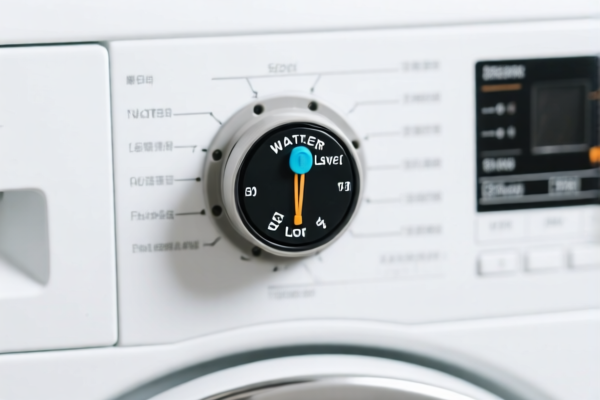
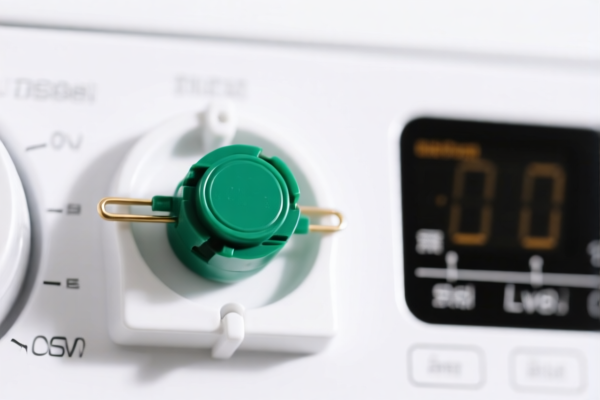
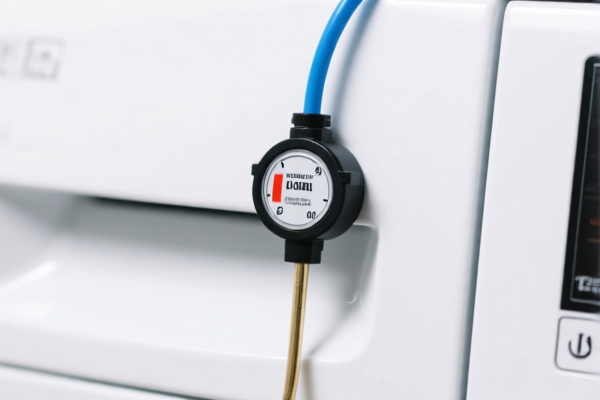
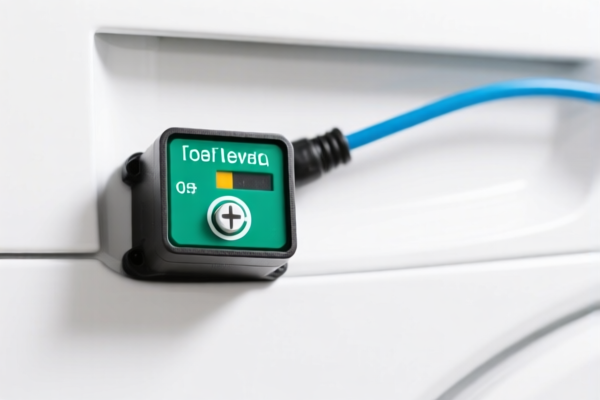
AI Analysis
🌊 Water Level Detector (Sounding Equipment & Depth Meters)
🌐 HS Code Reference & Customs Clearance Guide | 2026 Updated Tariff Analysis | Professional Strategy for Hydrological Instruments
📌 I. Product Definition & Classification: What is a "Water Level Detector"?
A Water Level Detector (also known as a Sounding Device, Echo Sounder, or Depth Meter) is an instrument used to measure the depth of water or the level of liquid in a tank. In international trade, classification depends heavily on the working principle (electronic/electrical vs. mechanical) and the specific application (hydrological survey vs. general industrial testing).
Key Distinctions: 1. Hydrological/Marine Instruments (Chapter 9015): Devices specifically designed for measuring water depth in oceans, rivers, or lakes. These often use sonar or electrical resistance principles for precise geographic/hydrographic data. 2. General Measurement/Testing Instruments (Chapter 9031): Devices used for testing water levels in tanks, industrial processes, or general laboratory settings. 3. Radio Navigation/Auxiliary Devices (Chapter 8526): Devices that may integrate radio signals or GPS for navigation-assisted depth measurement.
⚠️ Critical Classification Point:
- If the device is primarily for hydrological/oceanographic surveying → Look at 9015.
- If it is for general industrial testing or quality control → Look at 9031.
- If it is a radio-based navigation aid → Look at 8526.
- Avoid the "General Purpose" Trap:9031.80.80.85often carries lower tariffs but requires strict proof that it is not a specialized hydrological tool.
📦 II. HS Code Classification Details (2026 Tariff Book Comparison)
| HS Code | Product Description | Application Scenario | Key Characteristics |
|---|---|---|---|
9015.10.40.00 |
Water Depth Measuring Instruments | Hydrological/ Marine Surveying | Electronic/ electrical distance measuring for water bodies. High precision. |
9015.10.80.00 |
Other Depth Measuring Instruments | Hydrological/ Marine Surveying | General category for hydrological sounding gear. No material conflicts. |
9031.20.00.00 |
Measuring/Checking Instruments for Specific Applications | Industrial Testing Benches | Used in testing setups; fits the "apparatus" attribute for water level testing. |
9031.80.80.85 |
Other Measurement/Inspection Instruments | General Industrial Use | Lowest Tariff Option. For general-purpose level detectors not specialized for hydrology. |
8526.91.00.20 |
Radio Navigation Aids (Other) | Navigation-Assisted Sounding | Uses radio signals/reception to assist in depth measurement or navigation. |
8526.91.00.40 |
Radio Navigation Aids (Other) | Sonic/Radio Depth Meters | Combines acoustic or radio measurement for navigation assistance. |
🔍 Important Note:
- 9015 Codes: Specialized for hydrology/oceanography. If you are selling to shipping companies, naval architects, or environmental agencies, these are the correct codes.
- 9031 Codes: Broader industrial use. If selling to manufacturing plants for tank monitoring,9031.80.80.85is strategically valuable due to lower taxes.
- 8526 Codes: Niche. Only use if the device explicitly functions as a radio navigation aid or integrates GPS/radio comms for depth.
💰 III. 2026 Tariff Rate Breakdown (Including Surcharges & Policies)
✅ Applicable Country: United States (US)
✅ Origin: China (CN)
✅ Effective Date: November 10, 2025 (and subsequent imports)
🎯 1. 9015.10.40.00 & 9015.10.80.00 —— Hydrological Depth Meters
| Item | Content |
|---|---|
| Base Duty | 0.0% (ad valorem) |
| Section 301 Surcharge | +25.0% |
| Section 122 Surcharge | +10.0% |
| Total Duty Rate | 35.0% |
| Tax Calculation | CIF Value × 35% |
| De Minimis Exemption? | ❌ No (deny_de_minimis) |
| Legal Basis | USITC:9015.10.40.00 / 9015.10.80.00 + 301 Footnotes + IEEPA:122 |
📌 Explanation:
- These codes are classified under specialized scientific instruments.
- Despite a 0% base tariff, the Section 301 (25%) and Section 122 (10%) surcharges apply, totaling 35%.
- Section 122 specifically targets items often associated with strategic or dual-use technologies, which hydrological surveying equipment can sometimes fall under depending on precision.
🎯 2. 9031.20.00.00 —— Testing Bench Instruments
| Item | Content |
|---|---|
| Base Duty | 1.7% |
| Section 301 Surcharge | +25.0% |
| Section 122 Surcharge | +10.0% |
| Total Duty Rate | 36.7% |
| Tax Calculation | CIF Value × 36.7% |
| De Minimis Exemption? | ❌ No |
| Legal Basis | USITC:9031.20.00.00 + 301 Footnotes + IEEPA:122 |
📌 Note:
- Slightly higher than 9015 due to the 1.7% base duty.
- Recommended only if the device is explicitly part of a testing bench system and not a standalone hydrological tool.
🎯 3. 9031.80.80.85 —— General Measurement Instruments (OPTIMIZED)
| Item | Content |
|---|---|
| Base Duty | 0.0% |
| Section 301 Surcharge | 0.0% |
| Section 122 Surcharge | +10.0% |
| Total Duty Rate | 10.0% |
| Tax Calculation | CIF Value × 10% |
| De Minimis Exemption? | ❌ No (but much lower cost) |
| Legal Basis | USITC:9031.80.80.85 + IEEPA:122 |
📌 Strategic Advantage:
- This is the most cost-effective classification for general-purpose water level detectors.
- Condition: You must prove the device is not a specialized hydrological surveying instrument (Chapter 9015) or a radio navigation aid (Chapter 8526). It should be framed as a "general measurement instrument" for industrial tank monitoring or quality control.
- Savings: Compared to 9015 codes (35%), this saves 25% in total duties!
🎯 4. 8526.91.00.20 & 8526.91.00.40 —— Radio Navigation Aids
| Item | Content |
|---|---|
| Base Duty | 0.0% |
| Section 301 Surcharge | +25.0% |
| Section 122 Surcharge | +10.0% |
| Total Duty Rate | 35.0% |
| Tax Calculation | CIF Value × 35% |
| De Minimis Exemption? | ❌ No |
| Legal Basis | USITC:8526.91.00.20 / 40 + 301 Footnotes + IEEPA:122 |
📌 Usage:
- Only applicable if the device is marketed and used as a radio navigation aid.
- If the device uses sonar but lacks radio navigation functionality, do not use this code. Misclassification can lead to severe penalties.
🛠️ IV. Customs Clearance Practical Advice (Real-World Pitfall Guide)
✅ 1. Required Documentation Checklist
| Document | Mandatory? | Description |
|---|---|---|
| ✅ Product Specification Sheet | ✔️ | Must detail measurement range, accuracy, power supply, and interface types. |
| ✅ Technical Manual | ✔️ | Explain whether it uses sonar, electrical resistance, or optical sensors. |
| ✅ Photos (Clear Label) | ✔️ | Show the device, display screen, and any antennas (if applicable). |
| ✅ Commercial Invoice | ✔️ | Clearly state the product name: "Water Level Detector" or "Depth Sounding Device". Avoid vague terms like "Gadget". |
| ✅ Proof of Use | ✔️ | If claiming 9031.80.80.85, provide a statement that it is for industrial tank monitoring, not hydrological surveying. |
| ✅ FCC/CE Certificates | ✔️ | Required for electronic devices emitting radio frequencies or signals. |
✅ 2. Declaration Tips (Key Mnemonic)
🔥 "Hydrology = 9015 (35%), General Use = 9031 (10%), Radio Nav = 8526 (35%)."
| Scenario | Correct HS Code | Error Consequence |
|---|---|---|
| Selling to a Navy/Environmental Agency | 9015.10.40.00 / 80.00 |
Using 9031 → Risk of "Misclassification" penalty, back taxes + interest. |
| Selling to a Factory for Water Tank Monitoring | 9031.80.80.85 |
Using 9015 → Overpaying 25% in duties unnecessarily. |
| Device with GPS/Radio for Boat Navigation | 8526.91.00.20 / 40 |
Using 9031 → CBP may reclassify as Navigation Aid, triggering 301 surcharges. |
| Generic "Water Level Switch" (On/Off) | Check 9031 or 8543 |
Misclassifying as "Instrument" → Delays in clearance. |
✅ 3. Special Case Handling
| Situation | Handling Advice |
|---|---|
| Hydrological Surveying Equipment | Use 9015. Provide detailed specs on precision and survey capability. Do not attempt to lower it to 9031. |
| Industrial Tank Level Meter | Use 9031.80.80.85. Emphasize "Industrial Automation" and "Process Control" in documentation. |
| Device with GPS/Comms Module | Evaluate if it meets the definition of "Radio Navigation Aid". If yes, use 8526. If no, stick to 9015 or 9031. |
| Samples for Evaluation | Even samples are subject to duties. Ensure the value declared matches the actual value to avoid "Undervaluation" flags. |
🌍 V. Global Market Comparison (2026 Latest)
| Country/Region | Recommended HS Code | Duty Rate (China Origin) | Certification | Notes |
|---|---|---|---|---|
| 🇺🇸 USA | 9031.80.80.85 |
10% (Total) | FCC, NRTL | Best Option for general use. Avoid 9015 (35%) if not specialized. |
| 🇨🇳 China | 9015 / 9031 |
0% - 5% | CCC | No surcharges. Focus on domestic sales. |
| 🇪🇺 EU | 9031 |
0% - 2.7% | CE, RoHS | Low tariffs. No anti-dumping for these codes. |
| 🇯🇵 Japan | 9015 / 9031 |
0% - 3% | PSE | Low barriers. |
| 🇬🇧 UK | 9015 / 9031 |
0% - 2.5% | UKCA | Post-Brexit rules similar to EU. |
📌 Conclusion:
- The US market is the most critical due to high surcharges.
- For the US,9031.80.80.85(10%) is the optimal choice for general water level detectors, offering a 25% duty saving compared to hydrological codes (9015).
- Risk: Ensure the product description does not imply "hydrological surveying" or "marine navigation" to maintain the9031classification.
📌 VI. Common Mistakes & Pitfalls (Blood & Tears Lessons)
❌ Mistake 1: Using 9015 for a simple industrial tank level sensor.
👉 Consequence: Paying 35% duty instead of 10%. Unnecessary cost increase.
❌ Mistake 2: Using 9031.80.80.85 for a high-precision marine echo sounder.
👉 Consequence: CBP reclassifies to 9015, applies 25% back duty + penalties. Severe compliance risk.
❌ Mistake 3: Ignoring the Section 122 surcharge.
👉 Consequence: Many traders forget the 10% Section 122 tax. Even 9031.80.80.85 is 10%, not 0%. Always budget for it.
✅ Correct Approach:
"Assess the primary use. If it's for tanks/factories →
9031.80.80.85(10%). If it's for oceans/surveys →9015(35%). If it's for radio nav →8526(35%)."
🎯 VII. Conclusion: Professional Classification, Cost Optimization!
🎯 Key Takeaway:
🔹 For General Water Level Detectors: Aim for
9031.80.80.85to enjoy the 10% total duty rate.
🔹 For Specialized Hydrological Tools: Use9015codes but expect 35% total duty.
🔹 Documentation is Key: Your invoice and product descriptions must align perfectly with the chosen HS Code.
📌 Pro Tip:
If you are unsure, consider applying for an ACE Ruling (Advance Customs Ruling) with US CBP. It provides legal certainty and protects you from audits.
📣 Immediate Action:
📞 Review your product's primary use case.
📄 Update your commercial invoices to reflect the correct "Use" (Industrial vs. Hydrological).
🚀 Optimize your supply chain to minimize the 35% vs. 10% duty difference.
✨ Precise Classification, Maximum Profit!
💼 Every percentage point of duty saved is pure profit gained!
Customer Reviews
About HS Code Classification
The Harmonized System (HS) is an internationally standardized nomenclature developed by the World Customs Organization (WCO) to classify traded products. Over 200 countries use the HS system as the basis for customs tariffs, trade statistics, and import/export regulations.
Each HS code follows a hierarchical structure:
- Chapter (2 digits) — Broad category of goods (e.g., Chapter 84: Machinery and Mechanical Appliances)
- Heading (4 digits) — More specific grouping within the chapter
- Subheading (6 digits) — Internationally standardized breakdown, used by all WCO member countries
- National subdivisions (8-10 digits) — Country-specific extensions for further classification, such as US HTSUS 10-digit codes
Correct HS code classification is essential for smooth customs clearance, accurate duty payment, and compliance with trade regulations. Misclassification can lead to customs delays, overpayment of duties, or penalties.
When importing from CN to US, the applicable tariff rates may include:
- Most-Favored-Nation (MFN) rate — The standard duty rate applied to WTO members
- General rate — Applied to countries without trade agreements
- Trade remedy duties — Additional tariffs such as Section 301 (anti-dumping), Section 232 (national security), or countervailing duties
The information provided on this page is for reference purposes only. For official classification, please consult with your local customs authority or a licensed customs broker.