Water Purification Activated Carbon
CN → US| HS Code | Tariff Rate | Origin | Destination | Doc |
|---|---|---|---|---|
| 8421210000 | 35.0% | CN | US | Official Doc |
| 3802100010 | 39.8% | CN | US | Official Doc |
| 3802100050 | 39.8% | CN | US | Official Doc |
| 8421990140 | 35.0% | CN | US | Official Doc |
| 8421290065 | 35.0% | CN | US | Official Doc |
Product Images
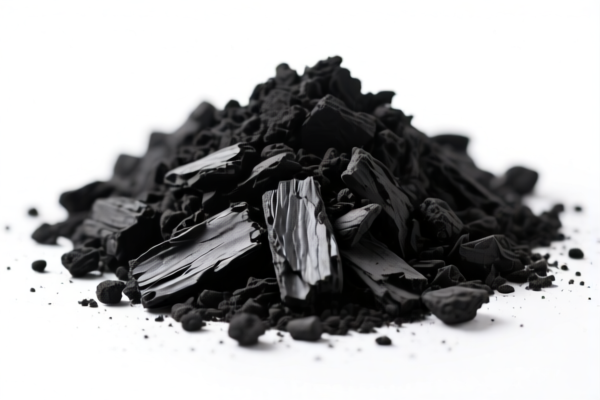
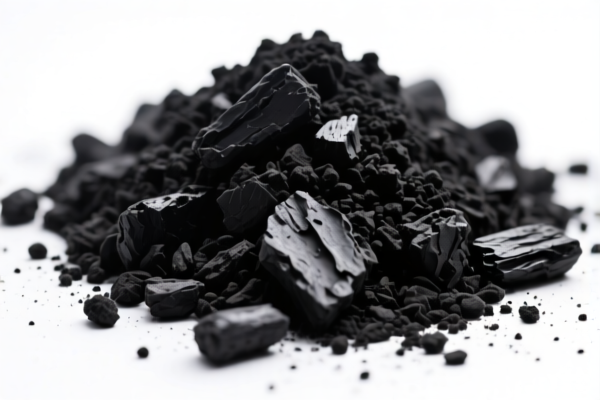

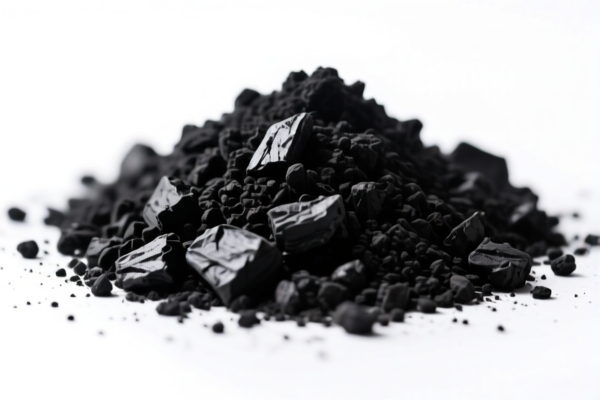
AI Analysis
💧 Water Purification Activated Carbon: HS Code Classification & 2026 Tariff Guide
🌐 HS Code Reference & Customs Clearance Guide | 2026 Latest Tariff Analysis | Professional Clearance Strategy
📌 I. Product Definition: What is "Water Purification Activated Carbon"?
Activated Carbon, widely used in water treatment, serves as a highly porous adsorbent material that removes contaminants, odors, and impurities from liquids. In international trade, its classification depends heavily on whether it is imported as a raw material/filtering medium or as a component of a filtration system.
⚠️ Key Distinction:
- If the carbon is sold as a bulk material or powder/granules specifically for adsorption/filtering → Classified under Chapter 38 (Miscellaneous Chemical Products).
- If the carbon is described as a part/component of a water purification machine or filter housing → Classified under Chapter 84 (Machinery and Mechanical Appliances).
📦 II. HS Code Classification Details (2026 Latest Authorized References)
Based on the provided data, here are the five most relevant HS Codes for Water Purification Activated Carbon, categorized by their logical fit:
| HS Code | Product Description | Logic for Classification | Suitability |
|---|---|---|---|
8421.21.00.00 |
Liquid Filters & Filtering Parts | Matches water purification function; Carbon as filtering medium fits logical scope of liquid filtration equipment | ✅ High Fit (Functional) |
3802.10.00.10 |
Activated Carbon (Coal-based) | Matches material (Activated Carbon) & purpose (Water Purification); Fits description of coal-based activated carbon | ✅ High Fit (Material) |
3802.10.00.50 |
Other Activated Carbon | Matches material (Activated Carbon); Purpose (Water Purification) falls under "Other types" category | ✅ Medium Fit (Generic) |
8421.99.01.40 |
Parts of Liquid Filtration Machinery | Matches water purification use; Carbon as filtering medium fits logical scope of parts for water treatment machinery | ✅ High Fit (Component) |
8421.29.00.65 |
Other Liquid Filters & Filtering Parts | Matches sewage/liquid purification use; Carbon as filtering medium fits scope of liquid filtration apparatus | ✅ High Fit (Application) |
🔍 Key Insight:
- Chapter 38 Codes (3802) focus on the material itself (Activated Carbon).
- Chapter 84 Codes (8421) focus on the function/application (Water Purification/Liquid Filtration).
- The choice between Chapter 38 and 84 often depends on customs interpretation of whether the carbon is a "chemical product" or a "machine part."
💰 III. 2026 Latest Tariff Rate Breakdown (Including Surtaxes & Policy Add-ons)
✅ Applicable Country: United States (US)
✅ Origin: China (CN)
✅ Effective Date: November 10, 2025 (and subsequent imports)
The tariff structure consists of Basic Tariff, Section 301 Surcharge (25%), and IEEPA Surcharge (10%).
🎯 1. Codes Under Chapter 84: 8421.21.00.00, 8421.99.01.40, 8421.29.00.65
These codes are classified under machinery/parts, which typically have a 0% base tariff but are subject to high surcharges due to their functional classification in water treatment.
| Item | Detail |
|---|---|
| Basic Tariff | 0.0% |
| Section 301 Surcharge | +25.0% (USITC Footnote 9903.88.01) |
| IEEPA Surcharge | +10.0% (For China/HK products, effective Nov 10, 2025) |
| Total Tax Rate | 35.0% |
| Tax Calculation | CIF Value × 35% |
| De Minimis Exemption | ❌ Not Eligible (deny_de_minimis) |
| Legal Basis Path | IEEPA:9903.01.25 → USITC:8421.21.00.00 → FOOTNOTE:9903.88.01 |
📌 Explanation:
- These codes benefit from a 0% base rate because water treatment machinery parts often enjoy lower base duties.
- However, the 35% total rate is driven by the 25% Section 301 tariff and the 10% IEEPA surcharge.
- Total: 35%
🎯 2. Codes Under Chapter 38: 3802.10.00.10, 3802.10.00.50
These codes classify activated carbon as a chemical/product, which has a higher base tariff but remains subject to the same surcharges.
| Item | Detail |
|---|---|
| Basic Tariff | 4.8% |
| Section 301 Surcharge | +25.0% (USITC Footnote 9903.88.01) |
| IEEPA Surcharge | +10.0% (For China/HK products, effective Nov 10, 2025) |
| Total Tax Rate | 39.8% |
| Tax Calculation | CIF Value × 39.8% |
| De Minimis Exemption | ❌ Not Eligible (deny_de_minimis) |
| Legal Basis Path | IEEPA:9903.01.25 → USITC:3802.10.00.00 → FOOTNOTE:9903.88.01 |
📌 Explanation:
- The 4.8% base tariff applies to activated carbon as a chemical product.
- Adding the 25% Section 301 and 10% IEEPA results in a 39.8% total rate.
- Total: 39.8%
🛠️ IV. Customs Clearance Practical Advice (Avoid Pitfalls)
✅ 1. Essential Documentation Checklist
| Document | Required? | Notes |
|---|---|---|
| ✅ Product Specification Sheet | ✔️ | Must detail pore size, iodine number, moisture content, and form (granular/powder). |
| ✅ Intended Use Statement | ✔️ | Clearly state "Water Purification" or "Liquid Filtration." |
| ✅ Chemical Composition Certificate | ✔️ | For Chapter 38 codes, confirm it is pure activated carbon without other chemical additives. |
| ✅ Commercial Invoice | ✔️ | Must accurately describe goods (e.g., "Activated Carbon for Water Treatment"). |
| ✅ Packing List | ✔️ | Include weight, dimensions, and packaging type. |
| ✅ Certificate of Origin (CO) | ✔️ | Essential for proving Chinese origin to apply correct surcharges. |
✅ 2. Classification Strategy & Tips
🔥 "Material vs. Function: Choose Wisely, Save Big!"
| Scenario | Recommended HS Code | Tax Rate | Rationale |
|---|---|---|---|
| Bulk Carbon (Powder/Granules) sold to filter manufacturers | 3802.10.00.10 or 3802.10.00.50 |
39.8% | Classified as chemical product. Higher base rate. |
| Carbon Filter Cartridge (Pre-assembled in housing) | 8421.21.00.00 or 8421.29.00.65 |
35.0% | Classified as liquid filtration equipment/part. Lower base rate (0%). |
| Loose Carbon for direct consumer use (e.g., water pitcher refill) | 3802.10.00.10 |
39.8% | Often viewed as a chemical/adsorbent rather than a machine part. |
| Carbon sold as a spare part for a specific water purifier model | 8421.99.01.40 |
35.0% | Classified as a part of machinery. Lower base rate (0%). |
📌 Critical Tip:
- If the carbon is pre-packed in a filter housing or explicitly sold as a "replacement filter cartridge," argue for Chapter 84 to save 4.8% in base tariffs.
- If the carbon is bulk material (e.g., bags of granules), it must be classified under Chapter 38.
✅ 3. Special Cases
| Scenario | Handling Advice |
|---|---|
| Custom-Bound Carbon | Provide design specs to prove it is a "part" of a larger system → Aim for Chapter 84. |
| Medical/Pharmaceutical Grade Carbon | May require additional FDA documentation, but HS classification logic remains similar. |
| Re-imported Used Carbon | Must declare as "Used"; may face additional environmental inspections. |
| OEM for US Brand | Provide contract and design files to justify "part of machinery" classification if applicable. |
🌍 V. Global Market Comparison (2026)
| Country/Region | Recommended HS Code | Tariff Rate (China Origin) | Certification Req. | Notes |
|---|---|---|---|---|
| 🇺🇸 USA | 8421.21.00.00 / 3802.10.00.10 |
35.0% or 39.8% | None specific, but EPA guidelines may apply | High surcharges (35-40%) due to Section 301 & IEEPA |
| 🇨🇳 China | 3802.10.00.10 |
0% (Import) | None | No additional surcharges |
| 🇪🇺 EU | 3802.10.00 |
0% | REACH Compliance | No Section 301 surcharges |
| 🇯🇵 Japan | 3802.10.00 |
0% | JIS Standards | No surcharges |
| 🇦🇺 Australia | 3802.10.00 |
5% | None | Low base rate, no surcharges |
📌 Conclusion:
- The USA is the most expensive market for importing activated carbon due to Section 301 (25%) and IEEPA (10%) surcharges.
- Total tariffs range from 35% to 39.8%, depending on classification.
- For non-US markets, tariffs are significantly lower (0-5%), making diversification advisable.
📌 VI. Common Mistakes & Pitfalls (Lessons Learned)
❌ Mistake 1: Classifying bulk carbon as a "machine part" (8421)
👉 Consequence: Customs may reject the classification as it doesn't fit machinery parts definition → Delays & Penalties.
❌ Mistake 2: Using "Filter" generic term for raw carbon
👉 Consequence: Misleading description → Customs Inspection & Delays.
❌ Mistake 3: Ignoring the 10% IEEPA Surcharge
👉 Consequence: Underpayment of duties → Back Taxes + Interest.
❌ Mistake 4: Failing to distinguish between "Carbon" and "Carbon Filter"
👉 Consequence: Wrong HS Code → Higher Tax (39.8% vs 35%) or Rejection.
✅ Best Practice:
- Use precise terms: "Activated Carbon for Water Purification" or "Water Filter Cartridge, Activated Carbon."
- Provide technical data sheets showing pore structure and adsorption capacity.
- If possible, structure the shipment as filter cartridges (Chapter 84) to save on the 4.8% base rate.
🎯 VII. Conclusion: Optimize Classification, Minimize Cost!
🎯 Key Takeaway:
🔹 "Bulk Carbon = Chapter 38 (39.8%)"
🔹 "Filter Cartridge/Part = Chapter 84 (35.0%)"
🔹 "Save 4.8% by Classifying as Part, Not Chemical!"
📌 Pro Tip:
- For large-volume imports, consult a customs broker to confirm if your specific product form (e.g., pelletized, granular, block) can be justified as a "part of a liquid filtration system" to utilize the 0% base rate under Chapter 84.
- Always verify the latest USITC Footnotes and IEEPA updates before shipment.
📣 Immediate Action:
📞 Engage a licensed customs broker
📄 Prepare technical specs & intended use declaration
🚀 Clear your Water Purification Activated Carbon smoothly, affordably, and efficiently!
✨ Professional Classification Starts with Precision!
💼 Every percentage point saved is pure profit!
Customer Reviews
About HS Code Classification
The Harmonized System (HS) is an internationally standardized nomenclature developed by the World Customs Organization (WCO) to classify traded products. Over 200 countries use the HS system as the basis for customs tariffs, trade statistics, and import/export regulations.
Each HS code follows a hierarchical structure:
- Chapter (2 digits) — Broad category of goods (e.g., Chapter 84: Machinery and Mechanical Appliances)
- Heading (4 digits) — More specific grouping within the chapter
- Subheading (6 digits) — Internationally standardized breakdown, used by all WCO member countries
- National subdivisions (8-10 digits) — Country-specific extensions for further classification, such as US HTSUS 10-digit codes
Correct HS code classification is essential for smooth customs clearance, accurate duty payment, and compliance with trade regulations. Misclassification can lead to customs delays, overpayment of duties, or penalties.
When importing from CN to US, the applicable tariff rates may include:
- Most-Favored-Nation (MFN) rate — The standard duty rate applied to WTO members
- General rate — Applied to countries without trade agreements
- Trade remedy duties — Additional tariffs such as Section 301 (anti-dumping), Section 232 (national security), or countervailing duties
The information provided on this page is for reference purposes only. For official classification, please consult with your local customs authority or a licensed customs broker.