Water Purifier Filter
CN → US| HS Code | Tariff Rate | Origin | Destination | Doc |
|---|---|---|---|---|
| 8421210000 | 35.0% | CN | US | Official Doc |
| 8421990140 | 35.0% | CN | US | Official Doc |
| 3926909989 | 22.8% | CN | US | Official Doc |
| 3926904590 | 13.5% | CN | US | Official Doc |
| 8421390115 | 35.0% | CN | US | Official Doc |
Product Images
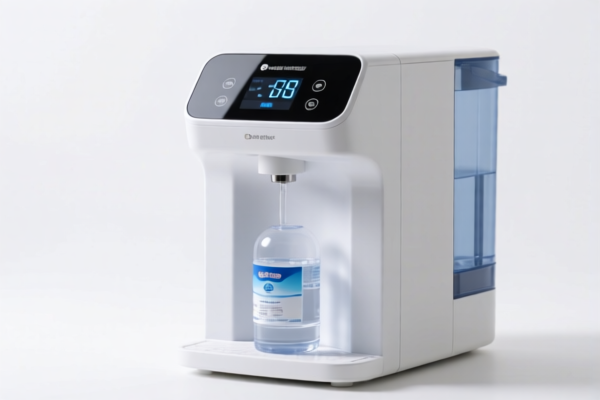
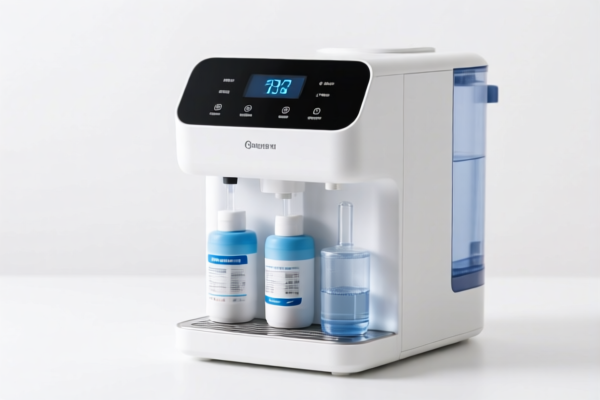
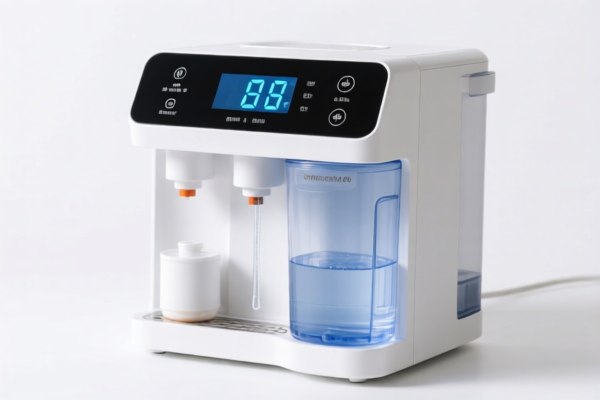
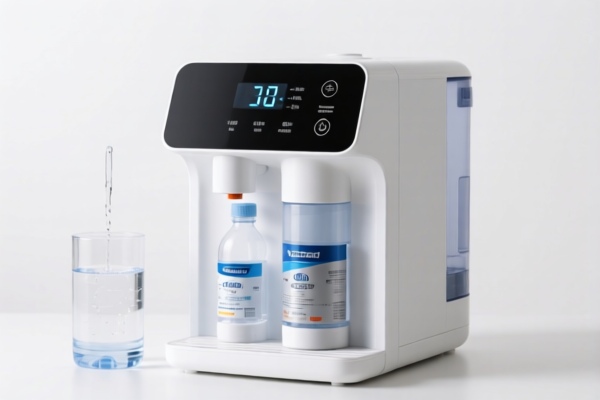
AI Analysis
💧 Water Purifier Filter (RO/Carbon/UF Filters)
🌐 HS Code Reference & Customs Clearance Guide | 2024/2025 Latest Tariff Analysis | Professional Compliance Strategy
📌 I. Product Definition & Classification: Do You Really Understand "Water Purifier Filter"?
Water purifier filters are critical components in water treatment systems, designed to remove impurities, sediments, bacteria, and chemicals from water. In international trade, their classification depends heavily on function (what it does) versus material (what it’s made of).
Key Distinction:
- Functional Components: Classified under Chapter 84 (Machinery) if they are specifically for filtration/purification machinery.
- Material-Based Parts: Classified under Chapter 39 (Plastics) if viewed primarily as a plastic molded part or sealing element, regardless of use.
⚠️ Critical Classification Point:
- If the filter is an integral part of a water filtration/purification machine → HS 8421 series.
- If the filter is a generic plastic component used in filtration but not specialized machinery parts → HS 3926 series.
- Note: The 122 Clause (Section 301/Tariff War) heavily impacts these items, with specific rates for Chinese origin.
📦 II. HS Code Classification Matrix (Based on Provided Data)
| HS Code | Product Description | Primary Basis | Total Tax Rate (China Origin) | Tax Breakdown |
|---|---|---|---|---|
| 8421.21.00.00 | Water Purifier Filter; for water purification; part of filtration equipment | Function (Water Purification) | 35.0% | Base: 0.0% Section 301: 25.0% 122 Clause: 10% |
| 8421.99.01.40 | Water Purifier Filter; for water purification; part of water filtering/purifying machinery | Function (Machinery Part) | 35.0% | Base: 0.0% Section 301: 25.0% 122 Clause: 10% |
| 3926.90.99.89 | Water Purifier Filter; Material: Plastic; Other plastic articles | Material (Plastic) | 22.8% | Base: 5.3% Section 301: 7.5% 122 Clause: 10% |
| 3926.90.45.90 | Water Purifier Filter; Material: Plastic; Gaskets/Seals/Non-O-Ring Sealing/Filtration Components | Material (Plastic/Seal) | 13.5% | Base: 3.5% Section 301: 0.0% 122 Clause: 10% |
🔍 Analysis:
- HS 8421 codes are for specialized filtration machinery parts. They have 0% base duty but attract the maximum 25% Section 301 tariff + 122 Clause.
- HS 3926 codes are for plastic components. They have base duties (3.5%-5.3%) but lower or zero Section 301 tariffs (0%-7.5%), yet still subject to the 122 Clause.
- Strategy: If the filter is a simple plastic housing or seal, HS 3926.90.45.90 offers the lowest total tax (13.5%). If it’s a complex functional cartridge, HS 8421 is more accurate but costs 35%.
💰 III. Tariff Rate Detailed Explanation (China Origin → USA)
✅ Applicable Country: United States (US)
✅ Origin: China (CN)
✅ Key Policy: Section 301 (Trade War) & 122 Clause
🎯 1. 8421.21.00.00 & 8421.99.01.40 —— Functional Water Filters
| Item | Detail |
|---|---|
| Base Duty (MFN) | 0.0% |
| Section 301 Tariff | +25.0% (High penalty for machinery parts) |
| 122 Clause Tariff | +10.0% (Specific additional duty) |
| Total Effective Rate | 35.0% |
| De Minimis Exemption? | ❌ NO (Denied for Section 301 goods) |
| Legal Basis | USTR List 3 / Executive Order 13871 related provisions |
📌 Why 35%?
- The US government classifies water purification machinery parts as strategic or industrial inputs, imposing the highest tier (25%) of Section 301 tariffs.
- The 122 Clause adds an extra 10% on top, making the total burden significant.
- Advice: Only use these codes if the product is unequivocally a "machine part" for a water purifier system. Misclassification here leads to high costs and potential audits.
🎯 2. 3926.90.99.89 —— Plastic Water Filters (General Plastic Articles)
| Item | Detail |
|---|---|
| Base Duty (MFN) | 5.3% |
| Section 301 Tariff | +7.5% (Reduced penalty for plastics) |
| 122 Clause Tariff | +10.0% |
| Total Effective Rate | 22.8% |
| De Minimis Exemption? | ❌ NO (Subject to Section 301) |
| Legal Basis | USTR Footnotes for Chapter 39 |
📌 Why 22.8%?
- While base duty is higher (5.3%), the Section 301 rate is significantly lower (7.5% vs 25%).
- This is a cost-effective classification if the filter is primarily a plastic component.
🎯 3. 3926.90.45.90 —— Plastic Sealing/Filtration Components (Optimal Cost)
| Item | Detail |
|---|---|
| Base Duty (MFN) | 3.5% |
| Section 301 Tariff | 0.0% (Exempted!) |
| 122 Clause Tariff | +10.0% |
| Total Effective Rate | 13.5% |
| De Minimis Exemption? | ❌ NO (122 Clause still applies) |
| Legal Basis | Specific exclusion for non-O-ring sealing components |
📌 Why Only 13.5%?
- Best Case Scenario: This code assumes the filter is classified as a plastic sealing/gasket component rather than a functional machine part.
- Section 301 is 0%, saving you 25% compared to the 8421 codes!
- Requirement: Must be justified as a "plastic sealing/filtration component" (e.g., housing, gasket, simple plastic filter frame) rather than the active filtration media itself.
🛠️ IV. Customs Clearance Practical Advice (Avoiding Pitfalls)
✅ 1. Documentation Checklist (Essential)
| Document | Required | Notes |
|---|---|---|
| Product Specification | ✔️ | Must detail material (plastic type), function (filtration), and dimensions. |
| HS Code Justification Letter | ✔️ | Explain why it’s 8421 (functional part) or 3926 (plastic part). |
| Commercial Invoice | ✔️ | Clearly state: "Water Purifier Filter Cartridge" or "Plastic Filter Housing". |
| Packing List | ✔️ | Show quantity and weight. |
| Material Certificate | ✔️ | Prove plastic composition if using HS 3926. |
✅ 2. Classification Strategy: How to Choose?
| Scenario | Recommended HS Code | Tax Rate | Risk Level |
|---|---|---|---|
| Active Filter Cartridge (Contains activated carbon, RO membrane, etc.) | 8421.21.00.00 |
35.0% | Low Risk (Correct) |
| Complex Filter Housing (With integrated mechanical parts) | 8421.99.01.40 |
35.0% | Medium Risk |
| Simple Plastic Filter Housing (No active media, just plastic shell) | 3926.90.99.89 |
22.8% | Medium Risk |
| Plastic Seal/Gasket/Simple Frame | 3926.90.45.90 |
13.5% | High Risk (Requires Strong Justification) |
🔥 Pro Tip:
- If you are importing empty plastic housings or seals, argue for 3926.90.45.90 to save 21.5% in taxes.
- If you are importing filled cartridges (with carbon/RO membranes), you must use 8421 because the function is purification, not just plastic molding. Misclassifying filled cartridges as plastic parts will lead to seizure and penalties.
✅ 3. Declaration Language Tips
| Bad Declaration | Good Declaration |
|---|---|
| "Water Filter" | "Plastic Housing for Water Purifier, HS 3926.90.45.90" |
| "Filter Part" | "Water Purification Machine Component, HS 8421.21.00.00" |
| "Plastic Filter" | "Non-O-Ring Plastic Sealing/Filtration Component, HS 3926.90.45.90" |
🌍 V. Global Comparison (US vs. Others)
| Market | HS Code | Base Duty | Special Tariffs | Total (China) | Note |
|---|---|---|---|---|---|
| 🇺🇸 USA | 8421.21.00.00 | 0% | +35% (301+122) | 35.0% | Highest burden due to 122 Clause. |
| 🇺🇸 USA | 3926.90.45.90 | 3.5% | +10% (122 only) | 13.5% | Best option if classified correctly. |
| 🇨🇳 China | 8421.21.00.00 | ~8-10% | None | ~8-10% | Lower cost domestically. |
| 🇪🇺 EU | 8421.21.00.00 | 0% | None | 0% | No Section 301/122 equivalents. |
📌 Conclusion:
- USA is the most challenging market due to the 122 Clause + Section 301.
- Strategy: Maximize use of HS 3926.90.45.90 for plastic parts to minimize the 10% 122 Clause impact. Avoid 8421 unless necessary.
📌 VI. Common Mistakes & Pitfalls (Blood Lessons)
❌ Mistake 1: Declaring a filled RO membrane cartridge as "Plastic Part" (HS 3926).
👉 Consequence: Customs will reclassify to 8421, charge 35% instead of 13.5%, and impose fines.
✅ Fix: Separate imports: Import plastic housings (HS 3926) and filter media (HS 8421) separately if possible.
❌ Mistake 2: Ignoring the 122 Clause.
👉 Consequence: Even if Section 301 is 0% (e.g., HS 3926.90.45.90), the 10% 122 Clause still applies.
✅ Fix: Budget for at least 10% additional duty on all Chinese-origin filters.
❌ Mistake 3: Using "De Minimis" (Section 321) for LTL shipments.
👉 Consequence: Section 301 and 122 Clause duties are NOT exempted under de minimis ($800) for China origin.
✅ Fix: Pay duties upfront or use a bonded warehouse. Do not rely on de minimis for tax savings.
🎯 VII. Final Recommendations
🎯 Remember the Key Formula:
🔹 "Function = 8421 (35%) | Plastic Part = 3926 (13.5%-22.8%)"
🔹 "122 Clause is unavoidable (10%)"
🔹 "No De Minimis exemption for Section 301/122"
📌 Action Items:
1. Audit your Bill of Materials: Are the filters filled with media or just plastic?
2. Negotiate with Supplier: Can they ship empty housings separately to use HS 3926?
3. Consult a Broker: Get a Binding Tariff Ruling if the product is borderline between 8421 and 3926.
4. Budget Accurately: Use 13.5% (if plastic) or 35% (if functional) for landed cost calculations.
📣 Final Warning:
🚫 Do not try to smuggle 35% goods as 13.5% goods. The US Customs and Border Protection (CBP) uses AI to detect misclassification in water treatment components.
✅ Do be transparent, document thoroughly, and choose the most defensible HS Code.
✨ Smart Classification Saves Money!
💼 Your Supply Chain Profit Depends on Accurate HS Codes!
Customer Reviews
About HS Code Classification
The Harmonized System (HS) is an internationally standardized nomenclature developed by the World Customs Organization (WCO) to classify traded products. Over 200 countries use the HS system as the basis for customs tariffs, trade statistics, and import/export regulations.
Each HS code follows a hierarchical structure:
- Chapter (2 digits) — Broad category of goods (e.g., Chapter 84: Machinery and Mechanical Appliances)
- Heading (4 digits) — More specific grouping within the chapter
- Subheading (6 digits) — Internationally standardized breakdown, used by all WCO member countries
- National subdivisions (8-10 digits) — Country-specific extensions for further classification, such as US HTSUS 10-digit codes
Correct HS code classification is essential for smooth customs clearance, accurate duty payment, and compliance with trade regulations. Misclassification can lead to customs delays, overpayment of duties, or penalties.
When importing from CN to US, the applicable tariff rates may include:
- Most-Favored-Nation (MFN) rate — The standard duty rate applied to WTO members
- General rate — Applied to countries without trade agreements
- Trade remedy duties — Additional tariffs such as Section 301 (anti-dumping), Section 232 (national security), or countervailing duties
The information provided on this page is for reference purposes only. For official classification, please consult with your local customs authority or a licensed customs broker.