Water Treatment Plastic Pipe Fittings
CN → US| HS Code | Tariff Rate | Origin | Destination | Doc |
|---|---|---|---|---|
| 8481805090 | 38.0% | CN | US | Official Doc |
| 3926909987 | 22.8% | CN | US | Official Doc |
| 3926305000 | 22.8% | CN | US | Official Doc |
| 8481805040 | 38.0% | CN | US | Official Doc |
| 3917400095 | 40.3% | CN | US | Official Doc |
Product Images
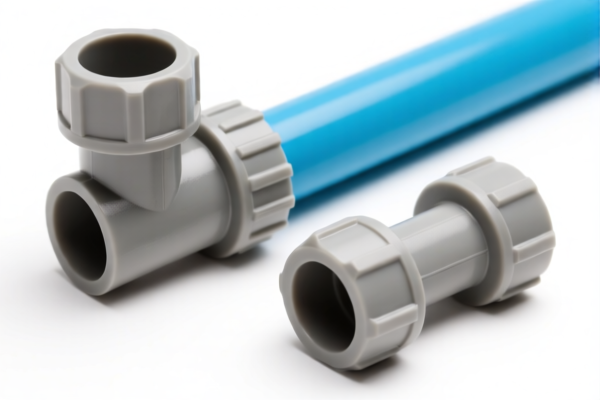
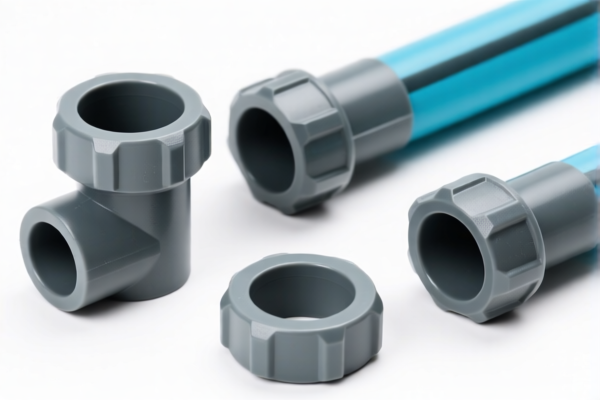
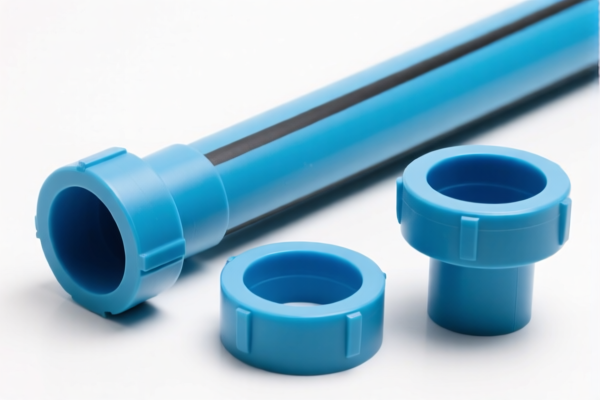
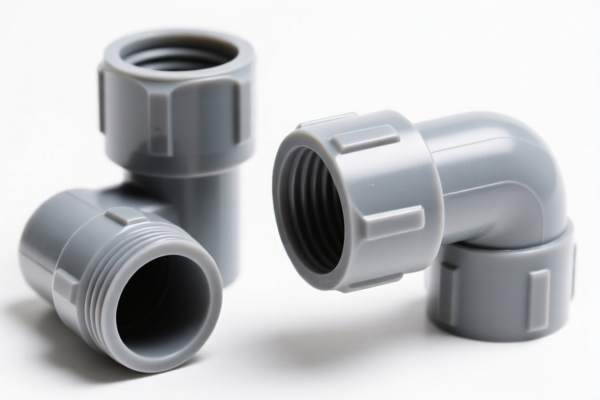
AI Analysis
🚰 Water Treatment Plastic Pipe Fittings
🌐 HS Code Reference & Customs Clearance Guide | 2026 Latest Tariff Analysis | Professional-Level Strategy
📌 I. Product Definition & Classification: What Are "Plastic Pipe Fittings"?
Plastic pipe fittings for water treatment are critical components used to connect, redirect, or terminate plastic piping systems in municipal, industrial, and agricultural water infrastructure. In international trade, they are primarily classified based on material composition and functional structure.
The core material is typically Plastics (Chapter 39) or they are considered Parts of Mechanical Appliances (Chapter 84) if they serve a specific pressure-containment or flow-control function within a larger apparatus.
⚠️ Key Distinction Point:
- If the fitting is simply a connector, elbow, tee, or adapter made of plastic used in general piping systems → It often falls under Chapter 39 (Plastics and Articles Thereof).
- If the fitting is a specialized valve, tap, cock, or similar appliance for controlling flow/pressure → It may fall under Chapter 84 (Nuclear Reactors, Boilers, Machinery).
📦 II. HS Code Classification Details (2026 Latest Tariff Authority对照)
Based on the provided data, here are the potential HS Codes for Plastic Pipe Fittings, ranging from general plastic parts to specific valve-related items.
| HS Code | Product Description | Application Scenario | Total Tax Rate | Tax Breakdown Detail |
|---|---|---|---|---|
3926.90.99.87 |
Other plastic articles, not specified elsewhere | General plastic pipe fittings (elbows, couplings) used in plumbing/water treatment. Viewed as an extension of plastic products. | 22.8% | Base: 5.3% Additional: 7.5% Section 122: 10% |
3926.30.50.00 |
Plastic fittings (identical in form and use to plastic articles) | Standard plastic pipe connectors used in water systems. Matches the "Plastic Articles" category perfectly. | 22.8% | Base: 5.3% Additional: 7.5% Section 122: 10% |
3917.40.00.95 |
Agricultural-grade plastic pipes/fittings | Fittings specifically designed for agricultural irrigation or drainage systems made of plastic. | 40.3% | Base: 5.3% Additional: 25.0% Section 122: 10% |
8481.80.50.40 |
Plastic pipe fittings, classified as parts of mechanical appliances | Fittings that are considered "parts" of water treatment machinery or pressure systems. Follows the "Part of Appliance" matching principle. | 38.0% | Base: 3.0% Additional: 25.0% Section 122: 10% |
8481.80.50.90 |
Plastic pipe fittings, within the category of pipe apparatus | General classification for plastic fittings within the broader scope of pipe apparatus/machinery. | 38.0% | Base: 3.0% Additional: 25.0% Section 122: 10% |
🔍 Key Insight:
- Lower Tax Options (22.8%): Classifying under Chapter 39 (3926.30.50.00or3926.90.99.87) is often favorable if the item is a simple connector without complex mechanical flow-control features.
- Higher Tax Options (38.0% - 40.3%): Classifying under Chapter 84 (8481.80.50.40/90) or as Agricultural (3917.40.00.95) incurs higher duties due to the "Additional 25%" or "Section 122" levies being applied on different bases or rates.
- Critical Note: The "Section 122" (10%) appears consistently, but the "Additional Tariff" varies significantly (7.5% vs 25%), drastically impacting the total cost.
💰 III. 2026 Latest Tariff Rate Breakdown (Including Surcharges & Policy Add-ons)
✅ Applicable Country: United States (US)
✅ Country of Origin: China (CN)
✅ Effective Date: Post-November 2025 (Current Policy Structure)
🎯 1. Category: Plastic Articles (Chapter 39)
Codes: 3926.90.99.87, 3926.30.50.00
| Item | Detail |
|---|---|
| Base Duty Rate | 5.3% (Ad Valorem) |
| USITC Additional Tariff | +7.5% (General Additional Tariff) |
| Section 122 Tariff | +10% (Targeted Sector Tariff) |
| Total Effective Rate | 22.8% |
| Calculation | CIF Value × 22.8% |
| De Minimis Exemption | ❌ Not Eligible (High value/Category exclusion applies) |
📌 Explanation:
- These codes are treated as general plastic goods. The additional tariff is lower (7.5%) compared to mechanical parts.
- Savings Tip: If the fitting is a simple connector (no valve mechanism), this is the most cost-effective classification.
🎯 2. Category: Mechanical Appliance Parts (Chapter 84)
Codes: 8481.80.50.40, 8481.80.50.90
| Item | Detail |
|---|---|
| Base Duty Rate | 3.0% (Ad Valorem) |
| USITC Additional Tariff | +25.0% (High Additional Tariff) |
| Section 122 Tariff | +10% |
| Total Effective Rate | 38.0% |
| Calculation | CIF Value × 38.0% |
| De Minimis Exemption | ❌ Not Eligible |
📌 Explanation:
- Although the Base Duty is lower (3.0% vs 5.3%), the Additional Tariff jumps to 25%.
- This classification applies if customs views the fitting as a functional part of a water treatment machine or pressure system rather than just a plumbing accessory.
🎯 3. Category: Agricultural Plastic Fittings
Code: 3917.40.00.95
| Item | Detail |
|---|---|
| Base Duty Rate | 5.3% |
| USITC Additional Tariff | +25.0% |
| Section 122 Tariff | +10% |
| Total Effective Rate | 40.3% |
| Calculation | CIF Value × 40.3% |
| De Minimis Exemption | ❌ Not Eligible |
📌 Explanation:
- This is the highest tax bracket. Only use if the product is explicitly marketed and used for agricultural irrigation. For general water treatment, avoid this code to prevent unnecessary costs.
🛠️ IV. Customs Clearance Practical Advice (Pitfall Avoidance Guide)
✅ 1. Document Checklist (Non-Negotiable)
| Document | Required? | Notes |
|---|---|---|
| ✅ Product Specification Sheet | ✔️ | Must state material (e.g., PVC, PP, PE), pressure rating, and temperature range. |
| ✅ Commercial Invoice | ✔️ | Must clearly describe items as "Plastic Pipe Fittings" or "Plastic Connectors". Avoid vague terms like "Plastic Part". |
| ✅ Packing List | ✔️ | Detail quantity, weight, and packaging type. |
| ✅ Material Certificate | ✔️ | Proof of plastic type (PVC/PP/etc.) to support Chapter 39 classification if contested. |
| ✅ Usage Declaration | ✔️ | State end-use: "Water Treatment Plant" vs. "Agricultural Irrigation". Crucial for distinguishing 22.8% vs 40.3%. |
✅ 2. Classification Strategy (Key Mnemonic)
🔥 "Simple Connector = 22.8%; Valve/Machine Part = 38.0%; Agri-Specific = 40.3%"
| Scenario | Recommended HS Code | Why? |
|---|---|---|
| Standard Elbow, Tee, Coupling (PVC/PP) for municipal water | 3926.30.50.00 or 3926.90.99.87 |
Lowest tax (22.8%). Simple plastic article. |
| Complex Fitting with Internal Mechanism (e.g., check valve body) | 8481.80.50.40 / 8481.80.50.90 |
Treated as part of mechanical apparatus. Higher tax (38%). |
| Fittings for Drip Irrigation/Agri-Pipes | 3917.40.00.95 |
High tax (40.3%). Only if strictly for agriculture. |
| Fittings with Metal Reinforcement | Consult Customs | May shift classification entirely. Requires detailed structural analysis. |
⚠️ Warning:
- Do NOT misclassify agricultural fittings as general plastic fittings to save tax if they are explicitly used in agri-sets. Customs may audit usage history.
- Do NOT over-classify simple connectors as "Machinery Parts" if they lack functional interaction with motors/pumps. You risk audit penalties for over-declaring complexity.
✅ 3. Special Case Handling
| Situation | Handling Advice |
|---|---|
| Mixed Container (Some fittings, some valves) | Split Declaration. Valves (8481...) at 38%, Connectors (3926...) at 22.8%. Mixing them into one line item risks the entire shipment being taxed at the higher rate. |
| OEM Custom Fittings | Provide client design specs. If designed for a specific machine, lean towards 8481. If generic plumbing, lean towards 3926. |
| Small Samples (De Minimis) | Check if value is under $800. However, with China origin, Section 122 and Additional Tariffs often block de minimis exemptions. Verify current CBP enforcement on this specific HS category. |
🌍 V. Global Market Comparison (2026 Snapshot)
| Country/Region | Recommended HS Code | Est. Duty (China Origin) | Key Certification | Notes |
|---|---|---|---|---|
| 🇺🇸 USA | 3926.30.50.00 |
22.8% | ASTM, NSF/ANSI 61 (if potable) | Highest risk market due to added tariffs. |
| 🇪🇺 EU | 3917.23 / 3917.29 |
~0-5% | WRAS, DVGW | No additional Section 122. Easier clearance. |
| 🇨🇳 China | 3917.23 |
~5-8% | GB Standards | Domestic trade. Lower regulatory barrier. |
| 🇦🇺 Australia | 3917.23 |
5% | WELS, AS/NZS | Standard import duties. |
📌 Conclusion:
The US market is the most challenging for plastic pipe fittings due to the layered tariffs (Base + Additional + Section 122).
- Strategy: Ensure the product is described strictly as a "Plastic Article" (3926) rather than a "Machine Part" (8481) to lock in the 22.8% rate instead of 38%.
📌 VI. Common Errors & Pitfalls (Lessons Learned)
❌ Mistake 1: Calling all plastic connectors "Valves" or "Faucets"
👉 Result: Custom may classify under 8481 (38%) or 8481 (higher) instead of 3926 (22.8%).
👉 Fix: Be precise. Use "Elbow", "Coupling", "Adapter" – not generic "Apparatus".
❌ Mistake 2: Ignoring the "End-Use" on the Invoice
👉 Result: If you write "Agricultural Use", you get hit with the 40.3% rate (3917.40.00.95).
👉 Fix: If it’s for municipal water treatment, specify "Municipal Water System Fittings".
❌ Mistake 3: Assuming "Plastic" always means Chapter 39
👉 Result: If the fitting has a metal insert or is part of a pump assembly, it might be Chapter 84.
👉 Fix: Check if it’s a "part of a machine" or a "standalone connector".
🎯 VII. Conclusion: Smart Classification, Maximum Profit!
🎯 Remember the Strategy:
🔹 "Simple Connectors = 22.8% (Best) | Machine Parts = 38.0% | Agri = 40.3% (Worst)"
🔹 "Describe Function, Not Just Material. 'Plastic Connector' beats 'Plastic Machine Part'!"
📌 Pro Tip:
If you are shipping large volumes, consider Applying for a Binding Ruling from US Customs (CBP) before shipment. This provides legal certainty on whether your specific fitting falls under 3926 (22.8%) or 8481 (38.0%), saving potentially 15% on CIF value.
📣 Immediate Action Required:
📞 Contact Your Freight Forwarder
📄 Prepare Detailed Specs (Material, Pressure Rating, End-Use)
🚀 Optimize HS Code Selection to lock in the 22.8% rate.
✨ Professional Clearance Starts with Accurate Classification!
💼 Every Percentage Point Saved is Pure Profit.
Customer Reviews
About HS Code Classification
The Harmonized System (HS) is an internationally standardized nomenclature developed by the World Customs Organization (WCO) to classify traded products. Over 200 countries use the HS system as the basis for customs tariffs, trade statistics, and import/export regulations.
Each HS code follows a hierarchical structure:
- Chapter (2 digits) — Broad category of goods (e.g., Chapter 84: Machinery and Mechanical Appliances)
- Heading (4 digits) — More specific grouping within the chapter
- Subheading (6 digits) — Internationally standardized breakdown, used by all WCO member countries
- National subdivisions (8-10 digits) — Country-specific extensions for further classification, such as US HTSUS 10-digit codes
Correct HS code classification is essential for smooth customs clearance, accurate duty payment, and compliance with trade regulations. Misclassification can lead to customs delays, overpayment of duties, or penalties.
When importing from CN to US, the applicable tariff rates may include:
- Most-Favored-Nation (MFN) rate — The standard duty rate applied to WTO members
- General rate — Applied to countries without trade agreements
- Trade remedy duties — Additional tariffs such as Section 301 (anti-dumping), Section 232 (national security), or countervailing duties
The information provided on this page is for reference purposes only. For official classification, please consult with your local customs authority or a licensed customs broker.